
There are two paths into Veterans Affairs (VA) oral appliance therapy. Which doorway veterans walk through now decides which device they are allowed to have.
Same VA.
Same diagnosis
Different answer.
Make it make sense…
Until last fall, a veteran treated inside a VA clinic and a veteran sent out to a community provider got the same menu of oral appliances. Then CDI #00048, the VA’s community care determination for oral appliance therapy in OSA, took effect on September 1, 2025. It aligned VA community care with Medicare’s PDAC rules and LCD L33611, essentially splitting one treatment into two codes.
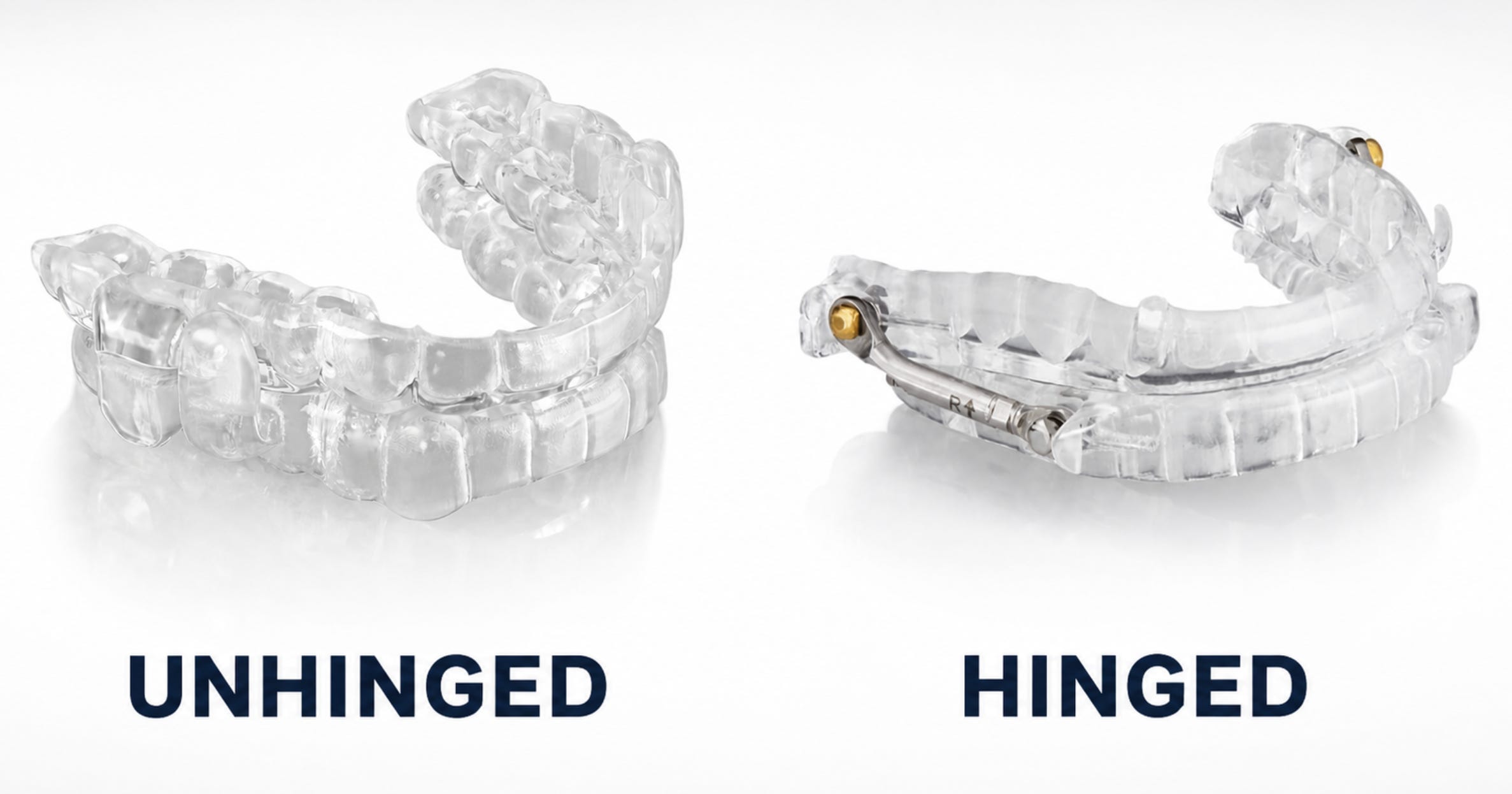
E0486 is defined as a custom oral appliance with a fixed mechanical hinge. K1027 is the same custom appliance without the hinge. CMS created K1027 in 2021 because it could not rewrite E0486’s hinge descriptor to fit newer designs. No study has found the hinge to be a clinically meaningful variable in outcomes. CDI #00048 covers E0486 and excludes K1027 as “not medically necessary,” citing insufficient evidence. A community care authorization can only pay what the schedule allows, so the hingeless design is not denied on a case-by-case basis. Instead, it is non-payable by design.
CDI #00048 governs care the VA buys from outside providers. It does not govern care the VA delivers in its own clinics. One staff dentist at a VA medical center walked me through what he can order through the VA’s central dental laboratory: ProSomnus in hinged and hingeless designs, TAP III, EMA, Silent Nite. On the subject of device design, he said he has no limitations, as long as the choice helps the patient.
The reason he has that autonomy is that the in-house side is not run on DME claims. It runs on federal procurement, which has multiple paths into the clinic. There’s the Central Dental Laboratory (CDL) in Dallas, the hub that services VA medical facilities nationwide. There’s the Federal Supply Schedule, another government purchasing vehicle available to the VA and other federal health systems. ProSomnus listed its precision appliances on the Federal Supply Schedule through Lovell Government Services, a service-disabled veteran-owned distributor, so a VA clinic can order their appliances that way. Other appliances come in as lab work through the dental lab-services contracts the CDL administers, or, for small one-off cases, through open-market purchase. The VA dentist can order whatever they determine is best, and the acquisition avenues vary depending on the appliance.
Notice that there is no PDAC verification, no E0486-versus-K1027 line, and no arcane Medicare fee schedule that precludes hingeless designs. The hinge rule never reaches the staff dentist. They pick what best suits the veteran, and the VA buys it through whichever vehicle fits the device. Hinged or hingeless, the design remains a clinical choice.
A veteran who lives too far from a VA dental clinic gets referred to a Community Care Network provider. Here the money cycles through a third-party administrator at Medicare rates, and CDI #00048 runs with it. That administrator is Optum, which holds the Community Care Network contract for Regions 1 through 3, and TriWest holds Regions 4 and 5.
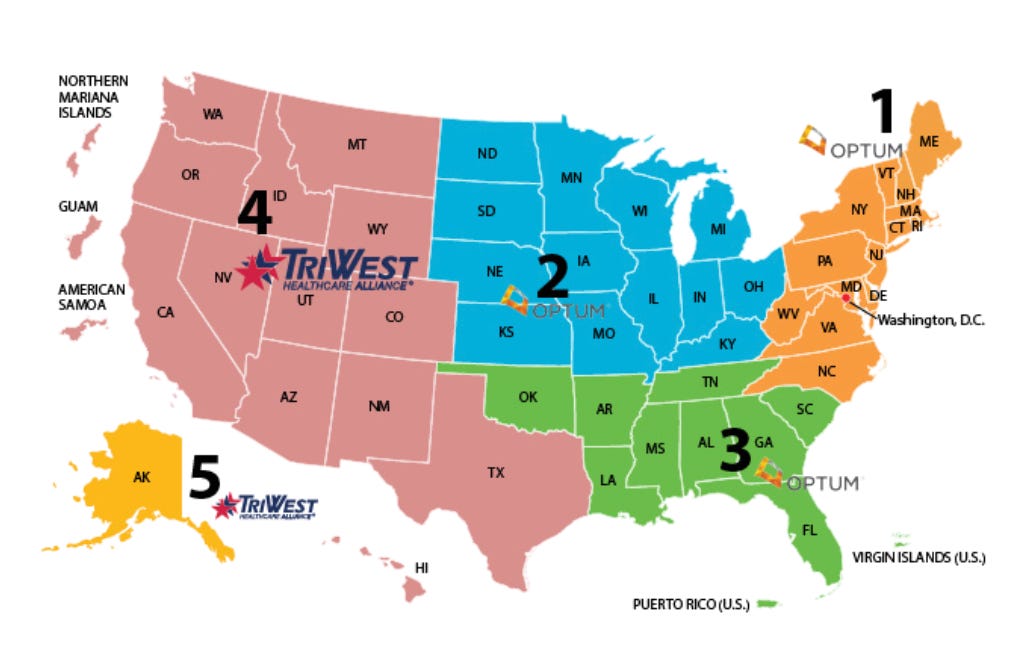
CDI #00048 states that “custom-fabricated oral appliances without a mechanical hinge” are “not indicated and therefore considered not medically necessary due to insufficient evidence from peer-reviewed medical literature to support the safety and efficacy.”
So the hingeless ProSomnus EVO a staff dentist delivers to a veteran is the same design that the care community provider is told is not medically necessary for the veteran two counties away. One VA. One medical condition. Two different answers, decided by which building the veteran drives to.
Community care exists for the veterans who cannot easily get to a VA facility. These are commonly elderly vets or those in remote rural that require driving long distances to reach a VA facility. West Virginia, where I practice, is 97.3% rural and home to about 110,900 veterans; nearly half of them are over 65. Many of them travel hours to reach me. They often require follow-up via telehealth, which means they titrate the device themselves at home. A fixed-hinge appliance with a key requiring multiple turns can be especially challenging for elderly patients with limited vision or compromised dexterity. A hingeless design is far easier for them to manage, particularly if they live alone. Veterans who cannot navigate the hinge stop wearing the appliance, and the treatment they drove two hours for is more likely to fail.
Nothing clinical supports the hinge line. Head-to-head trials pitting devices with a hinge and devices without, have repeatedly found no design superior at reducing the apnea-hypopnea index, and the AADSM’s own treatment protocols tell dentists to be fluent with a range of appliances because no single device is indicated for every patient.
The 2025 VA/DoD clinical practice guidelines for OSA never once mention a hinge. It directs providers to use “digitally engineered, custom fabricated, and titratable” MADs, singling out “digitally engineered, custom milled appliances made of semi-rigid materials” as the ones that result in the least tooth movement. Those are hingeless designs. The DoD’s own Mandibular Advancement Device fact sheet is even more explicit. Its device-selection table lists “…the most commonly used appliances in DoD/VA clinics,” led by the hingeless ProSomnus EVO, with most of the menu composed of milled or printed hingeless designs.
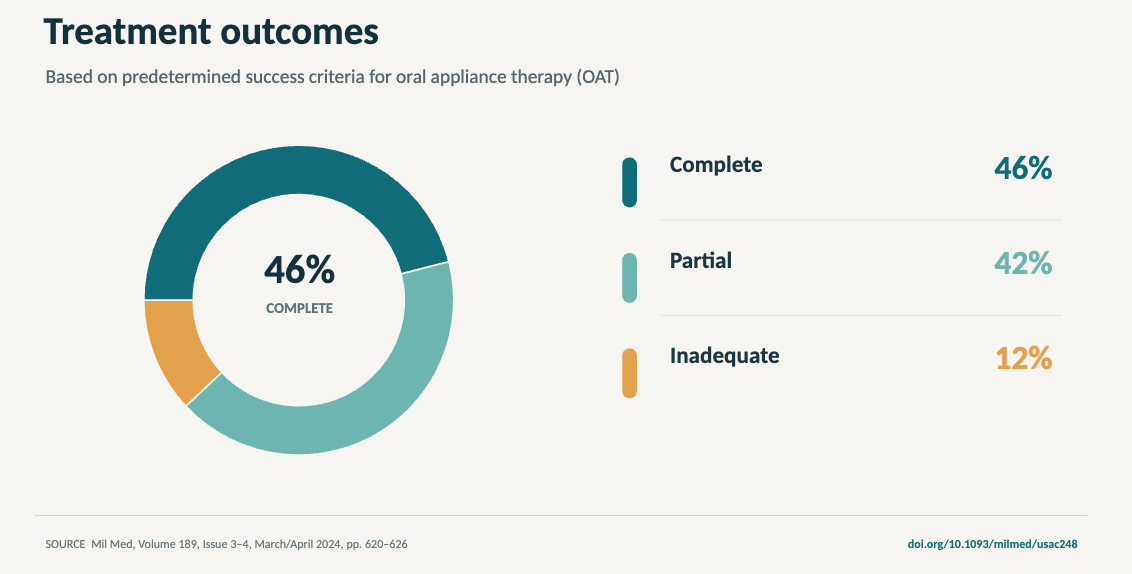
The government does not just permit these devices for veterans. It positions them as the standard. A 2022 study in Military Medicine from Darnall Army Medical Center reported 88% success with hingeless devices compared with less than 65% success for hinged designs. The Army built its 2017 Dental Sleep Medicine Initiative around hingeless devices precisely because service members titrate remotely. Sadly, a design the VA places on its own patients is not deemed medically necessary just one clinic away.
The split isn’t the result of clinical findings. It stems from Medicare’s DME framework. CDI #00048 imported that coding logic and applied it as if it were a standard of care. That’s the rationale; again, nothing to do with clinical care at all.
There is an explicit cost that befalls the community side, and it is almost as costly as an abbreviated OAT armamentarium. Across multiple states, Optum has been retroactively reviewing claims the VA already authorized and paid, denying oral appliance therapy on retrospective review and recouping money already paid to treating dentists. Many of those clawbacks are landing on hingeless appliances fitted before September 1, 2025, when the VA had no rule against them. A determination that did not yet exist is being applied backward, to care that was compliant the day it was rendered. Read that again. Let it sink in.
In June 2026 the AADSM asked the VA Office of Inspector General to investigate, describing reviews that read rely on AI screening tools and reviewers who never see the veteran. They cautioned that every dentist driven out of the network is another door closing on veterans suffering from OSA. The dentist inside the VA never carries that risk. The one in the community does.
The solution belongs in the determination and is within the VA’s own authority. The VA can cover K1027 at parity, or it can drop the fixed-hinge requirement from E0486 so the code covers every custom titratable design.
Until the VA resolves this disparity, one system holds two classes of veterans. The ones who can reach a VA clinic get the full suite of solutions. And the less fortunate ones whose choices are limited for reasons wholly unrelated to their airways.
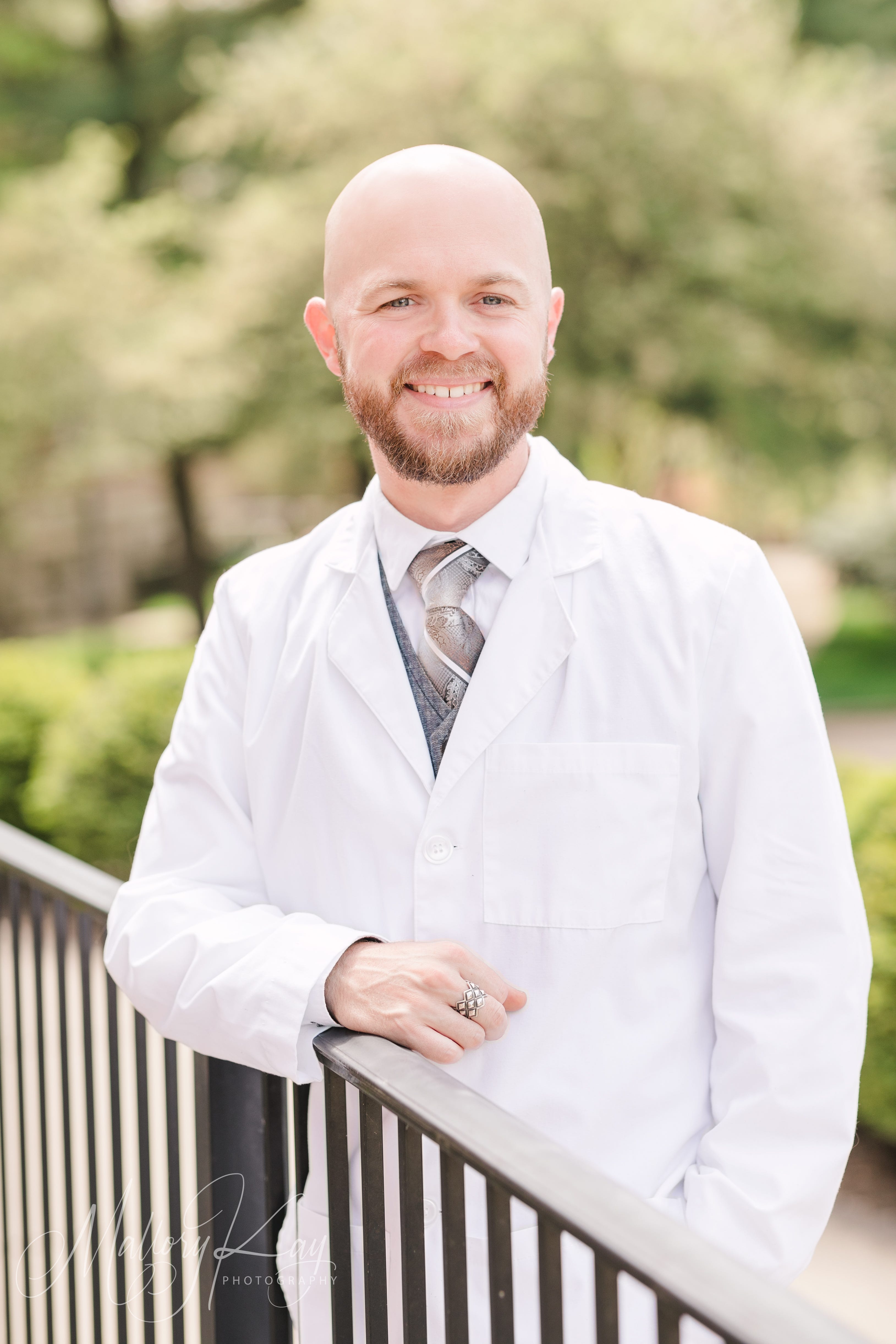
Luke Bauserman, DDS, is a Diplomate of the American Board of Dental Sleep Medicine (D.ABDSM) and a Certified Clinical Sleep Health provider (CCSH). He directs Better Sleep Mid-Ohio Valley: Center for TMJ & Sleep Apnea in Parkersburg, West Virginia, treating obstructive sleep apnea and TMD/orofacial pain, and caring for veterans as a VA Community Care Network provider. He gravitates to the overlooked seams between medical and dental sleep care, where the interesting problems tend to hide. Off the clock, he plays banjo (competently, on a good night) and is cheerfully outnumbered by his wife and five kids. A lifelong history buff and storyteller, he writes fiction that has nothing to do with airways and hosts the American Mythology YouTube channel.
Comments
Nothing yet. Say the first thing.
Sign in to join the conversation.