
Russian classical literature! Ah, how wonderful it is… to hate it. Trust this severely traumatized former Soviet school child and run far, far away. Or just let me explain why.
Alexander Pushkin: a virulently imperialist poem "To the Slanderers of Russia" that chastised the West for condemning czar Nicholas’ brutality toward freedom-seeking Poles. Fyodor Dostoyevsky: disgustingly antisemitic "Diaries of a Writer", a truly proto-Nazi text about the Jewish perfidy and plots to destroy Russia and the world. Joseph Brodsky: insane ravings about Ukraine in his insults-filled, profane early 1990s poem “On Ukraine’s Independence”. The best way to never get disappointed in Russian literary treasures is to do like Slava and never read them in first place.
You won't be missing anything. Pushkin is untranslatable anyway, and those who are already familiar with Lord Byron, whom Pushkin desperately wanted to imitate, won't find anything new there. Dostoyevsky is a self-righteous bore, and I've proudly slept through all of him in high school. And I have never really read any Brodsky at all and feel great. Also, Leo Tolstoy exploited and emotionally abused his wife, but this is hardly shocking at this point.
The main crime of Russia’s “great classical literature” is the fact that it’s overhyped shlock promoted to and by snobs and used by propagandists to spread the myth of Russia’s greatness, permanence and irreplaceability while denigrating its colonies’ (Ukraine’s first and foremost) claims of cultural distinctness.
“If you are so great and independent, how come you haven’t had your own Tolstoy?”, spit Russians at Ukrainians, whose culture they have suppressed for centuries and whose literary talent they have killed, imprisoned or starved to death. This is in no way different from Europeans’ blaming their former African subjects for not being “civilized” enough in the post-colonial era.
“Sure, despise Putin, but Dostoyevsky is not to blame! And why destroy the lovely statues of Pushkin?”, cry defenders of the “Great Russian Culture”, ignoring the fact that Russian cultural markers were used precisely to belittle the colonies’ identities and remind them of who their sovereign lords are. This is in no way different from the reasons the statues to Confederate generals were erected all over the South.
Tolstoy and Dostoyevsky are breathlessly exalted by Western literary snobs, ultimately serving to push Russia’s “soft power”, to convince the world that, no matter what it does, Russia is utterly indispensable for humanity (while, let’s say, Ukraine is an artificial, Western-propped entity that we can take or leave, really).
But listen to me, people! I have had the Great Russian Culture shoved into me from my earliest childhood, and I am here to tell you that it’s all a goddamn myth. It’s no greater than the Great Swiss Culture, the Great Kenyan Culture or the Great Culture Of Your Roommate Kyle When He Got Really High That Night. The “Great Russian Culture” is perhaps one of the world’s greatest cons.
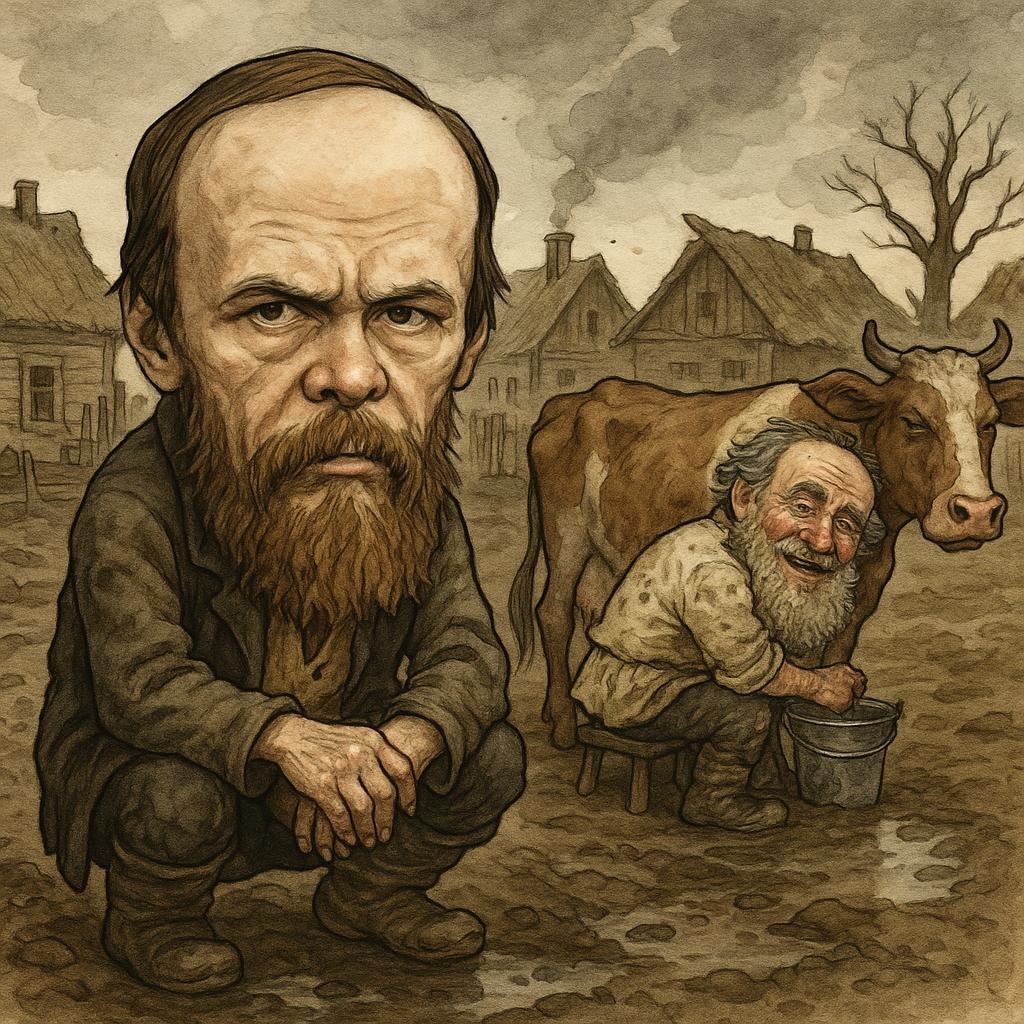
As someone intimately familiar with the subject, I can tell you honestly and truthfully that the entirety of Russian classical literature is mind-numbing, hopeless, grotesquely verbose, self-important borefest, tremendously overhyped by terribly depressed people with a longing to feel more cultured. The only way to derive any real enjoyment from it is to constantly tell yourself: “Here I am, a smart, cultured, sophisticated person, holding a piece of humanity’s most cherished literary treasure. Fucking look at me, I am so goddamn fine!” Which, I am convinced, is something that goes through the mind of every weird teenager who has suddenly discovered The Great Truth in Dostoyevsky’s little-known novella about Russians being miserable amidst bad weather and tyranny.
Listen, folks, Dostoyevsky couldn't construct a believable plot if you held a gun to his head (which the czar once famously did), would never be bothered to come up with a three-dimensional character, made all women look like his two long-suffering lovers, and basically used his haphazard and poorly-constructed novels as a vehicle for his own half-insane sermons, without even disguising them as dialogue. All of his characters were cardboard cutouts who got together in implausible situations, displayed over-wrought emotions and immediately launched into nonsensical discourse, all while serving as sock-puppets to open their mouths to whatever silly, depressing thoughts were bothering their raving author at the time.
Tolstoy had a slightly better ability to tell stories, but could not stop himself from ejaculating a trainload of stupid and unnecessary philosophy all over them in random places, because he honestly didn't trust the reader to just figure his thoughts out through the plot. This is why “War and Peace” is about seven million pages long instead of being a nice little novella about star-crossed lovers in the time of war. And if you are considering reading “Anna Karenina”, please, stop. In fact, let me spoil it for you: it utterly fails to work as a mystery, and the killer is a train.
The only story by Tolstoy I ever managed to read in its entirety is “A Lion and a Dog”, which I still believe to be his magnum opus despite the fact that he ostensibly wrote it as a happy little tale for children. We studied it in fourth grade. Here is the synopsis. A ferocious lion’s zoo cage is invaded by a tiny, cute dog who, instead of being afraid of the lion, licks him and plays with him and becomes his dear little friend. This goes on for a bit before the dog dies. The lion grieves, and the zoo keeper tries to cheer him up by putting another cute little dog in his cage, which the lion then RIPS THE FUCK APART INTO TINY LITTLE PIECES. And then, the lion dies. Of grief.
Trust me, this is as happy as happy little children’s tales went in Russia. Tolstoy obviously thought it unfair to bestow suicidal depression, which The Great Russian Literature is the world’s best provider of, on adults only. But, in fairness, this book at least lends itself to literary analysis pretty easily. The lion is, of course, symbolic of Russian men whose inner desire for destructive violence can only be controlled by Russian women (rather obviously symbolized by the dog), whose job is to be submissive, attractive, devoted and selfless in what is a terribly abusive relationship. Read up on Tolstoy’s own marriage for a deeper insight. But, once free of the constraints of this tempering presence in his life, the Russian Man Lion is not only expected, but is positively encouraged to let his inner demons out in a murderous rampage against anything close at hand. The poor second dog (I have always deeply sympathized with it, even though Tolstoy clearly meant for me to sympathize with the two main characters) can be another woman, an innocent bystander or Ukraine. Whatever collateral damage serves best to let the Russian Man Lion cope with what he must be. Which, in the end, is dead. For the glory of the Motherland.
You are welcome. Now, go read some Tolkien.
What, Chekhov, you ask? Let’s start with his being antisemitic (there is going to be a pattern there, by the way), but yes, he was also talented. Please, never read his "comedy" plays unless you feel like your day is sorely lacking a suicide attempt. His short stories are hit and miss. Chekhov, at the height of his powers, had two main modes: depressing and super depressing, and his true genius was to convince people that his moody-teenager bitchy bullshit about supremely unlikeable people is ingenious comedy and/or satire.
He also loved the word “zhid”, which is the Russian antisemitic slur, which carries the same historic and emotional charge for any Russian-speaking Jew as the “N-word” does for African Americans. And just like the N-word, while it was once a more or less accepted ethnic term, it became horrifically offensive and was understood as such by Chekhov’s time. And, man oh man, did this not stop the great Russian classic from using the everloving shit out of it!
Chekhov was the world's undisputed champion of the Z-word. He outzhids Nikolai Gogol, Dostoyevsky and Tolstoy combined. His zhidding is relentless, bordering on obsessive. He zhids in his short stories, he zhids in his correspondence, he most likely zhidded in his sleep. He is the zhiddiest. Being dumped by a Jewish woman (according to one source, due to her refusal to convert for him) surely does wonders for a Great Russian Classic’s vocabulary.
Now, I don't pretend to be a Chekhov expert (he bored me half to death in sixth grade), but there were Black Hundreds members who hadn't zhidded half as much in their lifetimes as he zhidded on a lazy Saturday afternoon while ordering tea. The man was into zhidding is what I'm saying. Listen, I grew up deep in the Pale of Settlement, surrounded by virulent antisemites, and I can appreciate a good spot of zhidding as much as anyone, but the cat was to zhidding what Oppenheimer was to radiation sickness. Chekhov was one hard-zhidding dude. He zhidded AF.
And how about Gogol? He was a tamed, mentally ill Ukrainian with great talents as a storyteller. And, of course, breathtakingly antisemitic. His patriotic Russian imperialist trash "Taras Bulba" was so jingoistic and anti-Jew, it's even been filmed in Putin's Russia. Gogol, however, could do both plot and humor, but could not escape being depressing either. So, of course, the one time he tried to write an uplifting story, it came out as blathering Czarist propaganda chock-full of anti-Semitism, where the main character kills his own son and is burned alive in the end.
What’s with the antisemitism, you may ask at this point? Why did Russian literary giants have so much to say about an ethnicity that wanted nothing to do with them? We can only guess.
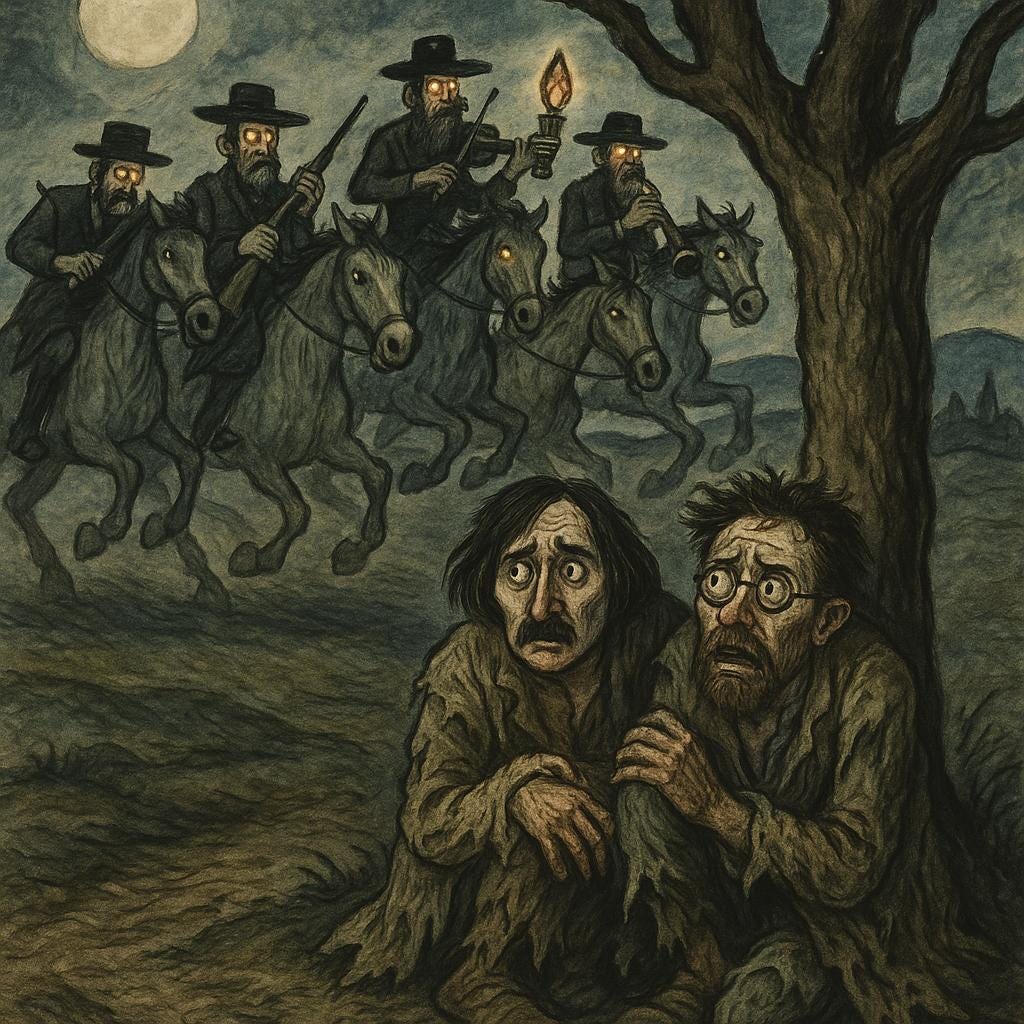
If someone mentions Chernyshevsky as a Russian classic, spit them in the face because you are talking to an absolutely insufferable snob. Chernyshevsky, Lenin’s favorite novelist because of course he was, could not write and should have been issued a restraining order from stationery by the courts. Full stop.
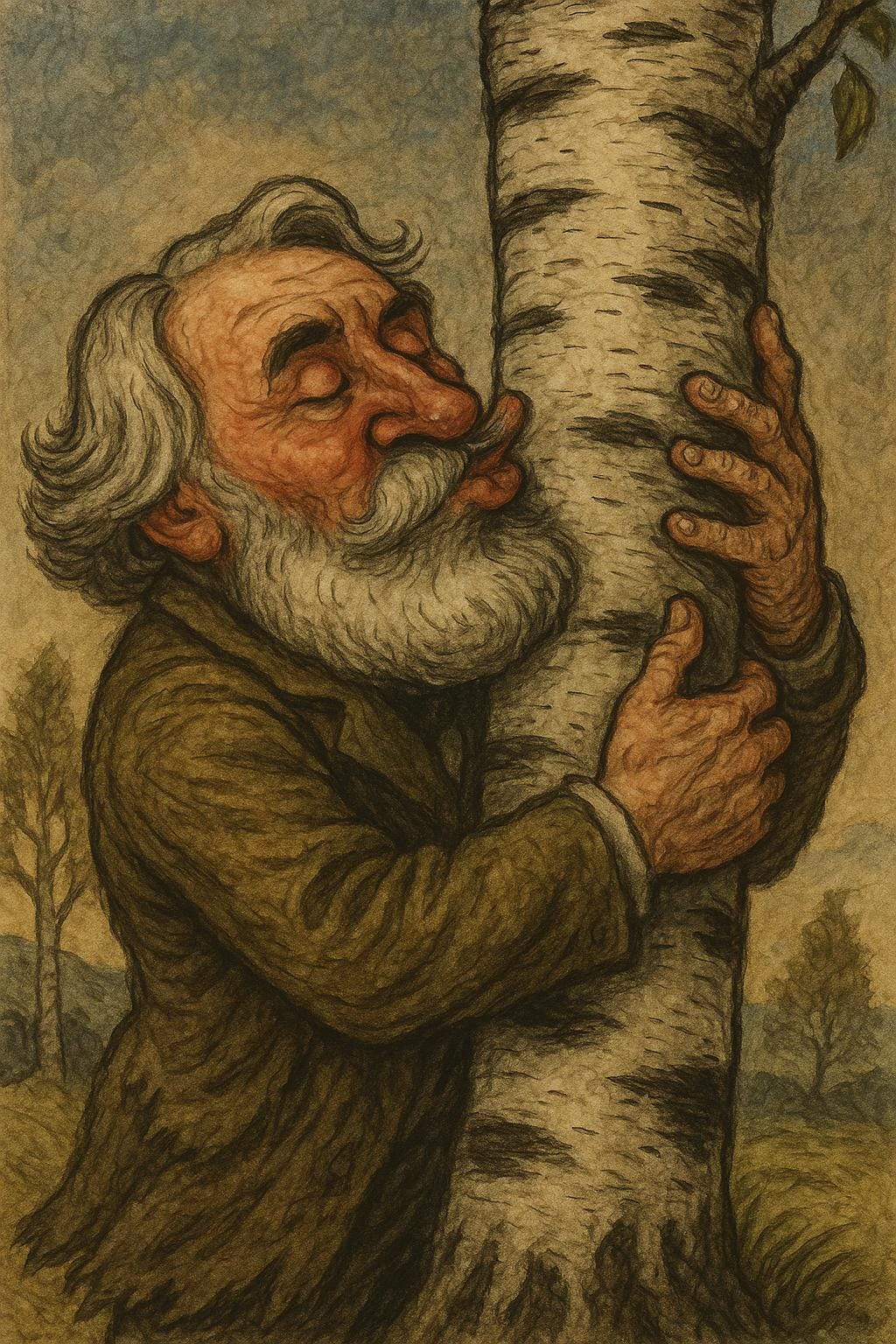
And let me tell you about Ivan Turgenev! He could bore the knickers off a Puritan preacher's wife, which he would never do, because, according to his stories, every single woman is a tender virgin ready to faint on command. The guy had no idea how women worked. All his female characters are one-dimensional rag dolls oscillating between poetry and a fainting couch. But give the dude a birch tree, and hello, thousands of pages of exposition and character development. I mean, the dude fucked trees is what's up. I am not even kidding. His endless goddamn descriptions of stupid fucking birch trees are more interesting than anything he has ever written about owners of human vaginas. And reading them is still torture.
But even he was outdone by Prishvin and Tyutchev. Want some hardcore tree fucking? These are your men. Countless unreadable pages of trees, describing them with words that barely even exist, making them pose in different lighting, in different weather. With and without foliage.
Turgenev’s only story that anyone has ever finished is “Mumu”, which is about a serf who drowns his beloved little pet dog on his master’s orders. Yes, Russian literary giants hated Jews and loved killing dogs. Any more questions?
Mikhail Lermontov, like Pushkin, should have stuck to verse, because his prose is outrageously mediocre. Lermontov's in particular could have been written by a Emo 10th-grader for a second-marking period essay without really trying too hard.
Mikhail Bulgakov? A self-hating Ukrainian and quite likely an antisemite, which at this point barely even needs mentioning (his Jesus is pointedly not a Jew, and any Jews in his stories are always evil). The story about the doggo that became an alcoholic is good, if you read it as symbolism of Russian men. All else is overrated.
Yes, once again, I can’t overstate this enough, RUSSIAN WRITERS FUCKING HATED DOGS.
Let me summarize here. Russian writers: depression is comedy, women are unknowable, Jews are an infestation, all dogs must die, and a birch tree is a good fuck. (Plus, something-something Jesus loves me I hate me existentialism blahblah, hey, angsty teen, wanna feel superior to your mystery-reading peers?)
Now, yes, I know, most XIX-century literature was very verbose, very boring, quite full of religious imagery and Biblical allusions and pretty unreadable nowadays. But even by these standards, Russians have outdone everyone else. And while in the West there still were Alexandre Dumas, Mark Twain, Jules Verne, Arthur Conan Doyle and a few others who could turn out readable, enjoyable, timeless stuff, all of Russia’s classical literature is a slog through the dullest circle of literary hell.
The only purpose of Russia's XIX-century literature (except for propagating antisemitism, fundamentalist Christianity, self-pity or suicidal depression) is making a bunch of self-adoring assholes feel superior to the rest of us. Don’t be afraid to stand up to them, friends. Do like Slava and tell them that one page of “Sherlock Holmes” is worth all of Dostoyevsky.
And I say this as a person who was required by Soviet law to suffer through every single bearded antisemite spewed out into the world by Alexander II and Alexander III society. For whom Mark Twain and Arthur Conan Doyle were lifelines. Lifelines from boredom and depression.
Stay safe. Love life. And Glory to Ukraine. Among other things, for demolishing the statues of these misanthropic sufferers of verbal diarrhea that were imposed on all colonies by the stormtroopers of Russian imperial culture.
No posts
Comments
Nothing yet. Say the first thing.
Sign in to join the conversation.