
Hello! The response to the first couple of newsletters was far better than I had prepared myself for, so thank you for reading, subscribing and getting behind the project.
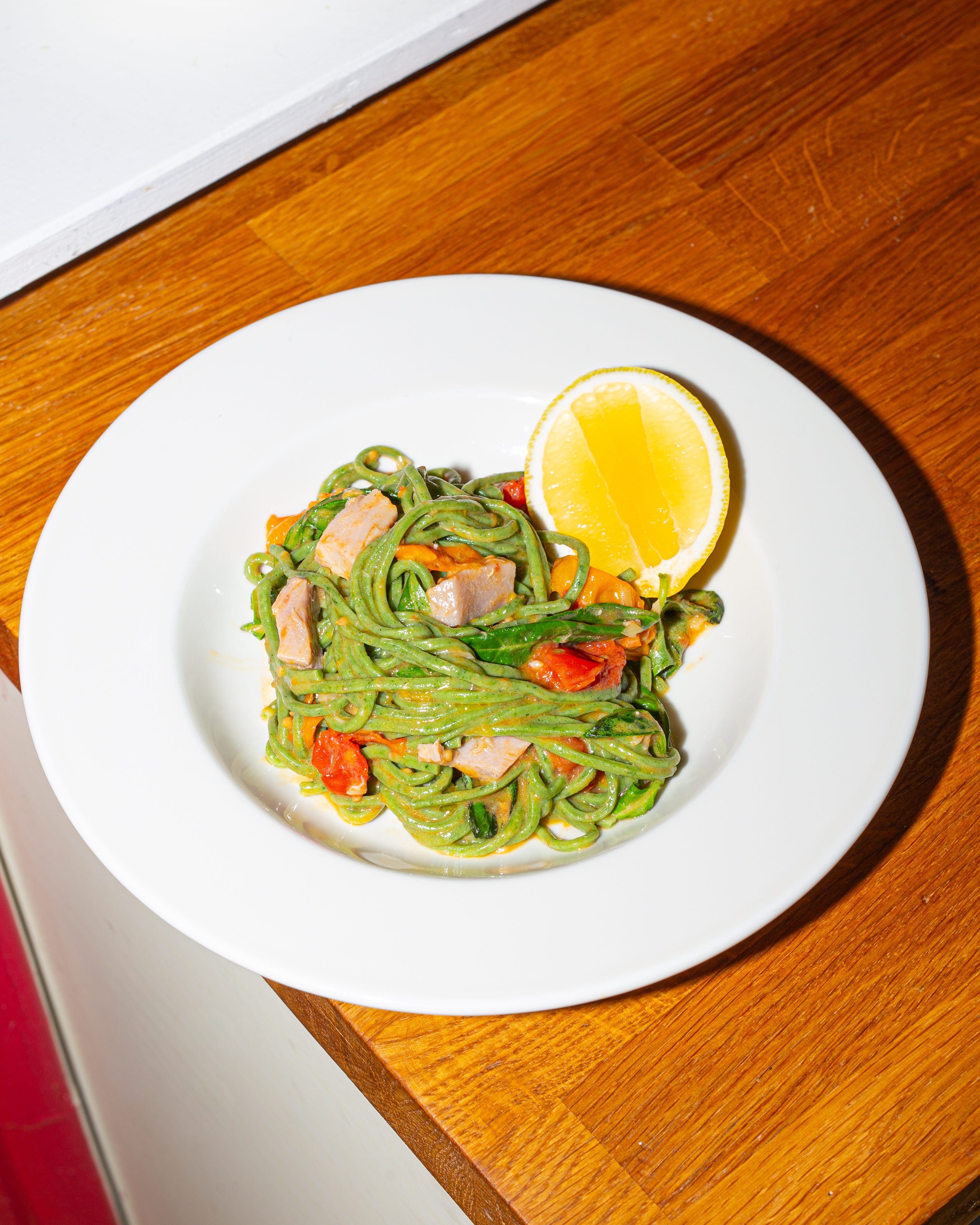
This week, I’ve developed a pasta dish specifically for summer - not only in terms of what goes into it, but how little heat it requires you to endure while making it. Naturally, this means taking a bit of a deep dive into confit.
Paid subscribers can read the full piece, get all three recipes and follow the thinking that turned a few random notes into supper. So, if you were considering upgrading, this would be a particularly good week to do it.
Ben x
My fiancé recently reminded me that I needed to spend time doing something that didn’t involve food. For the past fifteen years or so, I have forgone hobbies and engagement with popular culture to focus on becoming a better cook. I host a great dinner party, but make for an awful conversationalist when talk diverges from what we might be eating. So, recently, I decided to funnel a little energy into a six-week ceramics course with the aim of making plates, bowls, and things to eat from. Friends were quick to point out this wasn’t much of a deviation away from dining, but it has made a fantastic talking point at parties thus far.
Learning something new in your thirties is quite a vulnerable experience. Thankfully, this was softened by the discovery that, before throwing anything on a wheel, clay must be kneaded like a low-hydration bread dough to remove as many air pockets as possible. I sat at a large wooden table with my new classmates, making small talk and resisting the urge to mention bread dough more than once.
Our instructor explained that kneading also helps to align the crystals in the clay. “Like chocolate,” I said and immediately regretted. Nobody had asked. Tempering chocolate is, after all, an exercise in coaxing cocoa butter crystals to form in the correct structure, so that it sets right and has a snap rather than becoming dull, soft or streaky. It’s the difference between a glossy truffle and a floppy millionaire’s shortbread at a village fête.
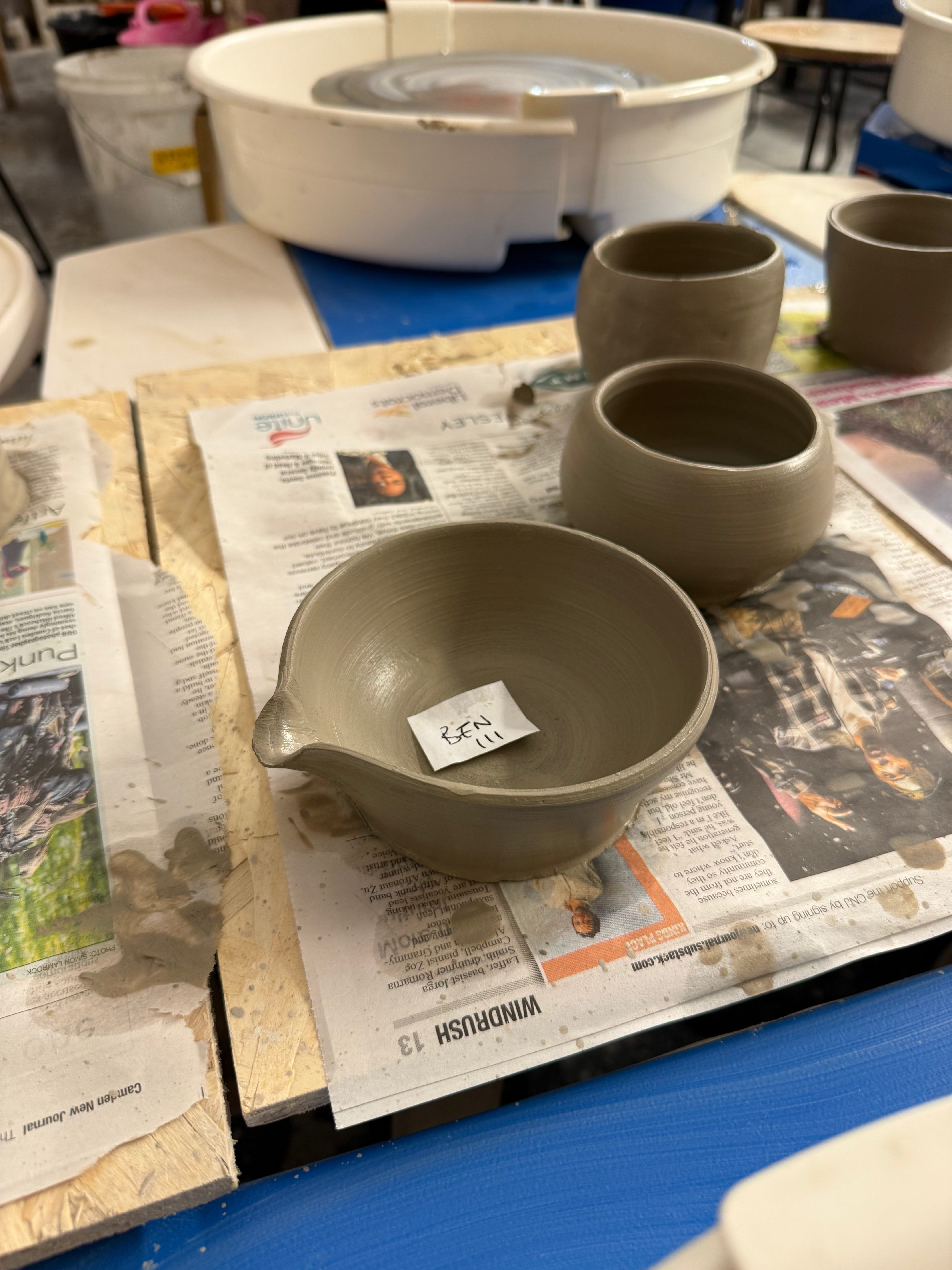
We started throwing the suitably molested clay into a few simple shapes. I had been slightly stressed all day, but at the wheel it all fell away. I began to understand why so many worn out parents end up making mugs, spoon rests, and little dishes for keeping rings in. Clay forces you to move slowly and concentrate on one thing at a time - the antithesis of the school run.
I noticed my whole body cooling down. Until then, I had been sweating gently but persistently, all day. Yet there, in a hot repurposed railway arch, hunched over a spinning lump of clay, I felt completely calm. Not cool exactly, but no longer actively weeping from most pores.
With clay, nothing could be rushed or forced; you apply the gentlest pressure and let time do the heavy lifting. It occurred to me that this was also the only sensible way to cook in summer. By late July, I was already a little bored of cold, raw food, but had no desire to introduce any more heat or agitation into my life. I wanted something properly cooked without turning the kitchen (or myself) - into a furnace.
I wiped my hands on my apron, pulled out my phone and typed the obvious conclusion: “confit.”
To confit food is to let it cook slowly in fat, almost without appearing to cook at all. Depending on what needs cooking, the oil might sit anywhere between the temperature of a warm bath and just below boiling. Fish tends to occupy the gentler end of that spectrum. While working in restaurants, we would sometimes reach briefly into pans filled to the brim with warm olive oil to coax soft fillets of cod to the surface. Tongs or slotted spoons could break their delicate flesh.
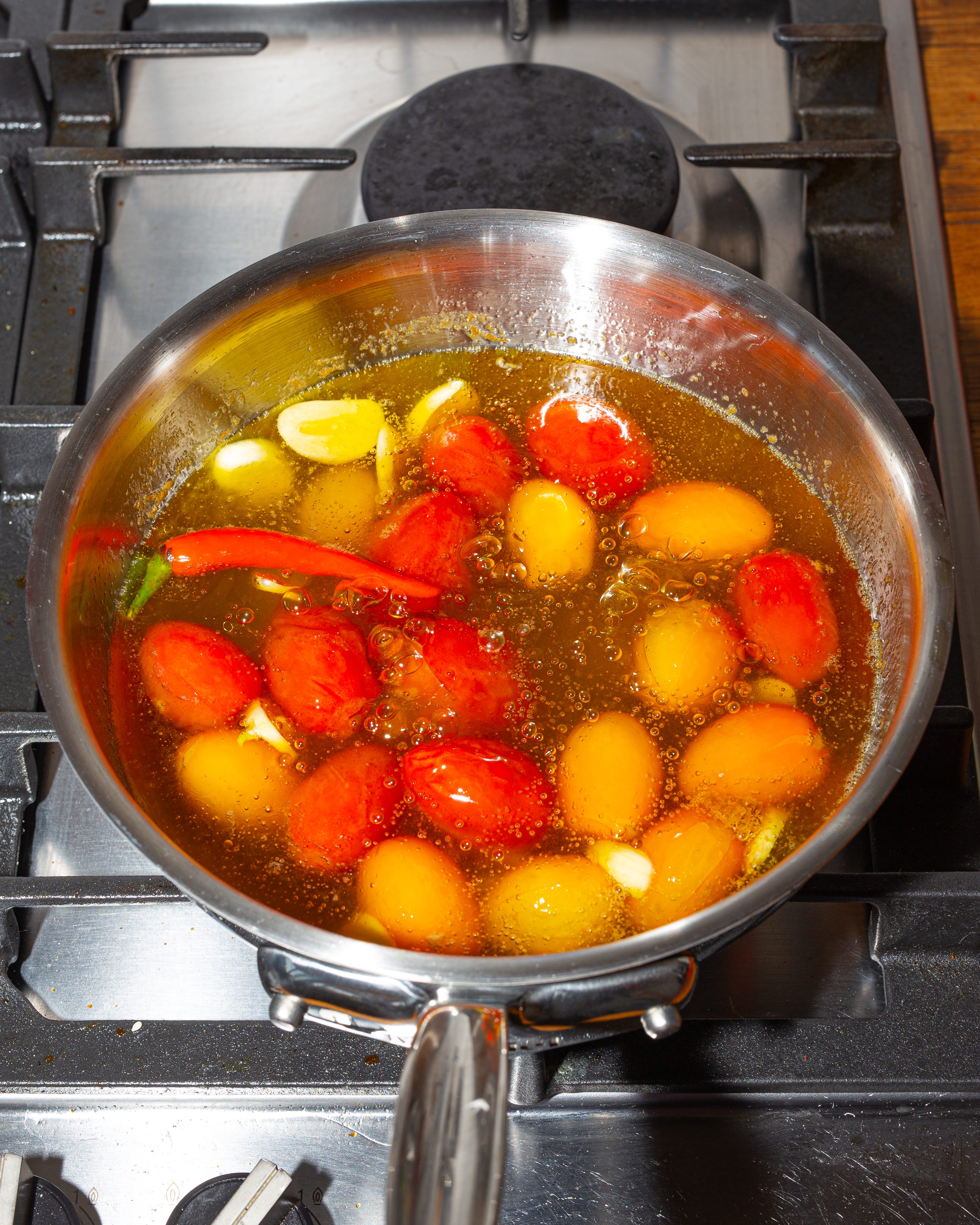
With meat, the low temperature gives collagen time to dissolve into gelatin without forcing the muscle fibres to contract too violently, which is why a duck leg can become yielding rather than dry. Vegetables behave differently: the heat gradually weakens the pectin-rich material holding the vegetable’s cells together, softening it, while the absence of boiling water prevents water-soluble flavour compounds and nutrients from leaching away into the fat. In both cases, the oil is less an ingredient being absorbed than a very steady way of moving heat around.
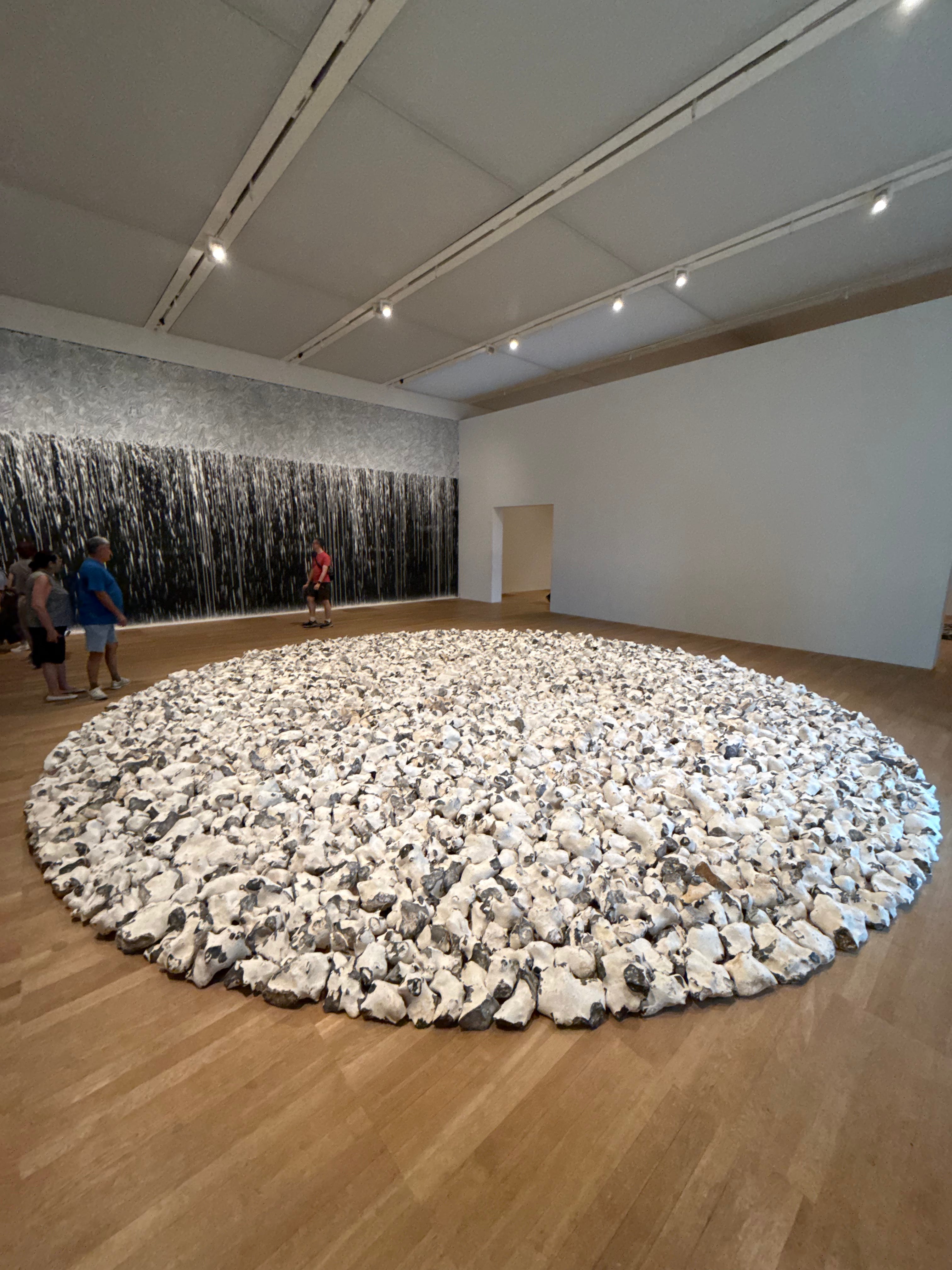
A few days later, we went on a gallery date and became peckish, though not in a way that could be satisfied by a dry croissant and a cappuccino from the museum café. I locked onto my phone’s map, searching for somewhere suitable while sleepwalking through the galleries and nearly disturbing a circular arrangement of flint on the floor. I was now, not only ignoring culture, but nearly literally kicking it in pursuit of food. Som Saa, somewhere near the top of my unwritten Thai restaurant rankings, had space.
We ate fragrant meatballs, deep-fried so that the oil met every part of their surface, driving off moisture and encouraging the browning reactions that gave them a crisp, deeply savoury crust. They came with bitter radicchio for balance and a sprig of mint that we nibbled between bites. There were skewers of chicken too, their sweetened marinade catching against the heat and leaving small pockets of caramelised flavour across the surface, followed by a fiercely hot papaya and crushed tomato salad. Chilli, ginger, garlic and sourness ran through almost everything we ate: flavours that make more sense the hotter the day becomes.
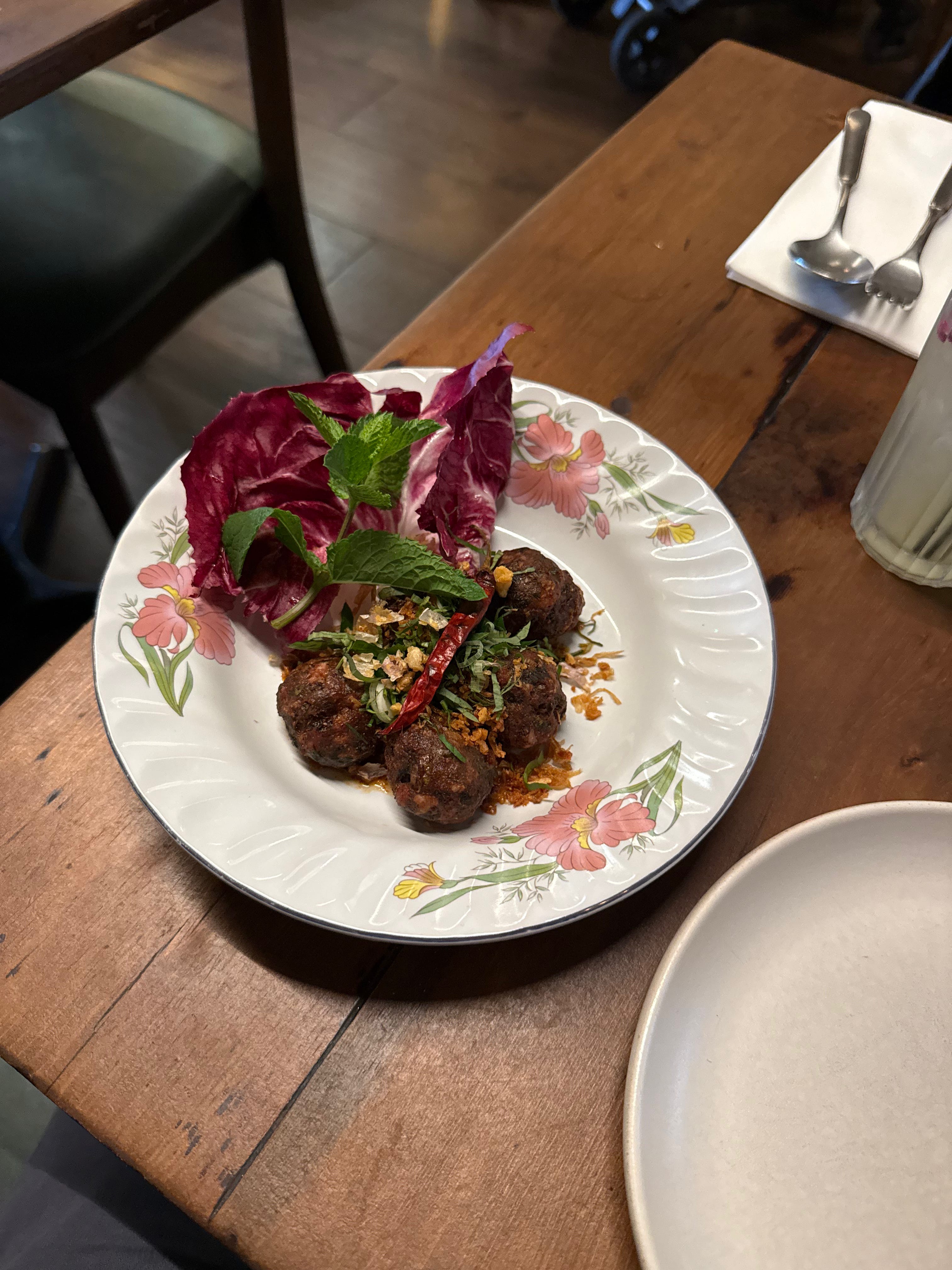
I jotted down: “tomatoes, chillies, ginger, garlic - confit. SE Asia confit.” I knew that these ingredients would give as much to the oil as the oil would give back to them. That heat would draw gingerols from the ginger, capsaicin and fruity esters from the chillies and - provided the garlic had been cut or crushed - allicin, which would soon break down into delicious sweet compounds. These molecules are much more at home in fat than water. The same ingredients appear, across Italian cooking too, where they already have great chemistry with olive oil. This was the point at which the dish became clear. An Italian confit of sorts, pulled further into summer by the aromatics that run through Thai cooking.
I threw my backpack into the boot of the Uber taking us home, where the driver had stowed an inexplicable quantity of tinned sweetcorn. I decided not to ask, preferring to imagine that he was the Green Giant’s smaller, less green brother - or that, somewhere within the North Circular, a gargantuan tuna pasta bake was waiting for its textural contrast. My mind wandered next to the cold tuna-and-sweetcorn mayonnaise spooned over baked potatoes at school - a combination that made little sense to me then, and somehow even less now. From there, it drifted further into tuna, and I wrote: “tuna in confit oil. from Uber sweetcorn, baked potato, tinned tuna.”
Tuna loin is lean and prone to drying out, so cooking it gently in fat keeps the temperature even and limits the tightening of its proteins, meaning less moisture is forced from the flesh. I sometimes find it easier to think about fish and meat like a sponge full of fat and water: apply too much heat and the structure contracts, squeezing out the moisture it was holding. It’s for this reason I wince when I watch anyone press down on a steak with the back of a spatula while it fries.
The oil also carries fat-soluble aromas from the garlic, chilli and ginger onto the fish as it cooks. It will not penetrate deeply, but it leaves the tuna softer, richer and far more fragrant than dry heat would. By this point, I knew I wanted to make full use of the warm, aromatic oil from the tomatoes by slipping thick slices of tuna into it to cook.
Wednesday is a good day to visit my new local greengrocer - and I should know. I spend an inordinate amount of time learning the rhythms of deliveries and replenished shelves in my favourite food shops, like a fastidious fisherman staying up for the shipping forecast. I gently squeezed yellow pineapple tomatoes, just soft, and brushed my hand over bunches of radishes with their peppery tops still intact - a rarity at almost any greengrocer. I tested the courgettes too, their firm flesh and the still-sharp spines on its stems offering a slightly painful reminder of how recently they had been picked. I noted “courgettes in confit?….strips like pasta”.
I can’t stand courgetti, and it might be a trauma thing. In two significant relationships, the spiraliser has been something of an omen for impending heartbreak. Realistically, spiralising vegetables is the culinary equivalent of joining a gym. A blatant sign that someone has decided they need to make some changes. Big ones. Involving you.
Comments
Nothing yet. Say the first thing.
Sign in to join the conversation.