
Dear friends,
It’s Tuesday, Dec. 2nd, and NYC is getting a mix of rain and sleet that makes it a perfect day to stay home and read an interesting interview with some amazing food folks.
Let’s get into it.
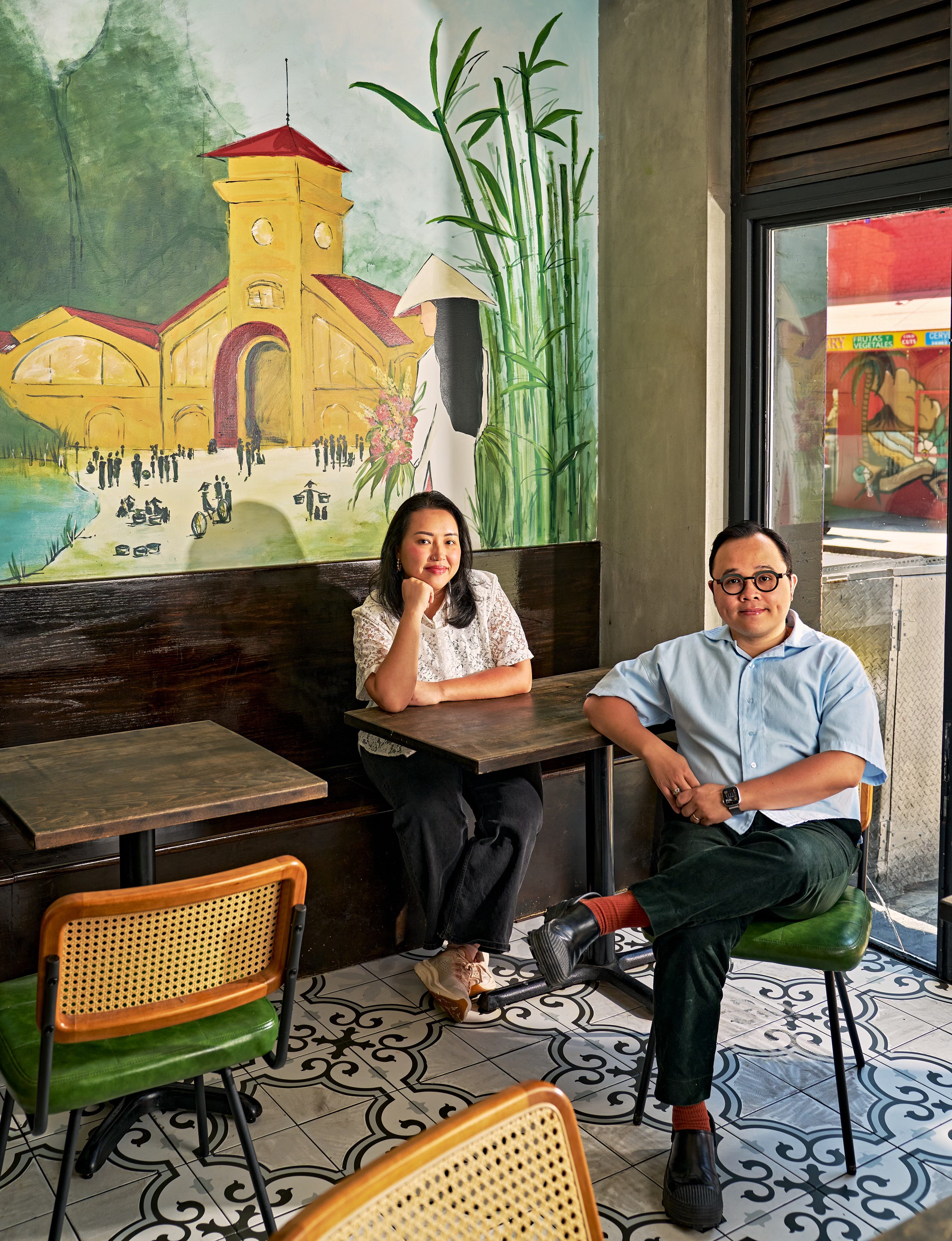
Today, I’m joined by Thảo Bùi and her partner Duy Võ, the Queens-based duo behind both Ǎn Xôi, a Vietnamese food pop-up here in NYC, and Vân Vân, their spice brand that packages and imports ingredients from Vietnam.
A little quick backstory before we dive in, Thảo refers to her health a couple of times in this interview, so here’s the story behind that, in her own words, and a bit more about Vân Vân:
Heads up, this is a long-ish one – we went over our call time chatting by almost half an hour, so cutting the interview down posed a challenge – but I think it’s well worth the read!
This conversation has been edited for length and clarity. Photos by Andrew Bui for Synonym Mag.
Thảo: So, I started cooking during the pandemic. I actually did not grow up wanting to cook or wanting to work in food at all. I went to school for advertising, slash journalism. I worked in a restaurant for a while, but I was doing operations and marketing for them, not cooking in any way.
And then, during the pandemic, everything shut down and I really wanted to have Vietnamese food. So that’s when I started cooking. And I think that’s when I realized that… I’m pretty good at it.
[laughter]
And after a few trials and errors, I decided to do a pop-up, mostly for fun. So I started a pop-up in 2021. And then I was sick for a while, so, like, that was on hold for a little bit. And then, after I got out of the hospital, I picked up again. And we’ve been doing it ever since.
Duy: Yeah. For me, I have cooked most of my life. Growing up, my mom was very adamant about all the boys needing to know how to cook, so she made us learn how to cook at a young age. So I picked up cooking – not very well, to my mom’s standard at the time.
But I knew my way around the kitchen, and then in school, I worked at different restaurants and in food services. I appreciate working in the kitchen quite a bit, I learned a lot from the people that I worked with. When I started working as a practicing architect and designer, I cooked mostly just for Thảo and I. I do a lot of the cooking at home because I like it, but it was never anything serious.
And then when Thảo started taking up cooking as a hobby, I saw that, you know, she was a natural. So I was like, well, great, you can do more cooking. And then she evolved into the chef that she is today.
And, I think my skill once again as a line cook, at various points in my life–
Emily: You’re used to taking the back seat and making it work.
Duy: Yeah. You know, line cook, dishwashing, all that stuff. It’s all very transferable to this point in my life where I’m just happy to be in a support role for Thảo whenever she does the pop-ups.
Thảo: Vân Vân started when I was running the pop-up, because, as I started cooking a lot more, I required a lot of ingredients. In Vietnamese food, we use a lot of herbs and aromatics, like garlic, shallot, lemongrass, and a lot more. And what I realized when I was cooking is that a lot of those herbs, in New York, specifically, they’re not very fresh.
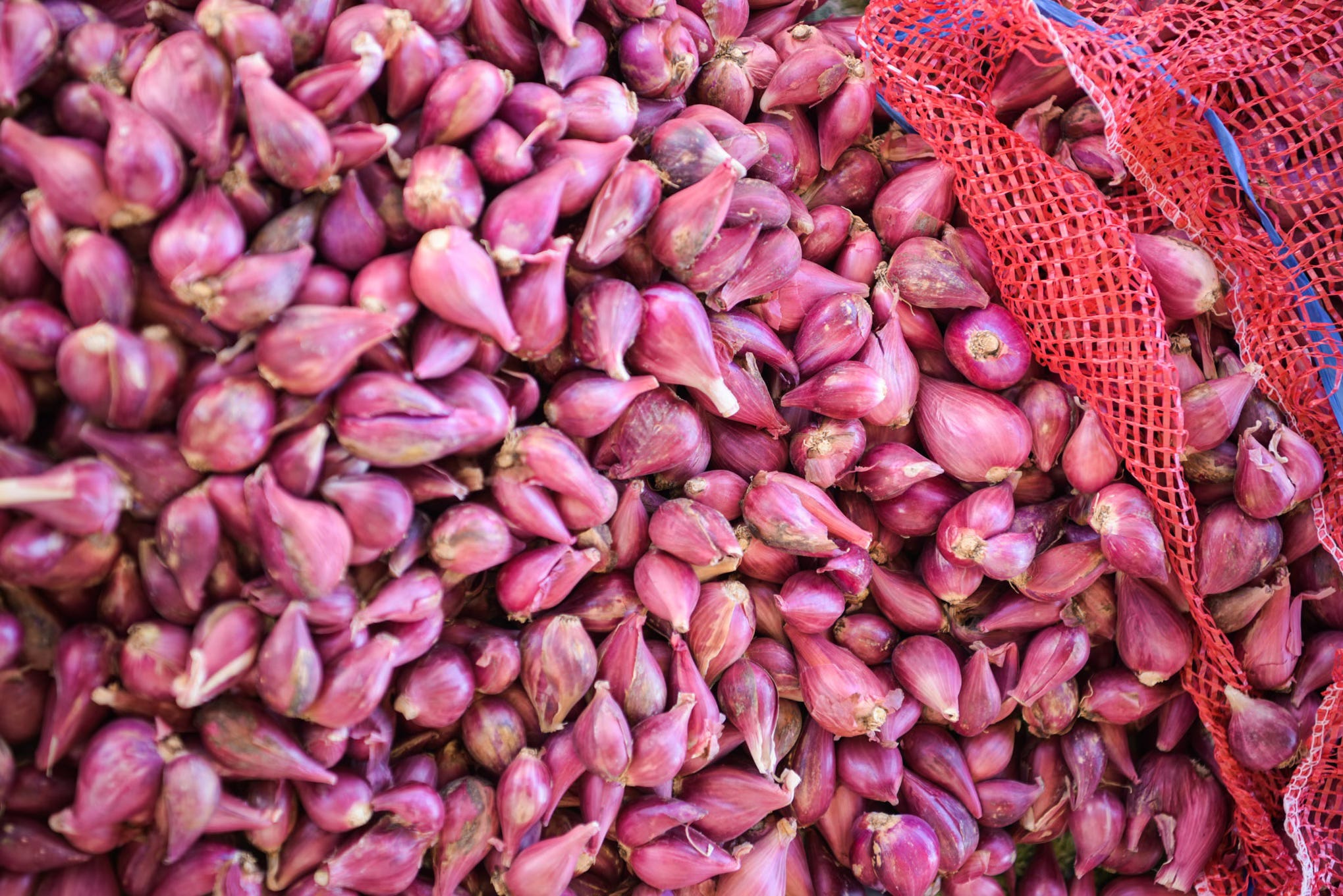
If you go to a store and you buy a shallot – and I don’t buy the giant shallots, it has to be the small ones, usually from China.
Emily: Oh yeah, the little guys.
Thảo: They’re always in mesh bags, and you cannot really see anything. And there were several times that I went to the market and I got a few bags, and then I went home and a lot of them were moldy and spoiled and they were just… not very good. And lemongrass, for example – in the winter, there was no fresh lemongrass.
We’re both Vietnamese born and raised. We grew up in Vietnam and we just came here to go to school, so the way that my mom and his mom cook is still very ingrained in us. We want to really honor Vietnamese food. You know, we don’t do spice powders, because in Vietnam the way you cook is not just the flavors but also the texture of it too. Like lemongrass chicken, it’s not just the lemongrass flavors, but also that texture of lemongrass and chicken, that’s what makes the dish.
So the dots started connecting for me that, if I could not find ingredients that I need, maybe there’s a market for this.
Duy: Vân Vân means etcetera in Vietnamese. And so when Thảo and I were talking about the name for a company, we were thinking a lot about how Vietnamese cuisine is portrayed in traditional media, and in social media now. When you think about Vietnamese culture, a lot of people just think immediately of the war. And then Vietnamese food, people think about just phở and bánh mì. Those are [considered] some of the key, most notable items, from a country that has so much to offer and a culture that has so much to offer.
And so we wanted to be the etcetera of all of that, like everything that people are not talking about, about Vietnamese cuisine, Vietnamese culture in general. And so the goal is for Vân Vân to carry some of the things that people might not know that Vietnam has to offer as a country, and Vietnamese culture has in its 4,000 years of history.
That’s how we center our brand and how we center everything that we do around Vân Vân.
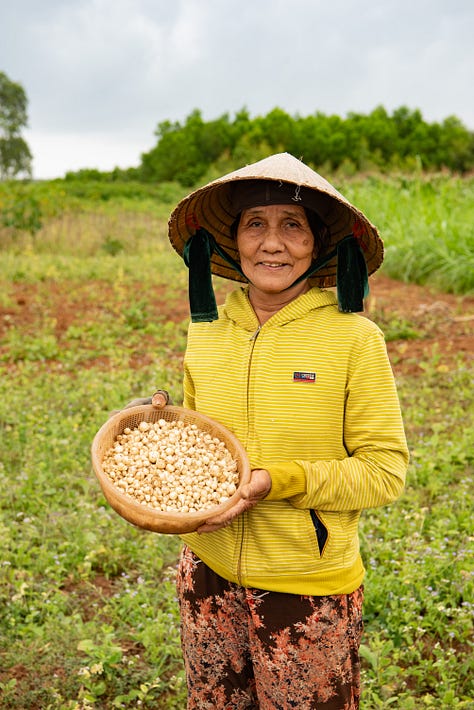
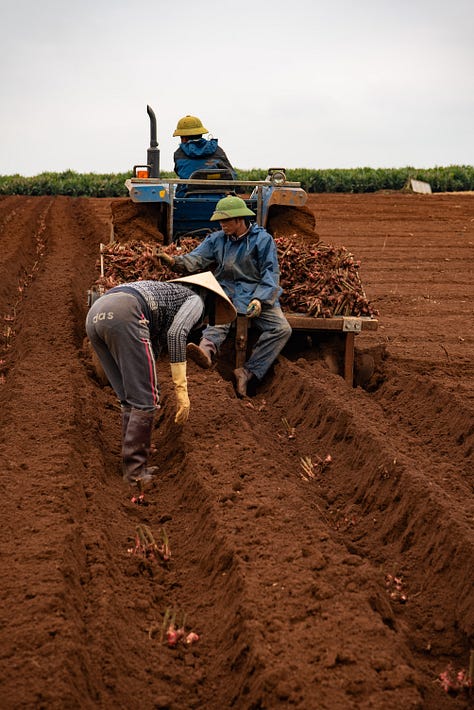
Thảo: We work directly with, and we source directly from, small farmers. So that means that we actually go to the farms and meet the farmers. And sourcing is very, very hard, which is something that I did not know before. I just thought, “Oh, I’m going to bring some stuff here, and people should be happy because they have an additional channel for their products.” And that’s not the case! Because we are a smaller brand and we cannot do very big volumes, like some other brands. And especially when we are in the US – we only go back to Vietnam once a year, so it’s just hard to make a connection.
But I have been able to do it with the help of social media. I’ve actually found a lot of people through Facebook groups, specifically. And we also have our families, some [of whom] still farm, so we have that connection as well. I think the biggest thing is that you have to be curious, because it’s not just like, go on Google and search “shallots in Vietnam.” That’s just not how it works.
You have to be curious and you have to be creative about the way that you find people.
So we source everything, and then we buy from the farmers, and then we go through a few rounds of dehydration testing. Then we work with a manufacturer in Ho Chi Minh City to package everything in Vietnam, and then we import to the US. So a lot of our process is done in Vietnam. But we don’t just go to a wholesale market and buy things, because the whole point of me starting Vân Vân is that I really want to work with the farmers who grow the products. And I really want to go to the places that are known for these products.
For example, the shallots that we carry are from Phan Rang, which is in the central region of Vietnam, and that area specifically is known for shallots and garlic. You can not find shallots of that quality anywhere else. Mostly because the climate is so different, the soil is so different. And all of that really reflects in the flavors. That’s something I don’t want to compromise.
And it’s really hard. But I think that we have been able to make it work.
Duy: Yeah. I think one of the biggest challenges for us when we work in Vietnam, especially when it comes to sourcing, is establishing trust.
A lot of farmers in Vietnam, they’re not always willing to work with an individual or an entity from outside of Vietnam, especially at a small scale, because a lot of them, oftentimes, are subjected to scams. And so, when we approach them, it takes a little bit of time for us to actually show them the we can meet them where they’re at – literally, like, at their farm, you know, being out there talking to them and then showing them that we have the willingness to buy their products at the price that they want, as opposed to whatever a middle person would ask them to sell the products for.
We’re able to offer them a good price, per their asking, and we cut out a middle person. In the work that we do, what we hope to do always is to help elevate the Vietnamese producer in the global supply chain. Because a product like a shallot goes through probably six hands before it gets to a wholesale market.
And then from that wholesale market it goes to the mass market for everyone else to consume. And so by the time you get there, the value will have already gotten quadrupled, quintupled. And the farmers get very, very little from that transaction, even though they do 90% of the hard work.
Emily: Right. They actually grow the shallot.
Duy: A lot of young people in Vietnam, they don’t look to farming as a viable means of living anymore. Farming today is a very, very unreliable way of living. And so, once the older generation pass away, there won’t be too many people farming, and I don’t want to see a lot of our heirloom products just stop existing. So we want Vân Vân to try to help change that.
Emily: Trying to invest in the system so that it can continue, and improve it a little for the people that actually do the hard stuff.

Thảo: Yeah. We launched it in August, so it is a very new product, and that product is very special to us. We went to that region for another project, just to do some research, and we stayed with a host who is a Vietnamese young guy, but he’s very into the Khmer community, he lives within Khmer villages.
Just as background information, if you don’t know about Vietnam, Vietnam is made up of 54 ethnic minorities. The biggest group, the majority, is the Kinh people. But we have, you know, the Khmer people, we have the Cham people, all these different enclaves of people, spread throughout the country. So he lives within the Khmer community. And we stayed with him and he was showing us around the area, and then he introduced us to the Khmer people in his area.
And I always knew about it existing, but it’s not my community. So I had no idea who they are, what they do. I always thought of palm sugar as a Southern Vietnamese thing, but I did not know that palm sugar production is traditionally a Khmer trade.
Emily: Wow.
Thảo: Because they have all these palm trees in the area. So we got to learn a lot more about their culture, the sugar, and the food, specifically. And I was so blown away by the food, because it was so, so good.
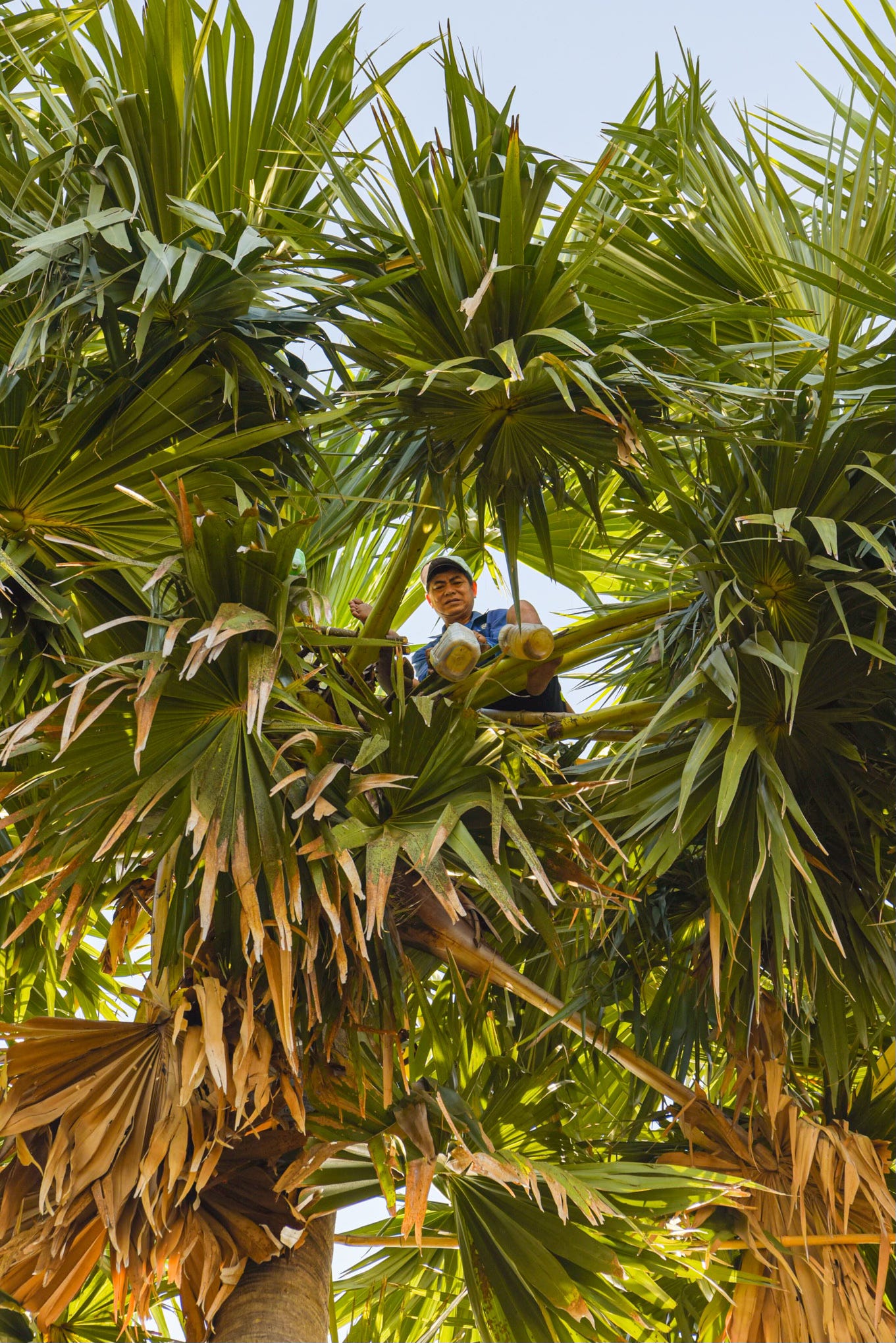
And we got to know a few sugar producers. And I think that just really piqued the interest for both of us. Because everything, I mean everything, is so labor intensive. There’s no machine that can do it. We saw people climbing up the trees and harvesting the nectar from the flower.
And after that, you have to cook the nectar over a brick stove, for hours, and that’s hard work. Vietnam is really hot! It’s like standing right next to a fire for a few hours.
So it was a very eye opening experience. And after that trip, we tried to source the palm sugar and we are very intentional in working with the Khmer community. Even though you can get palm sugar in a lot of places, I think that it is very important to give back to the people who actually, you know, that’s their culture and their livelihood.
Emily: Yeah.
Thảo: So, we found a partner that helps us with quality control and everything, and we went with the dehydrated palm sugar, which makes it a little bit easier to transport over here. And we launched palm sugar in the summer. And I think that people have been really liking it.
This palm sugar is very different in the way that the sweetness, it doesn’t hit you right away. It has a very deep sweetness that’s caramel-like. And it’s not sweet the way that cane sugar is sweet.
Duy: Yeah, it has, like, a tang to it. We were able to actually drink the nectar from the tree–
Emily: That’s so wild. That must be, as a food nerd, really fun.
Thảo: I think you can get drunk drinking it.
Duy: Yeah, we woke up early and our host’s neighbor, he’s also a sugar maker, he climbed up a series of palmyra palm trees, and he sent down a few buckets of this fresh nectar from the flowers. We each took a little gulp out of it, and it was the most amazing thing.
The sugar that we have now is almost like a powder form of that nectar, because when you drink it, it’s lightly sweet, it’s tangy.
Like Thảo said, we want to honor the generational tradition and craft of sugar making of the Vietnamese-Khmer community, and so it’s something that we’re really proud of.
Thảo: I think people are slowly noticing.
It’s just very, very important to us that we do the right thing by these people, working with these communities and trying to keep the trade alive, because like Duy said, you know, the younger generation, they just leave. And the Mekhong Delta has been facing a series of climate change issues and it’s affecting them very clearly, and people have to go somewhere else.
So I think, if we’re in a position that we can do right with our business and do right for the people in our country, then we do that, even though it’s hard.
Duy: I think the biggest challenge with a pop-up is you’re never in the same space twice.
Thảo: Yeah.
Duy: And it’s like, you know, one weekend we’ll be here at a restaurant, the next weekend we’ll be–
Thảo: At a coffee shop.
Duy: A coffee shop, right. Or, you know, we’d be at a restaurant, but that doesn’t have gas or doesn’t have electricity.
Emily: Oh God, yeah.
Thảo: That happened last month. So we went in and we did a pop-up, the broken rice pop-up in the East Village. And we came in the restaurant and we checked everything the night before and everything was working. And then the day of the pop-up, we came in again, and there was no electricity–
Emily: Ahh!
Thảo: And we had 100 reservations.
[collective nervous laughter]
Thảo: It was sooo stressful.
Duy: Yeah. And then sometimes, when we do a pop-up in a space that has sort of no kitchen at all, we have to bring our own equipment and build our own makeshift kitchen. And so that, I think, is like the number one challenge – how do we adapt to every single space that we’re in, while respecting that space and not requesting too much from the business owners?
You know, Ǎn Xôi as a pop-up doesn’t exist without the generosity of all the people who open the door, literally open the door, for us to come into their space and cook. And so we always think of how to best utilize that space, respecting their space, and then… how do we get this operation working and cooking?
And that’s like 90% of the challenge. The cooking is easy.
Thảo: For both running pop-ups and launching a brand, the first thing is, prioritize your personal health. Because it’s really true when people say that health is wealth, you know, and I think that when people start a business– I see so many people, they just work themselves so much and they get so tired. Being healthy is very, very important, because it affects everything in your life, your business and your personal relationships and everything else.
And I think that the second thing is, just be realistic about what you can do and what you can achieve in this amount of time. There’ll be things that you cannot do right away.
I feel like now, in the age of social media, so many people romanticize entrepreneurship. So many people romanticize cooking, because cooking brings a lot of clout nowadays on Instagram and on TikTok.
But, behind the scenes, you know, in real life, it’s really, really hard. You just have to find ways to make it work.
Duy: At the end of the day, when you open a business, you work a lot. Like sometimes that becomes your entire life, your entire personality. Because you have to do it all the time. All the notions about, oh, you know, “When you do what you love…”
Emily: “You’ll never work a day in your life?” It’s not true at all.
Thảo: You have to work every day!
Duy: You work many days, you don’t get a lot of rest. And I think that, just because a friend tells you that your cooking is good, you should take that slow. Keep trying to repeat things. Try to feed other people that are not your friends before committing to doing something like opening a restaurant or running a big pop-up.
Emily: Make sure you can cook for 20 people before you cook for a hundred. And you like to.
Thảo: Exactly. Exactly.
Thảo: Yeah. I mean, I have a lot. But I think my favorite is probably Vietnamese braised pork belly, because it’s something that you don’t really find at restaurants. It’s a very, very homey food, but very comforting.
After a long day, that’s the dish I go back to a lot because when you eat it, you just say, “ahh,” you know, it feels so good. The Vietnamese name for it is thịt kho.
Duy: It literally just means braised meat.
Thảo: Yeah.
Duy: So, one thing to know, Vietnamese people love eating depending on the weather. If it’s hot, that’s this specific dish. And when it’s cold, again, specific cravings.
So on days like this, it’s nice and crisp outside, or at night when I’m cold, I’m craving some pork belly, finely sliced. You stir fry it with shrimp paste, and then you top it off with some crushed, toasted peanuts.
Emily: Mmm.
Duy: And then you have it over a bowl of rice and a lot of cucumbers and greens.
And that’s the ultimate… like, every time I miss my family, I think about that dish a lot. My favorite.
Emily: Love that. Thank you.
Thảo: I would always do egg drop tomato soup. It is so easy. It’s good for you. It has everything. Protein, produce, all the good things. And then we just eat that with rice and some lemongrass chicken.
Emily: How do you make the tomato soup?
Thảo: So you cut up the tomato into quarters and heat up a skillet or a pot, then drizzle some oil, and cook, just soften, the tomato, seasoned with some salt. Add in water and wait until the water boils. Then you whisk some eggs and drizzle them in the broth, mix it up, wait for the eggs to cook, and that’s it.
Season with salt and a little bit of sugar until it tastes good to you, then top it with garlic or scallion.
Emily: Sounds delicious! And super easy.
Thảo: Very easy.
Duy: We’re actually raising money for Vân Vân as a business. So if you have any readers who believe in what we do and have the means to support a business in ways that are impactful, we’re happy to chat because that’s something that we’re, you know, actively doing.
Emily: I’m sure you could use any extra hands! And do you have any pop-ups coming up?
Thảo: We do have a pop-up coming up December 6th at Larry’s Cà Phê in East Williamsburg. We’re just doing some simple sticky rice bites, so it’s not going to be like a full meal. If you order everything, you can get full, but it’s just for snacking. And I think that will be the last pop-up for this year.
We’ll have more pop-ups and a new product launching next year, so stay tuned for that.
And support small businesses!
Duy: Shop local!
If you want more from them, you can buy Vân Vân spices directly from their website and follow their Vân Vân and Ǎn Xôi Instagram accounts.
My tourtière recipe is now up on Yahoo Creators, if you’re ready for a festive meat pie (I know I am). And I just posted my new and improved creamy coconut cauliflower soup recipe, which has been on repeat in my kitchen since the temperature started dropping.
The tree is up at our house and we’re thinking about a Muppet Christmas Carol viewing. Hope you’re staying cozy.
Thanks for reading and talk soon,
No posts
Comments
Nothing yet. Say the first thing.
Sign in to join the conversation.