
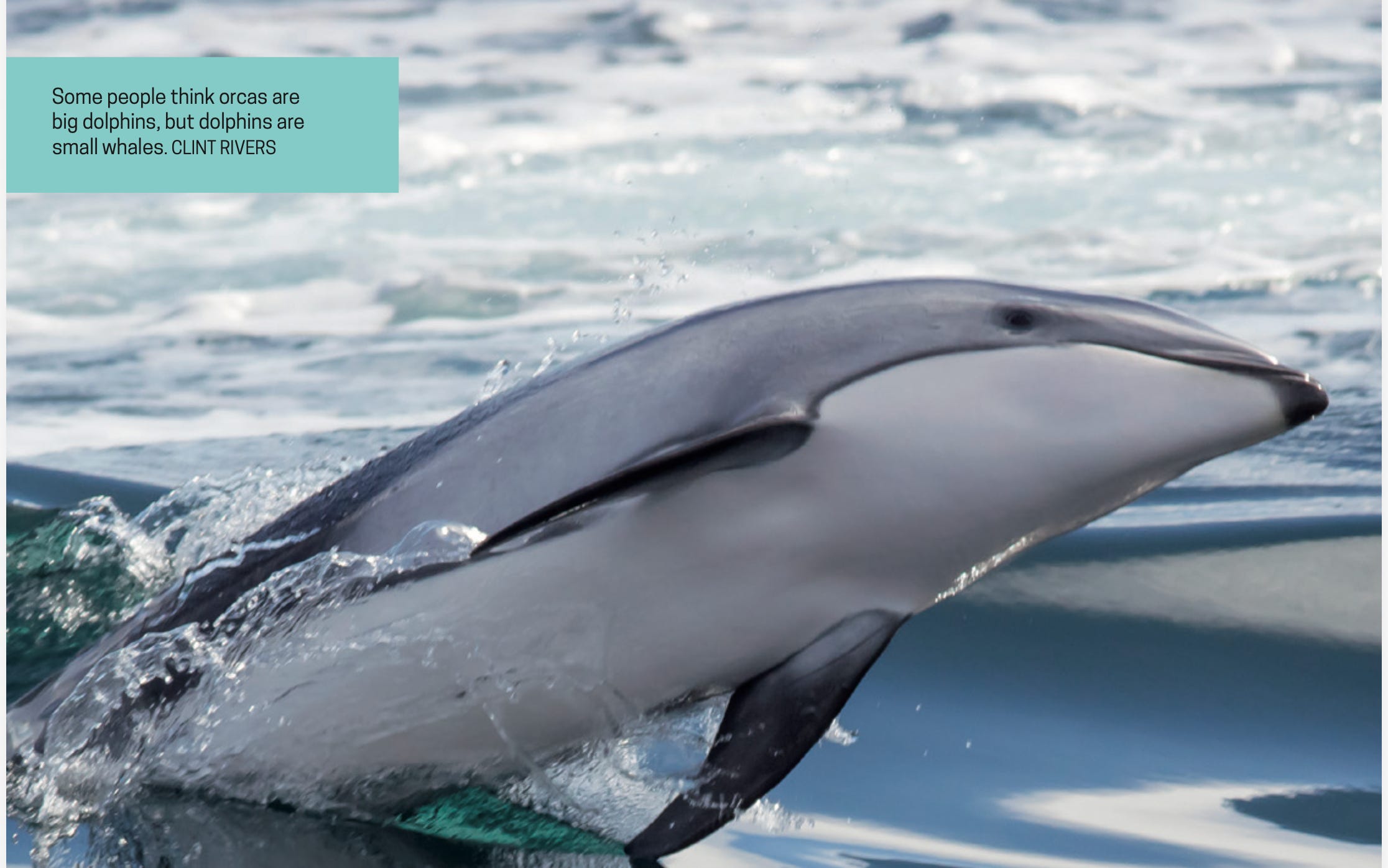
I was talking about my books at a middle school in Vancouver the other day and one of the first “questions” I was asked wasn’t a question it was a statement: “Orcas aren’t really whales you know, they’re dolphins.” And I thought… I really ought to make sure I share this chapter from my book Orcas Everywhere on my Substack because almost every article that mentions orcas in every publication including The New York Times, tends to toss this in stories that mention orcas. And, yes, they are right. Sort of. They are also wrong.
This is from the chapter: Is an Orca Really a Whale?
Whenever you mention orcas, someone will probably tell you, “Orcas are not really whales — they are the largest member of the dolphin family.”
This is true. Sort of. It’s also false. Isn’t science awesome?
Pretty much every dictionary definition of whale describes a “very large marine mammal with a tail fin and a blowhole.” That sure sounds like an orca to me.
When Herman Melville listed every species of whale in Moby Dick, he included “the Killer.”
There are more than seventy kinds of whales who have teeth. The largest are sperm whales (like Moby Dick). Orcas are among the largest.
So why does anyone think they’re dolphins?
In 1735 Swedish botanist Carl Linnaeus published the first volume of his book Systema Naturae. This pretty much created the rules scientists still use for categorizing living things. These rules are known as taxonomy.
He originally called orcas Delphinus orca (demon dolphin) and classified them as belonging to the family Delphinidae.
As you can guess from the name, this category includes dolphins. When he found out more about killer whales, he changed their name to Orcinus orcus (demon from hell) but didn’t bother to change their category.
Here’s the thing. Carl didn’t spend much, if any, time around whales. In the first nine volumes of his book, he said whales were fish.
He didn’t realize whales were mammals until his book’s tenth edition. That was when all whales, dolphins and porpoises were classified as cetaceans, which comes from the Latin word cetus. Cetus means — you guessed it — “whale.”
Some people will tell you killer whales and short-finned pilot whales are really big dolphins — because they are Delphinidae — but it’s more accurate to say dolphins and porpoises are really small whales, because that’s what cetacean means.
Meanwhile, Linnaeus lists narwhals — yes, narwhals — as toothed whales. Have you ever seen a narwhal?
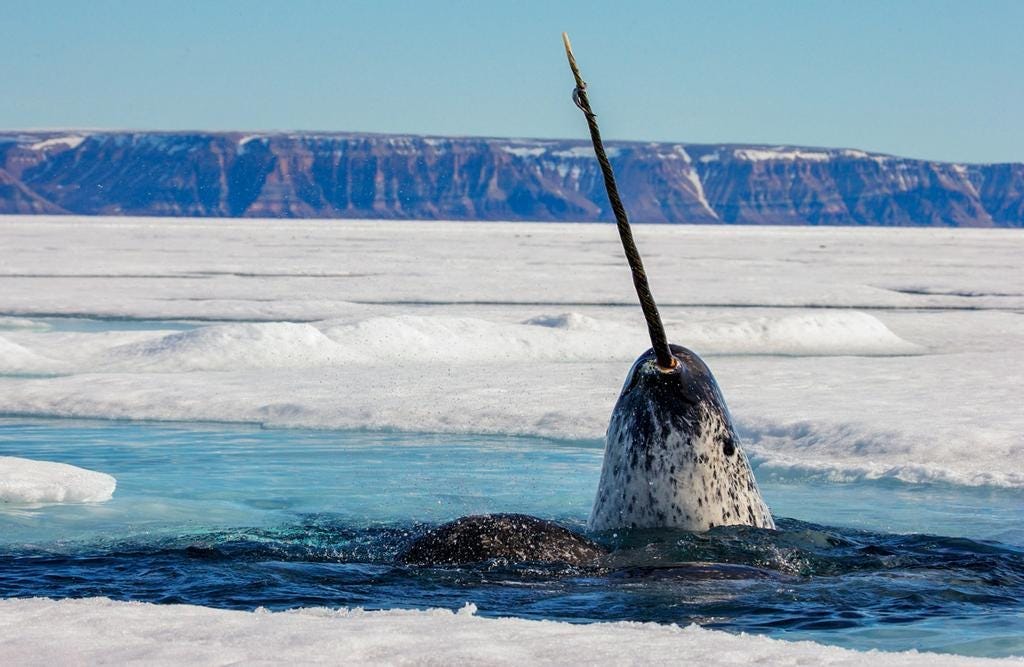
Narwhals are whales too…
Does that look like a whale to you?
And just as orcas and pilots are delphinidae, the most whale-like whales on the planet (blue whales) are rorquals.
This was a term used to classify big baleens.
So if someone tells you orcas are dolphins, tell them that following their logic, blue whales aren’t whales either.
Or blow their minds by explaining that dolphins are whales.
Thanks for reading Skaana 🐙 One Ocean 🐳 with Mark Leiren-Young 🇨🇦! Please help the orcas and the ocean by sharing our stories.
And for my writing this isn’t (always) about life in the ocean…
Comments
Nothing yet. Say the first thing.
Sign in to join the conversation.