
This week, we’re joined by novelists Victoria Redel, author of I Am You, and Lucy Caldwell, author of These Days, who center women falling in love in 17th-century Amsterdam and 1940s Belfast.
These characters’ love stories unfold despite the constraints of their time. We talk with Victoria and Lucy about writing intimacy under secrecy, the queer history and fiction that has shaped them, and how historical fiction has the power to help us imagine a more inclusive future.
SJP Lit: In both of your settings—17th-century Amsterdam and 1940s Belfast—you have women falling in love with each other. Tell us about your central characters. How did you decide to place women in love in these settings?
Lucy Caldwell: I’ve always been interested in untold and undertold stories—which in my experience tend to be those of women and girls, and those aspects of our lives that are (or historically have been) marginalized. These Days weaves together real stories that I researched in historical archives, newspaper articles, and journals, stories I sought out myself by interviewing people who had lived through the Belfast Blitz, and imagined stories.
It begins with two sisters, Audrey and Emma, and opens out to take in their mother, Florence, their wider family and household staff, their respective colleagues and friends and lovers, a young child whose path crosses theirs in the confusion of an aerial raid, eventually giving you a picture of the whole city.
It felt both natural and important that at least some of those women should be queer, or questioning their sexuality. It’s something I’ve done before too—and I have seen the importance of it. In 2016, I wrote a story called “Here We Are,” published in Granta. It follows two teenage girls in love in Belfast of the 1990s, and on its publication, an overwhelming number of people got in touch to tell me that it had resonated with them. And people still do—just this summer, a young Chinese woman told me that, inspired by the story, recently translated into Chinese, she flew to Tokyo for her first-ever Pride, wanting to walk and to claim the streets in the way my characters do. That makes me prouder than anything.
Victoria Redel: Maria and Gerta begin their relationship in an unbalanced manner as master and servant, people from different socioeconomic classes. Gerta has also begun her life brought into the family as Pieter, a boy, although Maria eventually reveals that Pieter is a girl. Gerta/Pieter believes that her devotion to Maria’s art will help Maria attain world recognition, which is made difficult by exclusion from the male painters’ guild. That devotion includes becoming Maria’s painting assistant, which begins to alter the relationship between the two.
I was interested in exploring how varieties of devotion and love grow and shift as power dynamics change between two people. That they become lovers was less a writerly decision than an inevitability. And because this is, in essence, a long marriage, there are also the complications of loving through illness and decline.
SJP Lit: Both couples—Gerta and Maria in I Am You and Emma and Sylvia in These Days—have to be very secretive about their affection. How did you approach writing these scenes?
Lucy: There’s a scene in These Days where Emma and Sylvia are at the Ulster Museum, the day after they have slept together, and Emma imagines others seeing them from the outside. Sylvia is a decade older, and Emma wonders, “. . . did people think them friends, or a tutor and pupil, or even an aunt and niece, or godmother and charge, and she suddenly thought that people don’t think, they barely glance at two women, they don’t wonder, and in this invisibility is a new prospect of freedom too, that you can, in fact, walk the city as yourself and no one knows, or cares to.”
I tried to find, even in the strictures of secrecy, or disapproval, or judgement, a sense of possibility for them—defiant, triumphant. And of course, when it comes to writing the two of them together, alone, in bed, there is no need for secrecy, or for coyness, or euphemism—on the contrary, those scenes can be written in full ardent flow.
“. . . did people think them friends, or a tutor and pupil, or even an aunt and niece, or godmother and charge, and she suddenly thought that people don’t think, they barely glance at two women, they don’t wonder, and in this invisibility is a new prospect of freedom too, that you can, in fact, walk the city as yourself and no one knows.”
Victoria: Secrecy is very powerful. It gives a heightened intimacy, a private world, and, for me, that is inevitably sexy. All these scenes of moments of affection and those of sexual connection were wonderful scenes to write because, in addition to the emotional risk of loving, there’s the external danger of outside eyes, which heightens tension and their bond.
SJP Lit: Too frequently, we tend to think of queer history primarily through the lens of repression or absence. Were there moments in your research that revealed joy, intimacy, or community in ways that surprised you?
Victoria: Oh, Gerta and Maria feel no absence! They cultivate privacy. They revel in it; it heightens their intimacy in painting and in making love. They are part of an engaged community of artists, scientists, and intellectuals, but they reveal only bits and pieces of their shared life. Obviously, some of that is on account of the danger of being exposed as queer. The ramifications were very serious. But isn’t it also true that even in community we ultimately know little of the internal workings of couples who live an open life?
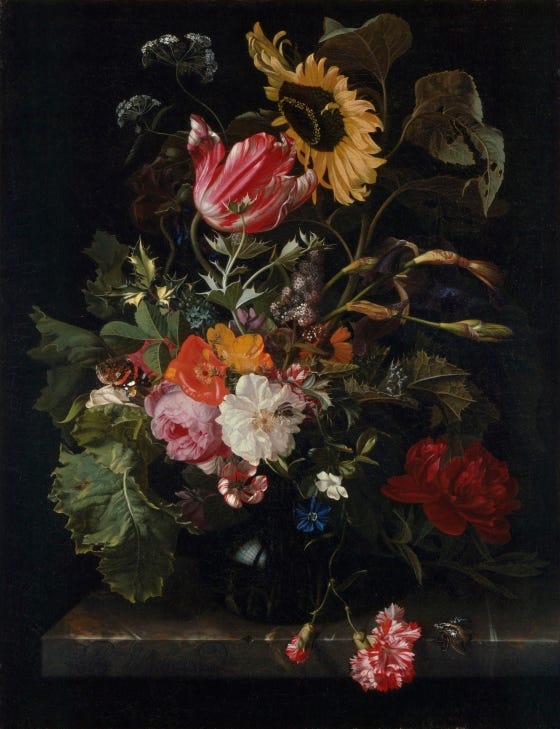
Lucy: Emma and Sylvia don’t have—and I’m sorry for the spoiler alert—a happy ending, and I thought long and hard about this, about the problems of writing into a trope of misery and pain and anguish for a lesbian couple. But it was ultimately more important for the novel to ask how you can grieve the loss of someone when the process of grief is stunted and thwarted, because the relationship isn’t approved of, acknowledged, or even known about by those around you.
For exactly this reason, I needed to counterbalance this loss with joy. Their coming together, when it happens, is effortless; they have a close, intimate, sexually fulfilling relationship; and crucially, were it not for the Blitz, they would have a future. Even in Belfast of the 1940s, they have places they can go to be themselves, a whole community to which Sylvia promises to introduce Emma.
SJP Lit: Why is it important that readers understand queerness as something that has always existed, even when the language and social structures around queerness were different in the past?
Victoria: That women loving women has always existed, that gender fluidity has always existed, seems so fundamental and true that I hardly felt that I was doing anything radical. What felt more radical was exploring the dynamics of class, female ambition, and envy, and how an emergent self can be at odds with the power structure inside a couple.
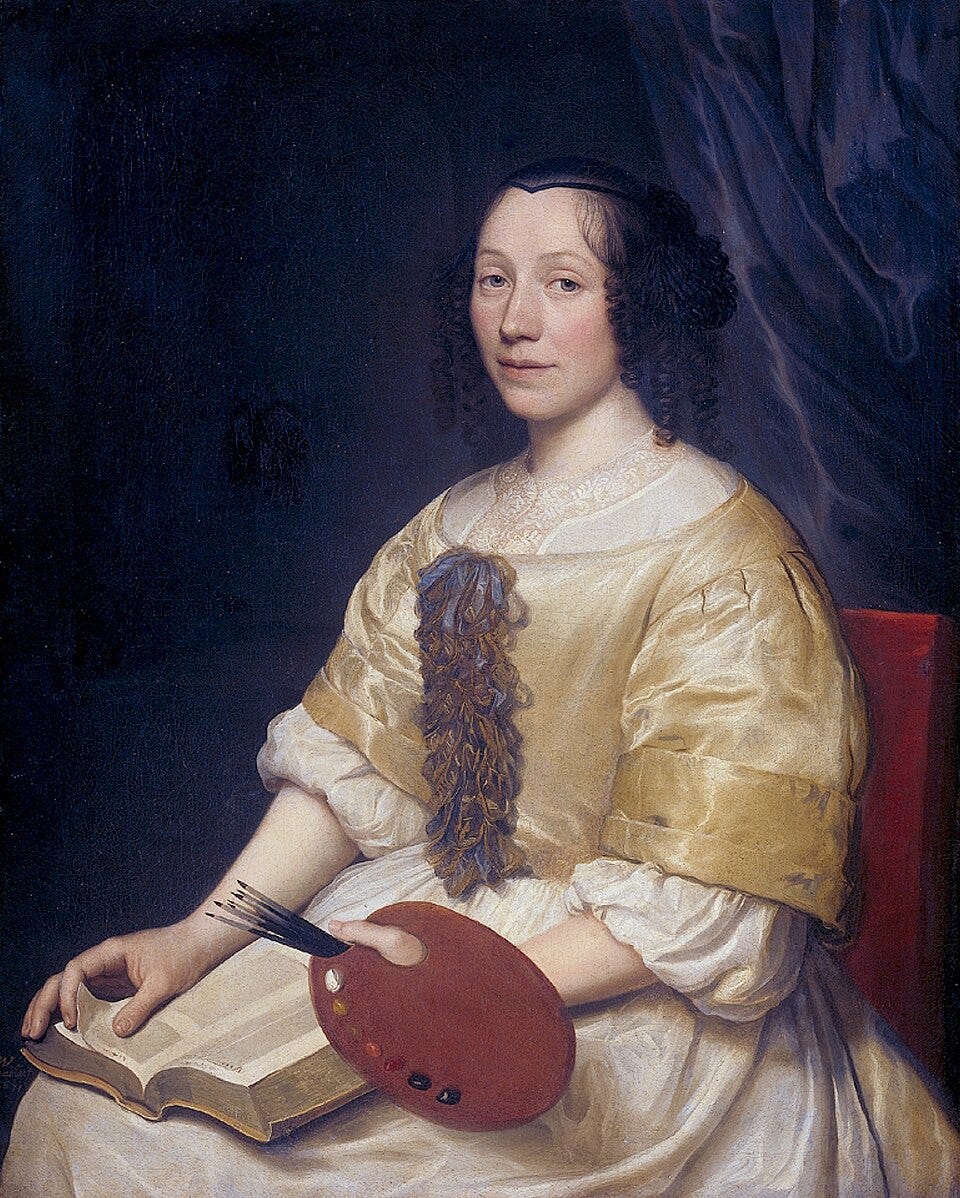
Lucy: I think that the more examples we have of lives that were lived outside of the prevailing societal norms or strictures, often with great dignity, and sometimes at great cost, the easier it is for all of us, whatever our sexual orientation, to live bolder, freer lives, to make less conventional choices, to be less fearful. The visibility of queer lives isn’t solely for, and doesn’t just benefit, queer readers, but all of us.
SJP Lit: Can you share queer authors or narratives that you think don’t get enough attention?
Lucy: If you’re interested in more queer Belfast literature or characters, Hilary McCollum’s recent As a Lover fictionalizes the trial of The Well of Loneliness, interweaving Radclyffe Hall’s story with that of a young Belfast girl training as a firefighter and coming to terms with her sexuality. I love Glenn Patterson’s novel The International, set on the eve of the Troubles, and following young sexually fluid bartender Danny over the course of a momentous night. Paul McVeigh’s The Good Son, which won the Polari Prize, tells the coming-of-age story of another young boy in West Belfast, this time in the 1980s.
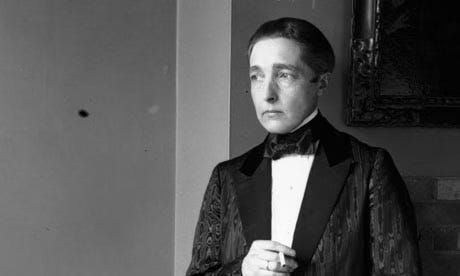
One of my favorite books of last year was Gráinne O’Hare’s debut, Thirst Trap, following three 30-year-old female friends in contemporary Belfast reeling from the loss of their flatmate. They drink too much, do too many drugs, fall hopelessly in love, make inadvisable decisions about who to sleep with—one of them is gay, two are straight, and their sexuality is irrelevant. It just is. Finally, I was lucky enough to hear the poet Annemarie Ní Churreáin read at the Belfast Book Festival just last night—including the title poem of her recent collection Hymn to All the Restless Girls. Her poems are about women’s lives and bodies, gender, marginalized and mystical experiences—I can’t recommend her work highly enough.
Victoria: There are so many! The Heart is a Lonely Hunter and Ballad of the Sad Café by Carson McCullers were key novels I read as a teenager. God, how I loved them and spent hours considering McCuller’s notion of the Lover and the Beloved. Around the same time, I read Herman Hesse’s Narcissus and Goldmund. Some might argue that it’s a queer novel, but no one could argue about its exploration of intense love between men.
“And at some point I believe one has to stop holding back for fear of alienating some imaginary reader or real relative or friend, and come out with personal truth. If we are to understand the human condition, and if we are to accept ourselves in all the complexity, self-doubt, extravagance of feeling, guilt, joy, the slow freeing of the self to its full capacity for action and creation, both as human being and as artist, we have to know all we can about each other, and we have to be willing to go naked.”
James Purdy was a brilliant and quite neglected novelist and short story writer. Adrienne Rich’s poetry collection, The Dream of a Common Language, is worth everybody’s attention. May Sarton is another lesbian poet and novelist who should be read widely. In her Journal of a Solitude, she writes: “And at some point I believe one has to stop holding back for fear of alienating some imaginary reader or real relative or friend, and come out with personal truth. If we are to understand the human condition, and if we are to accept ourselves in all the complexity, self-doubt, extravagance of feeling, guilt, joy, the slow freeing of the self to its full capacity for action and creation, both as human being and as artist, we have to know all we can about each other, and we have to be willing to go naked.” Is there a more perfect definition of the challenge in making art?

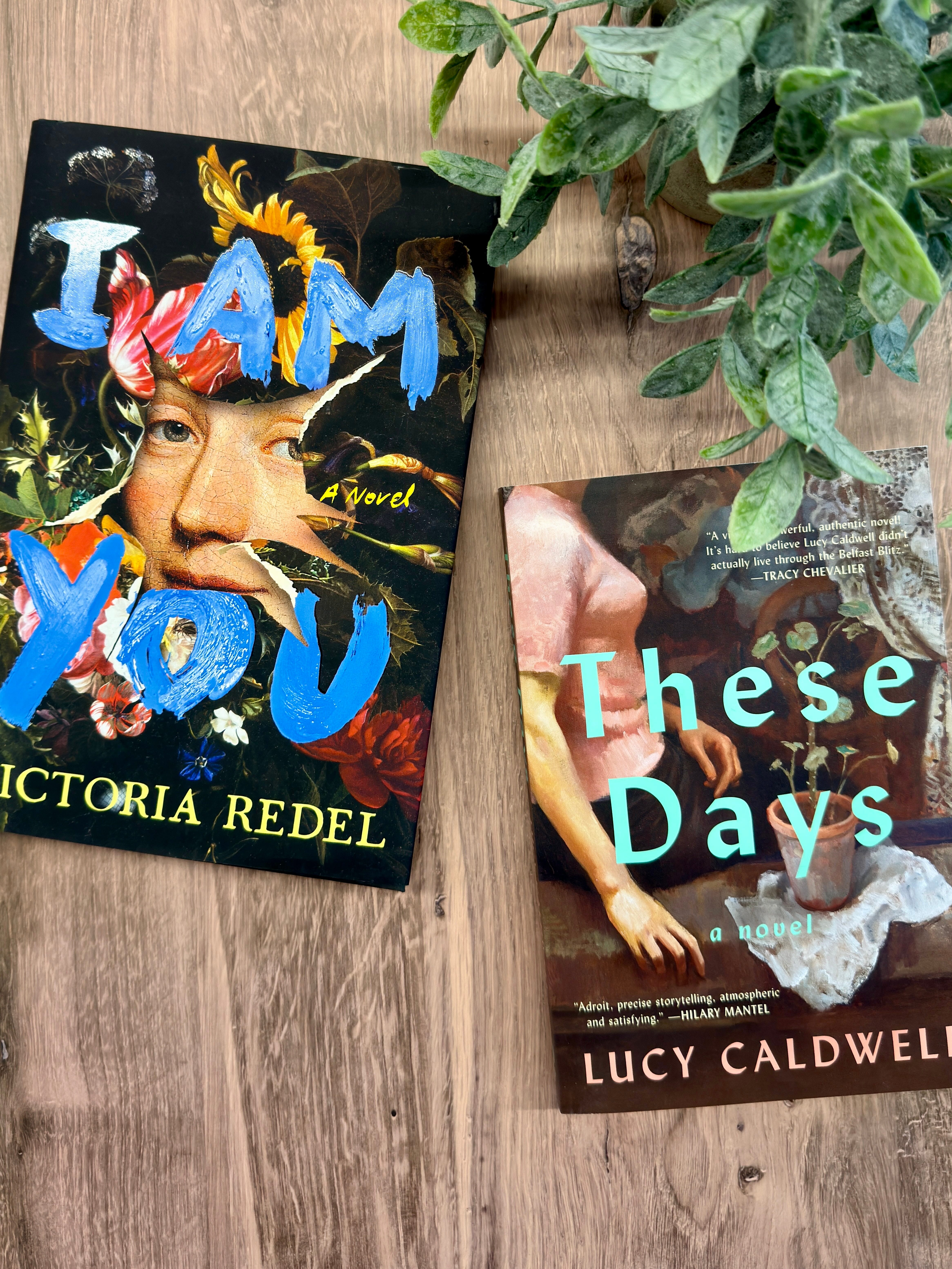
We love these stories of women in love! To celebrate Pride Month, we’re giving away copies of both Victoria and Lucy’s novels. Two winners will each receive a copy of both I Am You and These Days. To enter to win, can you share what stories are resonating with you this Pride Month?
No purchase necessary. Open to US residents 18+. Sweepstakes begins at 10:00 AM ET on 6/11/26 and ends at 10:59:59 AM ET on 6/17/26. To enter, share your recommendation in the comments. Limit one (1) entry per person. One (1) winner will be selected at random and notified via DM by SJP Lit on or about 6/17/26. Void where prohibited. Sponsor: Zando, LLC. This promotion is in no way sponsored, endorsed, administered by, or associated with Substack.
No posts
Comments
Nothing yet. Say the first thing.
Sign in to join the conversation.