We authored a new report on the election using data from the Cooperative Election Study (CES) which interviewed 60,000 Americans, including over 36,000 validated voters and more than 23,000 non-voters.
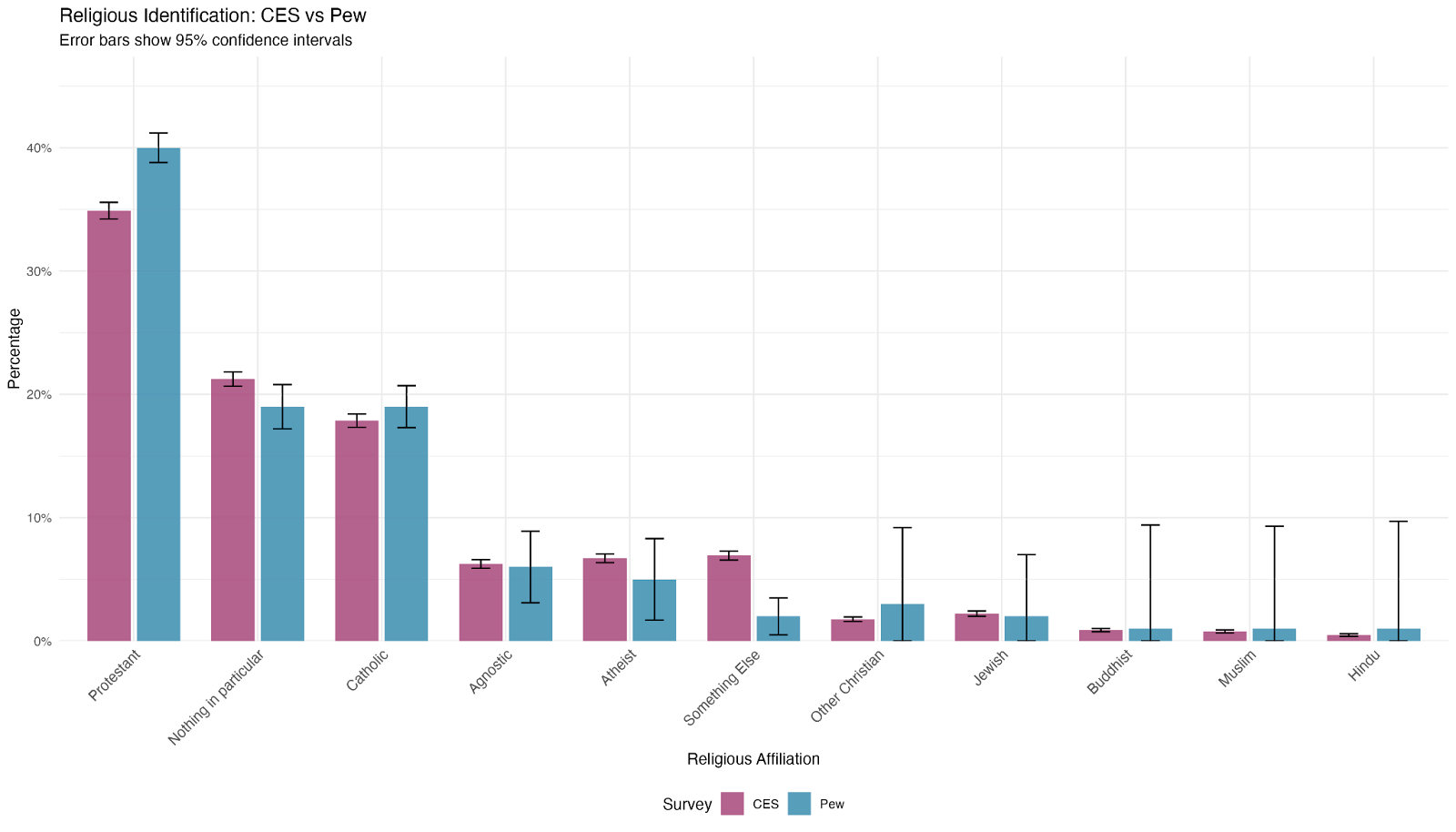
by Caroline Soler White evangelicals have emerged as a dominant force in conservative politics and an increasingly large share of Trump’s base, which means accurately measuring this group is more critical than ever. Yet, researchers still lack consensus on the fundamental question of how to define evangelicals. Two main competing approaches exist: self-identification and a …
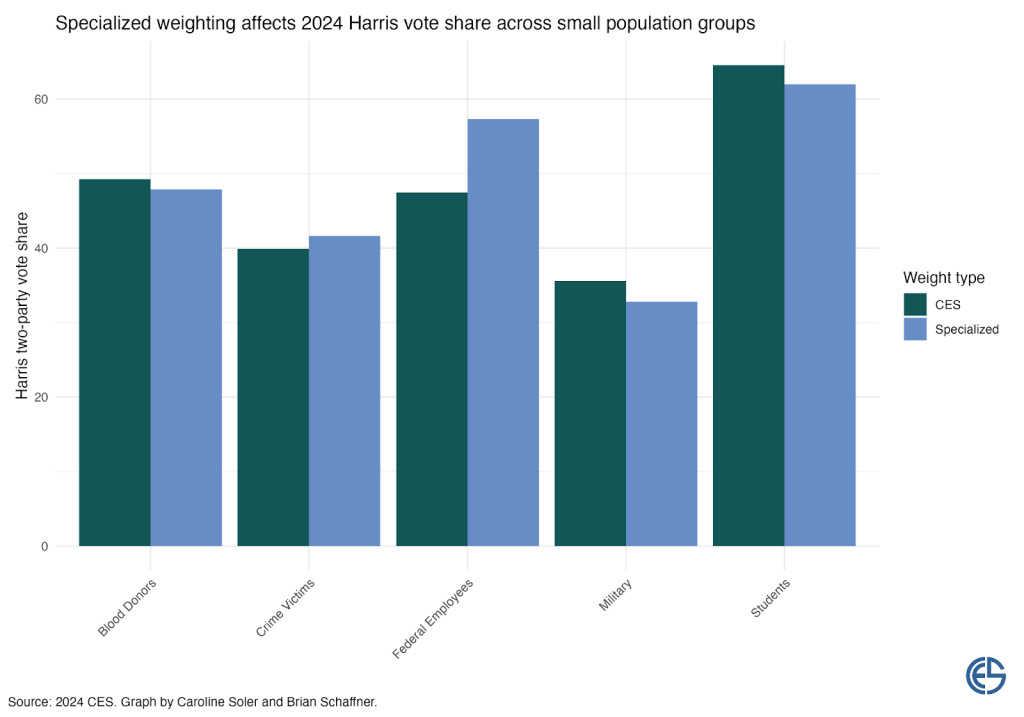
by Caroline Soler Recently, I was tasked with looking into the political opinions of blood donors in the Cooperative Election Study (CES) when I noticed that our demographics were off. Our sample showed that 53% of blood donors were men, but the data from America’s Blood Centers indicated that the actual proportion was only 46%. …
by Caroline Soler, Brian Schaffner, and Stephen Ansolabehere Earlier last month, David Shor, now a data scientist at Blue Rose Research and someone who has drawn a lot of attention as an influential figure in Democratic politics, spoke on Ezra Klein’s podcast. He promoted the bold idea, based on his research at Blue Rose, that most groups of …
There is power in numbers. Starting in 2006, a consortium of 39 universities came together to create the Cooperative Congressional Election Study (now the Cooperative Election Study), the first truly large-scale and cooperative academic survey project aimed at studying American elections. Our joint efforts have produced national sample surveys in excess of 50,000 respondents for …
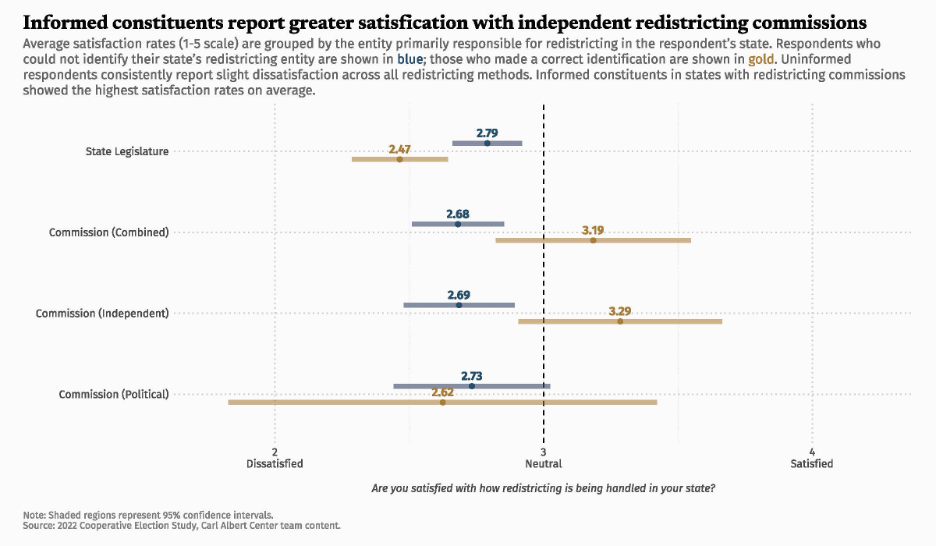
by the Carl Albert Congressional Research and Studies Center In the November 2024 elections, Ohio voters rejected a proposed constitutional amendment that would have created a citizen-led redistricting commission aimed at reducing gerrymandering. The proposal would have replaced the current Ohio Redistricting Commission on which elected officials serve as members. Our recently published article…
by Rebecca Bankhead and Jeremy C. Pope Heading into the 2024 election, lots of people want to believe that America is always and quite irrevocably polarized. It’s a reasonable place to start: Congress provides a never-ending stream of evidence and issues that divide Democrats and Republicans are highlighted in headlines nationwide, creating images of division …
Each election year, the Cooperative Election Study (CES) produces summary results from its pre-election interviews with American adults. The 2024 pre-election results, including dynamic crosstabs, can be found here. Results for key swing states can be found here. The survey shows Kamala Harris with a 4-point lead over Donald Trump among likely voters (51% – …
by Kyle Krell The Pew Research Center says that “the basic goal of a good public opinion poll is to give everyone in the population, regardless of their wealth, age, education, race, knowledge of politics… an equal voice about the issues of the day.” Polls aim to be representative of and generalizable to the broader …