
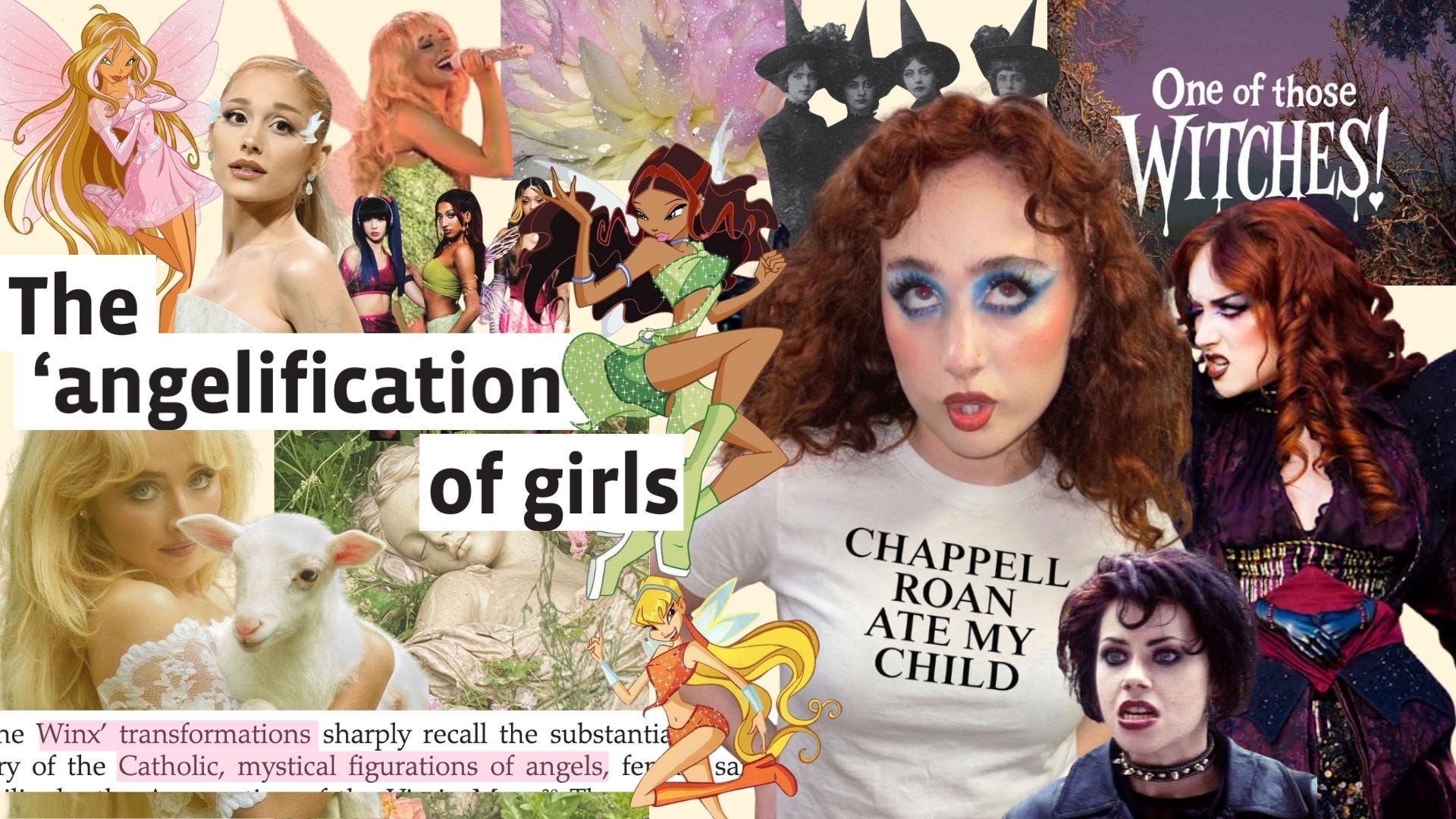
In this article, we’re using the Winx Club TV show as a lens to look at some celebrity drama. This is usually the type of thing I’d save for a paid post, but it’s April Fool’s and the spirit of the jester compels me to tomfoolery. (Paid people, you’ll be getting your special extra one later this month)
If I were to ask you what Italy and Japan had in common, you might mention cars, or UNESCO-recognised food cultures, or maybe something to do with 20th-century politics that they’d both rather you stop bringing up, thank you very much. What you might not think of — although you should — is that both of these countries produced some of the best magical girl series of all time.
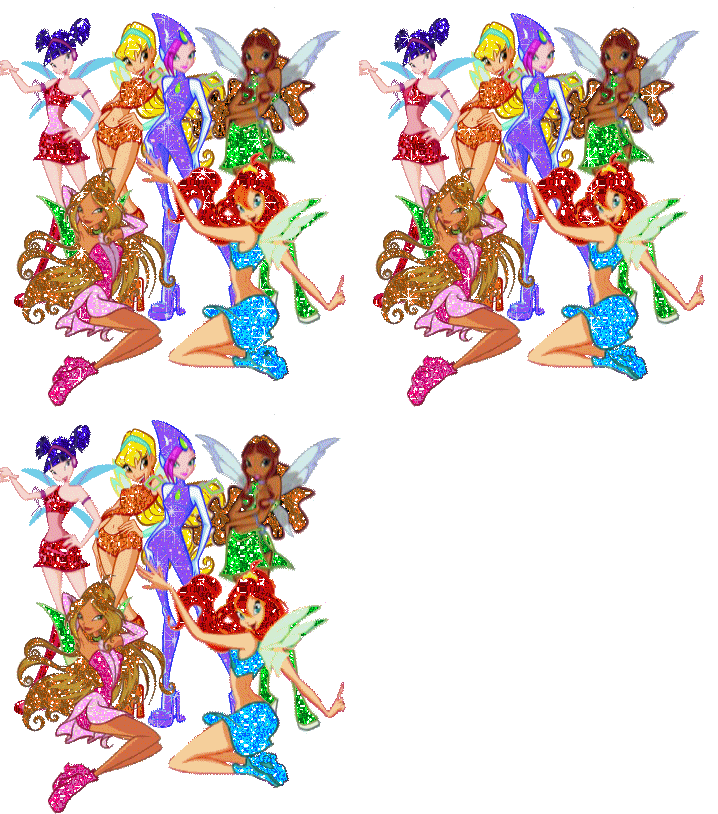
After W.I.T.C.H., my favourite was Winx Club. Whenever the Winx fairies had to fight some bad guys, they’d float up into the sky and go through the most inefficient transformation process, sprouting wings and glittery outfits at an excruciatingly slow pace. I can only assume the bad guys played Wordle in the meantime.
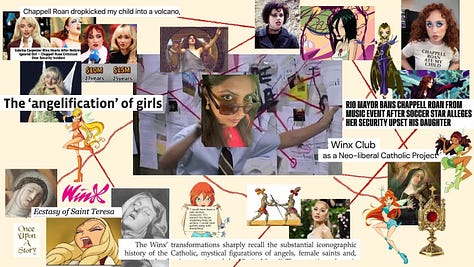
Some scholars have bravely wondered: hang on, is this… Catholic?1 The Winx’s accessories enhanced their magic “like the saints who derive mystical power from the crucifix,” as Nicoletta Marini-Maio and Ellen Nerenberg wrote. Just like female saints in rapture, the fairies glow, throw their heads back, and half-close their eyes as if bracing for transcendence or a wind machine. In other words, the young Winx were, as all Victorian-inspired fairies are, angelic.

Angelic or fairylike traits in female characters are quite easy to define — they’re small, demure, innocent, silly, kind, nurturing, and wholly good — but it’s not something you can totally apply to any real woman. Even the media, which loves a label, doesn’t hand out “fairy” all that often unless it’s setting up a little discourse cage match. You only really get to be the fairy if someone else is being positioned as your rival: the witch.
Winx Club features an entire boarding school full of witches. Much like real high schoolers, these girls spend most of their time impotently scheming and rubbing their hands together in a sinister manner. The best way I can describe them is that they’re like if a teenager were a hag, but in a crop top.
The witches are often drawn with more mature features than the fairies, like long faces, drooping noses and thin, arched brows. They opt for dark, mature colours instead of the fairies’ glittery pastels. If magical girls (in this case, fairies) represent the transformations girls’ bodies go through during menstruation, a witch might represent the changes of menopause.2
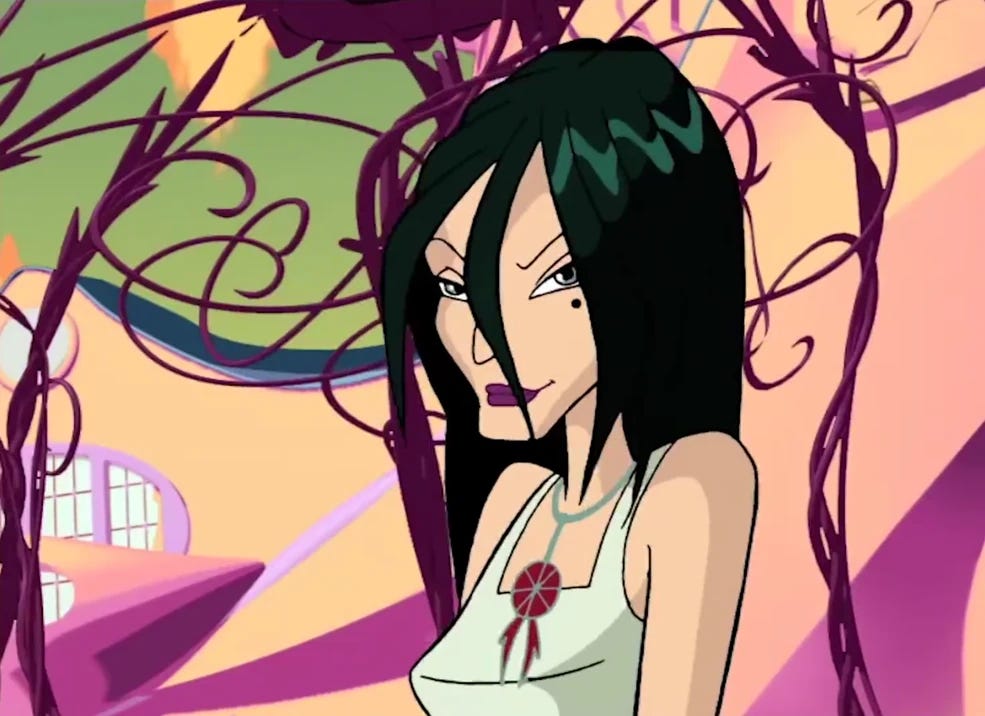
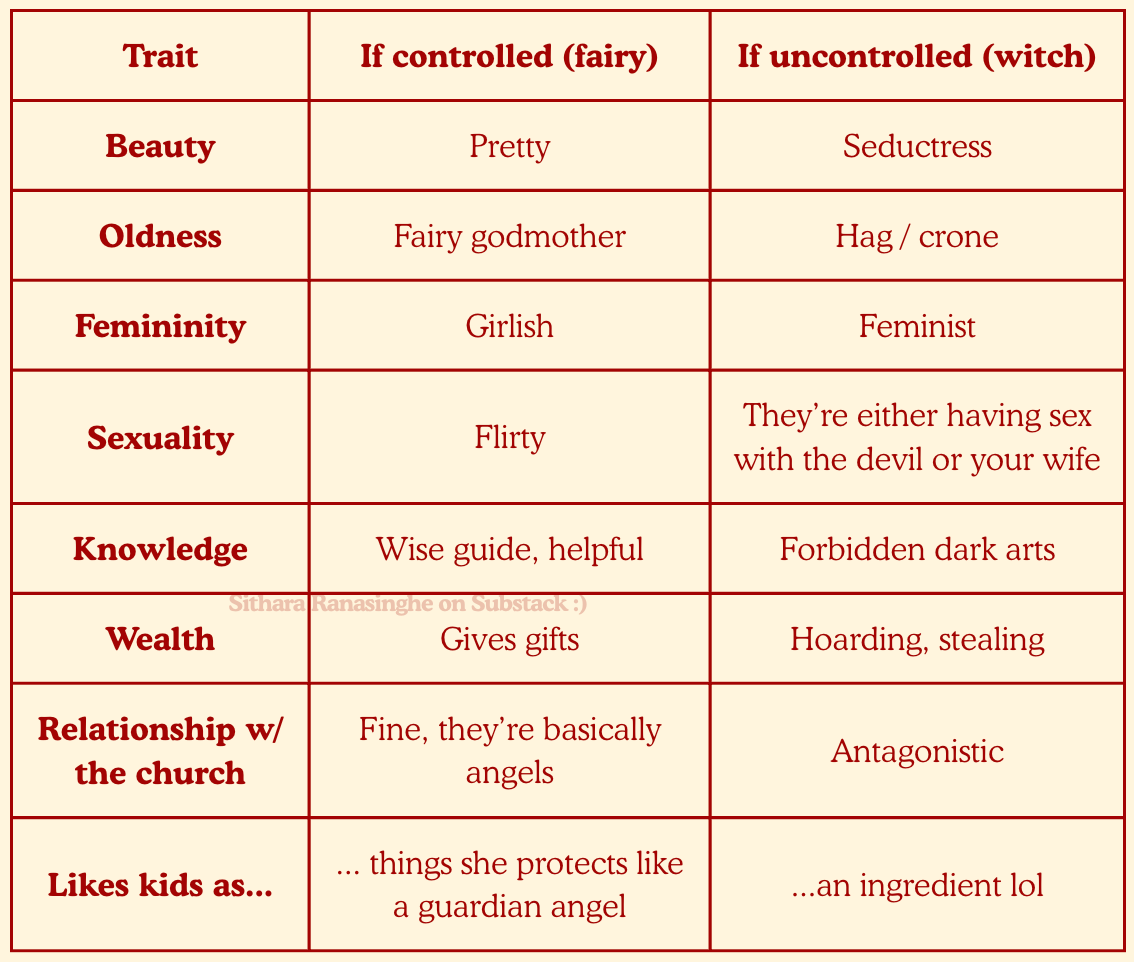
Although they both represent girl magic, fairies are glittery little party girls, and witches are mean crones. This separation reflects cultural attempts to distinguish between acceptable and unacceptable forms of female power, rather than any inherent difference in their origins. Fairies — at least the angel-like, Victorianised version of them — represent feminine power under control, and witches represent feminine power unleashed, which sounds like the sequel to Women Who Run With Wolves, but hear me out.
If you apply beauty to the fairy, you get a pretty lady. If you apply it to the witch, you get a seductress. If you give them both power, the fairy becomes a fairy princess, but the witch becomes evil, conspiring to kill the king or pox your sheep or whatever witches do. Look, I made a table…
While pop culture is quite stingy with the fairy label, they’re usually very generous when it comes to doling out the witch one. Right now it’s being heaped onto pop star Chappell Roan. It’s pretty easy to see why. Roan is a confrontational queer woman who describes her look as “pretty and scary — or just not pretty.”
A story has been circulating online that Roan was rude to a child — famously a great hobby of witches! The way people talk about it, I assumed a barefoot orphan asked Roan for a tuppence only to be slam dunked face first into a volcano. (Roan then dropped a grand piano into the volcano, followed by 200 red sticks of TNT and then a large anvil with the weight labelled on the front. Then she zoomed through a wall, leaving a Chappell-shaped hole.)
What actually happened was this: one of Jude Law’s seven kids (and step-daughter of ex-Arsenal footballer Jorginho) is out with her mum. The kid smiles at Chappell Roan, and is then screamed at by a security guard. To valiantly avenge his child, Jorginho posted an Instagram story. He explained the encounter and tagged Roan, writing in all caps, “WITHOUT YOUR FANS YOU WOULD BE NOTHING. AND TO THE FANS, SHE DOES NOT DESERVE YOUR AFFECTION.” Presumably he wrote this while brandishing a torch.
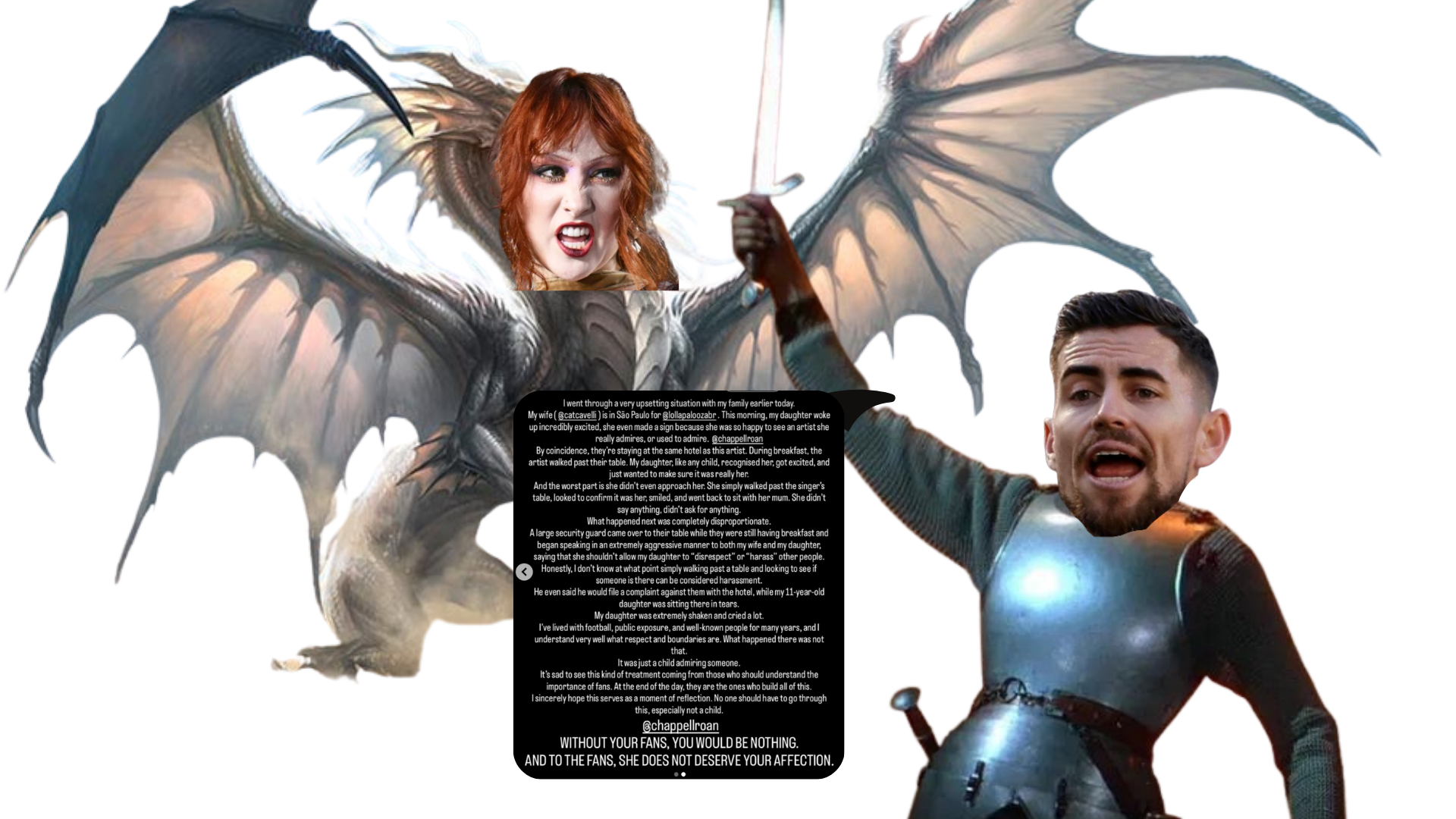
From there, multiple people piled onto Roan. Among them was the Mayor of Rio de Janeiro, who decreed, “As long as I’m in charge of our city, this young lady @ChappellRoan will never perform at [music event] Todo Mundo no Rio! I doubt that @shakira @Shakira_Brasil would do that! By the way, @FrelloJorginho your little one is already the guest of honour of the organization in May!”
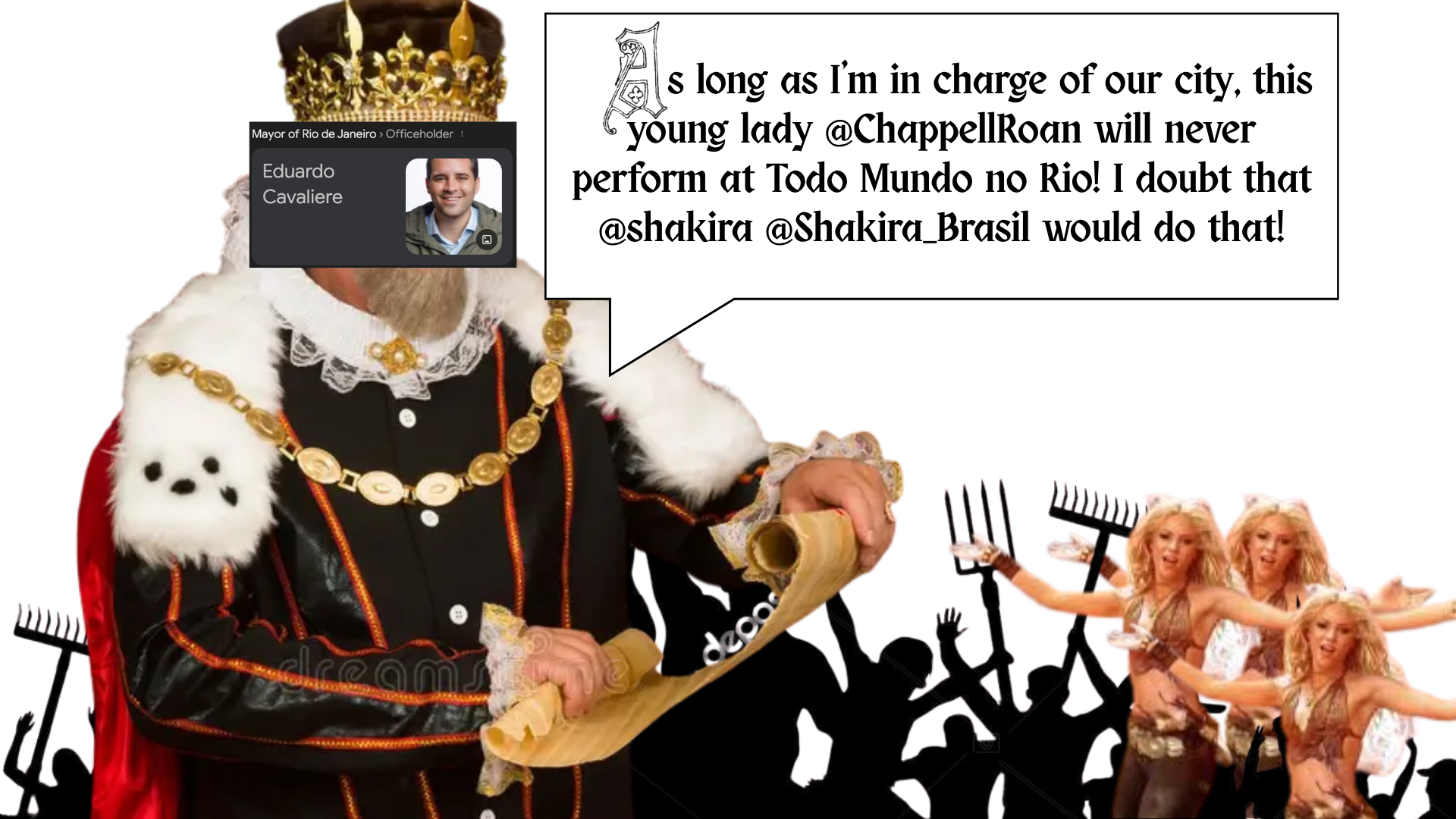
The witch invites opportunities to assign fairies. Aside from the fact that it’s quite sweet that the Mayor of Rio de Janeiro tagged a Shakira fan account, it’s also telling that he buttressed Jorginho’s “little one” against the wicked, child-hating witch. Without trying, the Mayor of Rio de Janeiro perfectly replicated a classic trio of fairytale womanhood — the wicked witch, the princess she victimises, and the good fairy, who in this case is Shakira. Or at least whoever’s running @Shakira_Brasil.3
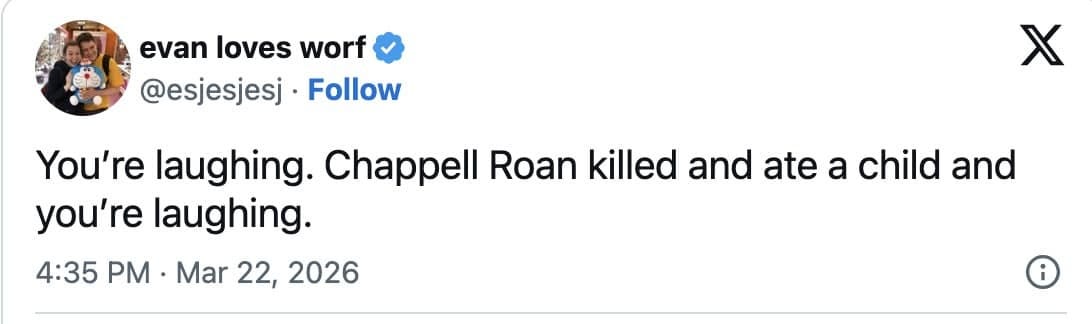
“In the postmodern world, fame has replaced marriage as the imagined means to realising feminine dreams,” writes Susan Hopkins in Girl Heroes. “Romance may be an attractive after-effect, but fame is the ultimate girl fantasy.”
So, while the fairies of Winx harness the power of plants, technology, the sun, leaves, air, and whatever else the writers could presumably see from their windows, the real-world expression of female power is fame. Female celebrities can wield that power in a way that’s deemed good or bad — controlled or uncontrolled.
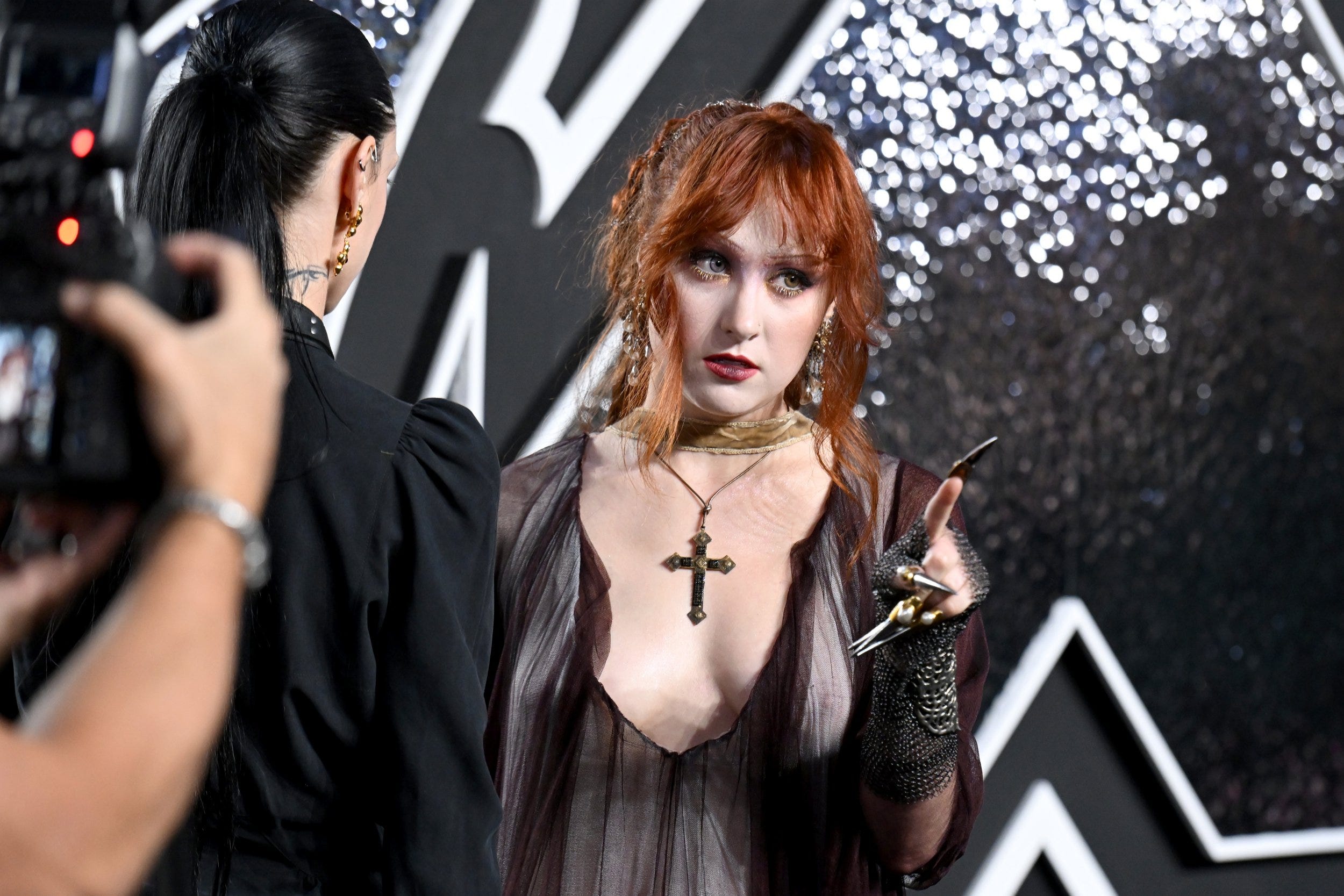
A common critique of Roan online is that she acts like she doesn’t even want to be famous, or that she doesn’t appreciate her fame. Instead of graciously thanking paparazzi for their interest in portraiture, she calls them out. If they tell her to shut the fuck up, she snaps back, jabbing a finger their way, “No, you shut the fuck up. Not me, bitch.”
A surprising number of people online find Roan’s willingness to stand up for herself rude. This is pretty interesting in a job — female pop star — that’s long been tied to some Spice Girls version of empowerment.
In Girl on Girl, Sophie Gilbert makes the case that the Spice Girls represent a postfeminist moment in pop culture. “Feminism was over, having achieved all it needed to; women were free to dress and adorn themselves however they wanted; any individual choice could be empowering if someone declared it so; consumerism was the path to self-fulfillment.” If sexism is over, then your struggles represent your own lack of girlbossery and you should probably just try a more assertive mauve lipstick. Yet, obviously, the workplace you’re supposed to excel in isn’t going to treat men and women the same. To get your promotion, you’ll need to jump through some very stupid hoops.

One of the ways postfeminist girlbosses can do this is through glamour — or as Angela McRobbie calls it, sparkle. She writes that women used sparkle to “lessen the potential threat” they would pose by being assertive and girl bossy. On one hand, sparkle symbolises wealth (bling) and visibility — two post-feminist goals — but it also serves to make you look more girlish. After all, glitter isn’t exactly serious. Remember how mad everyone got when Stephanie Meyer made vampires sparkle?
The 2000s offered a deluge of female action heroes who effectively utilised Girl Power to slay monsters. Their combat skills were softened by cute poses, glimmering magic and sequinned outfits, showing us that girl power can be made digestible if you use a bit glitter.
Sabrina Carpenter is a pretty good case study for this. She’s outspoken and progressive, but she’s also small, flirty and silly. The medicine is far easier to swallow when it’s coated with sugar. When tabloids reported that the security guard who vaporised that kid with a death ray was actually working for Carpenter, online commenters were in disbelief that, out of the two of them, Roan might not be the “villain”. While I’m glad people are sceptical of claims made by the Daily Mail, it feels inconsistent with how willing they are to believe fake Twitter accounts claiming Roan is secretly an oil baron, and a school bully, and straight.
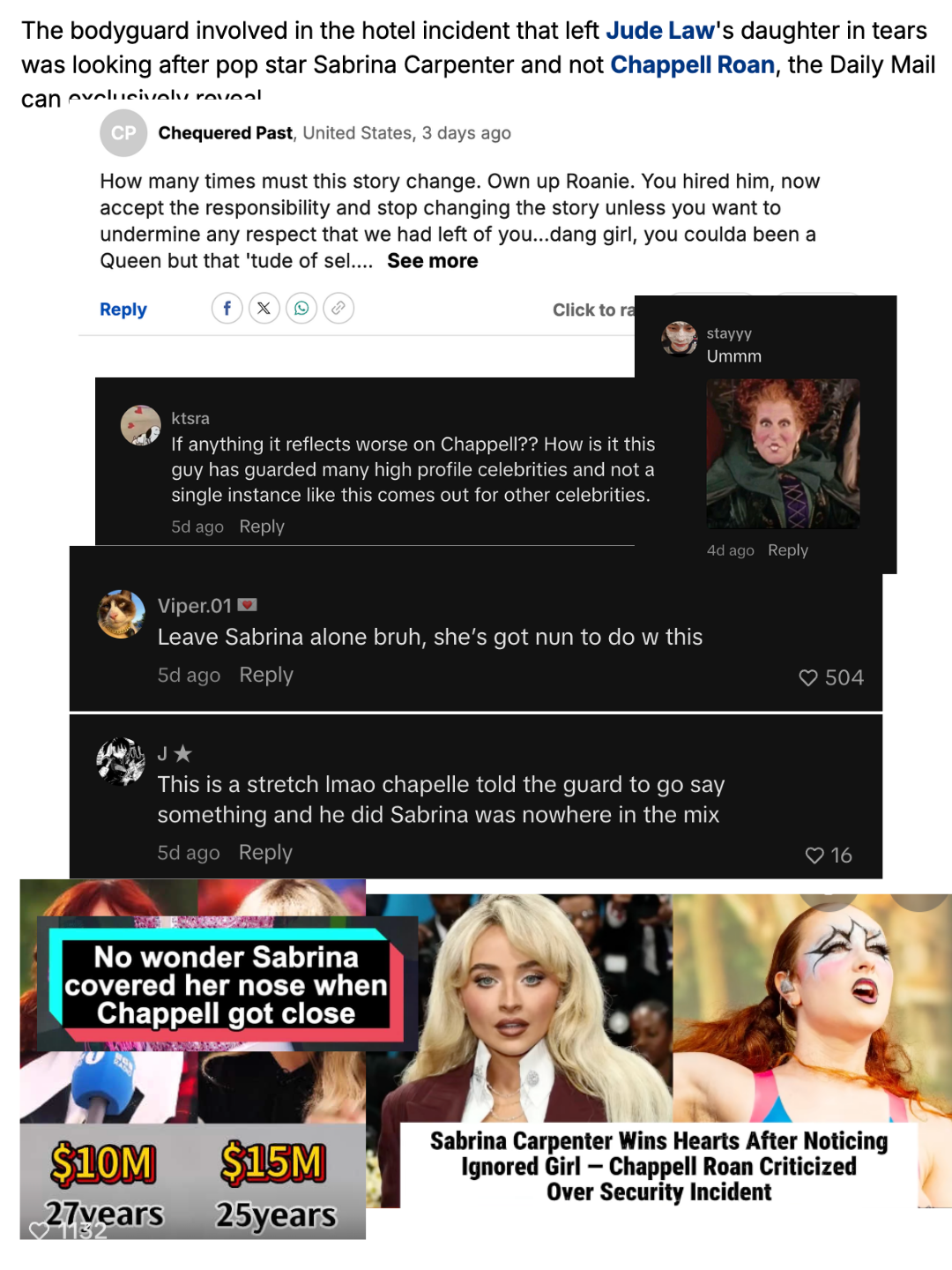
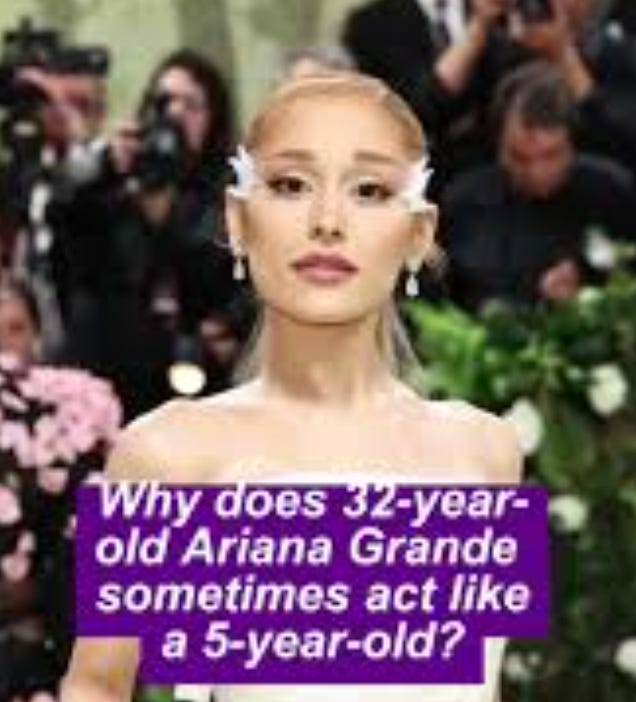
But, to speak to how arbitrary these roles are, Carpenter has been made to play the witch in 2021 during some drama with the younger Disney star Olivia Rodrigo. The roles are cast and recast depending on what narrative people want to push. You can also win some slander by playing the fairy unconvincingly, like Ariana Grande, who’s often accused of forcing her high-pitched voice and faking a tuberculous frailty.
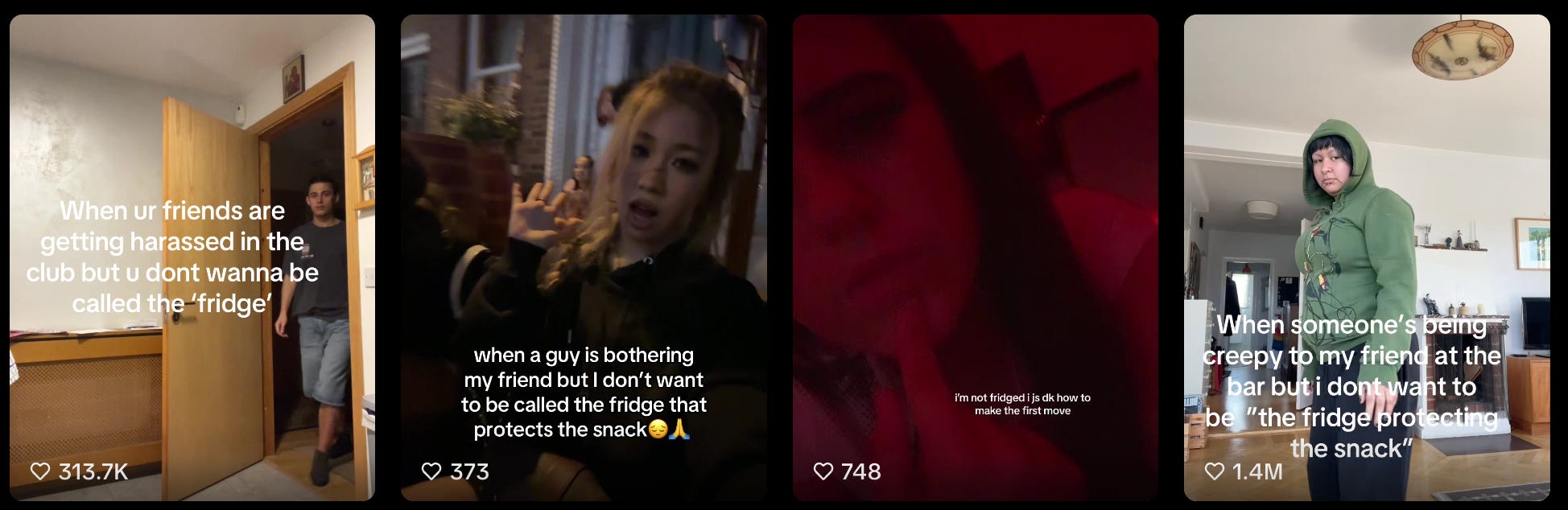
Perhaps this is just a reflection of my screen time, but this whole thing reminds me of the term “fridge who protects the snacks”. It’s an insult that weirdos use against girls who protect their female friends from creeps. ‘Fridge’ is a term that’s meant to insult a woman by implying size and heft, and by contrasting her to the desirable ‘snacks’. Like the witch, she is socially punished for not playing along. I doubt most women care about being insulted by a little creep in Meta AI glasses — they are the daughters of the fridges we couldn’t unplug, or something — but, crucially, some do. Regular girls can see the way Chappell Roan is getting death threats online, or the way ‘fridge’ girl friends are shamed by creeps in IG comments, and we can use that to predict what’ll happens if we don’t behave.
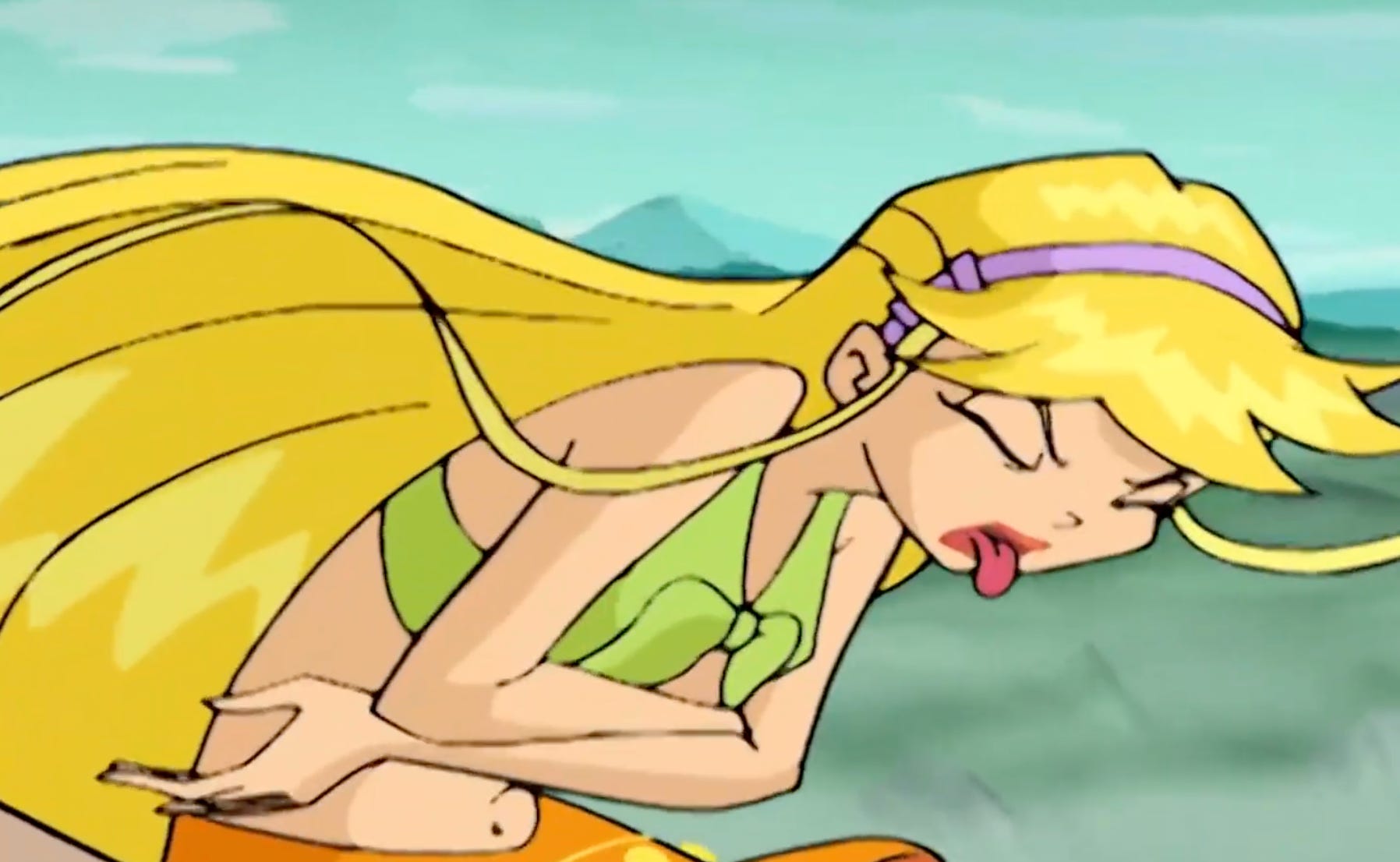
In Winx Club, the fairies and the witches are sometimes forced to team up against a larger foe, including a sort of floating Rococo bodybuilder. But when the smoke clears, the fairies (or the writers) retain their anti-witch prejudice. “I don’t even like being in a crowd where there’s a single witch,” says Stella, who is the fairy of the sun, the moon, and bigotry.
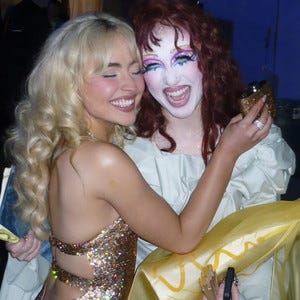
Similarly, women who get labelled with the witch archetype help the rest of us in the real world. They might not always get thanked or acknowledged, but we all benefit from a woman who’s not scared to look like a bitch. This February, on the red carpet, Sabrina Carpenter turned to the photographers and said, smiling, “You guys are so quiet this year. Chappell really started a movement. She really whipped [you] into shape.”
Thanks for reading! This was a silly one. Years of Buzzfeed-era graphic t-shirts have left me with the opinion that aligning powerful feminist women with witches is, for lack of a better word, cringe, but I had fun. I hope you did too, and I hope you don’t mind that it wasn’t as deep-divey as my usual posts. Let’s chat in the comments!
If you’d like an extra post like this every month, please consider subscribing for the cost of a tea and biscuit. Instead of my normal essays, they’ll follow the style of old internet blog posts, like this:
And if you want more of me (for free), I have a podcast where I read too deeply into my weekly obsessions! If you want to follow along, I’d love to have you. Episodes so far:
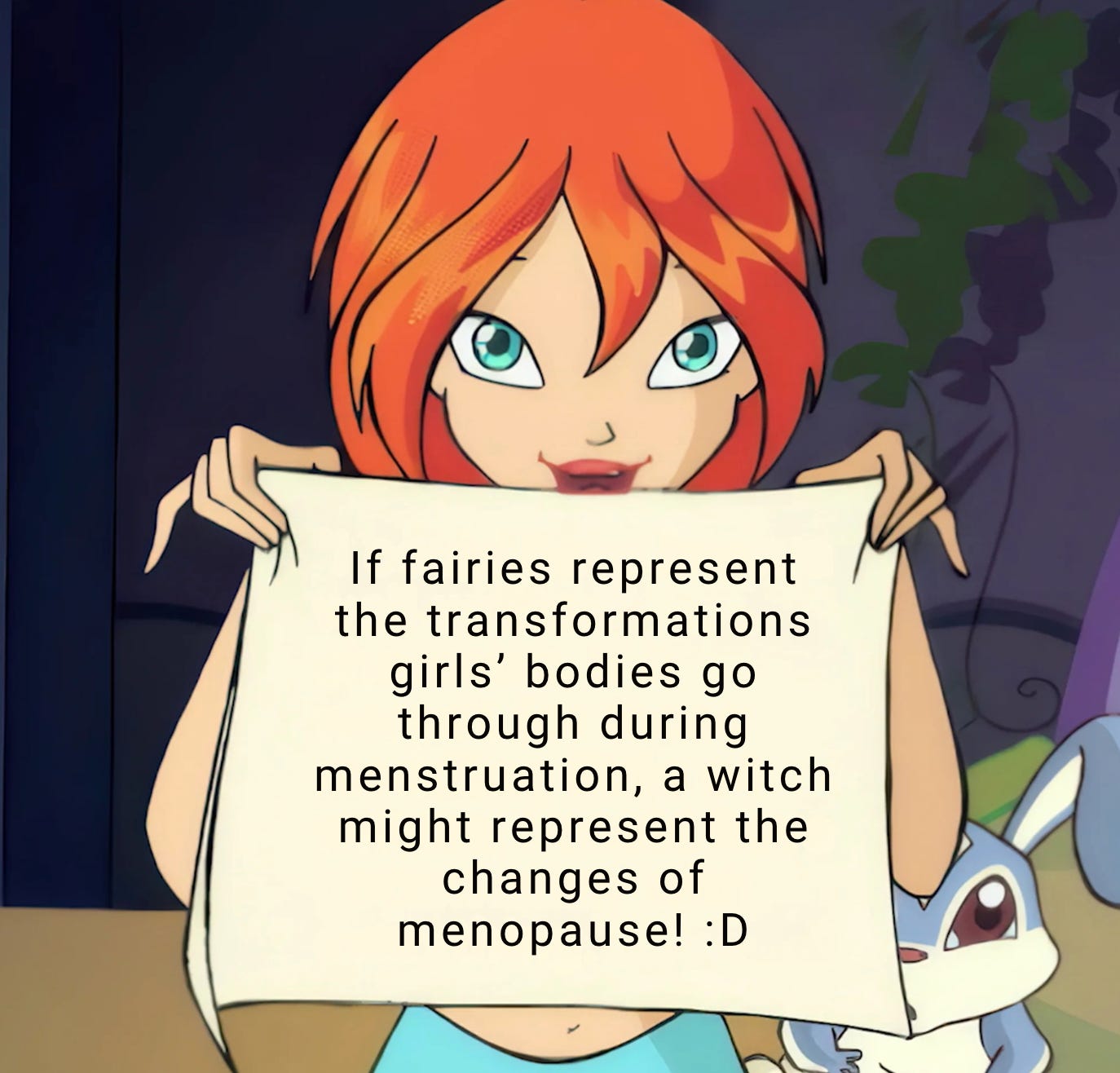
And some relatable memes…
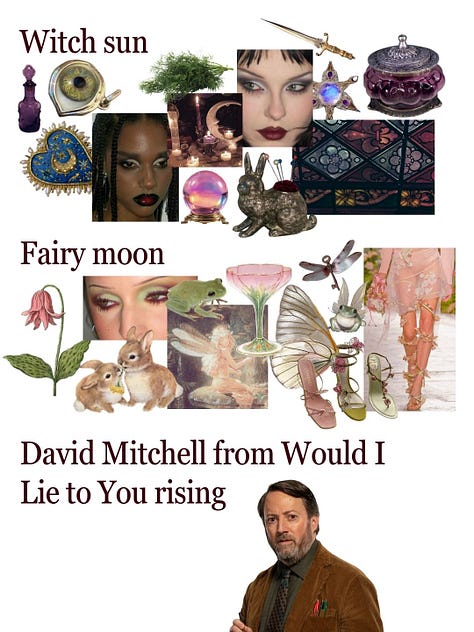

If any of you interpret this post as a framework to categorise women based on inherent values, I’m going to yell at you.
Thank you Bit for the correction re: the kid story!
Further reading:
Kearney, M. C. (2015). Sparkle: luminosity and post-girl power media. Continuum, 29(2), 263–273. https://doi.org/10.1080/10304312.2015.1022945
Marini-Maio, Nicoletta & Nerenberg, Ellen. (2020). The ‘angelification’ of girls: Winx Club as a neo-liberal Catholic project. Journal of Italian Cinema & Media Studies. 8. 23-41. 10.1386/jicms_00003_1.
Hopkins, Susan. “Girl heroes: the new force in popular culture.” (2002)
Gilbert, Sophie. “Girl on Girl: How Pop Culture Turned a Generation of Women Against Themselves.” (2025)
After all, the studio behind Winx Club was funded by Catholic priest’s company, Piginigroup.
Although there are some fairy-coded witches (Glinda from The Wizard of Oz) and some witch-coded fairies (Maleficent from Disney’s Sleeping Beauty), I’m going to focus on the coding instead of nitpicking.
I have to differentiate this trio from “maiden, mother, crone”, which is meant to represent 3 aspects of a goddess, or the female life cycle. The difference here is that the witch and the fairy are explicitly at odds, and they each have a relationship (antagonistic or supportive) with the princess. They’re not a continuation of a single thread but rather 3 archetypes.
Comments
Nothing yet. Say the first thing.
Sign in to join the conversation.