
In May 2026, Google announced the dawn of the Search Agents era with “the biggest upgrade in over 25 years” to its search box. The company’s success with shoving AI summaries down every user’s throat, which has reportedly doubled the number of queries in less than a year, encouraged the corporate leadership to turn the world’s leading search engine into a place for AI to engage in conversations with its users, build mini-apps, and take action on their behalf. The update was met with the mix of anticipation, excitement, and dread, and among many burning questions, such as whether this transition would put the final nail in the coffin of SEO, one sounded particularly relevant in today’s context: will Google Search now get worse?
In 2026, platform decay, aptly named Enshittification by a Canadian journalist and writer Cory Doctorow, no longer surprises anyone. Enshittification is a persistent global trend, a symptom of the financial decline, and a major contributor to the ever-growing sense of social anxiety. By desperately squeezing every drop of value out of their entrapped customers, corporations not only cripple their own products and curb their long-term potential for sustainable growth but waste whatever little public trust they still command. Same tech companies that had once sworn by their commitment to making the world a better place are now busy making apocalyptic predictions about AI taking away all jobs (or not). The all-powerful leaders have no time to think about how to improve their products—their primary objective today is to replace the “lower-value human capital” with infinitely obedient, hyper-productive, and cheap (not at all) machines.
This newsletter is and will remain free, but if you’re willing to thank the author, you are welcome to buy him a cup of espresso.
The shift towards maximising shareholder value with the help of AI gives births to such innovations as AI-powered hair clippers and microwaves while making every day objects worse with unnecessary changes and unwelcome downgrades. It encourages companies to forego the lengthy and costly process of discovery, research, and design in favour of instant delivery, where initial ideas get turned into products without ever being challenged, tested, or improved upon. Qualitative metrics that do not directly translate into profit—satisfaction, convenience, loyalty—no longer have any impact on product decisions, and the absence of enforcement silences all concerns for ethics and accessibility. Companies can finally forget about customers with their petty whinging and concentrate on producing expensive rubbish and optimising the workforce.
Enshittification impacts everything—from gig platforms and fast food chains to the Internet itself where AI-generated and AI-assisted websites currently comprise over 35% of all newly published pages, and where the likes of Meta roll out subscription plans, drown their customers in slop, and promote support bots that help scammers hijack celebrity accounts. More importantly, as the platform decay intensifies, it erects even more barriers to equal access, which, in the absence of quality control and human oversight, are doomed to endlessly self-replicate:
This is not a minor bug trend. It is a systematic civil-rights failure that has now found its way into software as a whole, through lightning-fast adoption of AI systems that are trained on over 20 years of institutional barriers. Accessibility is a baseline for participation in modern life. When developers automate UI development, they automate discrimination from rights, services, and opportunity.
What is worse, some regulators happily contribute to the decline instead of curbing it. With every new website that the Trump’s administration deploys—be it the new White House website or the AI Action Strategy portal—the lack of care for the American citizens and their digital rights becomes more apparent.

If the government can violate every standard imaginable on their own web pages, what (or who) could possibly incentivise the private sector to follow the rules?
There is only one choice consumers still have: walk away.
Customer disappointment is gradually translating into action that businesses can no longer ignore. Streaming services watch people turn to the high seas as they introduce plans with ads and increase prices. Car manufacturers reluctantly bring back physical buttons and ditch touch panels. Corporations weep and panic as their monopoly crumbles.
In particular, AI backlash is a terrifying and fascinating phenomenon to observe. On the one hand, the financial, political, and social implications of pouring billions on dollars into data centres and AI products are promising to be devastating once the bubble inevitably pops. On the other hand, AI fatigue inspires new creative responses: from games that emphasise storytelling and atmosphere to products that use DIY-advertising to attract customers with humour and humility.

Takes that sounded way too radical and contrarian two years ago, today perfectly resonate with the public’s opinion on AI, creativity, and tech:
We're here for the humans. We're not chasing a technology that is a moral threat to our greatest jewel: human creativity. In this technological rush, this might make us an exception or seem at risk of being left behind. But we see this road less travelled as the more exciting and fruitful one for our community.
Corporations that rush to desperately plug every hole in their products with AI inadvertently disrupt their own position, and customers begin to escape the tightly closed physical and digital ecosystems of rapidly deteriorating products. This shift brings about a change in mindset, nurturing appreciation for sustainability, good customers experience, and privacy, and rejecting the likes of a razor company that once forced buyers to pay twice for the same product. Enshittification creates the perfect storm from which repairable mobile phones, customisable laptops, and open source alternatives to proprietary tools get a chance to emerge victorious, as a reminder that honesty and profitability are not mutually exclusive. It encourages us to dream up the version of the future where corporations are not rewarded for ignoring their customers, and where consumer rights—be it the right to repair their own hardware or the right to access their favourite website—are universally respected.

In 1851, London’s Hyde park hosted The Great Exhibition of the Works of Industry of All Nations or the Crystal Palace Exhibition, named after a 564-meter long, 39-meter tall palace comprised 293,000 glass panes assembled to host the event of the century. The great celebration of modern technology was organised to solidify Britain’s role as industrial leader and demonstrate various moving machines, novel scientific instruments, and mass-produced goods.
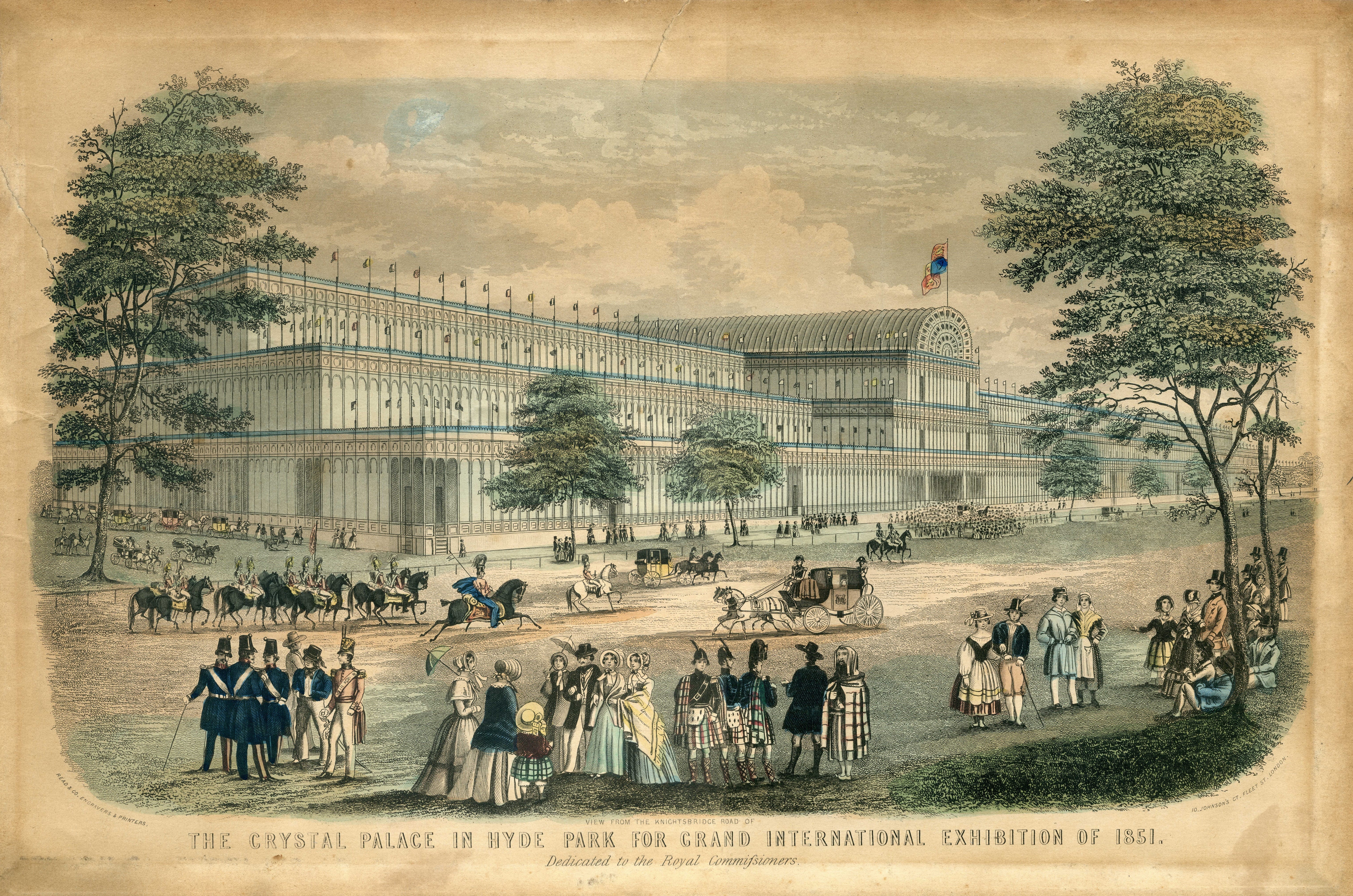
The Great Exhibition attracted 6 million visitors—roughly a third of England’s entire population at the time, but one young man by the name of William Morris refused to attend.
To a 17-year old Morris, the exhibition was the triumph of quantity over quality, of an obedient machine over mindful, soulful craftsmen—and interestingly, many critics at the time agreed with his assessment and noted that the products inside were rather underwhelming. William Morris would go on to become one of the most influential artists and thinkers of the time and become a prominent figure in the Arts and Crafts Movement. In his essay, “Of The Revival of Design and Handicraft”, Walter Crane, artist and book illustrator, would describe the movement as
a protest against that so-called industrial progress which produces shoddy wares, the cheapness of which is paid for by the lives of their producers and the degradation of their users. It is a protest against the turning of men into machines, against artificial distinctions in art, and against making the immediate market value, or possibility of profit, the chief test of artistic merit.
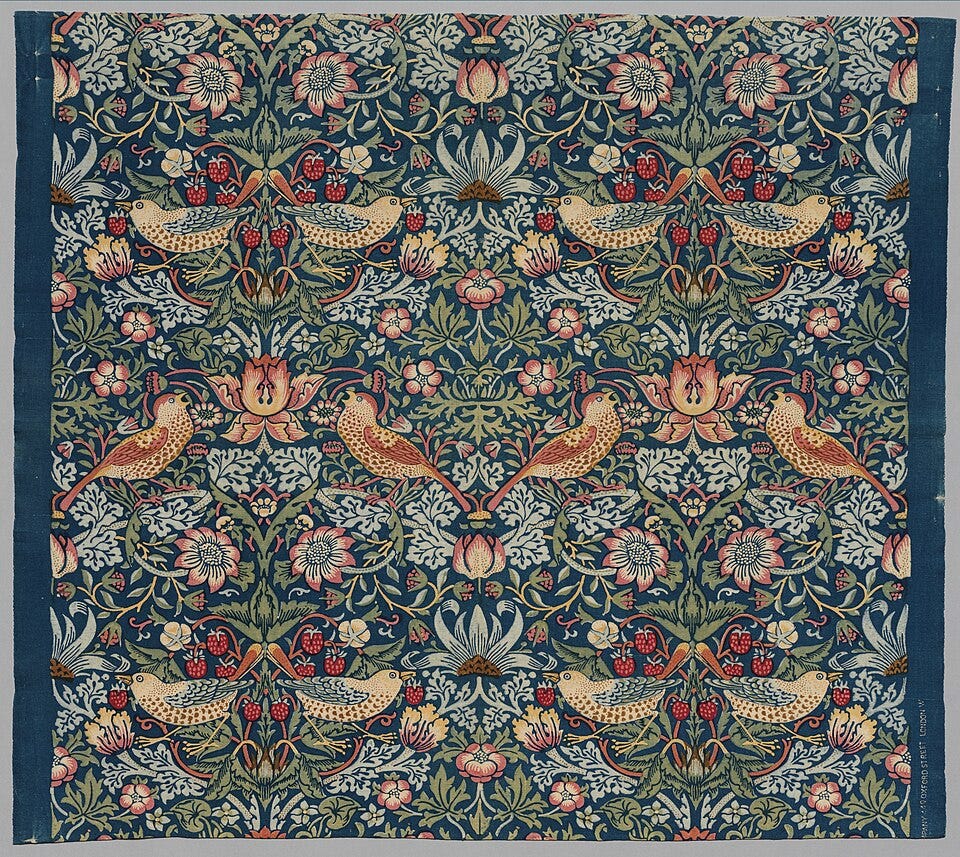
Morris and other members of the movement bravely revolted against the system’s obsession with increasing efficiency at all cost, which not only produced inferior goods and disappointed customers but severed ties between workers and the fruits of their labour. This system nurtured indifference and frustration in craftsmen, turned capable artisans into anxious cogs with no connection to the final product, and continuously sought ways to expand production and reduce the cost. It exploited local communities, destroyed ecosystems, and torn social structures only to squeeze more resources to further fuel its growth and pour more cheap goods into the market. As the system was rapidly marching towards an imminent collapse, Morris and peers fought for the revival of craft, the rise of the artisan, and the right to make a living producing beautiful, well-designed, and durable every day objects. The Movement was not regressive: it rejected the factory-based production system, but embraced technology—so long as it empowered the craftsmen, not threatened to replace them.
150 years ago, William Morris and his colleagues suggested a viable alternative to the exploitative, growth-obsessed system of mass production. Today, as companies replace entire divisions with AI, command developers to maximise their token usage, and battle the decreasing morale with snacks and perks, the Arts and Crafts Movement’s ideas might once offer a better path forward.
No posts
Comments
Nothing yet. Say the first thing.
Sign in to join the conversation.