
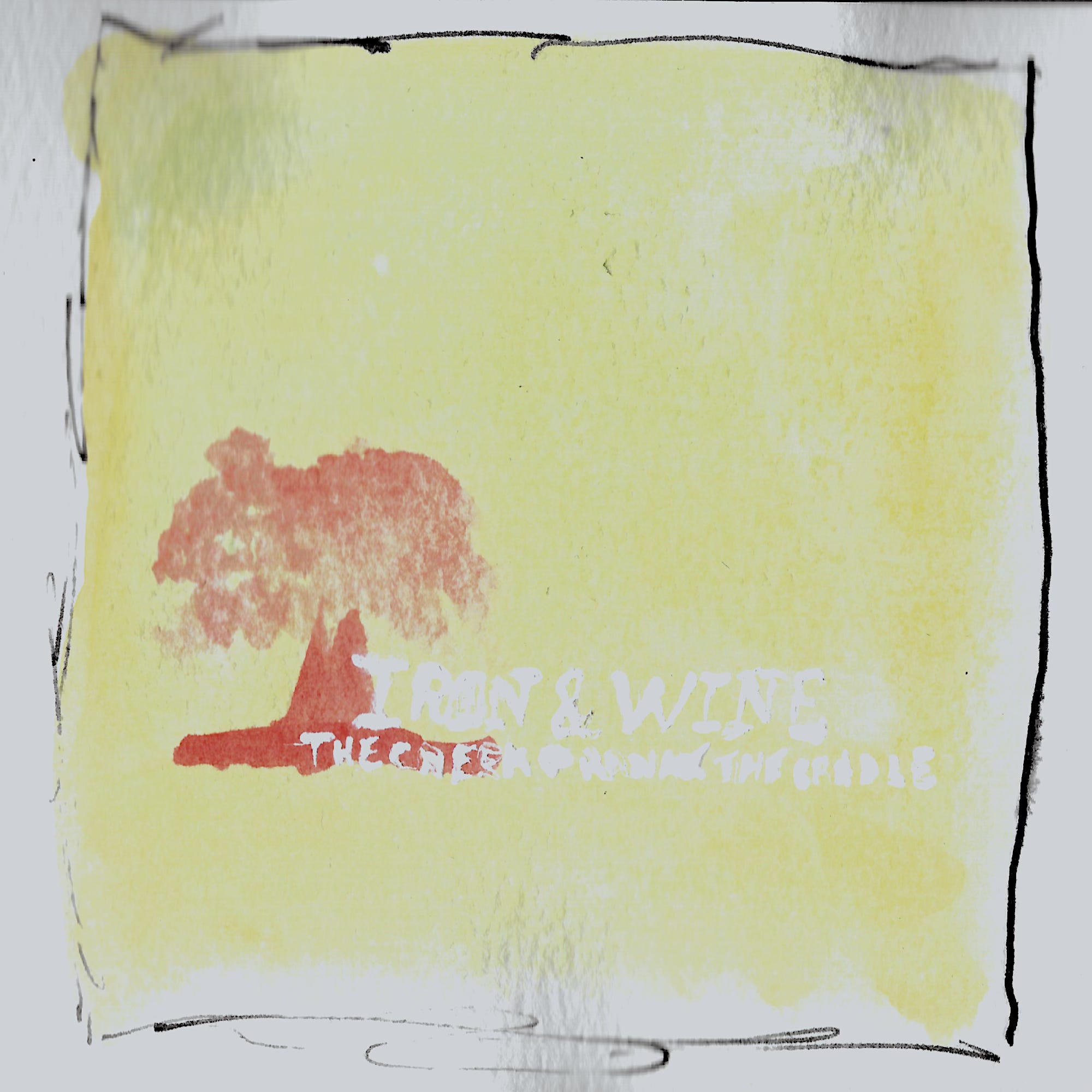
According to Sam Beam, the man himself, Iron & Wine is one of those bands men don’t like. At every performance I’ve seen him, he’s made the same joke: guys intentionally suffer through his concerts to appease their girlfriends, their wives, that lady from work they’re trying to get a little closer to. There’s some kind of ulterior motive in the act of listening, temporarily letting your sensitive side out.
Honestly, it’s a pretty weird and unreliable perspective, given that the majority of Iron & Wine fans I’ve known have been male. Moreover, I know that one of the major things that attracted me to his songs in the first place was the songwriting, the imagery in the verses that were reminiscent of Faulkner or (in darker moments O’Connor), and the recording techniques he employed. I was always curious about both home recordings and the studio, and the other boys that I spent my time with were similarly aligned.
When I first heard this record, in the early days of my college years, I fancied myself as a sound recorder and a producer. I was all about recording my friends’ musical interpretations of standards, their own original songs; basically anything that would let me test out my skills with the digital audio workstation. There was even a moment when I thought I was going to be a songwriter, write my own literate Great Lakes gothic-style pieces talking about growing up in the country.
I had many different musical influences I was attempting to pin down: Bob Dylan, Cat Stevens, Fleet Foxes, and especially Pete Seeger, whose collected works of American folk songs soundtracked a garage sale we had one summer. After all those artists simmered together for a while, eventually I felt compelled to write my first (perhaps my only) song as a singer-songwriter. It was based on family lore, about how my mother was picking raspberries when she was pregnant with me, and then fell in the mud and had to crawl through the briars and brambles of the raspberry bushes. Every time I hear “Upwards Over the Mountain”—about the complex relationship between a son and his mother—I think of my own song. It’s not as good and isn’t something others will hear, but it captures a moment in an unforgettable way, freezes an important story in time.
The early Iron & Wine music is precious, but not too saccharine. Especially on this record, there’s a lot of familiar imagery in this music that will be (later) recapitulated through the rest of the Iron & Wine oeuvre. Songs about dogs, songs about sitting in cars, songs about tugging on skirts, Biblical stuff. The fingerpicked guitar moves contrapuntally across (typically) four chords, a straightforward ABAB sectional organization. It’s heavy in the upper-midrange because of the medium, highs rolled off, tape saturating, additional instrumentation layered atop to fill out the high-end: banjo, slide guitar, maybe a mandolin. There’s rarely more than four elements per track, perhaps a nod to the minimalism of the White Stripes.
This is the style I wrote my own song in, mimicking the thumbed descending bassline of “Faded from the Winter” and the mournful minor-key singing. I spent a whole summer chasing the atmosphere and feel of these lonesome, quiet songs and managed to compress all the feelings I got from the eleven of them into one.
Verdict: Keep
Are sons like birds?
No posts
Comments
Nothing yet. Say the first thing.
Sign in to join the conversation.