
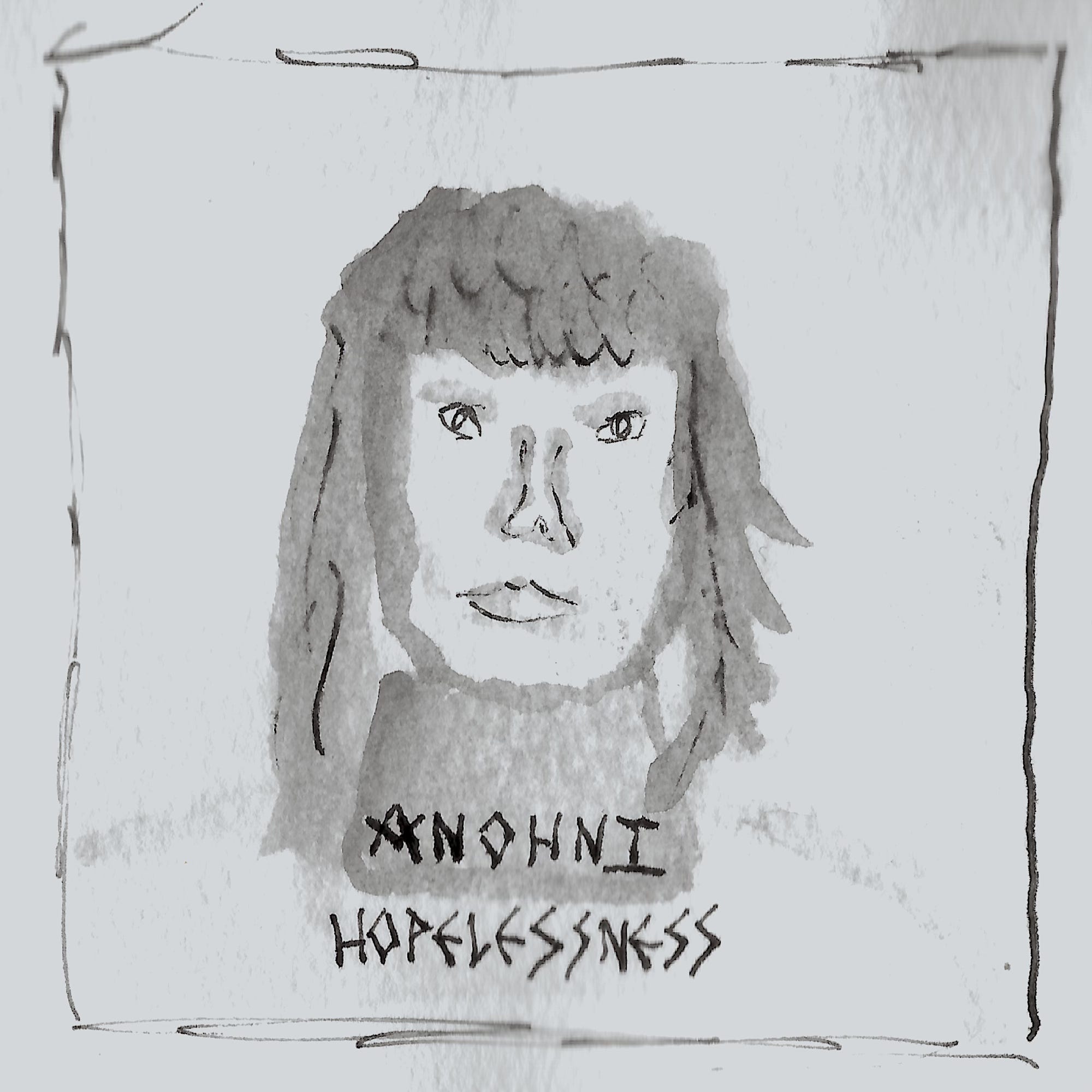
Nominally, I don’t do straight-up fiction as a part of this project, but let me summarize a story for you, a piece that a friend of mine wanted to write. There was a young Japanese boy was learning to be a mage, exploring how to manipulate the elements, cause waterspouts and make the earth rise. He tried hard and believed in himself and nothing happened. His classmates made fun of him, but he persisted. And then on August 6, 1945, as he was getting ready for school, he did his precise and special movements from a scroll he found in his grandfathers book shop, and saw the fireball he conjured in the distance over downtown Hiroshima, and was glad.
That is an illustration of the tension held in this album, the relentless positivity in the music itself, the most martial beach ball snares and basso profundo-blended synthetic horn voices giving us forward motion and intensity, the same ones which would soundtrack hip hop records for a micro generation; sheer ecstasy and pleasure in the sound design, and yet the recognition that these could be Disney anthems for a dead world.
I don’t know that I feel confident enough to assert that art is always political, but I do have some thoughts on the matter. What I learned in my ethnomusicology course in college was that music is a way of organizing social practice, not just sound. There’s a multiplicity of factors which go into the cultural definition as to what is perceived as a piece of music, depending on where you are at in the world, what time and what place. When Bob Dylan took his overtly-political Woody Guthrie Dust Bowl ballads and Dylan Thomas surrealism, and played them in front of an audience, that was a political act. And when he played Newport Folk festival with electric guitars, the screech of feedback sending Pete Seeger for his axe, to cut the trunk cable and prevent the squall from upending the audience, that was political too, but differently so. Maybe it’s the act of response to real-world events, that’s the thing that’s political, embedded in the world of other people and however we interrelate.
So here’s my context: I first heard this music in my kitchen in Raleigh, North Carolina, while brewing kombucha. I (we) had just come off a sequence of interesting years: one of living as a freegan, one living in China, and one living poor in a large American city. I was trying to figure out what sustainability looked like in my life. I didn’t own a car and took the bus an hour or more to work at the university.
Politically, I was growing and changing, becoming more aware and skeptical of the change promised by the Obama administration, noting that their overreach when it came to extrajudicial violence and prosecuting whistleblowers was something I despised. In the evenings we watched TV to unwind while my partner was in graduate school. I was disgusted by the saccharine just-so stories in the West Wing and also by the presidency depicted in House of Cards, which was near-Nixonian. I could not comport this idea of hope and change, visions of transformative growth for American society, with the planet burning down and destroying the homeland for all of us at once. It made me so sad but was also galvanizing in a weird way, and I didn’t know where to put that energy.
I had listened to Anohni and the Johnsons in high school, a group that blossomed out of the downtown New York scene but was getting lumped together with freak folk acts like Joanna Newsom and Devendra Banhart, the resurgent folk music that occupied my high school and college years. When I heard she had a new record out, I was expecting to hear something Nina Simone-adjacent: tender ballads about queerness or the AIDS crisis, something to emphasize her powers as a chanteuse, a vehicle for her to defiantly speak about contemporary issues in an adult contemporary style.
I got some of that, to be sure, but I was very surprised by the rest. To this day, I still don’t understand how music can be both anthemic and horrific.
Maybe her vocal performance on this album is rooted in her collaboration with Björk on the record Volta, songs about yearning for an integrated way to live on the planet, but also laser-focused on the viscera and muck that constitutes life itself, the fluids and fluidity of being human. I know that her collaborators Hudson Mohawke and Oneohtrix Point Never came to the work with this vision of addressing serious issues through the multimodal world of dance music, the ecstatic world of being free on the dance floor to inhabit your embodiment, while still confronting the range of complex emotions—rage, violence, isolation—which put you there, sublimating those feelings into invigoration instead of lashing out. It’s telling that there’s a four-on-the-floor (or at least danceable) beat on pretty much every song, that the subs sound good, that the kick knocks.
As above, the duality in the storytelling is the most important thing here, playing with that tension of jubilant release and recognition that we are hopeless in some of these circumstances. On “Watch Me”, our singer takes the American adage, “Don’t Tread On Me,” and converts it to “Step On Me, Daddy,” adapting the modern authoritarian surveillance state into a voyeuristic father figure. “Done Bomb Me” is a love song about being chosen, being overtaken by someone else’s gaze and will—in this case, the sights of the American war system.
Especially in light of the current AI-related froth in the economy, “4 Degrees,” a song named for how much hotter the world will be by 2100, hurts me when I listen to it. Anohni plays a character like an anti-David Attenborough, and at 2:57 when the song drops out and goes from violins to full-scale instrumentation again, one feels the tears of all of the mammals larger than us, writhing in death in some bleached field somewhere.
As a novice meditator, I try to relax my wandering mind and just focus on the upper portion of my philtrum when I sit. However, inevitably, other thoughts interject themselves. One of the mantras I have circulating through my head is: “how am I complicit in creating the conditions I don’t want”. There was a time that I believed that an individual can resist and act as a model for others, but either I became a coward or I found it impossible. I put in my time as a scavenger on the boundary of capitalism and, for me, it was a choice. But for the future generations, it won’t be, if they survive. And for what—what did we get out of it, especially when the economic calculus is to grow our way out of a crisis, but the growth that happens is all fake and we’re essentially right where we started?
Personally, I got this piece of vinyl, this petroleum product, which I can luckily listen to in a state the predominantly runs on hydroelectric power. Until it doesn’t.
Verdict: Keep
Is it only four degrees?
No posts
Comments
Nothing yet. Say the first thing.
Sign in to join the conversation.