
Years ago, I received an invitation to attend a program at the Aspen Institute. I’m so glad that I accepted the invite, because it changed my life. I loved what I learned there. I found it innovative and refreshing, and their approach resonated so much with how I saw my own work in the world.
A few years later, I received another call, asking about my interest in joining the team. I was astonished and also humbled. I ended up pursuing the opportunity and leading the program.
One of my main goals upon joining was to help bring the brilliant work of the program out into the world. We had an amazing and innovative team who helped us achieve this goal. We also had a project in the works to share our work as a publication. I had a bit of experience in publishing by this point. I wondered if a major academic press would be interested in a book on building religious pluralism that could be used by practitioners, scholars, and students alike.
It turns out that many publishers were interested in the project, and we ultimately signed a contract to produce the book with Oxford University Press.
It seemed like a simple proposition, but it turned into a massive project. We prepared a proposal for academic publishers, and we assembled a dream team of leaders to help write essays for the book. About four years later—and after many, many rounds of drafting and revising—our vision has finally coming into reality.
Our new book is officially out! It’s called Modeling Religious Pluralism: Cultivating Religious Equity in Today’s World.
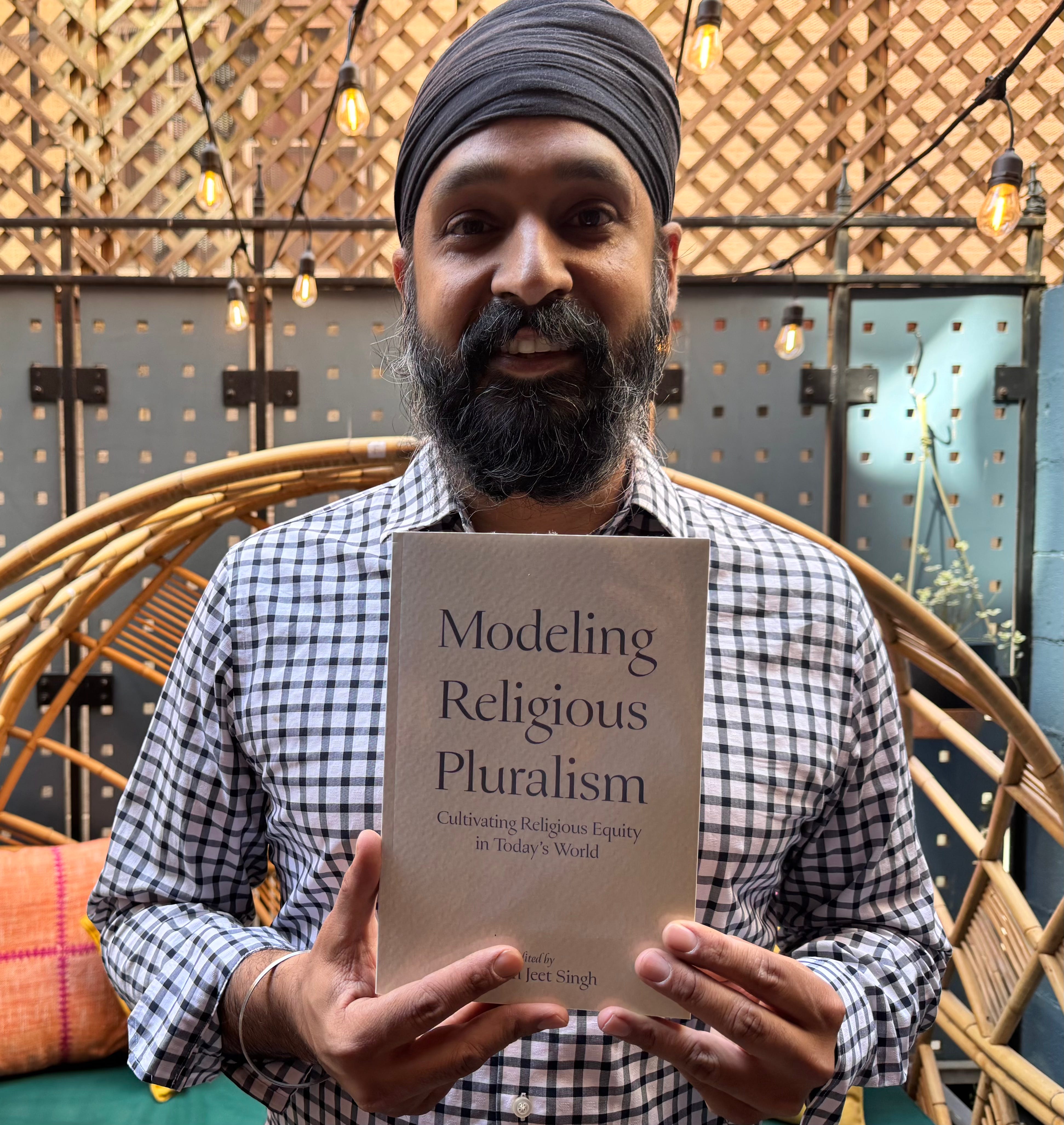
Modeling Religious Pluralism makes a case for why religious pluralism matters and how we can build it to last. The volume is animated by a long-standing question and a critical issue of our time: How might we live alongside people who live and believe differently? The contributors are leaders in the field and represent a diversity of traditions, approaches, and issue areas. They offer a rich tapestry of interlocking perspectives—grounded in deep expertise and experience—to provide analysis, insight, and practical guidance for building religious pluralism. This book is for anyone and everyone interested in understanding the intricacies of interfaith, pluralism, justice, and equity.
It’s available wherever books are sold, and unlike most academic books, it’s available at an affordable price point. This was an important consideration for me, because the last thing I want is to create another inaccessible or unaffordable resource that has minimal impact on the world.
It’s been a lovely experience editing my first anthology, especially because I had the fortune of doing it with people I respect and admire. I’m going to paste a brief excerpt from the opening pages below. I hope you enjoy and will consider ordering the book today!
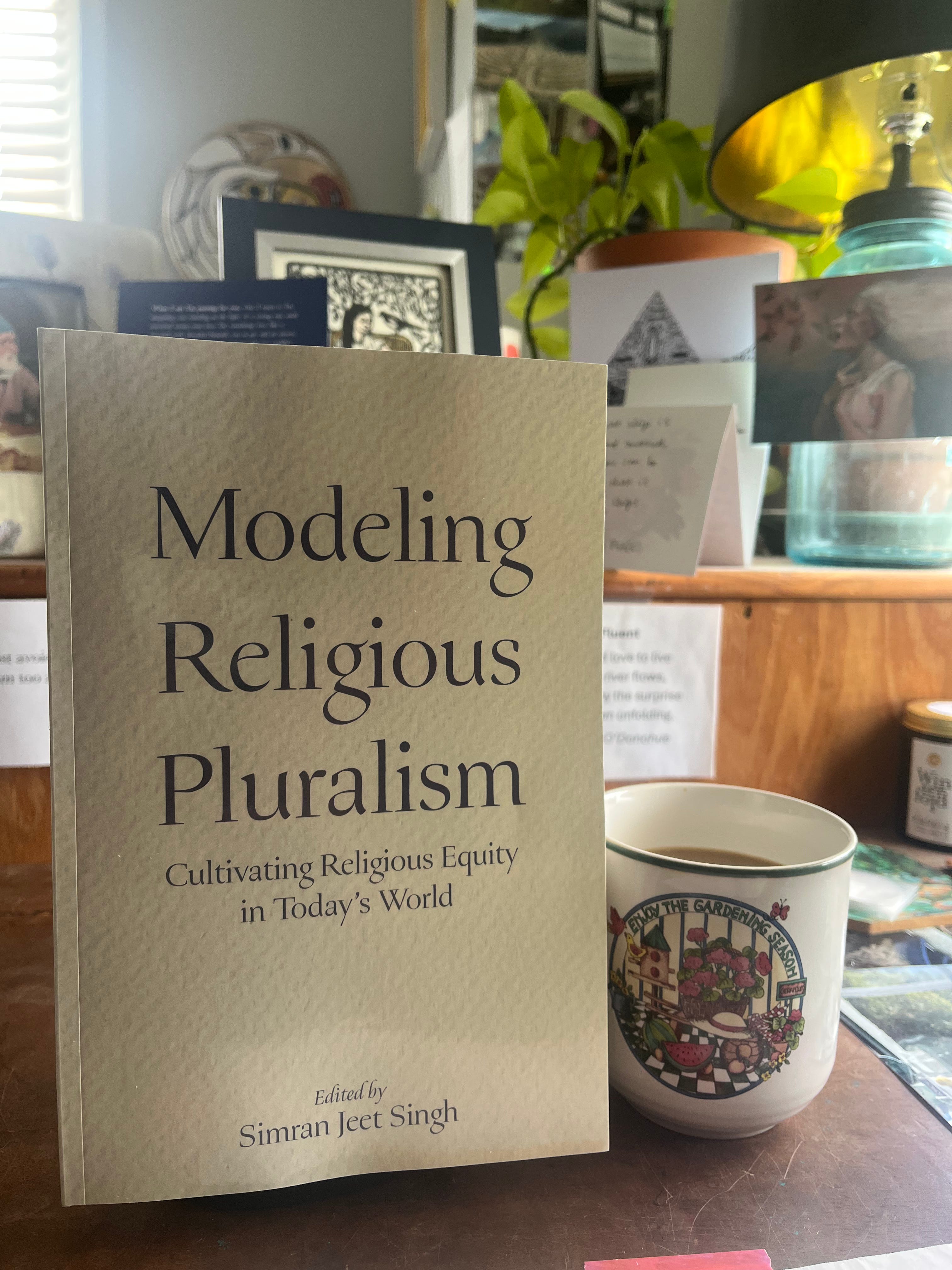
An excerpt from the preface to Modeling Religious Pluralism.
How do we deal with difference? This has become a central question of our time. Racial difference. Political difference. Cultural difference. Ideological difference.
Scholars, activists, and everyday citizens have discussed and debated these topics at length. And yet, there are some forms of differ
ence that have not yet received the attention they merit, despite their clear importance and urgency.
Our capacity to understand and engage with religion and religious diversity is one such issue. Religion is often overlooked, misrepresented, and misunderstood. Many people avoid conversations about religion, believing them to be too messy and too volatile.
On the occasions that people do discuss religion, it quickly becomes apparent that most in our society are ill equipped to deal with the complexities of religious difference.
The stakes are too high to continue operating in these ways. With surges in religious nationalism around the world and across the United States, it is past time that we develop a foundational understanding of how religion operates in our society and how we can engage religious difference in productive and meaningful ways. There are many leaders and initiatives working to advance that vision, and this volume is our humble effort to contribute to these efforts.
For the past fifteen years, the Aspen Institute’s Religion & Society Program has been working to make religious diversity an asset rather than a liability. We have recognized the global magnitude of this challenge and chosen to focus our work on the United States. It’s where we are situated, the context we know best, and a country where navigating religious difference remains a real challenge.
Through our convenings and research, we have determined that building a healthy society and democracy in this country necessitates a strong and robust commitment to religious pluralism.
What is religious pluralism? Since 2020, this has been our working definition: “Religious pluralism is a vision of the world in which diverse religious communities and non- believers engage one another in beneficial ways, maintain their distinct identities, and thrive and defend one anothers’ right to thrive.” In other words, religious pluralism is neither anti-religion nor pro-religion; it does not favor a particular religion or diminish another; nor is it a call for cultural relativism or an all- inclusive Unitarianism. Religious pluralism is a recognition that religions are different and specific, and that we can view them without assigning hierarchical value or placing them in competition with one another. The goal of engaging with religious difference is not to convince or convert, but instead, to disrupt bias, enhance understanding, and build empathy.
Religious diversity has often been targeted as a problem in this country. Figuring out how to navigate it has been a long- standing topic of debate, from before the United States was founded in 1776 to the present day. Religious missionaries have used the presence of religious difference to stoke fear and to advance ideologies of exclusion. This project offers another way forward, one that claims neither religious similitude nor religious supremacy, but instead, offers a path for appreciating the diversity that surrounds us.
While this book aims itself at the aspiration of religious pluralism, it is also grounded in present realities. This is to say, the authors and I are all keenly aware that not all religions have been able to claim equal footing in the United States of America, and that all religious communities have their own unique challenges.
This includes Christianity, which is often centered in how we conceive of religion and religious freedom in this country, as well as minoritized traditions like Hinduism and Buddhism, which have a strong presence in the United States but do not enjoy equal opportunities or freedoms.
As a scholar of religion, I am also keenly aware that religion itself is a problematic category, neither native nor universal in the way we often presume in our modern world. I am also aware that talking about religion in the singular, rather than religions in the plural, can reify presumptions of essentialism and homogeneity, privilege dominant narratives, and marginalize lesser- known traditions.
And yet, I am also aware that religion is an operative and important construct in popular discourse. In this volume, we have done our best to remain sensitive to these considerations in conceiving of and writing our chapters. One of the ways we have expressed this sensitivity is in our commitment to defining religion not based on what institutions or textbooks say, but on what it inspires people to do.
Implicit in our definition of religious pluralism is our position that the consequences of religious pluralism are positive and desirable. This is not to say that religion is always positive and pro- social. There are countless examples of how it has sown discord and division, hatred and violence. Many of the chapters in this volume speak to the suffering wrought by religious actors. What we believe, though, is that advancing religious pluralism has many positive outcomes that are worth naming explicitly, including enhanced civic engagement, social cohesion, trust, resilience, and belonging.
No posts
Comments
Nothing yet. Say the first thing.
Sign in to join the conversation.