
Welcome to the Pantry Files! A well-stocked pantry is one of those topics I could talk about for hours, so I figured I’d start breaking down what I keep on hand here. This is just a small part of the pantry (mostly sauces and seasonings) that is above the counter next to my stove.
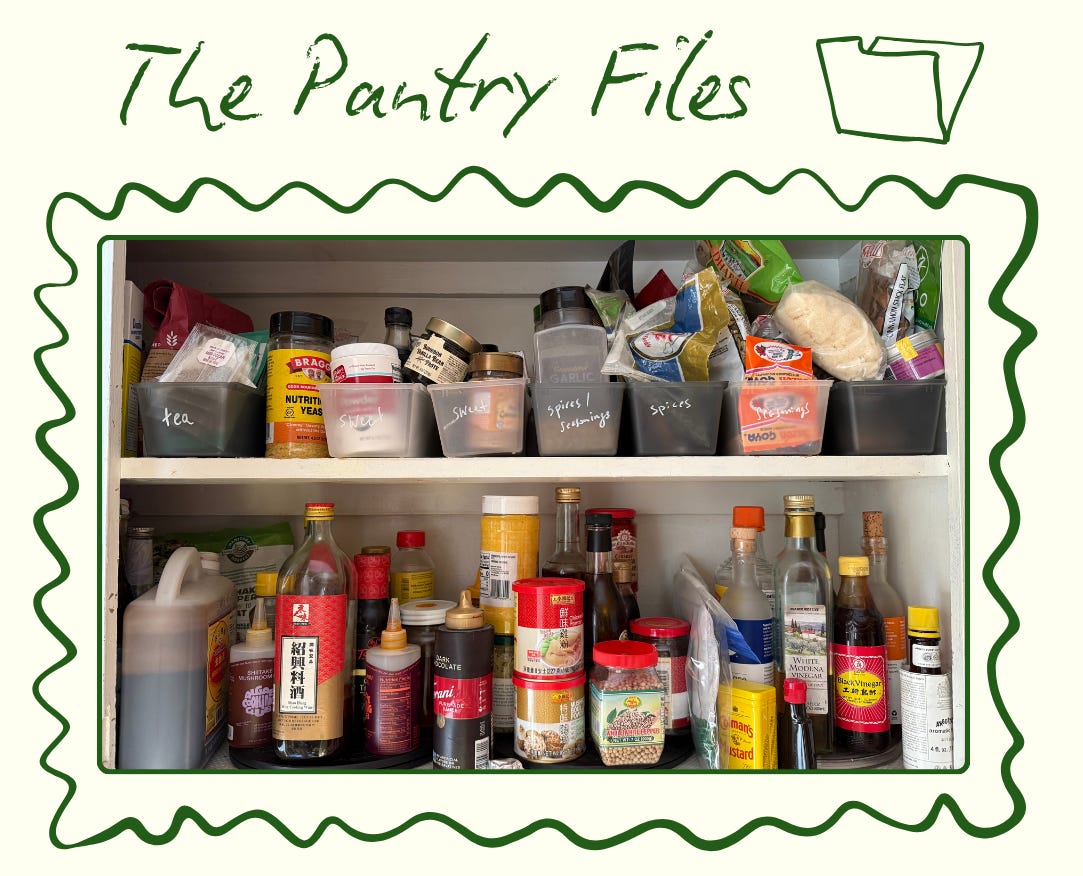
A good portion of this is my staple Asian pantry items, and today for the first installment of this series, I’m talking specifically about the Chinese cooking staples that I keep on hand.
I grew up in NYC, which has a very particular style of Chinese takeout, and when I moved to Michigan, it was one of the things I missed most. Over the years, I’ve found some takeout places we like, but it’s still not the same.
So when I wanted to try making more Chinese takeout dishes at home, I needed to build out my pantry of staple sauces and ingredients for that cuisine. This is the part that can feel expensive up front, and often you don’t know what to buy. So I wanted to make a simple cheat sheet that I would have wanted when going to the Asian market, navigating the grocery aisle, or shopping online.
Earlier, I shared a post with a few Chinese takeout favorites that I’ve been freezing lately. And I realized that there may be some ingredients you might not already have on hand. I was going to add this into that post, but decided instead to make this a series where I talk about my pantry staples and how I go about building out a pantry for a new cuisine.
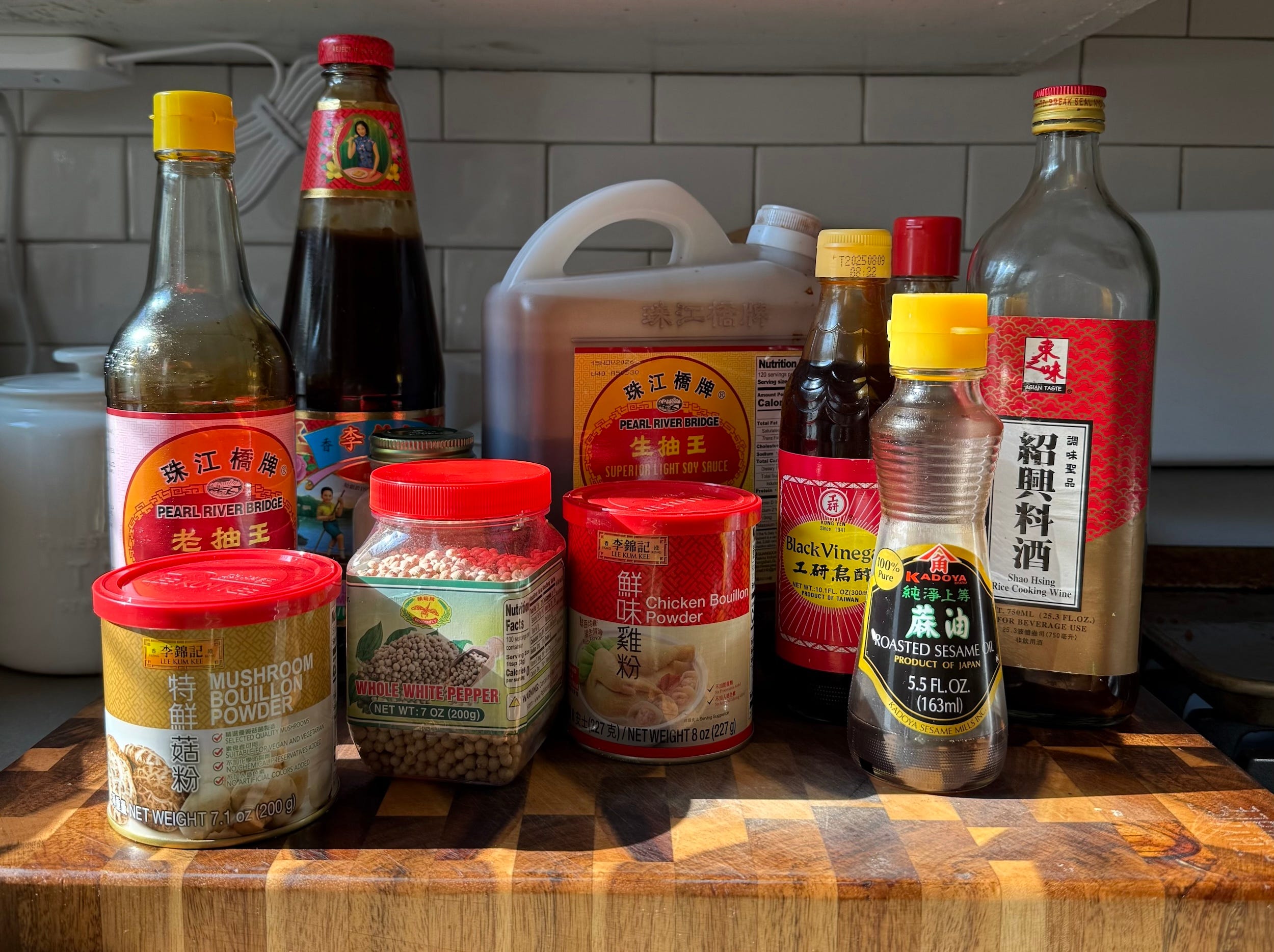
Soy Sauce - You will see recipes that call for regular soy sauce and dark soy sauce. Dark soy sauce is mostly for color; regular soy sauce is for flavor. For Chinese dishes, I have both from the Pearl River Bridge brand.
Hoisin Sauce - Sometimes called Chinese BBQ sauce, this sauce is sweet and tangy. It is mainly used as a dipping sauce but is also used in marinades like Char Siu (Chinese BBQ Pork). While you can make this at home, the best brand I’ve found is Koon Chun, and it gets bonus points for coming in a jar that is easy to spoon thick sauce out of rather than a bottle.
Oyster Sauce - So many of the classic takeout recipes call for oyster sauce, so it’s a must-have in the pantry. I use Lee Kum Kee (either the panda brand shown above, or I recently switched to the original premium oyster sauce from the same brand, which is much better).
Black Vinegar - this is used in dipping sauces and some stir-frys, but my favorite thing to use it for is to dress a simple side salad of smashed cucumbers. I’ve tried a few brands, and this is the one I like best.
Sesame Oil - Specifically roasted sesame oil; I like the one from Kadoya. I’ve repurchased it many times. You can find it in most supermarkets, and it’s easy to find by the shape of the bottle.
Shaoxing wine - This was the thing my pantry was missing for a long time. Deglazing with a splash of Shaoxing wine really adds that classic takeout flavor. I tried to find a link for the specific one I use, but this is as close as I could find. You can see the bottle on the right in the picture above, that’s what I get from my local asian market, it’s a square glass bottle with red and gold on the label.
Chicken Bouillon and Mushroom Bouillon - Sometimes you will see this in recipes as chicken powder. Getting the Lee Kum Kee powdered versions of both of these changed the flavor of my cooking.
MSG - This one has been debated for a while, but I think most chefs agree that the fearmongering around MSG is deeply rooted in xenophobia, and there is nothing harmful about monosodium glutamate. It naturally occurs in many of our favorite ingredients like Parmesan cheese, ripe tomatoes, and mushrooms. If you want to learn more about MSG and the science behind it, check out KnowMSG.com. MSG is sold under the brand name Ac’cent® in the United States, as well as AJI-NO-MOTO®, and can be purchased in the spice aisle of most major supermarkets, Asian grocery stores, and online.
White Pepper - While occasionally used in some classic French cooking (mostly for aesthetic reasons), it’s not common in the American household spice cabinet. But it’s much more common in Chinese cooking than black pepper. I keep both ground and whole peppercorns on hand, but just ground is fine for 99% of recipes.
Some other ingredients you will need for many takeout-style dishes but might already have in your pantry include cornstarch and baking powder.
While this is by no means an exhaustive list, there are still many areas of Chinese cooking I have yet to explore (most notably many Sichuan dishes with the mala flavor profile); this is a good start if you’re just starting to build out this corner of your pantry.
No posts
Comments
Nothing yet. Say the first thing.
Sign in to join the conversation.