
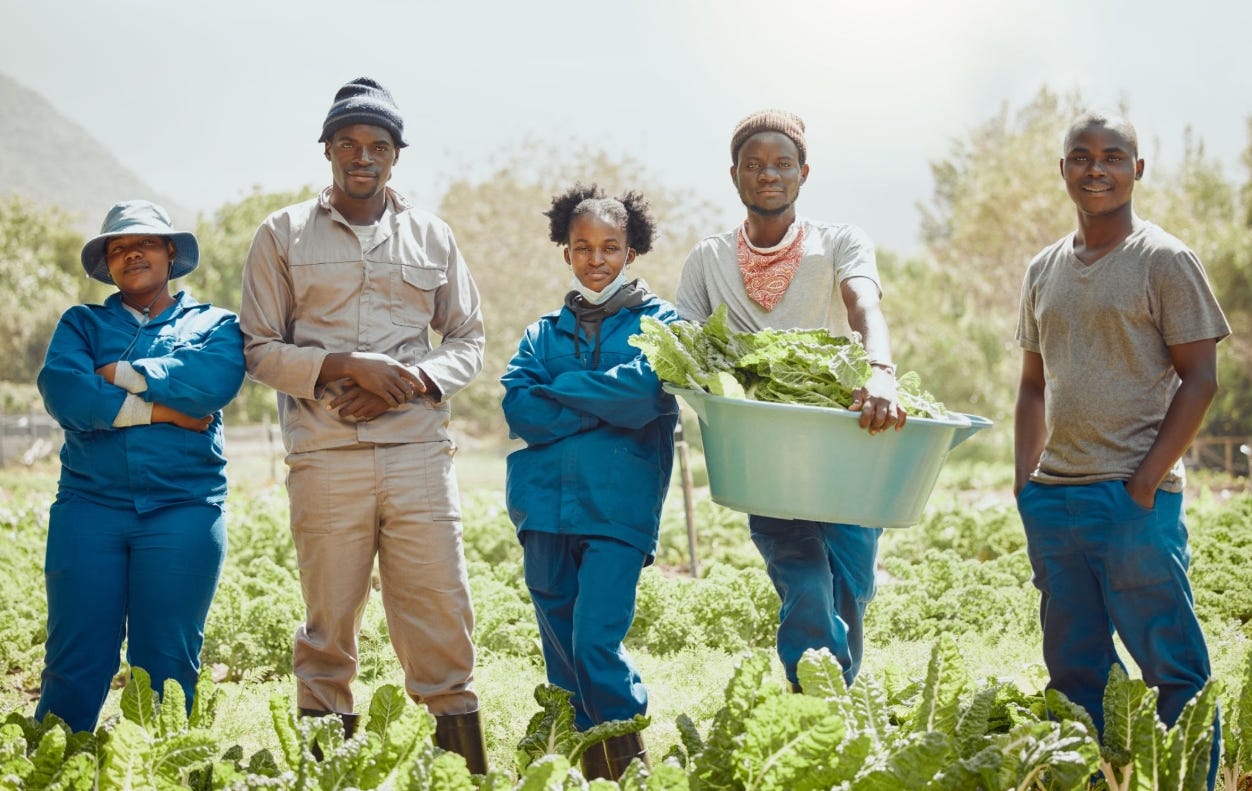
For over a decade, my work has centered on a single, stubborn reality: the traditional, linear pipeline of business across Africa is broken. We extract, we manufacture, we consume, and we throw away. Over my 13 years as a business consultant, coach, and media creator, I have watched countless startups and medium enterprises struggle against this rigid “take-make-waste” model. It isn’t just causing an environmental crisis; it’s an economic dead-end that fails to create sustainable, resilient livelihoods for the brilliant young minds entering our workforce every year.
As the Mastercard Foundation celebrates 20 years of shaping Africa’s future leaders, we have to ask ourselves a hard question: What are we actually leading our youth into?
The next frontier of African leadership requires us to stop managing poverty and start engineering closed-loop ecosystems. Having studied and worked directly within agroecology and local farming systems, I’ve learned that nature never creates waste. Every byproduct is an input for something else. The future of youth employment and entrepreneurship lies in translating that exact biological law into our industrial design—what I call the Green Industrial Future.
The Power of the Loop: Lessons from the Soil
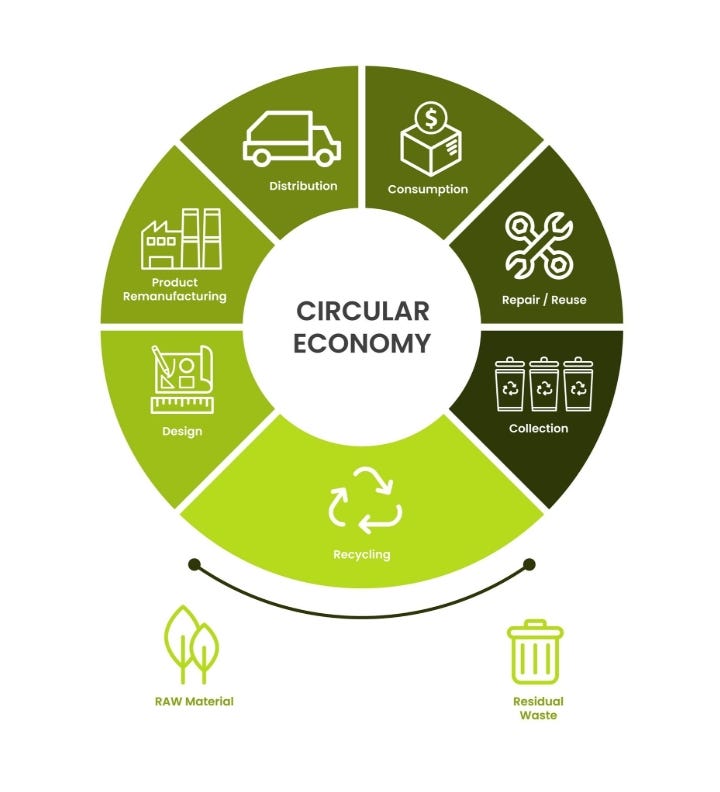
A genuine circular economy goes far beyond the surface-level politics of basic recycling. It is a deliberate, structural paradigm shift where waste is systematically mapped as an undervalued asset class. When we look at the heaps of electronic waste, industrial plastics, and discarded rubber suffocating our local municipalities, we shouldn’t just see a sanitation crisis. As strategists, we need to see raw, localized materials waiting for an optimized value chain.
Transformative leadership doesn’t mean holding a microphone or writing abstract policy papers from an air-conditioned room. It means designing platforms. In my daily practice as a mentor and consultant, I tell founders that true innovation happens when you solve immediate, local friction.
By merging agroecological principles with eco-tech manufacturing, we can build community-led upcycling micro-hubs. Imagine taking difficult-to-recycle regional waste and processing it locally to build affordable agricultural tools or digital learning infrastructure. This doesn’t just lower carbon footprints; it creates hyper-local, dignified green jobs that legacy industries can no longer offer.
Breaking Silos through Multi-Sector Collaboration
To turn these circular concepts into macroeconomic realities, young African leaders must collaborate ruthlessly across borders and sectors. Through my media and advisory work, I’ve realized that the transitions between education, employment, and entrepreneurship are treated as separate steps. In reality, they must be part of the same continuous loop:
Regenerative Agriculture & Data: Connecting young smallholders with tech innovators to deploy predictive, mobile-friendly tools that manage soil degradation and weather risks while scaling yields.
Circular Manufacturing: Training young creatives and engineers to upcycle local waste streams into high-value consumer goods, keeping capital circulating inside the community.
Alternative Fintech: Designing credit-scoring frameworks that look at alternative data points—like a youth cooperative’s waste-aggregation metrics—to unlock business capital without requiring impossible formal collateral.
The Systemic Mandate
Being a part of the Mastercard Foundation Scholars and Alumni network is a heavy, beautiful responsibility. We are the stewards of the next 20 years. But structural growth is completely meaningless if it isn’t inherently inclusive.
Our green industrial frameworks must be intentionally designed to lower the barrier of entry for young women, rural youth, and displaced communities. In my own coaching journey, I’ve seen that true economic resilience is impossible if our most vulnerable populations are treated as an afterthought rather than co-designers of the new economy.
The conversation we are neglecting today is how rapidly we can transition African youth from being passive consumers of global technology to the primary architects of our own supply chains.
My message to the next generation navigating life’s complex transitions is straightforward: do not wait for a perfect ecosystem to appear. Step directly into the arena. Map the assets already sitting in your immediate environment—even the ones others call garbage. Design with deep structural empathy, and build systems that protect the land while empowering its people. The past 20 years proved what happens when you invest in African youth. The next 20 years will be defined by how we use that investment to close the loop and own our future.
No posts
Comments
Nothing yet. Say the first thing.
Sign in to join the conversation.