
Thanks for reading Anti-Capitalist Musings. It is a small operation, and I hope it offers something worth your time. There will be no premium subscriber content here: everything published will remain free to read. If you value these pieces and want to support the writing, buying me a coffee helps fund media subscriptions and the books that keep the analysis grounded. Every contribution, however modest, is genuinely appreciated.
Something peculiar happened during the neoliberal era. The institutions of British and American capitalism became steadily more comfortable talking about race, gender and representation at the same time as they became more hostile to organised labour. Boardrooms diversified. Universities acquired equality strategies. Corporations learned the language of inclusion. Meanwhile wages stagnated, trade unions weakened, housing became an investment vehicle and public services were privatised, outsourced or stripped back.
None of this means that struggles against racism or sexism were mistaken. It means capitalism proved capable of incorporating one kind of demand while resisting another. A company could alter who appeared in its advertising while fighting union recognition. A university could proclaim inclusion while casualising lecturers and outsourcing cleaners. A political party could return a more diverse group of MPs while accepting economic rules that left very little of consequence open to democratic argument.
In Class Politics is Not Woke 2.0, I argued that talking about class is not the same as recovering class politics. In The Last Identity, I pushed the argument further: the left could abandon Woke 1.0 while retaining its political grammar, with “working class” becoming another category of authenticity, another experience to be represented and another constituency whose approved voices had to be found. That would not be a harmless change of vocabulary. A new identity politics organised around class would repeat the same sorting of people into authentic and inauthentic voices, the same suspicion of universal claims and the same substitution of representation for organisation. At a moment when the right is advancing through its own politics of nation, belonging and exclusion, such a retreat would be a catastrophe. It would leave the left fighting over who is entitled to speak for the working class while the institutions capable of giving that class power remain weak. Far from correcting the failures of Woke 1.0, it would become a catalyst for further defeat.
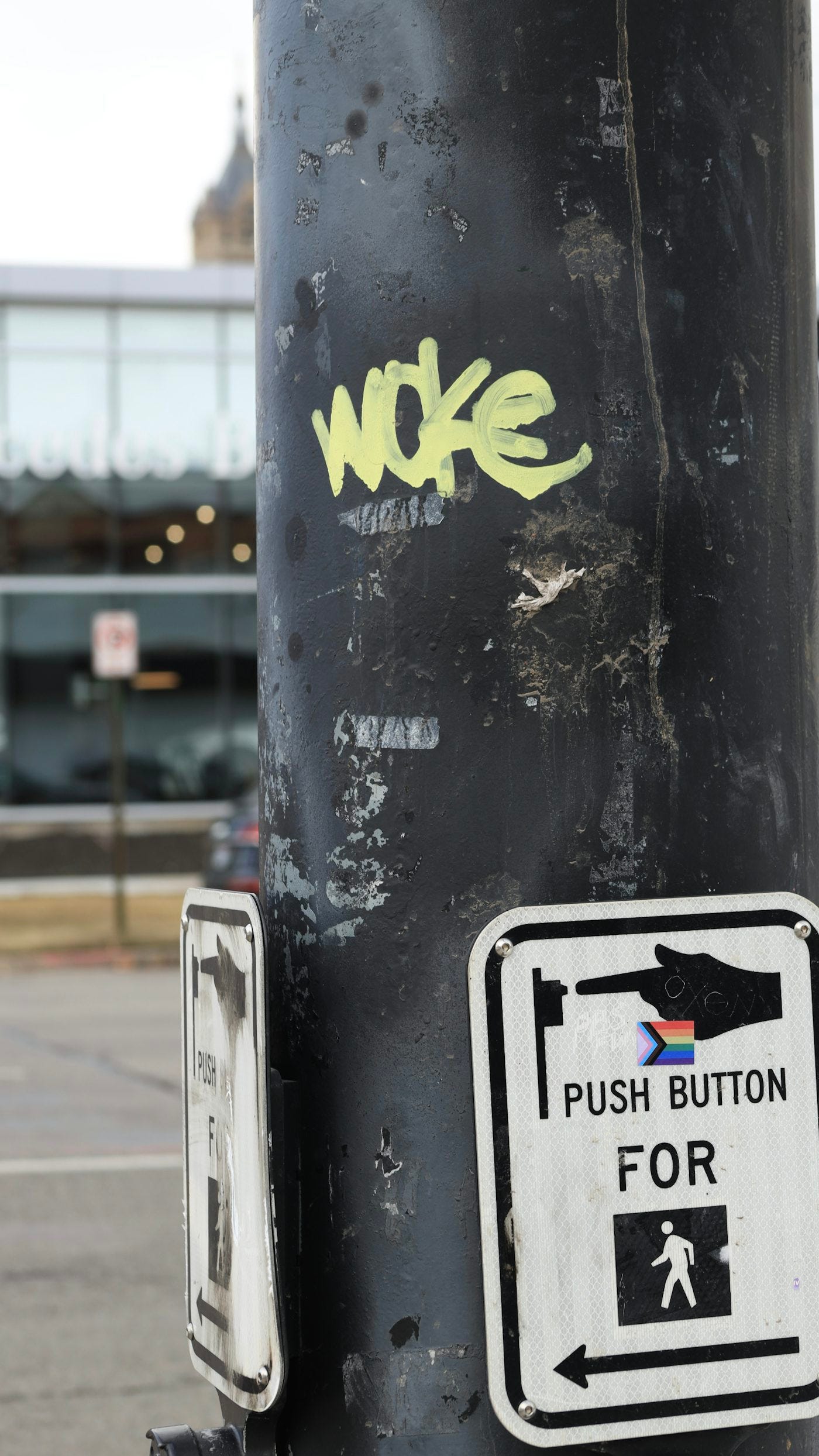
There is another question behind both pieces. Why was a politics that often understood itself as radical so readily accommodated by the neoliberal order it claimed to challenge?
The answer cannot simply be that the left abandoned class for identity. The sequence is wrong. Identity politics did not privatise industries, deregulate finance, sell council housing or break organised labour. Much of that had already happened before the politics later grouped together as “woke” reached its high point.
Organised labour/life was weakened first. Social democracy then accommodated itself to much of the new settlement. Work became more fragmented and insecure, union density fell and political parties lost much of their rootedness in everyday working-class organisation. When new forms of radical politics grew inside that landscape, they emerged through universities, NGOs, media organisations, professional workplaces and digital platforms.
It is hardly surprising that the politics produced there looked different.
A politics centred on recognition, representation, language and individual conduct fitted a society in which many of the institutions capable of organising collective economic power had already been destroyed. Political consciousness did not disappear. Its available forms changed.
There were real gains. Discrimination that had once been treated as normal became harder to defend. Racism, misogyny and homophobia could be named more openly and challenged. Trans people fought for recognition and basic rights in workplaces, schools and public life. Disabled people challenged exclusion, inaccessible institutions and a social order that routinely treated their needs as an afterthought. None of this sits outside class politics. Housing, work, welfare, healthcare, transport, education and bodily autonomy are material questions.
The problem came when emancipation was increasingly imagined through access to existing institutions rather than the transformation of the relations governing them. Who gets into the university? Who reaches the boardroom? Who appears on television? Whose experience is recognised? Those questions matter, but they leave another question hanging: what kind of institution are people being admitted to, and whose interests does it serve?
Capital proved much less frightened by the first set of questions than by the second.
It could live with a more diverse managerial class. It could live with chief executives talking about identity. It could live with banks sponsoring Pride events and corporations publishing disability and inclusion strategies. What it found much harder to live with was workers acquiring the capacity to stop production, tenants acting together against landlords, governments taking industries out of private hands or organised movements forcing redistribution from capital to labour.
The distinction is not between culture and economics. It is between recognition and power.
Mike Watson’s recent Revol Press essay, Wokeness Is Not the Enemy of the Left, is useful because it pushes against the lazy anti-woke argument. He is right that the contemporary right has turned anti-wokeness into a politics of its own, and right to put capitalism and digital platforms back into the story. He also insists that becoming conscious of oppression cannot be the end of politics. Consciousness has to acquire structure and community if it is to matter.
I wrote about this problem earlier this year in my review of Anton Jäger’s excellent book Hyperpolitics. Jäger’s phrase is “extreme politicisation without political consequences”. We have mass mobilisation without mass organisation, passionate engagement without institutional power. Political energy has not disappeared. If anything, there is more of it. What has disappeared are many of the dense organisations that once turned grievance into collective force: trade unions, mass parties, workplace organisations and the wider associational life around them.
That seems even more important when thinking about Woke 1.0. The striking feature of the last decade was not that people became too conscious of oppression. It was that enormous amounts of political consciousness developed while the organisations capable of converting it into durable power remained weak. People became exceptionally good at naming structures at precisely the moment when they had fewer institutions through which to confront them collectively. Racism could be exposed, transphobia challenged, ableism named and misogyny confronted with extraordinary speed, but naming a structure and possessing the power to change it are very different things.
Social media intensified the contradiction. It could expose an injustice within minutes, supply a vocabulary for understanding it and send that vocabulary around the world before the day was over. What it could not readily produce were organisations capable of surviving defeat, developing strategy and accumulating power over years. Politics became permanent and intense, but much of it remained low-commitment and short-lived. As I argued in the Hyperpolitics review, the problem is material rather than simply rhetorical: the organisational infrastructure through which collective action once became consequential has been badly damaged.
There is one point where I would go further than Jäger. The destruction of that infrastructure was not some natural process of institutional decay. Trade unions and mass working-class organisations did not simply wither because society became more individualistic. They were attacked because they possessed power. Thatcher’s assault on organised labour, the rewriting of trade-union law, deindustrialisation and the wider neoliberal restructuring of work altered the balance between labour and capital. The hollowing out of mass politics was part of neoliberalism’s victory, not an unfortunate side effect of modernisation.
That changes how we should understand the identity politics that followed. It did not destroy organised class power. It flourished in the political landscape left behind after much of that power had already been broken. Neoliberalism could live with enormous amounts of consciousness. What it had spent decades attacking was organisation capable of turning consciousness into power.
The right has no answer to this. Its rejection of identity politics is fraudulent because it has constructed a more aggressive identity politics around nationality, belonging, migration, übersexual man and an imagined lost homogeneity. Material grievances are pulled into that framework. A shortage of housing becomes a story about migrants rather than landlords, land values and decades of underbuilding. A collapsing NHS becomes evidence that foreigners are consuming resources rather than the consequence of political decisions about funding and capacity. Low wages can be blamed on workers arriving from abroad while employer power escapes serious examination.
The left cannot beat this by becoming a softer version of anti-wokeness. Nor can it defend every habit accumulated during Woke 1.0 because the right dislikes them. Both responses allow the right to dictate what the argument is about.
Class is not an accent, a flat cap or an authorised cultural experience. It cannot be established by asking whether somebody went to university, likes football or knows how much a pint costs. It describes a relationship to property, labour and power. It is that simple.
Even that is only a beginning. People who occupy a similar position in the economy do not automatically recognise one another as allies. They compete for jobs and housing. They possess different legal statuses. Some own homes and some rent. Some have secure pensions while others barely know their shifts for next week. Racism can divide them. So can sexism, nationalism, transphobia, ableism and religion. Capital does not encounter a coherent working class waiting to be awakened. It encounters people divided in ways that often serve its interests.
A political class has to be made out of those divisions.
That means a class politics worthy of the name has to fight for trans rights, disabled people, migrants, women and racial minorities not as an optional supplement to the economic struggle but as part of it. A trans worker threatened with discrimination is less secure at work. A disabled person denied adequate benefits, transport or social care faces material exclusion. A migrant whose residency depends upon an employer cannot bargain on equal terms. A woman carrying most of the burden of unpaid care meets the labour market under different conditions. None of these problems is solved by simply saying “class”, but neither are they solved by separating them from class.
Organisation is what turns the connection into something more than a slogan. A union creates relationships between workers who might otherwise have little in common. A tenants’ organisation can turn an individual dispute into a collective confrontation. A political organisation rooted in a place can connect the closure of a service to questions of tax, ownership and public priorities.
The old labour movement should not be romanticised. It contained racism, sexism and nationalism, and often excluded the very people whose labour sustained it. But at its strongest it understood something the contemporary left has struggled to reproduce: solidarity is not the recognition that somebody else shares your identity. It is produced through acting together and discovering that your ability to change your own circumstances depends upon people who may not resemble you very much at all.
There is no route back to the industrial world that produced that movement. Contemporary class politics has to operate inside warehouses, schools, hospitals, care homes and logistics networks, among platform workers and people whose employment is outsourced several times over. It has to organise renters as well as workers and treat social care, disability rights, migration status and access to healthcare as questions of power rather than separate moral causes.
I do not think Woke 1.0 was simply a mistake. It gave political force to struggles against racism, misogyny, homophobia, transphobia and the exclusion of disabled people, and some of those struggles produced real gains. But as a political form it reached a dead end. It became too easily organised around recognition, representation and the policing of language and identity, while the economic power of capital remained largely untouched. The question that interests me now is why so much cultural power translated into so little power over ownership, work, housing and the state.
That matters because repeating the experiment with class would be a catastrophe. If Woke 2.0 simply substitutes “working class” for the identities privileged by Woke 1.0, preserving the same tests of authenticity, representation and entitlement to speak, the left will have learnt almost nothing from its defeats.
Neoliberalism learned the language because learning the language was cheap. It could offer recognition while wealth continued to concentrate. It could diversify the competition for elite positions without questioning why so much power was attached to those positions. It could change the appearance of institutions while preserving their function.
The danger now is that the left notices the exhaustion of this politics but learns very little from it. “Working class” becomes the new badge of authenticity. Commentators hunt for the real working-class voice. Politicians perform cultural familiarity. Arguments begin about whether graduates or metropolitan renters count. The vocabulary changes and the old machinery keeps running.
That was the warning behind The Last Identity. The working class cannot simply become the final group in a politics of recognition. It matters because, potentially, it possesses a form of power that identity categories do not possess by themselves. Workers can interrupt the operation of the economy. Organised tenants can challenge property interests. Political movements rooted in collective institutions can force governments to confront demands they would prefer to ignore.
Knowing how power works is not the same thing as possessing power. That is the lesson I would take from Woke 1.0. Neoliberalism could accommodate intense politicisation so long as it remained detached from the organisations capable of turning it into power. An organised class can. The task is not to abandon struggles over race, gender, trans rights or disability. It is to build forms of solidarity strong enough to make those struggles part of a politics capable of changing who holds power.
Thanks for reading Anti-Capitalist Musings. It is a small operation, and I hope it offers something worth your time. There will be no premium subscriber content here: everything published will remain free to read. If you value these pieces and want to support the writing, buying me a coffee helps fund media subscriptions and the books that keep the analysis grounded. Every contribution, however modest, is genuinely appreciated.
Comments
Nothing yet. Say the first thing.
Sign in to join the conversation.