
Welcome! I’m Simon Owens and this is my media industry newsletter. If you’ve received it, then you either subscribed or someone forwarded it to you.
If you fit into the latter camp and want to subscribe, then you can click on this handy little button:
In today’s issue, we discuss why musicians like Harry Styles are embracing residencies, whether BuzzFeed was always doomed to fail, why YouTube really wants an Emmy, and the Wall Street Journal’s decision to allow AI-written op-eds.
Let’s jump into it…
The New York Times reports that famous musicians are increasingly turning to residencies, where they perform dozens of shows at a single venue instead of going on tour.
The appeal is easy to understand. Residencies reduce touring costs, are less physically demanding on the artists, and allow them to invest more heavily in elaborate sets and production elements that can make each performance feel like an event.
The tradeoff is that the cost and inconvenience of travel shifts to the fans, who have to make their way to wherever the residency is taking place. [NYT] (I used a gift link so you can access this article for free.)
There was a time when HuffPost and BuzzFeed looked like the future of digital media. Both mastered the mechanics of internet distribution, attracted enormous audiences, and convinced investors that scale itself could become a durable competitive advantage. So how did two of the defining brands of the digital-media era end up shrinking so dramatically? Was the underlying business model always flawed, or did a series of strategic mistakes — from costly acquisitions to overreliance on platforms like Facebook — turn these promising companies into cautionary tales?
To help answer these questions, I spoke with Jason Krebs, a longtime media executive who has worked at some of the industry’s biggest companies, including Google, Disney, The New York Times, and Condé Nast. He’s spent decades watching media business models rise and fall, which makes him an especially useful person to talk to about an industry that keeps cycling through new approaches to distribution and scale.
We also discussed two very different approaches to building subscription businesses. Jason weighed in on The New York Times’ experiment with an AI chatbot trained on its own archives and whether the reputational risks are worth it. And we dug into MS NOW’s new subscription product, debating whether personality-driven hosts like Rachel Maddow and Chris Hayes can convert their audiences into paying members.
Check out the discussion on YouTube. Or you can subscribe to The Business of Content wherever you get your podcasts. [Apple] [Spotify]
Here’s what I have on deck for paid subscribers:
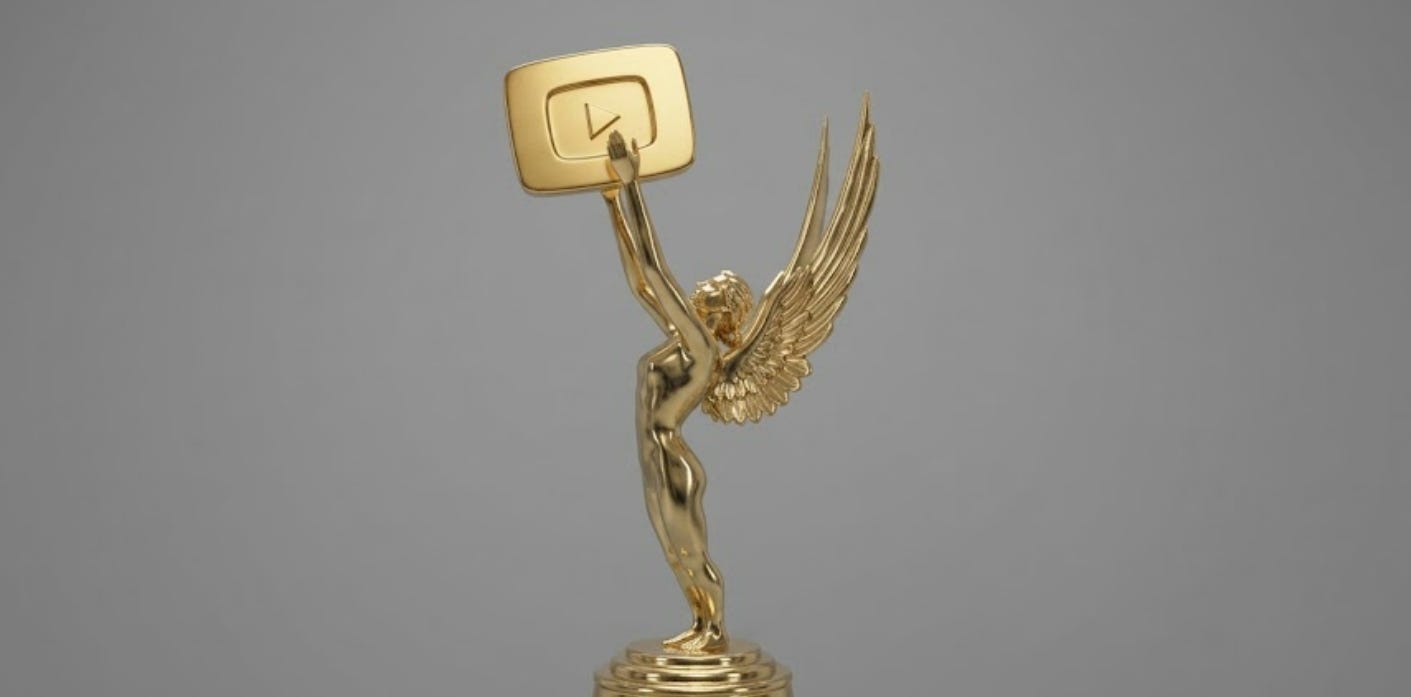
Why does YouTube want to win an Emmy so badly?
It’s pointless for media companies to police AI use
Let’s jump into it…
Comments
Nothing yet. Say the first thing.
Sign in to join the conversation.