
Because generating generic fantasy cities is now too easy, I asked Claude to come up with a specific alt history timeline for NYC (see below) and then draw some scenes from it.
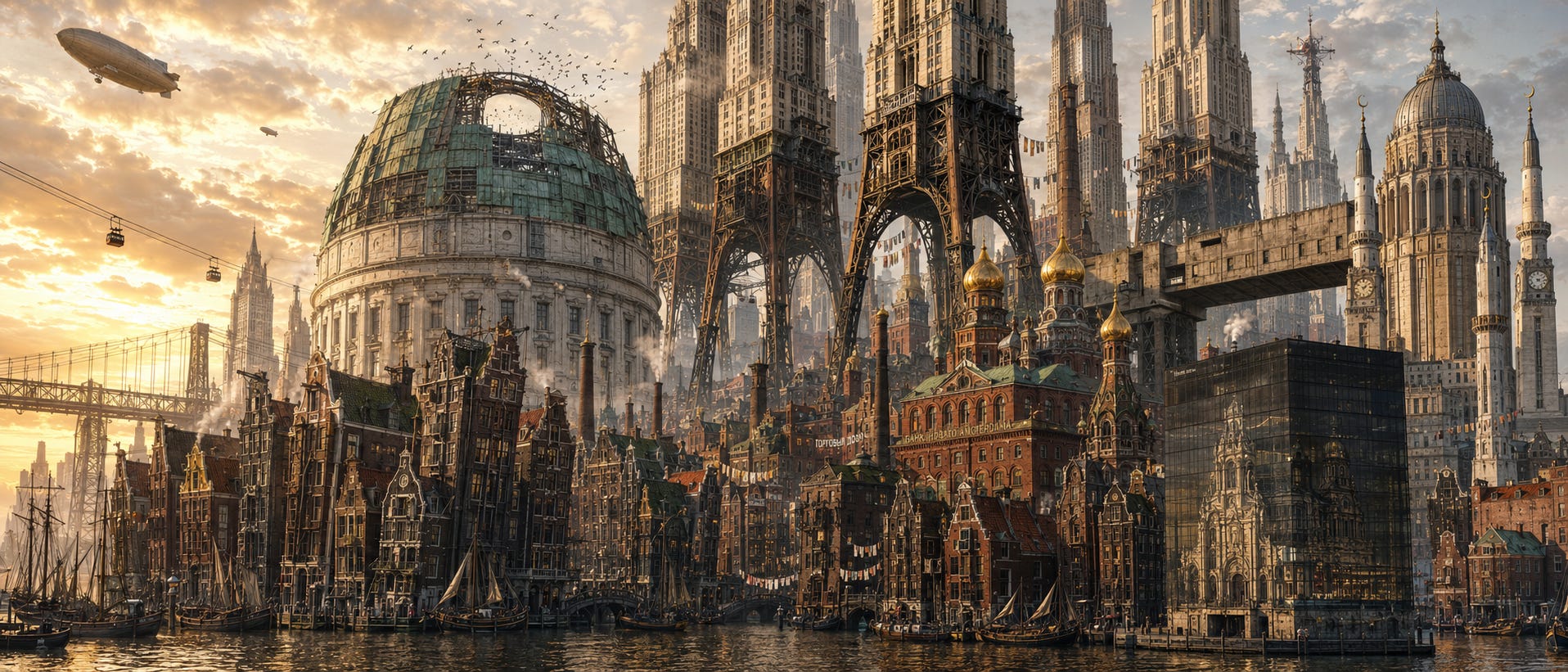
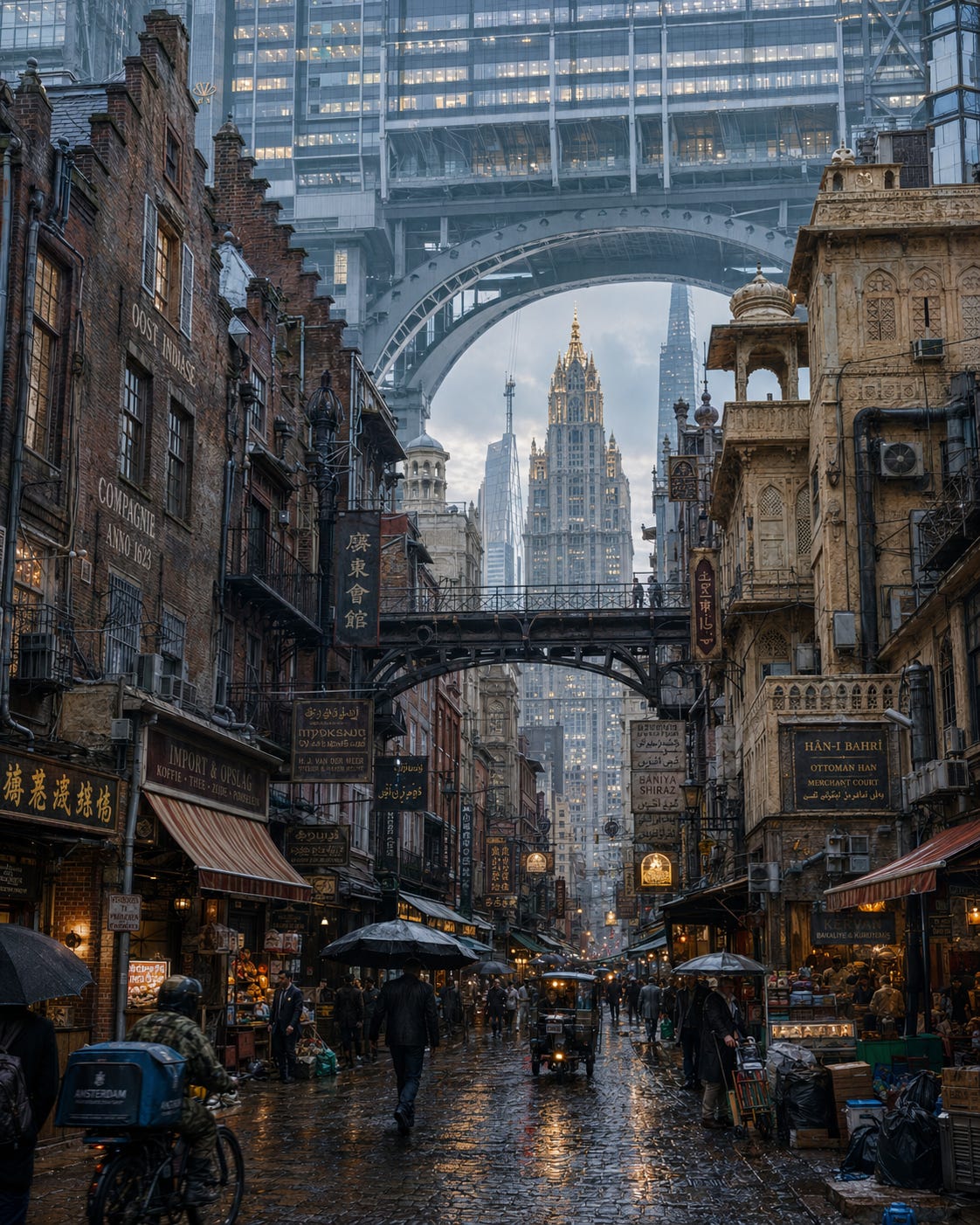
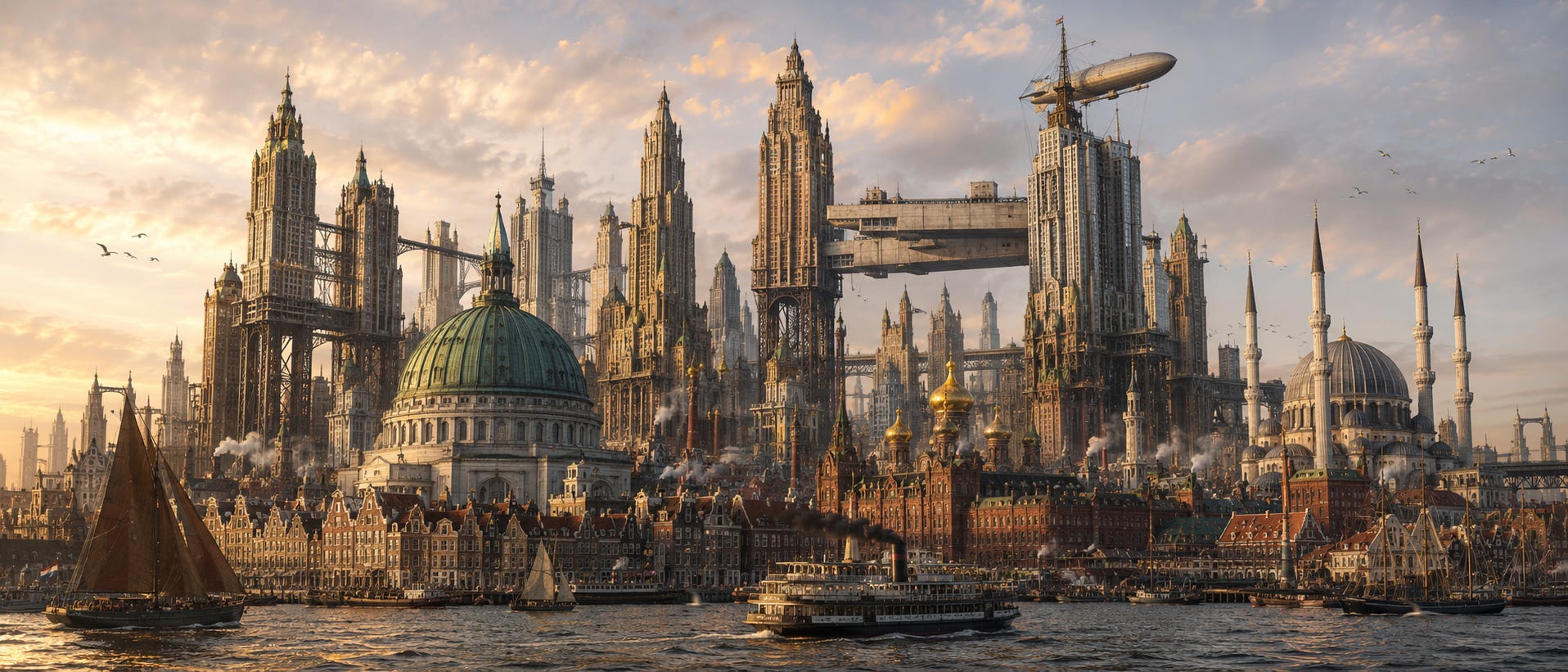
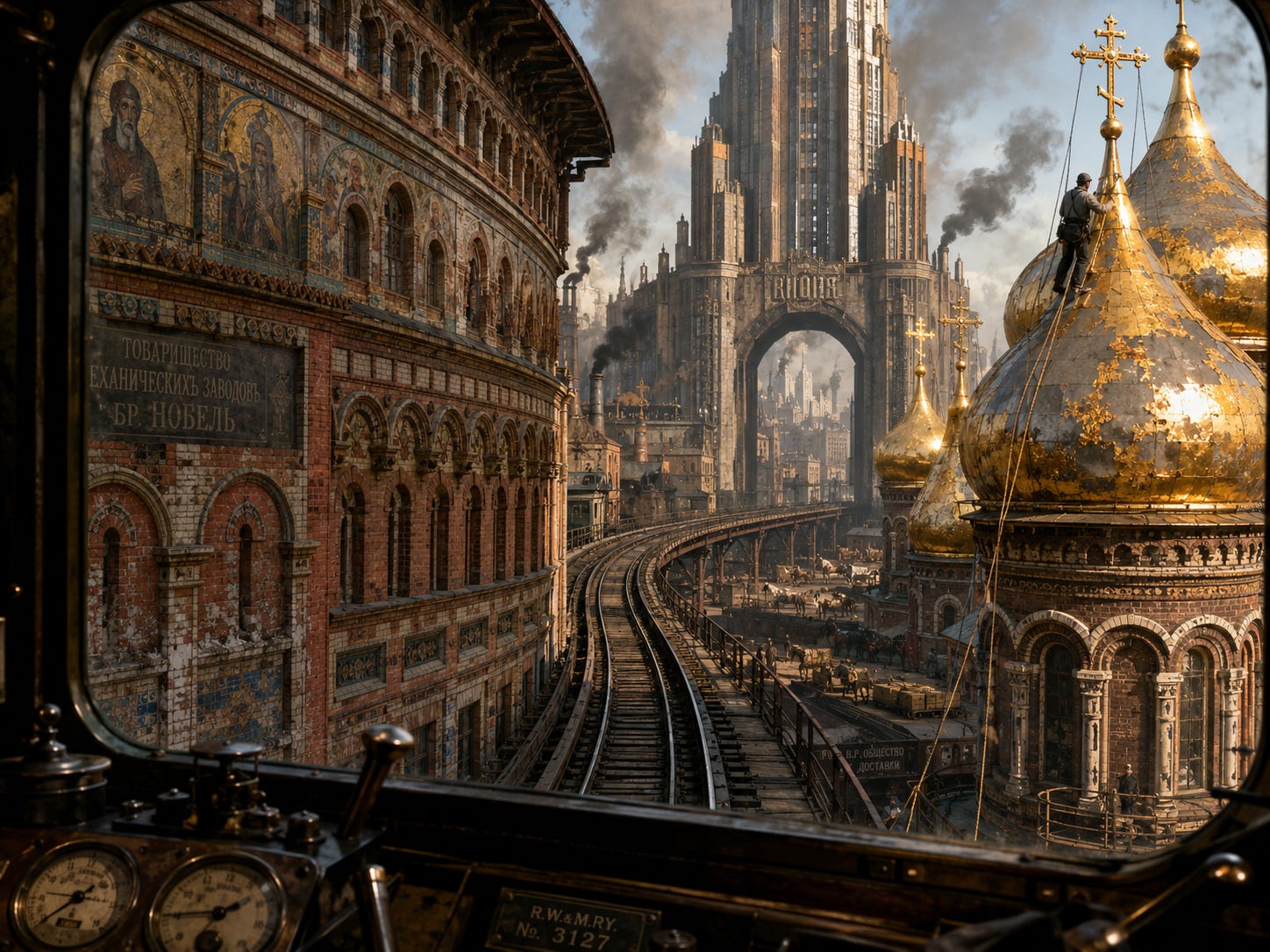
And here I realized I can just ask in the same conversation to keep going along the track, reconstructing the view on the fly (yes, like in Infinite Zoom).
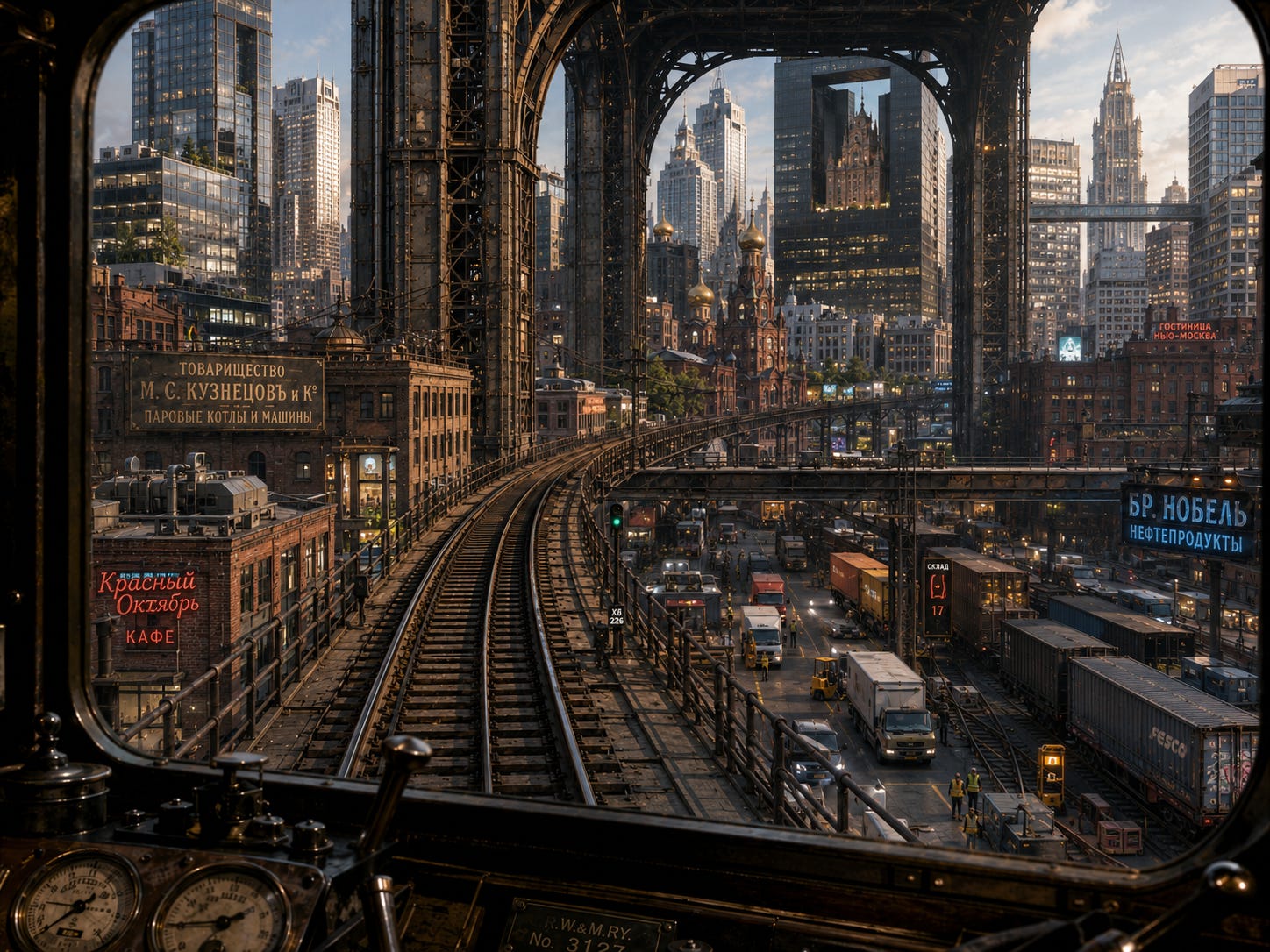
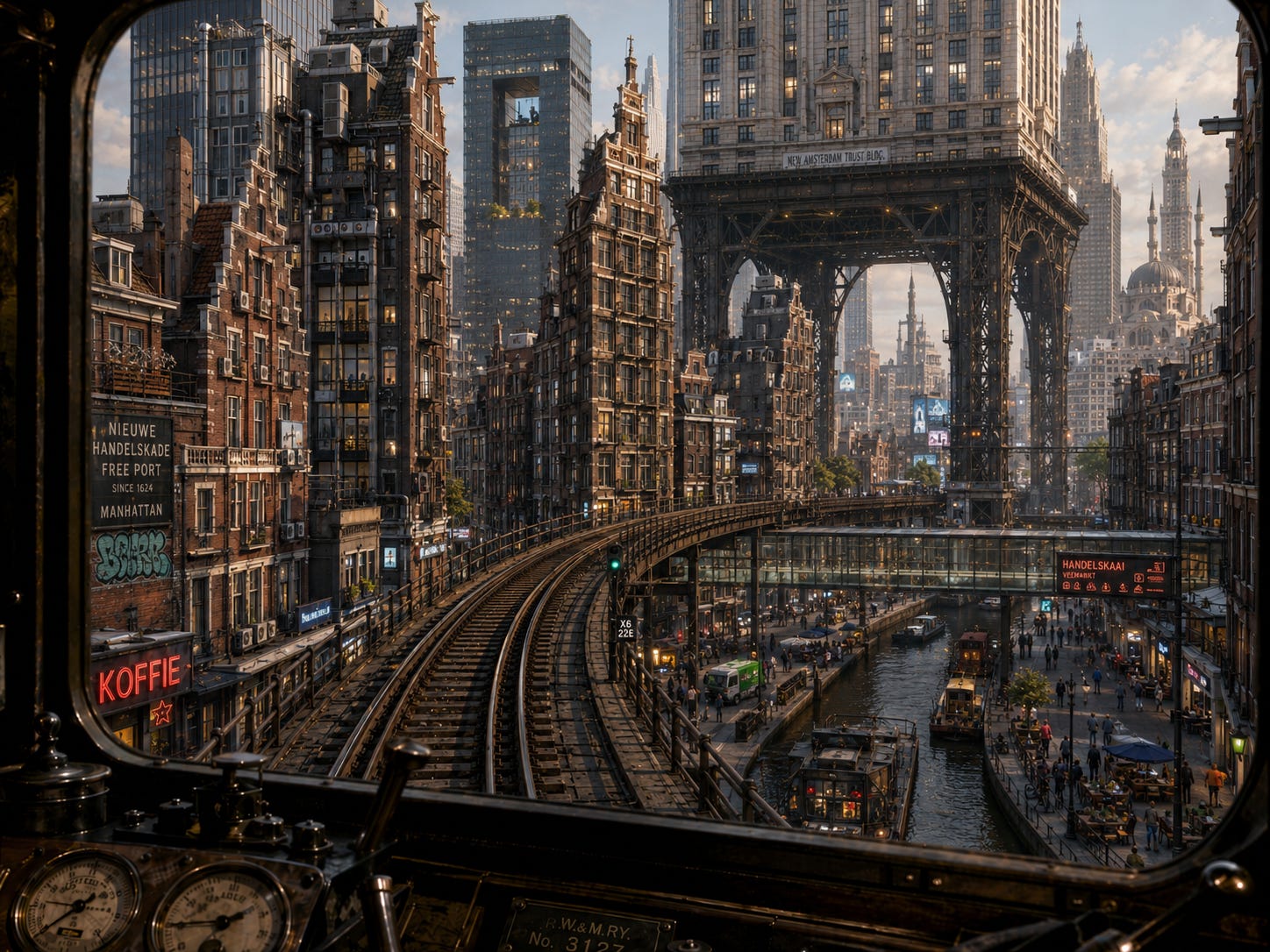
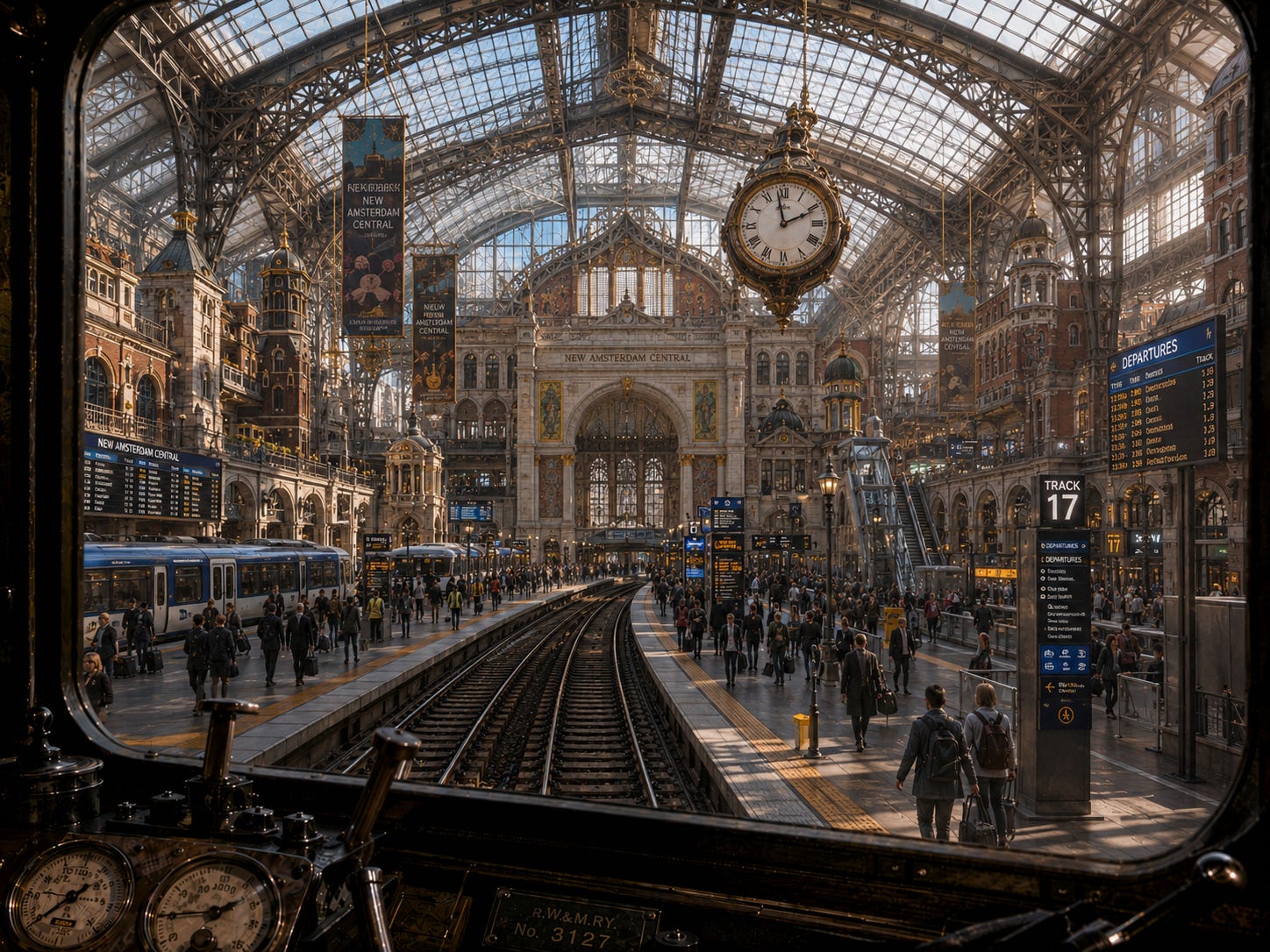
Premise: New Amsterdam is never ceded to the English in 1664. The Dutch hold Manhattan, and it becomes the permanently contested crown jewel of the Atlantic — a free port city that changes hands, or nearly does, every few generations. Each regime builds furiously to stamp its legitimacy on the island, and each successor, rather than demolishing, builds around and above out of a mix of superstition, treaty obligation (”the Stone Accords of 1791” forbid demolition of any consecrated or chartered structure), and sheer real-estate scarcity.
The consequences for architecture:
Dutch Golden Age core (1650s–1780s): The southern tip keeps its canal grid. Tall, narrow gabled merchant houses — but because land was never replatted, later builders went vertical on medieval footprints. So you get 14-story stepped-gable towers: brick, absurdly slender, crow-stepped crowns, hoisting beams still jutting from top floors.
French Revolutionary interlude (1790s–1820s): A brief Jacobin occupation leaves behind megalomaniacal neoclassicism — a half-finished granite Panthéon-scale dome downtown, later capped in copper by the Dutch and converted to a grain exchange. Boullée-style pure geometry: spheres, cylinders, colossal blank walls.
Russian concession (1840s–1900s): In this timeline Russia never sells Alaska and instead trades Pacific claims for a Manhattan trade concession. Midtown-east grows onion domes, tented roofs, and polychrome Kremlin-brick industrial cathedrals — railway-station-scale, with gilded domes clustered like beets.
The “Iron Charter” era (1880s–1930s): Skyscrapers still happen — steel is steel — but because the Stone Accords forbid demolition, towers are built as stilted colossi straddling older buildings. Beaux-Arts and Art Deco supertalls stand on splayed riveted-iron legs, arching over 17th-century gabled houses, their elevator cores threaded between chimneys.
Ottoman banking quarter (1920s): A surviving Ottoman Empire, flush with oil, buys a financial district block: a cluster of pencil minarets and a muqarnas-corniced deco-Ottoman hybrid tower.
Late modern (1960s–present): Glass towers exist, but the accords force them to envelope rather than replace — so you see a black Miesian slab with a baroque church visibly embedded in its glass base like a fly in amber, and brutalist megastructures bridging between older towers.
No posts
Comments
Nothing yet. Say the first thing.
Sign in to join the conversation.