

Growing up, the World Series, the Stanley Cup, the NBA Finals, and the Super Bowl were the championships that mattered most to me.
Every year I looked forward to watching the best teams compete for a title. Those championships represented the pinnacle of sports, and I never questioned whether anything else belonged in the conversation.
As I got older, my list expanded.
I started watching the Masters, Wimbledon, the U.S. Open, and other legendary tournaments that crowned individual champions. Eventually, March Madness became one of my favorite events on the sports calendar. The unpredictability, the upsets, and the win or go home format made every game feel like a championship.
For years, if someone had asked me what the greatest tournament in sports was, I probably would have answered March Madness.
Then I started watching the World Cup more closely.
As I sit here watching another World Cup move into the knockout stage, I find myself asking a different question.
What actually makes a tournament great?
The answer isn’t as simple as crowning the best team.
For me, there are several things that matter.
How difficult is it just to qualify?
What’s the tournament format?
How intense are the games?
How many elimination games are there?
How much pressure is placed on the athletes?
How emotionally invested are the fans?
And ultimately, how difficult is it to become a champion?
The first thing I realized is that individual tournaments and team tournaments deserve to be judged separately.
As incredible as the Masters and Wimbledon are, they don’t create the same emotional connection for me as team sports.
Individual athletes come and go. We cheer for them while they’re competing, then another generation arrives.
Teams are different.
Teams are passed down through families.
When the Cubs finally won the World Series in 2016, grandfathers, fathers, sons, daughters, and grandchildren celebrated together. Some had waited their entire lives for that moment.
That kind of shared history is difficult to duplicate.
So now the question became simpler.
What is the greatest team tournament?
NFL playoffs and the Super Bowl is cool, but they don’t even play the Super Bowl in the city where one of the teams is from, so it really has just become a spectacle, a cash grab.
Every major American sport eventually builds toward elimination.
Sometimes it’s a one game playoff.
Sometimes it’s a best of seven series.
One of the greatest examples I can remember was the 2004 American League Championship Series when the Red Sox fell behind the Yankees three games to none before winning four straight. It was some of the most exciting baseball I’ve ever watched.
But as incredible as that comeback was, there was still room for error.
Lose Game 1.
Lose Game 2.
Even lose Game 3… but they could still recover, and they did.
March Madness is different.
Every game is an elimination game.
Every possession matters.
Every mistake can end your season.
That is why so many people, including me, have considered it the greatest tournament in sports.
Then I started comparing it to the World Cup.
The similarities are remarkable.
Both begin with hundreds of teams trying to qualify.
Both narrow the field to the best teams.
Both are built around knockout rounds.
Both create Cinderella stories.
Both inspire office pools and bracket predictions that allow casual fans to become emotionally invested.
Then the differences begin to emerge.
March Madness happens every year.
The World Cup happens once every four years.
A basketball player may get four chances during college.
An NFL player gets another opportunity next season.
An NBA player can regroup and try again next year.
A soccer player may only have two or three realistic opportunities to win a World Cup during an entire career.
One bad match can end a lifelong dream.
Then I looked at the numbers.
Since 1930, more than 200 nations have competed to qualify for the World Cup.
There have only been 22 tournaments.
Only eight countries have ever won.
Eight.
March Madness has crowned 37 different champions in 87 tournaments.
The Super Bowl has produced 20 champions in 60 seasons.
The World Series has crowned 24 champions in more than 120 seasons.
Nothing compares to the rarity of winning the World Cup.
Then I realized something else.
The World Cup isn’t just watched around the world.
It belongs to the world.
My love for the tournament became personal in 1994.
By then, I had started following soccer because of my roommate Rudy from Scotland, and when I learned the World Cup was coming to the United States in 1994, I couldn’t wait to experience it.
My wife, Perla, is from Colombia, and Colombia had just shocked the soccer world by defeating Argentina 5–0 to qualify for the World Cup. They entered the tournament as one of the favorites.
We were fortunate enough to get tickets to the United States versus Colombia match at the Rose Bowl.
I’ll never forget walking into that stadium.
Thousands of Colombian fans had traveled halfway around the world to support their country. The energy was unlike anything I had ever experienced.
Then came one of the most heartbreaking moments in sports history.
Colombian defender Andrés Escobar accidentally redirected a ball into his own net for an own goal. The United States won 2–1, effectively eliminating Colombia from the tournament.
Leaving the stadium, I saw devastated Colombian fans everywhere.
Ten days later, Andrés Escobar was murdered after returning home.
His death was not simply about soccer. Colombia was living through one of the most violent periods in its history, and one of the game’s true gentlemen became one of its greatest tragedies.
That experience changed how I viewed the World Cup forever.
I realized this wasn’t simply another sporting event.
For many countries, the World Cup is part of their national identity.
Victories unite generations.
Defeats are remembered for decades.
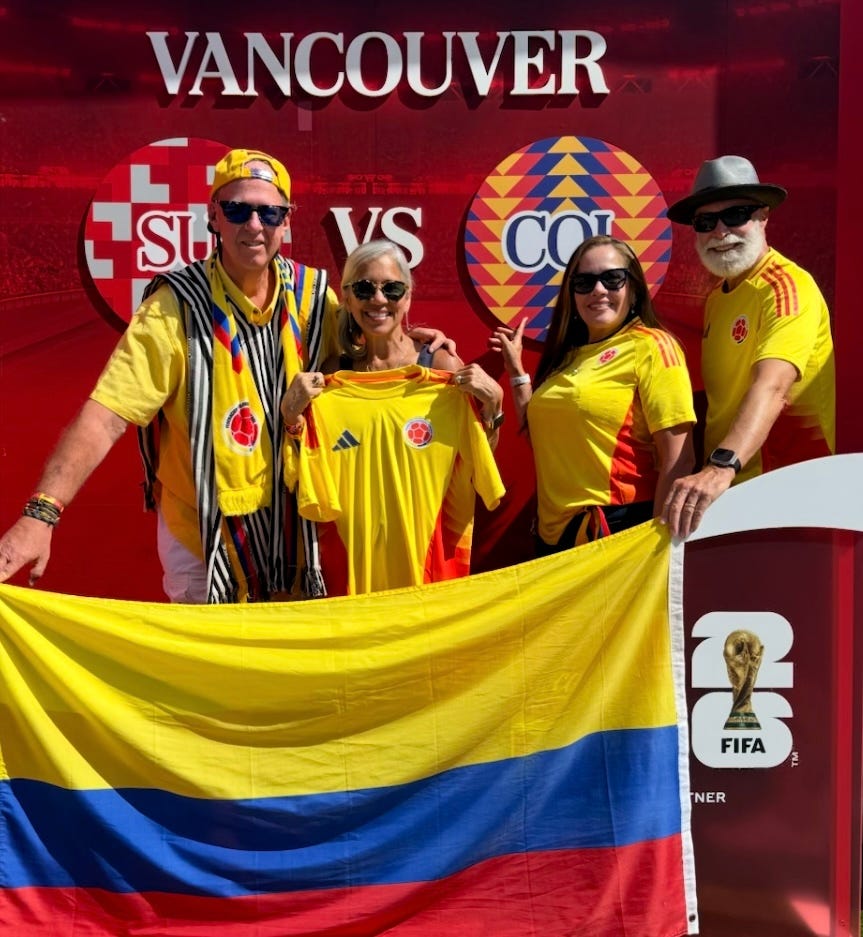
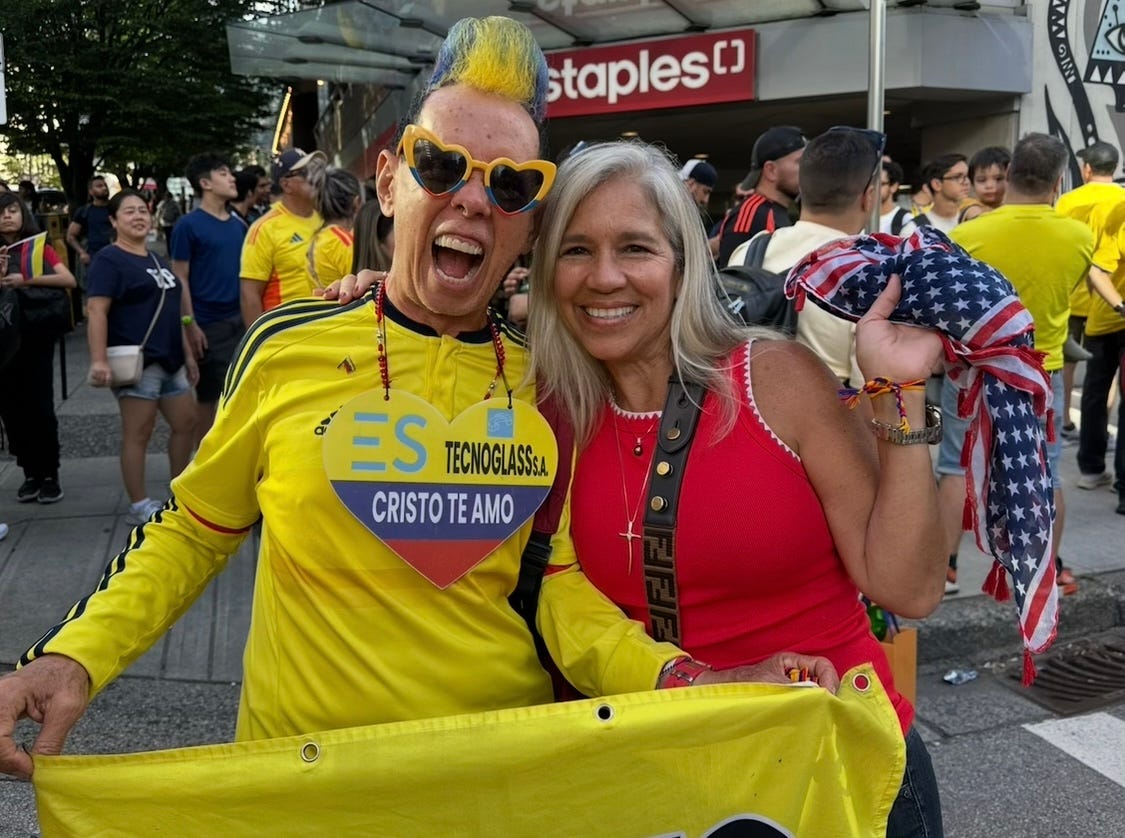
Today, even though I’m an American and would love to see the United States someday lift the trophy, Colombia will always hold a special place in my heart.
My father-in-law Jorge loved soccer.
He watched every Colombian match, and every game during the World Cup. This was his time, and I miss him dearly.
He never got to see his country win a World Cup.
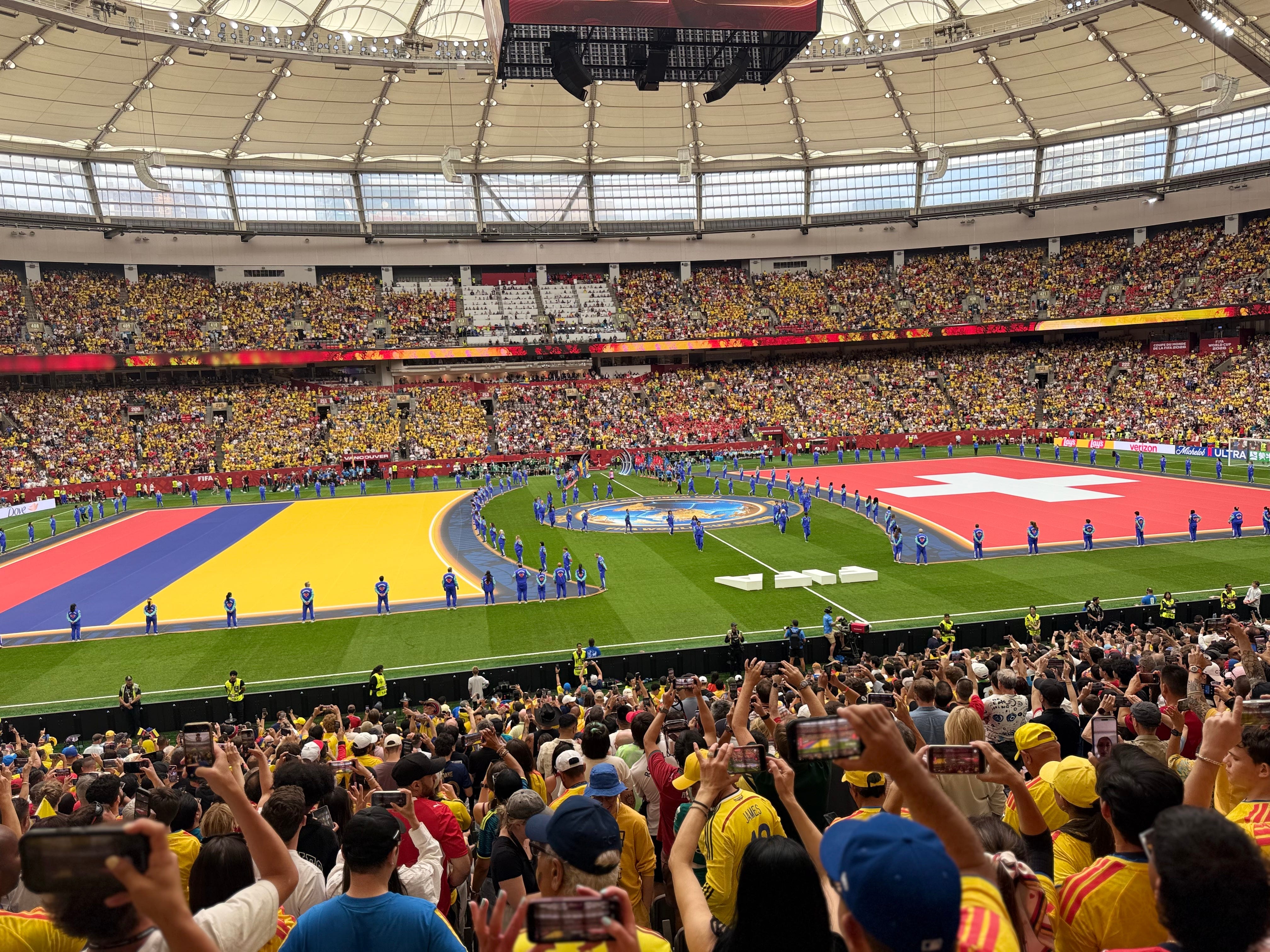
As I watch Colombia play in this years tournament, I find myself hoping they can accomplish something generations of great players, and so many fans like Jorge have never experienced…
I’d love to see them lift the trophy.
Not just for Colombia.
For him.


No posts
Comments
Nothing yet. Say the first thing.
Sign in to join the conversation.