
Before continuing, I’d like to make one quick update.
What was originally the second half of Part 3 has now become Part 4.
As I continued researching, I realized the conversation about Portland’s future is evolving far too quickly to fit into a fixed number of articles. New information, new ideas, and new opportunities continue to emerge, so Reimagining Portland will now be an ongoing series as we continue exploring where Portland is today, where it could go, and how we might help shape that future together.
This also seemed like the right time to give each article its own subtitle, making it easier for readers to follow the topics being discussed.
Part 1: Falling in Love with Portland
Part 2: When the City Around Us Changed
Part 3: Following the Population Shift: The Numbers Don’t Lie
Part 4: Come Together
Part 5 : Negotiating Portland’s Future
One thing I’ve found increasingly discouraging as I’ve followed the debate surrounding Portland’s future is how quickly conversations can become polarized. Instead of respectfully discussing different ideas and perspectives, too often people assume motives, dismiss opposing viewpoints, or resort to personal attacks.
Portland deserves better than that.
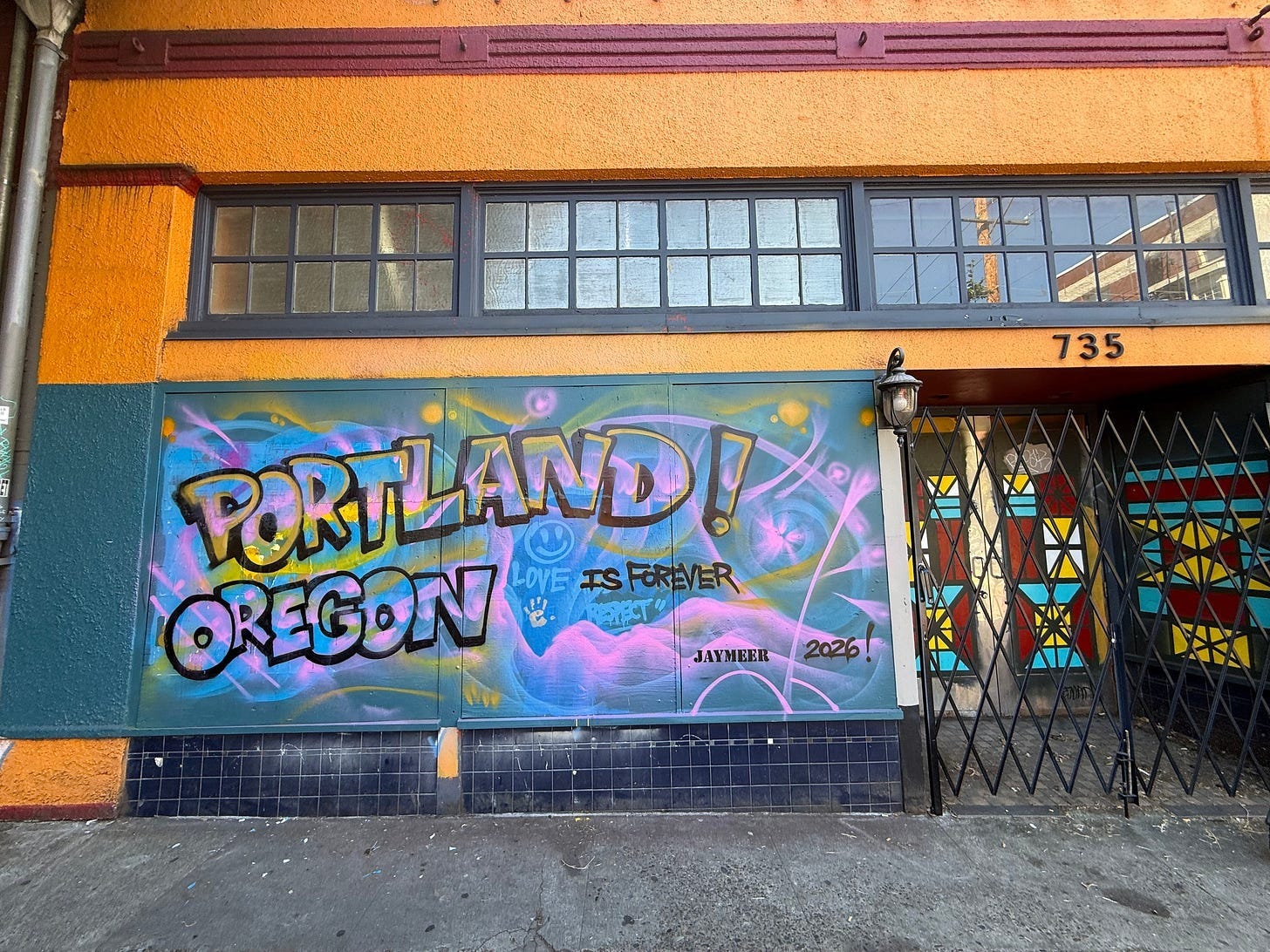
PORTLAND IS BETTER THAN THIS.
Whether someone supports public investment in the Moda Center or opposes it, every opinion deserves to be heard and thoughtfully considered. This isn’t simply a debate about a sports arena. It’s about the future of our city and how we choose to address the challenges unfolding on our streets, in our neighborhoods, and throughout our community.
My hope is that Reimagining Portland encourages conversation rather than division.
None of us has all the answers, but together we have a much better chance of finding them. We may never agree on every solution, but we can still listen with open minds, treat one another with respect, and move forward together.
With that in mind, I’d like to continue where Part 3 left off.
History is filled with cities that reinvented themselves. Some did it after losing major industries. Others recovered from natural disasters, economic collapse, or decades of decline. They succeeded because they developed a shared vision of where they wanted to go and because enougrants, entertainment, businesses, public spaces, and transportation come together to create another destination that people are proud of.
When the Vanport Flood destroyed Oregon's second largest city in 1948, more than 18,700 people lost their homes in a matter of hours. Portland responded by coming together. The Red Cross, local organizations, churches, businesses, and countless residents worked side by side to provide shelter, food, and hope for families who had suddenly lost everything. The city couldn't undo the disaster, but it could decide how to respond to it.
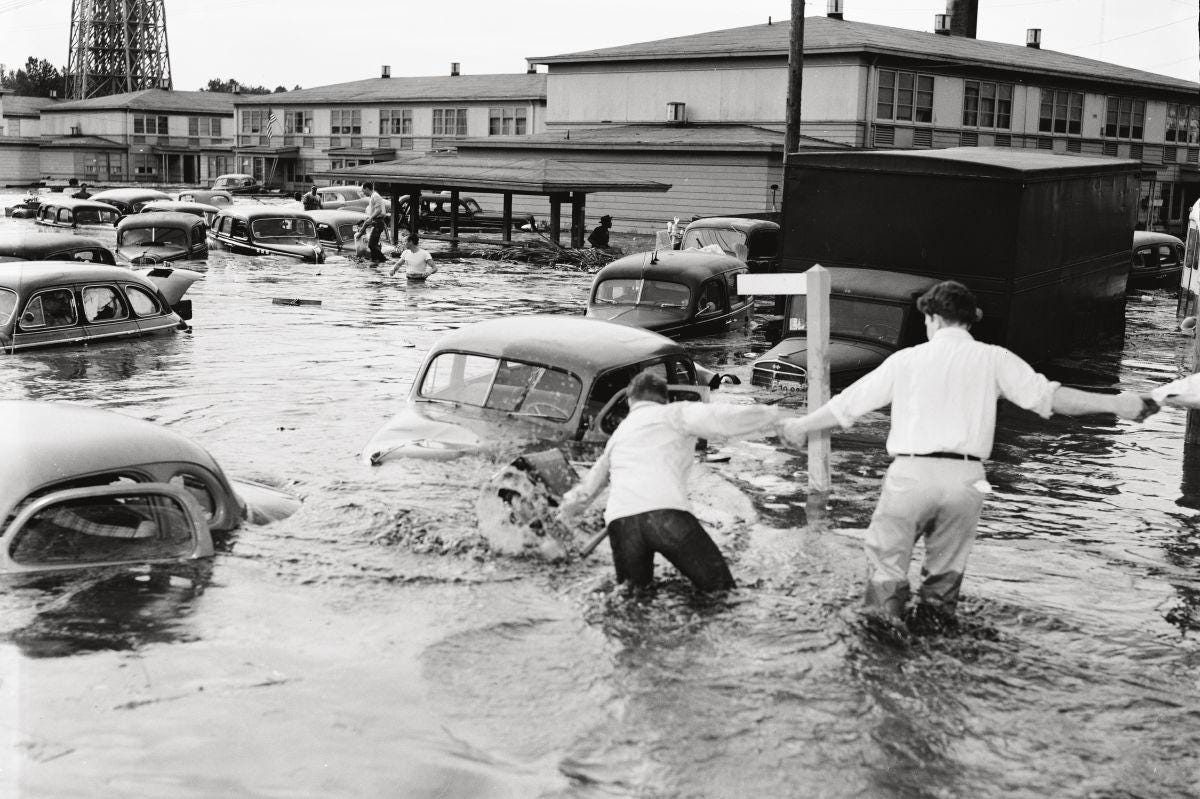
Today's challenges are different, but the lesson is the same. Portland has overcome defining moments before, not because everyone agreed on every solution, but because people recognized they shared a common responsibility for the future of their community. Reimagining Portland requires that same spirit today. We won't solve homelessness, addiction, mental illness, public safety, or economic growth by working against one another. We'll solve them by working together.
The arena itself isn’t the point.
The point is what becomes possible when a city rallies around a shared vision.
We’ve seen this happen before.
One example of what’s possible can be found in Raleigh, North Carolina, where Carolina Hurricanes and Portland Trailblazers owner Tom Dundon is leading a roughly $1 billion transformation of the area surrounding Lenovo Center.
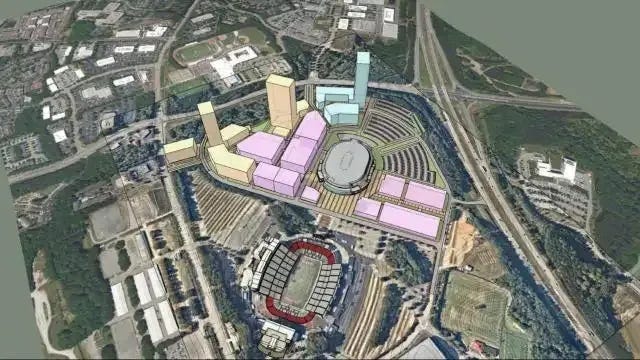
The vision extends far beyond renovating an arena. Plans include more than 4,000 apartments, nearly 3 million square feet of office, retail, restaurant, hotel, and entertainment space, along with new public gathering areas designed to create activity every day of the year—not just on game days. Development on that scale expands the local tax base through new property values, businesses, hotel stays, retail sales, and jobs, generating additional public revenue that can be reinvested in city services and infrastructure while creating a more vibrant destination for residents and visitors alike. It reflects a broader philosophy that a professional sports franchise can serve as the catalyst for economic development, private investment, and long-term community revitalization.
If this is already in progress with our new owner in another city.. and it’s working and applauded by the city and its people, why are we not having the same discussions with Dundon about doing a similar project in Portland?
Tom Dundon has succeeded wildly in multiple businesses, which I wrote about in this prior article, and it seems we should be at the table discussing ideas like this with him, along with the remodeling budget.
The details regarding the commission Raleigh built to oversee the publicly owned arena that required a $300m upgrade paid with public funds, and the economic impact study results showing $4b in revenue generation from the redevelopment project in Raleigh is a blueprint for Portland.
The city didn’t demand to see specific plans in advance, they saw an opportunity to redevelop an area and raise needed funding to give their city additional revenue resources to deploy to other needed projects and programs. Of course they understood Tom Dundon would also benefit, he’s the businessman making the deal happen, that’s business and it’s why some businessmen become wealthy, but that doesn’t mean they’re bad people or deserve to be publicly called out as greedy or cheapskates or all the other terms being used lately.
https://www.centennialauthority.com/economic-impact/
https://www.centennialauthority.com/
City leaders and the Centennial Authority aren’t arguing that hockey games alone justify the investment. Their strategy is that a mixed use district with housing, hotels, restaurants, retail, offices, entertainment, and public spaces will transform the area into a destination that generates economic activity 365 days a year instead of only on game days. The arena becomes the anchor that attracts private investment, tourism, conventions, and new tax revenue.

There's an old saying: "Don't look a gift horse in the mouth." It doesn't mean you should accept every offer without asking questions. It means you shouldn't dismiss a valuable opportunity before you've taken the time to understand it. If Tom Dundon is willing to invest in Portland the way he's investing in Raleigh, we owe it to ourselves to have that conversation before deciding it's not worth pursuing.
Milwaukee Wisconsin tells a similar story. The Deer District surrounding Fiserv Forum transformed underused land into one of the city’s most vibrant neighborhoods, with restaurants, apartments, offices, hotels, and public gathering spaces that remain active long after the final buzzer. The revenue driven from that project created jobs and helped fund other public programs.
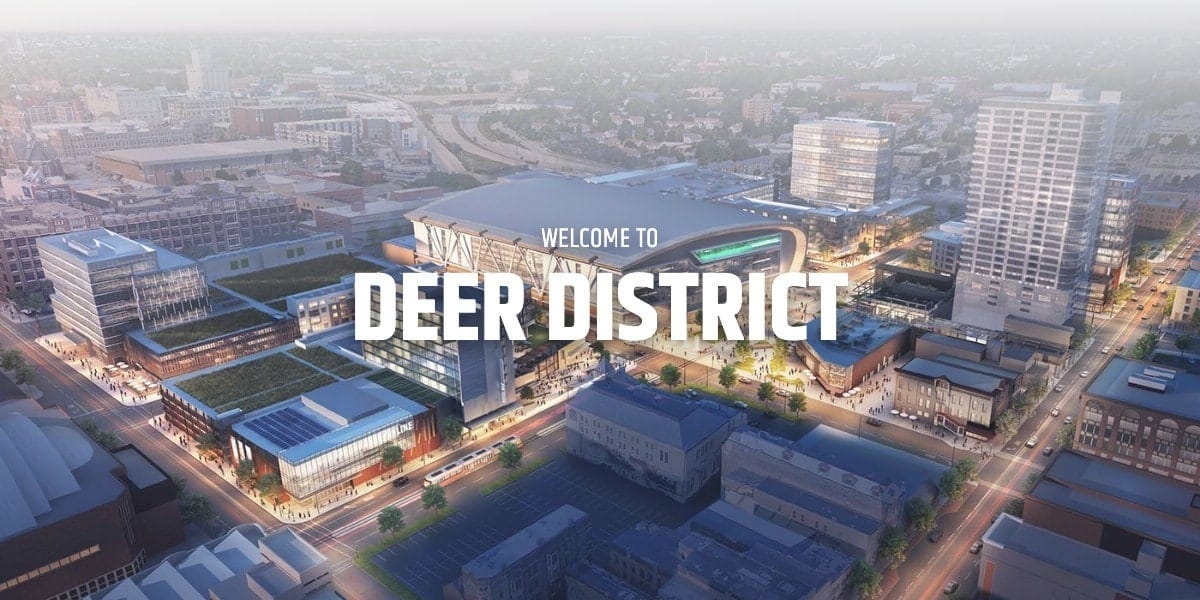
Milwaukee and Raleigh demonstrate that some cities have successfully used professional sports franchises as the catalyst for broader redevelopment. Their experiences don't guarantee the same outcome in Portland, but they provide real-world examples worth studying before dismissing similar ideas here.
More info here:
https://city.milwaukee.gov/DCD/BusinessToolbox/bids/TheDeerDistrict?utm_source=chatgpt.com
https://wcd.org/wp-content/uploads/2023/11/WCD-FS-2019.pdf?utm_source=chatgpt.com
Portland doesn’t need to copy another city, but understanding how other cities combined sporting venues with the area around them being redeveloped. . It should build something uniquely its own. But these examples remind us that sports can become the catalyst for something much larger than sports.
No one is suggesting Portland is Raleigh, or that the two regions have identical economies, but we do have the same pro sports owner, and he has a successful track record in finance, and as an investor and visionary in Top Golf and Pickleball and now in the Stanley Cup champion Carolina Hurricanes. Many people in that city also questioned his motives when he arrived and now he’s applauded.
Raleigh has experienced more than 40% population growth since 2010, while Portland’s growth largely stalled after COVID. But that’s exactly the point. Strong population growth creates demand for housing, restaurants, hotels, retail, offices and entertainment. Raleigh is using that momentum to build a multibillion dollar district around the Lenovo Center. Portland faces different challenges, but if the city wants to reverse years of stagnation, it should be asking what investments can help attract people, businesses and activity back to the urban core rather than assuming growth will simply return on its own.
We can’t take our eye off the ball of economic growth while we’re working to solve homelessness, addiction, untreated mental illness, the need for more police and public safety or fixing all the potholes we all drive over, but that’s exactly what Portland did. We also can’t expect businesses, families, and visitors to return if we neglect those problems. We’re making small steps forward, but the magnitude of the problems Multnomah County faces take big steps, with vision. Dundon is a visionary.
Redeveloping the Rose Quarter, attracting private investment, supporting our cultural institutions, and creating new jobs are offensive strategies. Those are the discussions our city should be having with business leaders and with the Trailblazers owner to come together on a plan where everyone wins.
Building an effective behavioral health system, helping people recover from addiction, improving public safety, and making government more accountable are defensive strategies, and they require difficult to obtain funding, so creative ways to generate funding becomes an important opportunity.
To summarize the situation, we can’t lose sight of the challenges that matter … Homelessness, untreated mental illness, addiction, and public safety remain issues that demand thoughtful, effective solutions. If federal Medicaid funding becomes more constrained in the years ahead, which has already been targeted by the current administration, Oregon will face even greater pressure to fund behavioral health services from its own resources, and I doubt there’s going to be enough in the general fund to cover the deficit.
The best teams understand that championships aren’t won by playing only offense or only defense.
Portland faces the same challenge, and they must do both.
We can’t take our eye off the ball of economic growth while we’re working to solve homelessness, addiction, untreated mental illness, and public safety. But we also can’t expect businesses, families, and visitors to return if we neglect those problems.
Redeveloping the Rose Quarter, attracting private investment, supporting our cultural institutions, and creating new jobs are offensive strategies. Building an effective behavioral health system, helping people recover from addiction, improving public safety, and making government more accountable are defensive strategies.
We don’t need to choose between them.
We need to succeed at both.
That vision won’t come from government alone. It won’t come from business alone, or nonprofits, universities, healthcare providers, neighborhood associations, or citizens acting independently. It will come from all of them recognizing that Portland’s future is a shared responsibility and a shared opportunity.
When my wife and I first visited Portland more than a decade ago, we weren’t looking for a new home. Oregon found us. It found our daughter first, then our son, and eventually the two of us. We fell in love with this place because of what it was, but we chose to stay because we believe in what it can become, but the time is now, and the opportunities are right here in front of us to make something happen, and if we don’t seize the moment, people will continue to leave as Portland will continue its struggles.
That’s why I’m optimistic.
Not because Portland’s challenges are easy, but because its strengths are extraordinary. Cities are ultimately shaped by the people who believe they’re worth improving, and throughout our time here I’ve met thousands of Oregonians who care deeply about this place.
Reimagining Portland isn’t about returning to the past. it’s about building a grass roots movement that spreads the word efficiently and quickly, and it must involve positive leaders desiring change, and a passion to help rebuild Portland, while helping those we see on the streets every day that so desperately need our help.
It’s about building a future worthy of the city and the state that so many of us still believe in.
Because the next great chapter of Portland’s story hasn’t been written yet.
It will be written by the choices we make today, and by people choosing to work toward it together.
I believe Portland has that same opportunity we’ve seen in Raleigh, Milwaukie, Sacramento and many other cities.
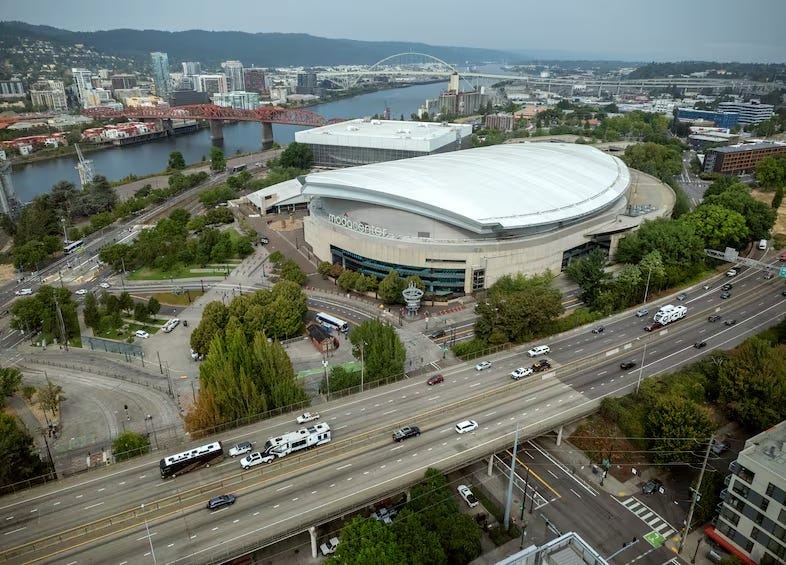
Recently, Tim Boyle, a native from Portland and President and CEO of Columbia Sportswear, and one of Portland’s business leaders, spoke publicly about the state of the business environment and the importance of keeping the Portland Trail Blazers, the only major local sporting franchise, in Portland. The team had been recently sold, and negotiations to remodel the city owned Moda Center where they play, and to extend their lease, have stalled. Some are saying the team may relocate. Understanding the impact of potentially losing the Blazers to another city and the economic impact it could have on Portland and the metro area, Multnomah County, and the state of Oregon is critical.
Boyle recently argued that Portland should do everything possible to keep the Trail Blazers, calling for the city to fund Moda Center renovations as part of a broader effort to restore Portland’s competitiveness. His comments echoed what many business leaders have begun saying publicly: preserving the Trail Blazers isn’t just about basketball—it’s about protecting one of the city’s most important economic and cultural assets
Tim’s comments resonated with me, but they also prompted a larger question he began to raise…
What if we thought beyond keeping a basketball team and how can we help the leaders of the city see the same vision we see, and many people in business and who live here also see?
What if the future of the Rose Quarter became part of a broader effort to reimagine downtown Portland?
Cities often define themselves through transformational projects. The Pearl District transformed rail yards and warehouses into one of Portland’s most vibrant neighborhoods. The South Waterfront turned industrial land into a thriving mixed use community. Perhaps the Rose Quarter could become the next chapter.
In Part 5, we’ll dive into how that could happen and what would it look like.
No posts
Comments
Nothing yet. Say the first thing.
Sign in to join the conversation.