
This realm may never have existed at all, so does it matter where I draw its boundaries, or who ruled it, who its enemies were or when it fell? I prefer to think Rheged did exist, and so too its semi-mythical king, Uryen. Although his dynasty, the Cynferching, can trace its roots back to the 4th century warlord, Coel Hen, as per the Harleian genealogies1, he and his son Owein were both sucked into the Arthurian canon.
They lived in that liminal era previously known as the dark ages. Now it’s widely accepted that it wasn’t dark, that it produced some of the best poetry in the oral tradition, as well as art, textiles and crafts. The point is that Uryen’s historicity is largely reliant on surviving praise poetry attributed to his bard, Taliesin, rather than rigorous historical data. And despite his appearance in the chronicles of Bede and Nennius, he and his vast realm remain alluringly mythic.
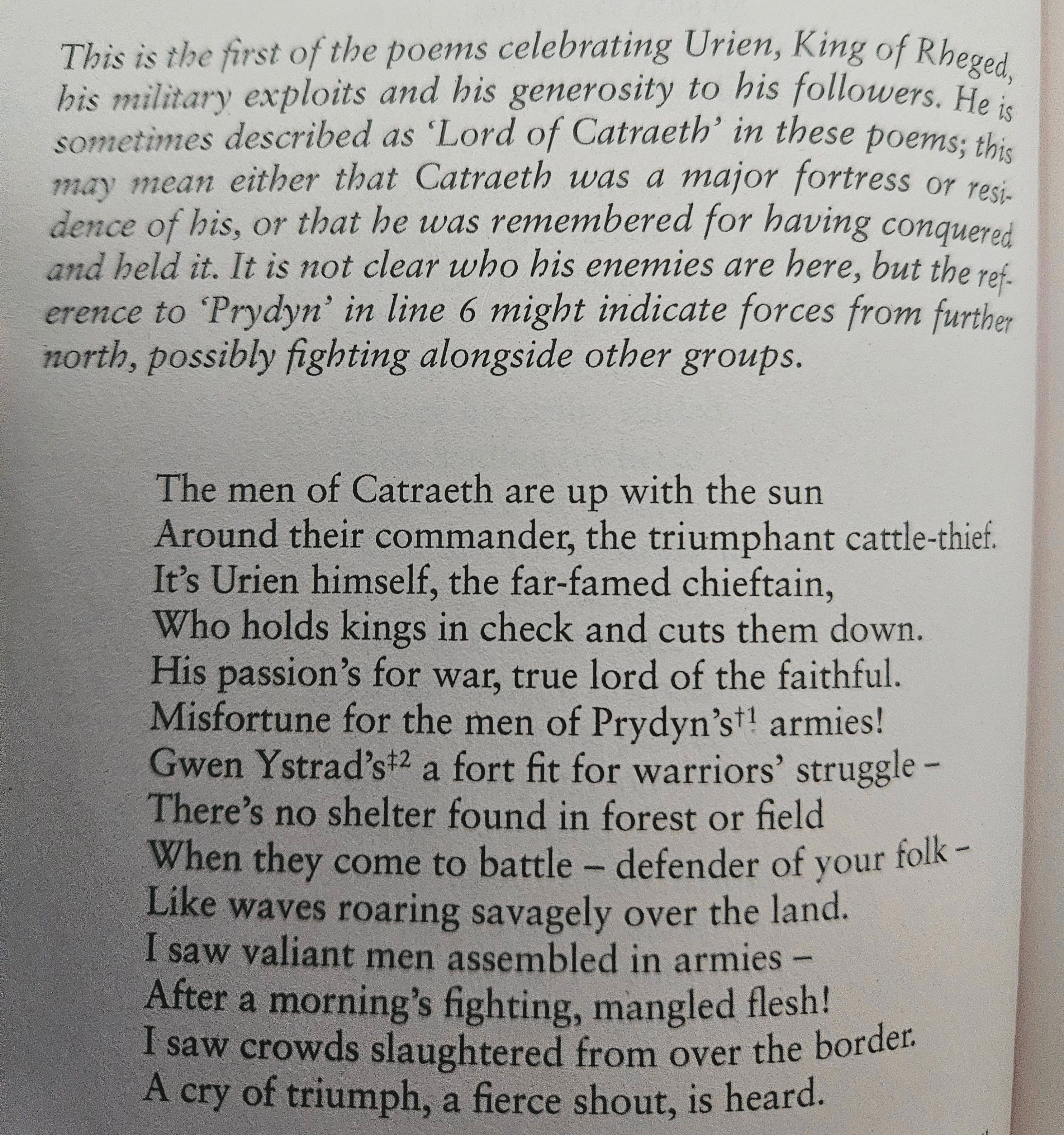
It’s thanks to Taliesin that we have records of Uryen’s battles, the names of his sons, where the borders of Rheged might have been, the enemy warlords he fought to keep those borders intact. Because the Angles of fledgling Northumbria have repeatedly been depicted as Uryen’s enemies in the heroic poetry of that time there is a tendency to see the conflict that characterised the Old North during the late 6th century in a racial light. The reality may have been more complex. Britain was a cultural melting pot, and war was just as likely to erupt between rival British tribes as between Britons and Angles.
I worked my way through a bunch of history books2 on yr Hen Ogledd (the Old North), all of which offer slight variations on the above. But I’m a novelist. I’m here to tell a story first and foremost, so it’s up to me to choose the vision of Britain that works best narratively. True to my gardener/pantser nature, I figured it out as I went. When you have enticing passages like the famous one from Nennius below, it’s hard to resist inserting such personalities into your world:
Hussa reigned seven years. Against him fought four kings, Urien, and Ryderthen, and Guallauc, and Morcant. Theodoric fought bravely, together with his sons, against that Urien. But at that time sometimes the enemy and sometimes our countrymen were defeated, and he [Urien] shut them up three days and three nights in the island of Metcaut [Lindisfarne]; and whilst he was on an expedition he was murdered, at the instance of Morcant, out of envy, because he possessed so much superiority over all the kings in military science. - from the Historia Brittonum
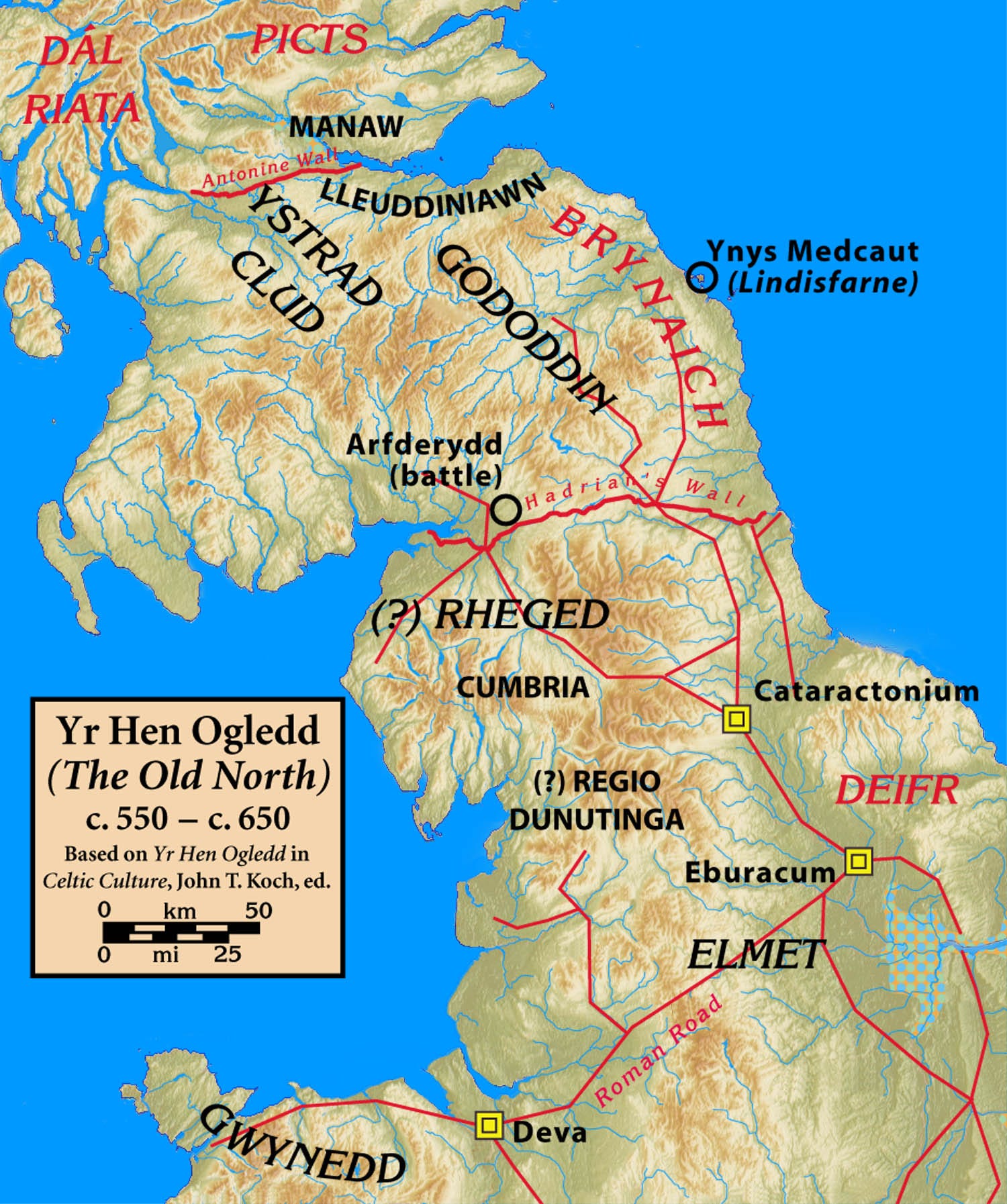
As well as inciting confusion over which Anglian king the Britons were fighting at Lindisfarne, this passage has been used as evidence by some historians to claim that all four named British kings were in alliance against the invaders. While that’s a romantic image, it may not have been the case, and actually raised all sorts of narrative possibilities for me when I was deciding how my own story of the Old North would play out.
This post is public so feel free to share it.
John Koch - whose marvellous encyclopaedia, Celtic Culture, has been an indispensable resource - made some compelling arguments in his commentary on Y Gododdin that this battle featured an alliance between Rheged and Deira against Bernicia3. In other words, Britons and Angles vs other Angles. I’m sure you can see the prospect may not be quite as narratively compelling as the dramatic final stand of the Britons Y Gododdin is usually interpreted to be. But it does have historical precedent, most famously when Cadwallon of Gwynedd allied with Penda of Mercia against Northumbria just a few decades later. The problem arises from the fact there are three scribal versions of the poem, all dating centuries after the battle occurred. And like a lot of oral material, it is susceptible to differing interpretation over time. Artistic licence, an evolving language, the Christian belief of those recording it…
Saying all that, I do largely follow the Last Stand of the Britons narrative and was not able to resist leaning into the jealous Morcant’s rivalry with Uryen. Here’s a peek at a scene where Morcant gets the upper hand. It’s from part 1 and narrated by my main character, Aneirin, son of Dwywei, who goes on to compose Y Gododdin.
Before I could speak, Morcant said silkily, ‘In the circumstances, I am willing to accept… reparation.’
Uryen ran a hand over his face, seeming to have aged ten years in the short time it had taken Morcant to spin his story. ‘Name it.’
‘I have lost two loyal men, for Hywel can barely rise from his bed. Both have families I am obligated to support.’ His eyes narrowed. ‘In payment of this debt, I ask that Dwywei of Elmed bring her skill to my court. She will settle at Din Guardi and will marry a man of my choosing.’ That sickening mix of hate and desire was in his smile. ‘Bryneich will be her home… and the home of any children she bears.’
‘No,’ Uryen and I said together.
Mam had paled, but she met Morcant’s smile with studied cold. ‘If something as small as my presence will settle all animosity between our kingdoms, let it be agreed.’
‘Dwywei.’ Uryen took her hands. ‘I beg you not to do this.’
She lowered her voice. ‘I told you before, Uryen. The alliance must hold.’
Uryen closed his eyes. When he opened them again, they shone a deadly blue. ‘Will this satisfy you, Bryneich?’ His voice was terrible to hear.
Morcant sat down. ‘I am satisfied.’ He reached for a haunch of mutton and began tearing into it, as if nothing had happened. I stared at him, numb. How could anyone believe Mam responsible for this? Chewing slowly, the king of Bryneich met my gaze. He and I both knew that she was innocent. That I was the one who had killed Gormant. But he wanted Dwywei. He had always wanted her.
The archaeological evidence for Rheged is a lot sparser. At its most expansive, Uryen’s realm could have stretched from what is now the southern Lakes up to Dumfries & Galloway, eating east into Yorkshire too. However there are few reliable links between the remains and Uryen. I’ve been using the OS map of Ancient Britain to visit places that may once have been part of his kingdom.
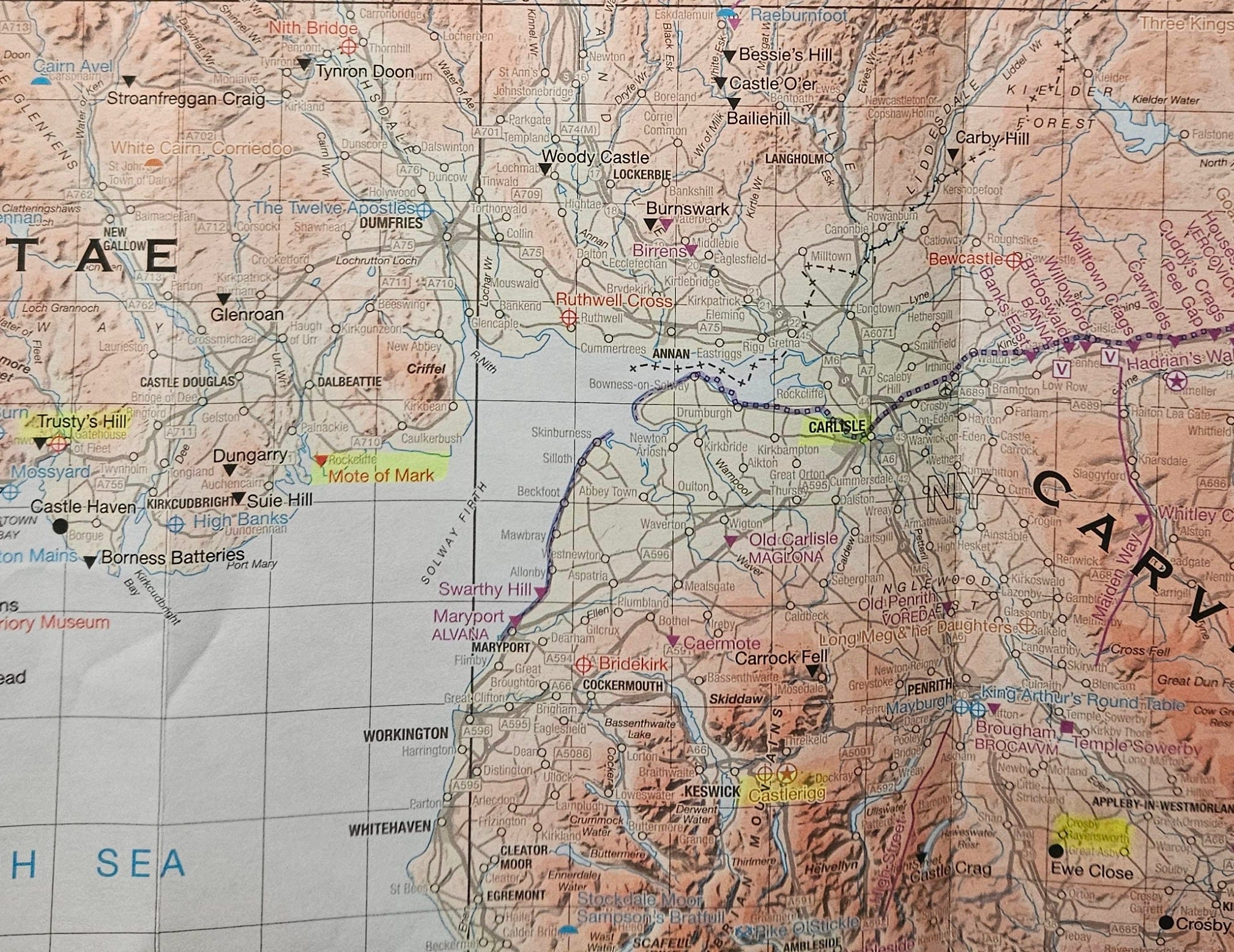
Key locations are:
Caer Ligualid (Carlisle) one of Uryen’s capitals
Llwyfenydd (the Lyvennet river valley near Crosby Ravensworth, Cumbria) also one of Uryen’s forts
Trusty’s Hill, a vitrified hill fort in Dumfries & Galloway, location of a possible royal stronghold
The Mote of Mark, site of another vitrified fort evidencing habitation in the 6th century
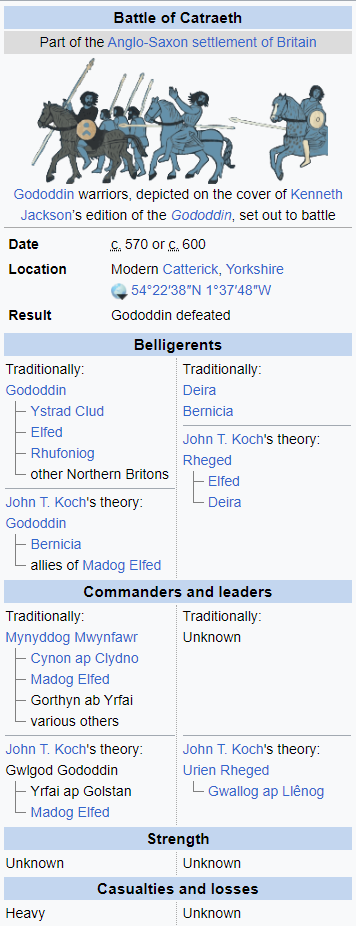
Catraeth (Catterick) - a bizarre entry in the Old North story because of its geographic location. There is a popular theory, based almost exclusively on linguistic interpretation, that this was where the famous battle depicted in Y Gododdin took place. But it’s a very long march from Din Eidyn (Edinburgh). The established explanation claims this territory once belonged to the Gododdin, which might be why they wanted it back. However a different theory proposed by John Koch pits Uryen against the other states of the Old North, suggesting Catraeth was part of Rheged. I’ve gone for something between the two, giving it to Uryen, but following the traditional battle lines of Britons vs Deira & Bernicia. See this helpful summary from the Wiki page on Catraeth.
I hope all this is convincing you to pre-order The Last Verse of the Harp Lord when it becomes available! The 6th century Old North is really a fascinating period of history that I knew nothing about when I started this journey. The dramatic topography of northern England and Southern Scotland lends itself to the epic - you’ll see I’ve included a full list of locations to visit in the novel’s Afterword. We’re so lucky to have thousands of years of history on our doorstep, history that explains quite a lot about the cultural divisions in the UK today. This land has always been tribal and that continues to manifest in regional boundaries, dialects, and yes tensions, especially between England and Wales. There are stories of conquest, oppression and integration alongside those of mutual respect and co-operation. I’m digging out the ones which have captured my imagination and hope will capture yours too.
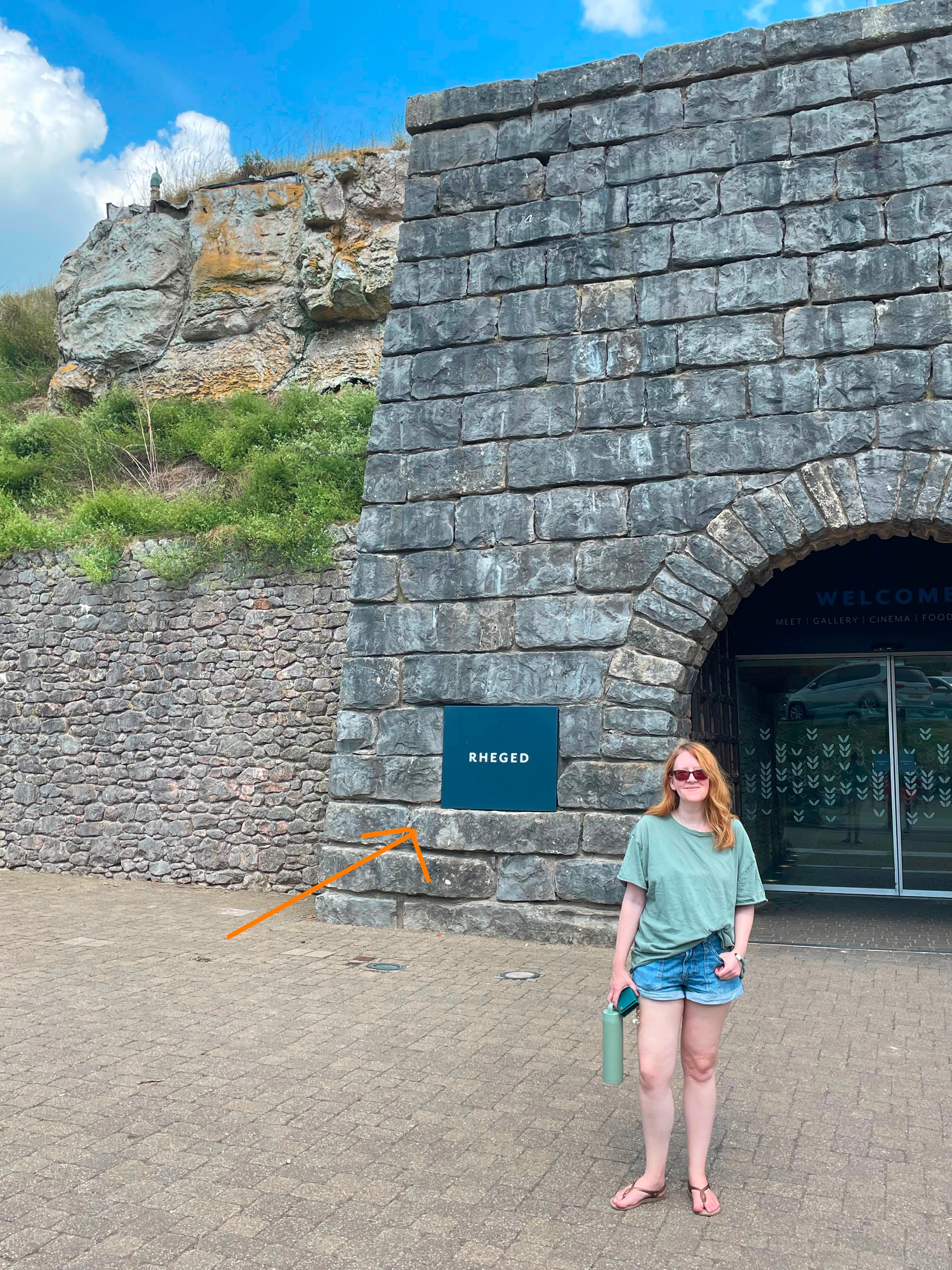
The genealogies were compiled in the 10th century, 500 years after Coel Hen was said to have lived so are not exactly robust historical evidence.
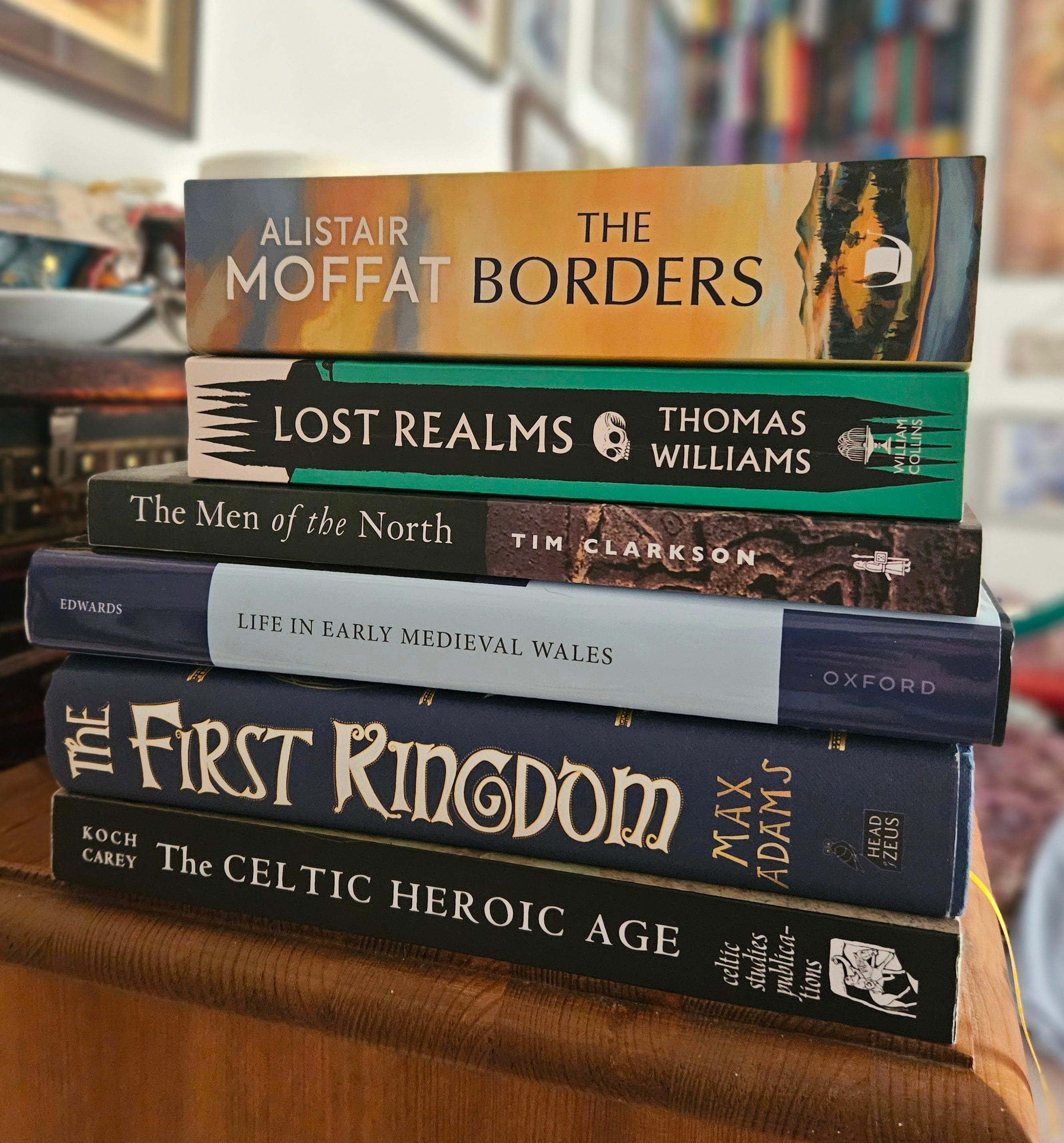
Some of my research material:
Bernicia being the domain of Æthelfrith or “Twister” as the Britons called him. This Anglian king was responsible for uniting Deira and Bernicia into the Anglian powerhouse of Northumbria. He’s an important character in my novel, so I went to visit his royal court at Yeavering.
Ad Gefrin
·
February 12, 2025
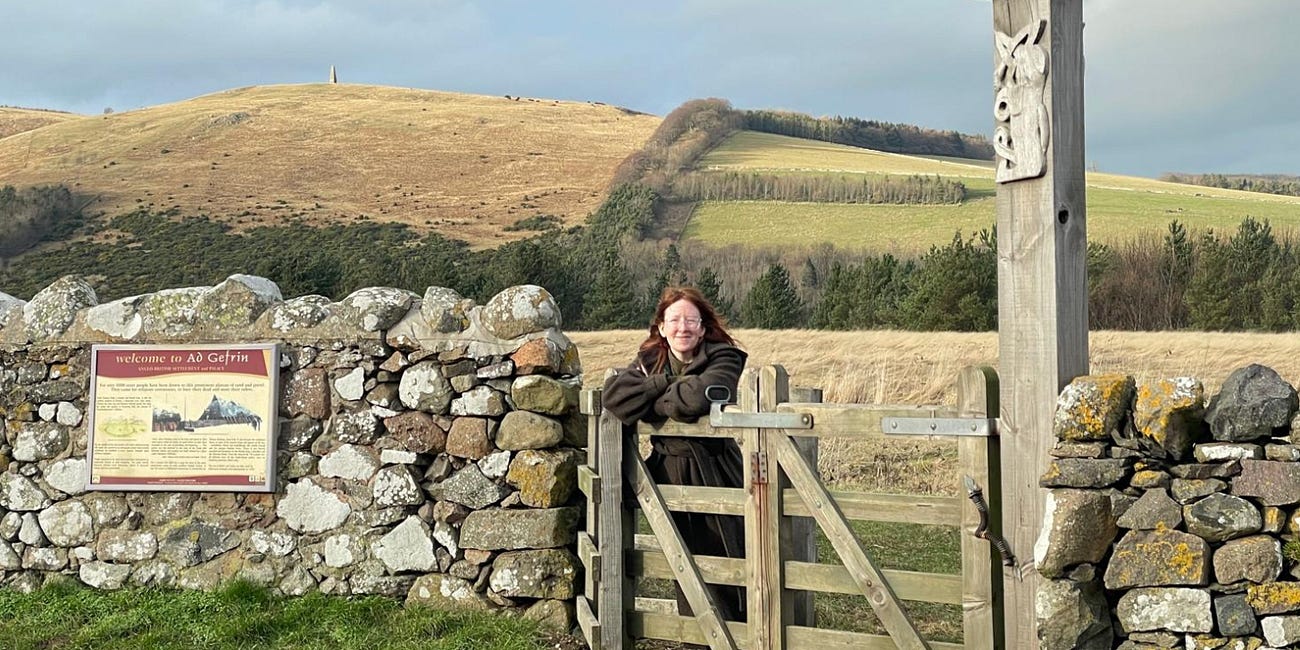
While on a research trip to the North, I finally had a chance to visit Ad Gefrin, a distillery and immersive museum exploring the 7th century "golden age" of Northumbria. You can find it in the town of Wooler, not too from from Bamburgh.
No posts
Comments
Nothing yet. Say the first thing.
Sign in to join the conversation.