
In March, I was lucky enough to do a two-week subsidised residency at the beautiful Cove Park (thank you Society of Authors for funding it). I can't express how vital the solitude and space was. Not least at the start of a new creative project, plus weathering the anxiety that comes from being out on submission with a book I’ve worked on for two years and which has my whole heart.
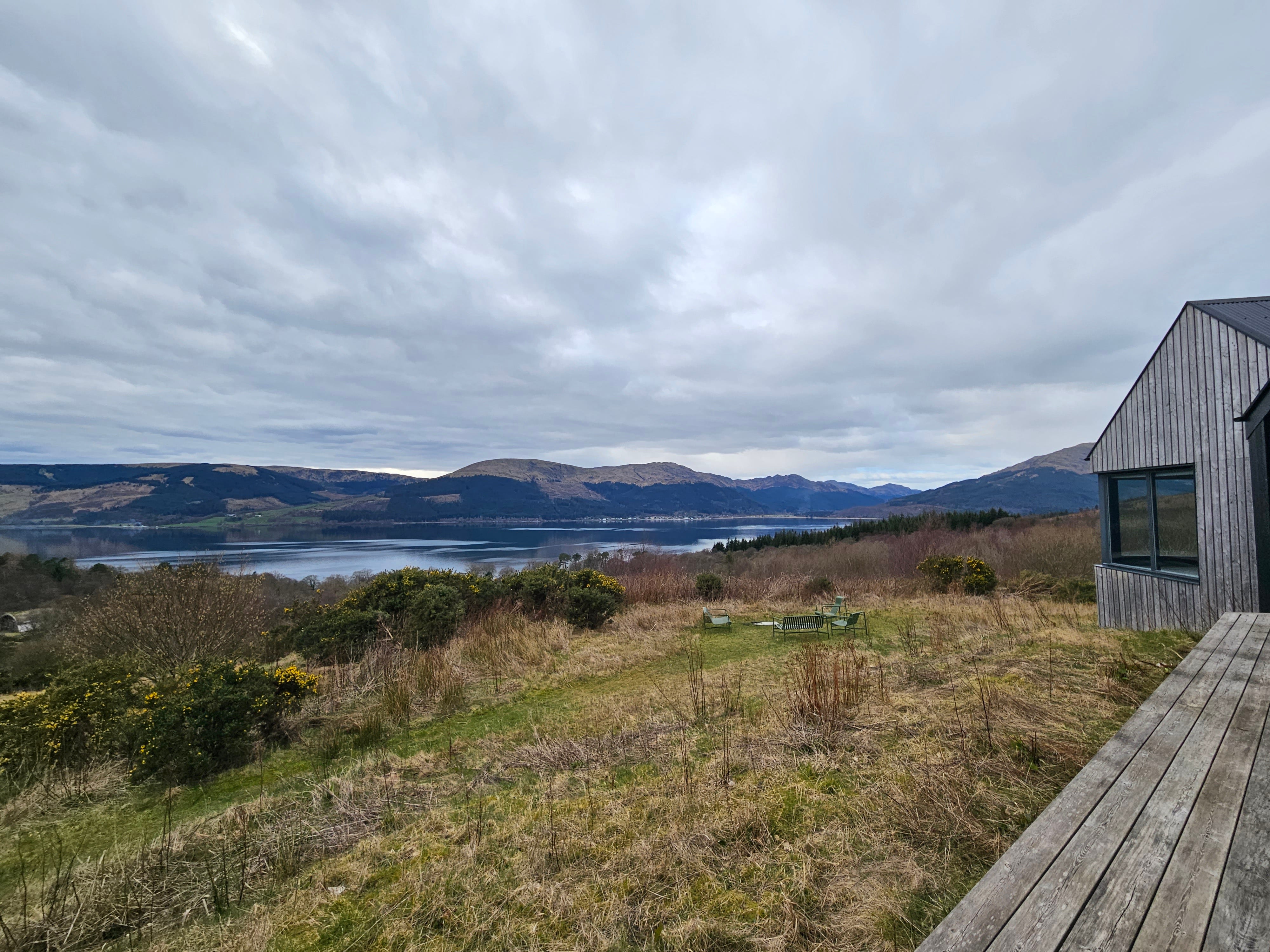
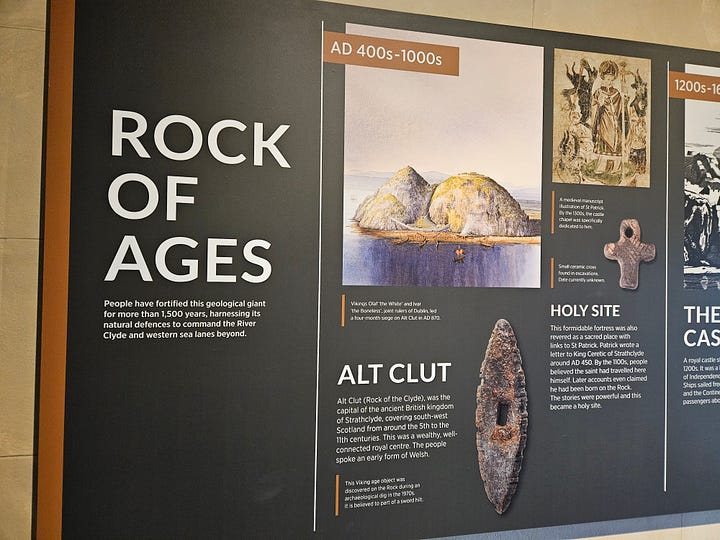
I wanted to immerse myself in the landscapes of yr Hen Ogledd, and managed to visit two old British tribal centres: Dumbarton (Alcluith) of Strathclyde and Dunadd of Dàl Riada. I think what's hard to appreciate without seeing it first-hand (especially from a southerner’s perspective) is the vastness of Scottish scenery. Can you imagine how much time it would have taken ancient folk to travel around? For kings to move what constituted armies between strongholds?
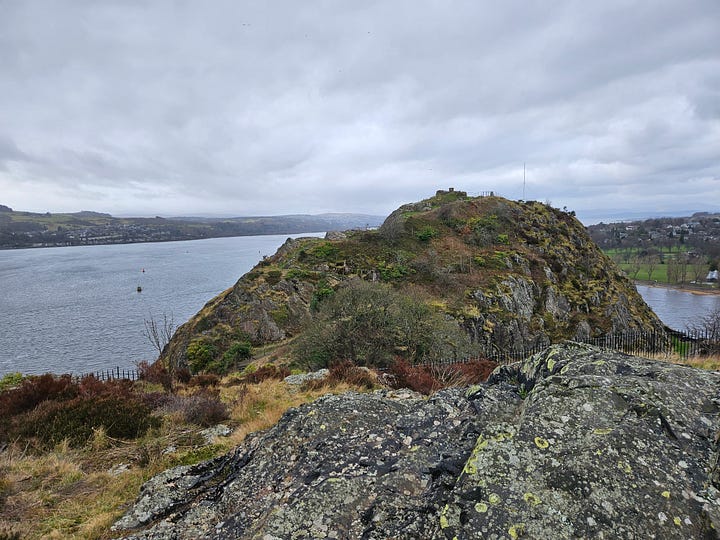
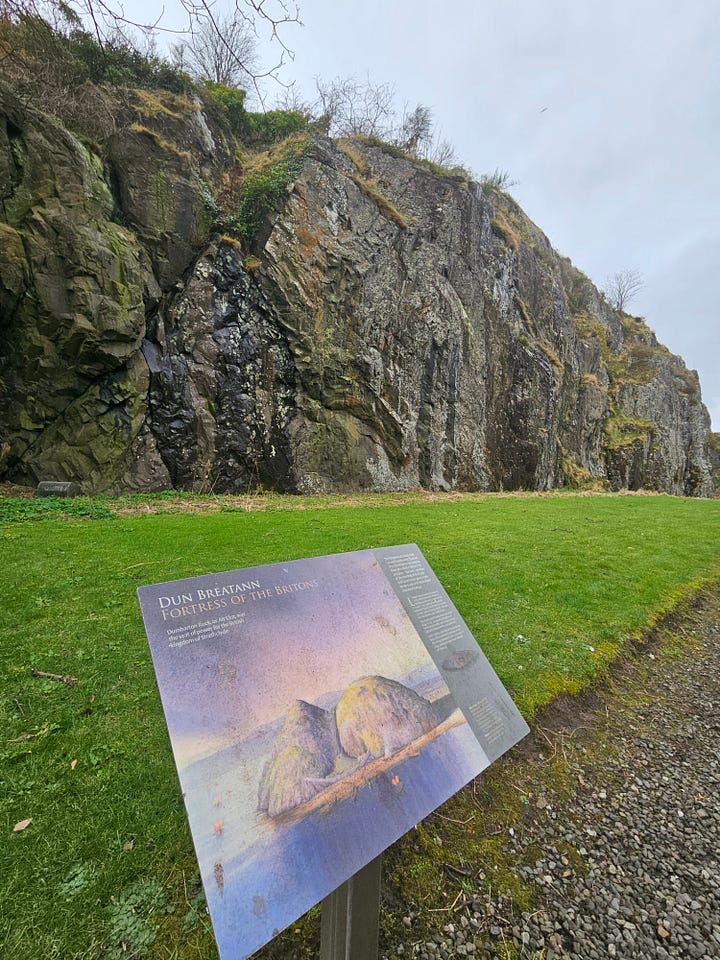
One of the ancient British kingdoms that comprised yr Hen Ogledd was Strathclyde, or as it was earlier known, Alt Clut. The name Alcluith, recorded by Bede, means Clyde Rock, and it has a very long history as a royal seat. It features in Of Splendid Song as the home of Rhydderch Hael (Rhydderch the generous), one of its earliest kings, and it remained a centre of power for a thousand years. Yes, Mary Queen of Scots stayed here!
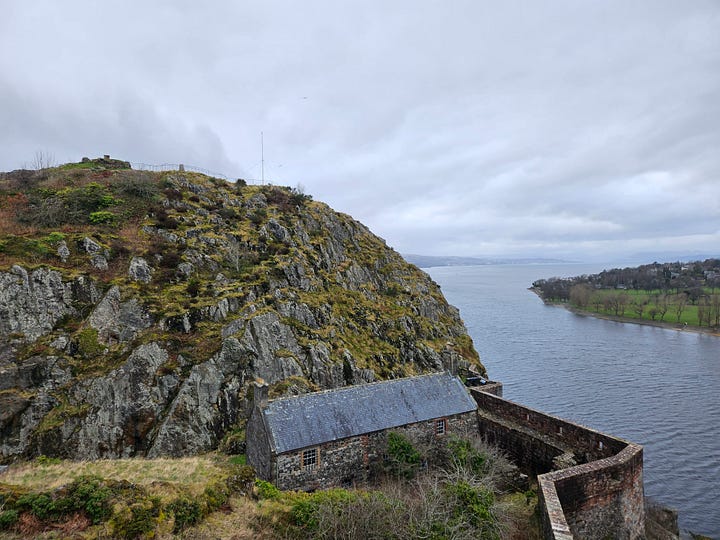
Today only scant remnants of the original "Fortress of the Britons" can be seen, but even they are mere footnotes in the actual rock's history, which is volcanic and dates back 340 million years. It’s reminiscent of Castle Rock and Arthur’s Seat at Edinburgh - also volcanic in nature and used as early fortifications by the Britons.
The views from the top of Dumbarton are magnificent. On a chilly March afternoon, I had them all to myself, and you can truly appreciate why the Rock earned its reputation as a gateway to Scotland.
Dál Riada was a powerful kingdom in what is now Argyll, Scotland. Argyll = coast of the Gaels. It is said the old warrior kings would place their foot upon the inauguration stone when they were crowned, ‘betrothing themselves to the land which fed their people.'
A legend claims that the hero Ossian left the print after leaping from Rhudle Hill, a kilometre away. His knee dented the hilltop, while the Ogham script you can see below the inauguration stone is actually the marks of his fingernails.
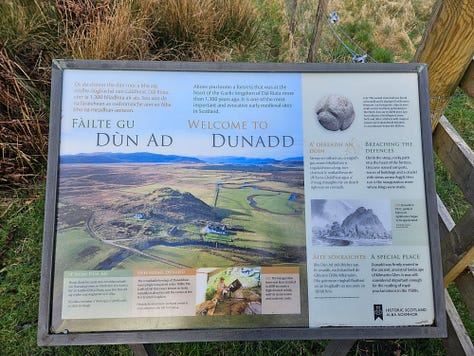
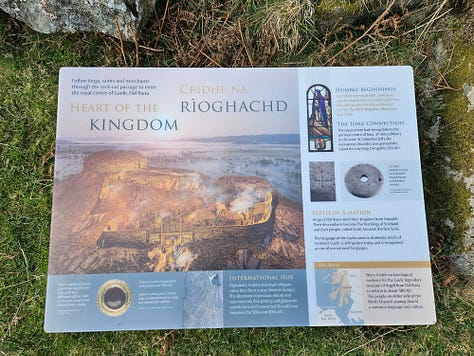
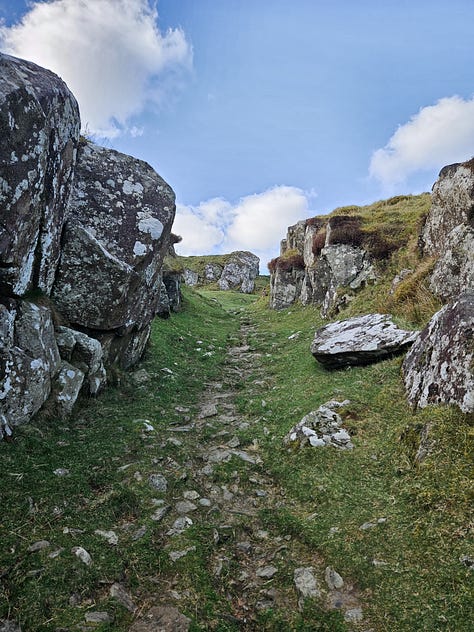
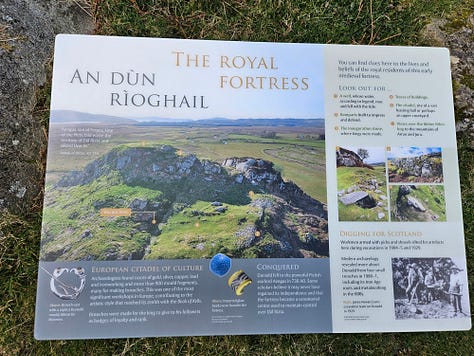
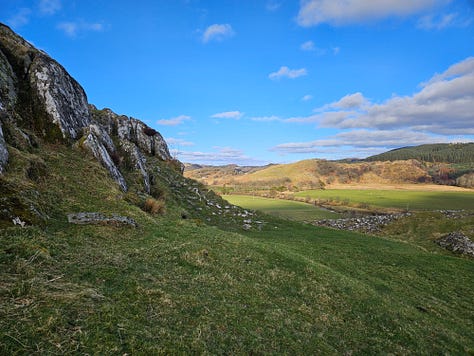
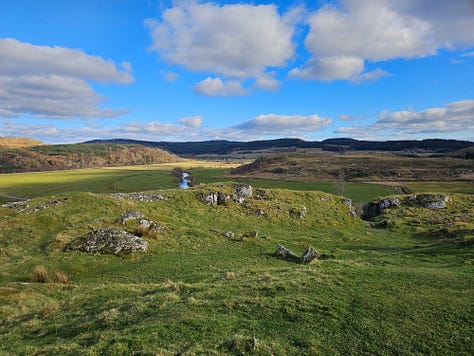
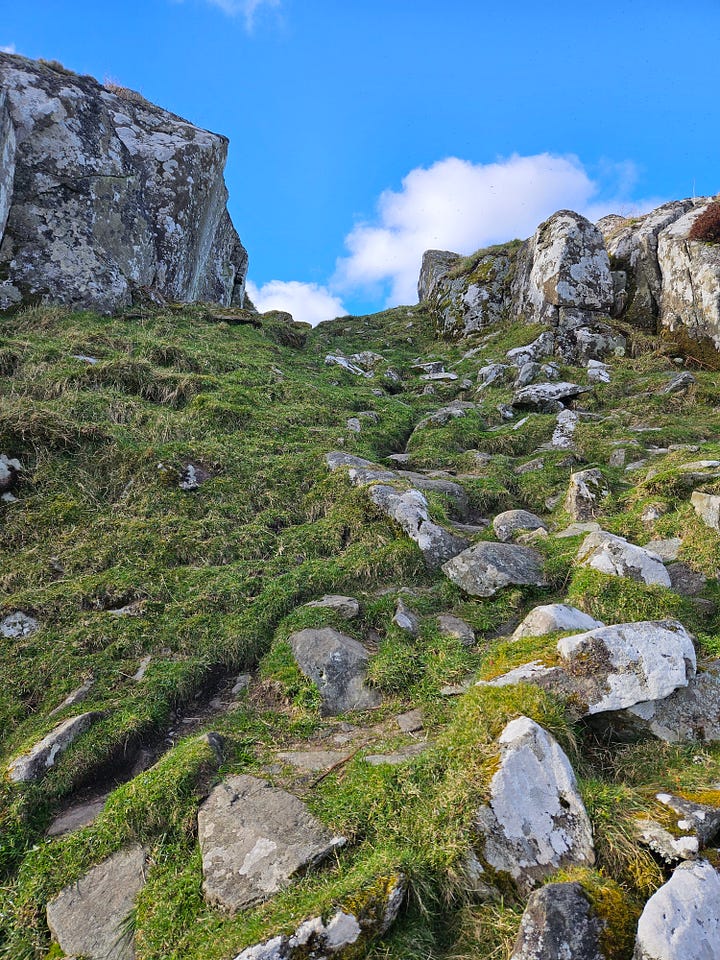
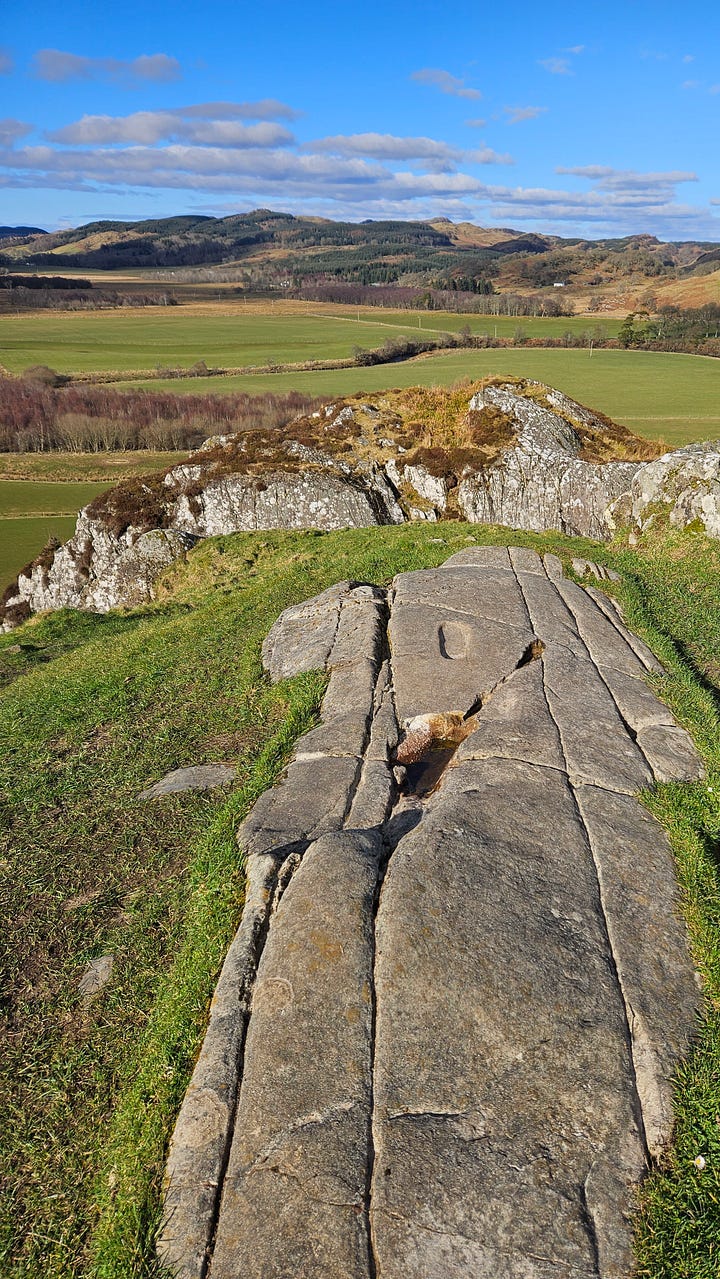
Áedán mac Gabráin (574-608) was one of Dál Riata's most potent kings. And those closing decades of the 6th century saw great upheaval across the Old North and its neighbouring realms - both Gaelic & Anglian. Choosing to set my book during this era has led me to learn so much about the region and its history. One of the best parts of writing historical fantasy is being able to return this lost world to living breathing life: a world of warrior kings, battle, blood and bards.
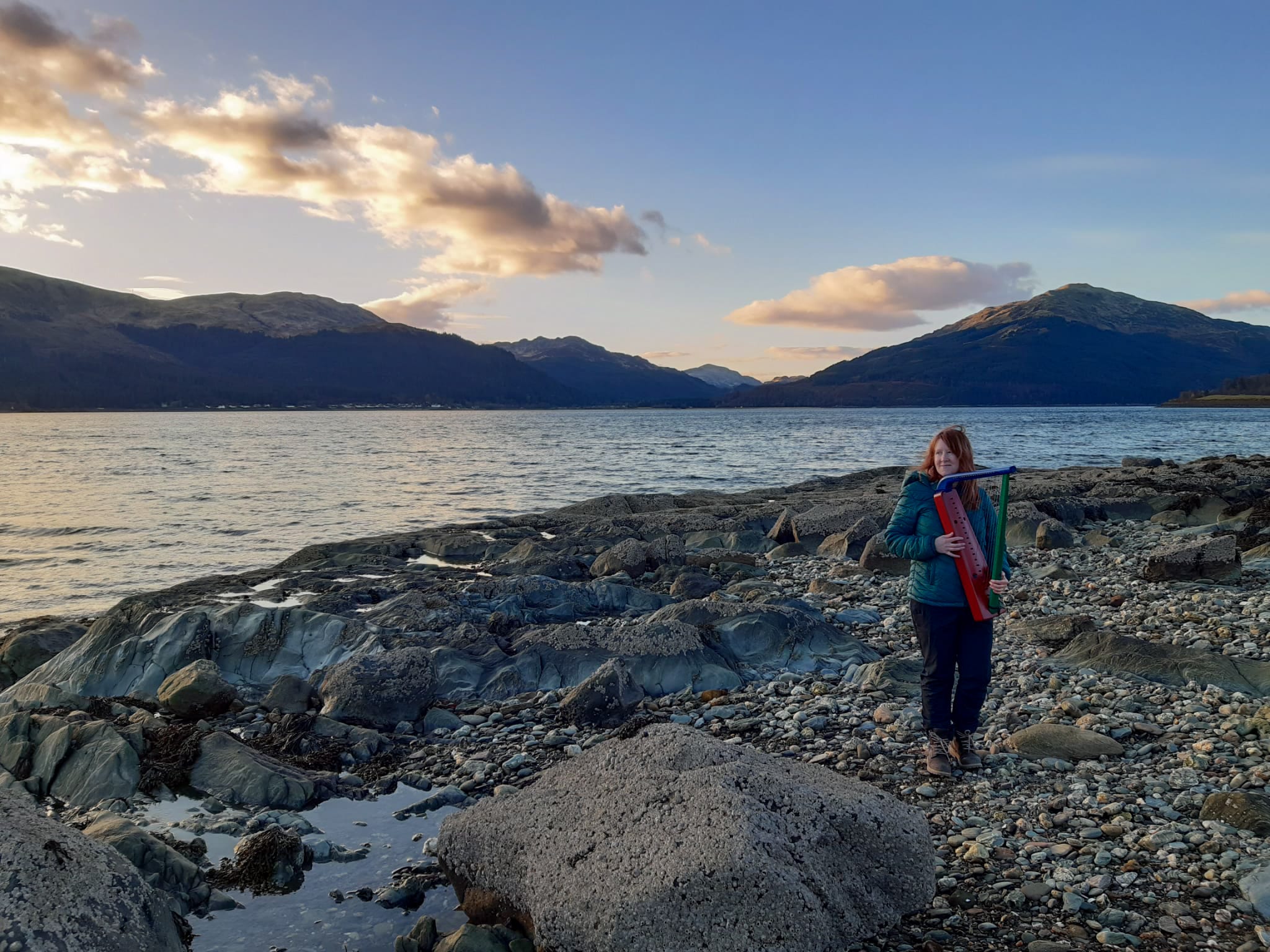
On a quiet March afternoon, even in surprising sunshine, I was alone there. And I wondered what glory songs had once echoed between the stones. What dark elegies for the dead had been sung while the bereaved wailed? Perhaps if one listens closely, it is still possible to hear them, hidden in the wind. I made sure to play again for the lords of the land.
I tried to capture this feeling in Of Splendid Song. Here’s a bit from near the end of the book where Aneirin is composing his masterpiece, Y Gododdin:
At Cove Park, I made a good start on historical fantasy novel #4 aka Gwydion Book, a queer hot transgressive retelling of the Mabinogi's Fourth Branch (hell the original material is queer & transgressive so I'm just following a well-trodden path). I'm excited about both these new novels. Gwydion is a companion to Of Splendid Song in the same way Song of the Huntress is a companion to Sistersong.
I would love to be able to tell you when you can read them, but publishing is really bogged down at the moment and everything is moving slowly. It’s also vital for me to ensure I sell both novels well because I took a year out to write a complete draft of OSS without remuneration, and am now feeling the squeeze. Throw in Meta’s dreadful theft of our work to train its A.I. (there is a web-wide protest today) and it’s never felt harder to be a traditionally published author trying to make a living from writing. But I love telling stories - it’s who I am - so I’ll keep on at it.
Thanks for reading The Land Beneath the Wave! This post is public so feel free to share it.
No posts
Comments
Nothing yet. Say the first thing.
Sign in to join the conversation.