
Over hill, over dale,
Thorough bush, thorough brier,
Over park, over pale,
Thorough flood, thorough fire,
I do wander every where,
Swifter than the moon’s sphere…A Midsummer Night’s Dream, William Shakespeare (1595-96)
The Fairy Month is upon us!
Did you know that May is associated with the fairies? The veil between our world and theirs is said to grow thin. Green growth, flowers and flowing streams nudge the door open just a little, allowing them to gingerly slip into our reality (and perhaps us, into theirs).
And so, with the veil cracked open just a wee bit, let’s explore some fairy folk beliefs that can be adapted in our modern lives.
Fairies, the good people (daoine matha), the fair folk, the other crowd, the hidden folk/Huldufólk, sidhe, elves, the fae… the names ascribed are endless.
Their nature changes across the globe, but their core is essentially the same: fairies are supernatural beings whose lives run parallel to our own, with the ability to influence humans for good or ill.
In today’s Western zeitgeist, fairies are generally thought of as delightful, diminutive winged humanoids that live in flower gardens and are kind and helpful (perhaps a tad mischievous). Victorian artists cemented this version in our culture, later solidified by J.M. Barrie’s Peter Pan. Given the names ascribed to the fae - the good people - it’s easy to understand how this interpretation arose. Without the context of folklore narratives, they must be good… right?
It’s complicated.
Fairies found in folklore are much darker and elusive. Fearsome and destructive. Invisible (sometimes revealing themselves) neighbours that directly impacted the lives of real people, forever changing their fate.
Names like the Good People or the Fair Folk were used out of both respect and fear. A gesture to not cause offence in the case they were listening. For you never knew if they were near.
An example of their nature is as follows: a young girl is whisked away to their world. While she’s there, she dabs magic ashes on her one eye which gives her the ability to see fairies. Back in this world, she encounters a fairy at the market and the story ends in folkloric fae fashion:
Well, I’m delighted to see you,” said she. “How are you?”
He looked at her.
“How do you see me?” he asked.
“I see you with this eye,” said she, pointing to the one to which she had rubbed the ashes.
“Well, you’ll see me no more,” said he.
He pushed his finger into the socket and pulled out her eye. From that day on, she had only one eye.
The Fairy Frog from Folktales of Ireland, ed. Sean O’Sullivan (1966)
The fear felt by those who believed in fairies was justified by stories like these. Fairy lore is full of abductions, changelings and loss of life, among other tragic outcomes. For believers, these were true events, not just stories told for entertainment.
At the same time, many stories show their benevolent side. They have been said to bestow a lifetime of luck, help with domestic chores and return lost children safely to their homes.
Today, fairy lore is thought to have functioned as both cautionary tales (stranger danger / don’t get lost in the woods etc.) and rationalizing difficult topics. For instance, depression or mental illness could easily be explained as “oh, they’ve been away with the fairies.”
However, for those that lived side by side with the Good People, these beliefs were woven into the fabric of everyday life. Small rituals were practiced to keep the peace with their unseen neighbours.
Many of these can still be practiced today as well, whether you believe in fairies or not, it may behoove us to keep the peace with them.
Offerings of milk, water, honey or bread. Place a small dish or shell in a garden and fill with any of the above. Whether it’s the fae or your local birds or insects, this is an offering of connection and appeasement. I put a terracotta plant saucer in the garden and fill it with water, the birds appreciate the gesture.
… put a saucer of milk outdoors for the fairies before going to bed every night without fail. The fairies supposedly fed on this and thus their friendship was ensured.
Strange Terrain, Barbara Rieti (1991)
Nail a horseshoe above your door (or the door of an outbuilding - especially if you have animals). Iron has long been associated with protection against the fairies. The horseshoe in particular is said to hold your luck, so what better way to protect yourself? The iron horse shoe is also believed to protect against the evil eye and any ill will that may be cast your way.
In Mull, a person encountered by a bean shith was told by her that she was kept from doing him harm by the iron he had about him. The only iron he had was a ring around the point of his walking stick.
The Gaelic Otherworld, John Gregorson Campbell (2008)
St. John’s Wort is the strongest herb to protect oneself from the Fae who may want to change your fate. Having some in your cupboards as a tea or tincture or growing it yourself doesn’t hurt.
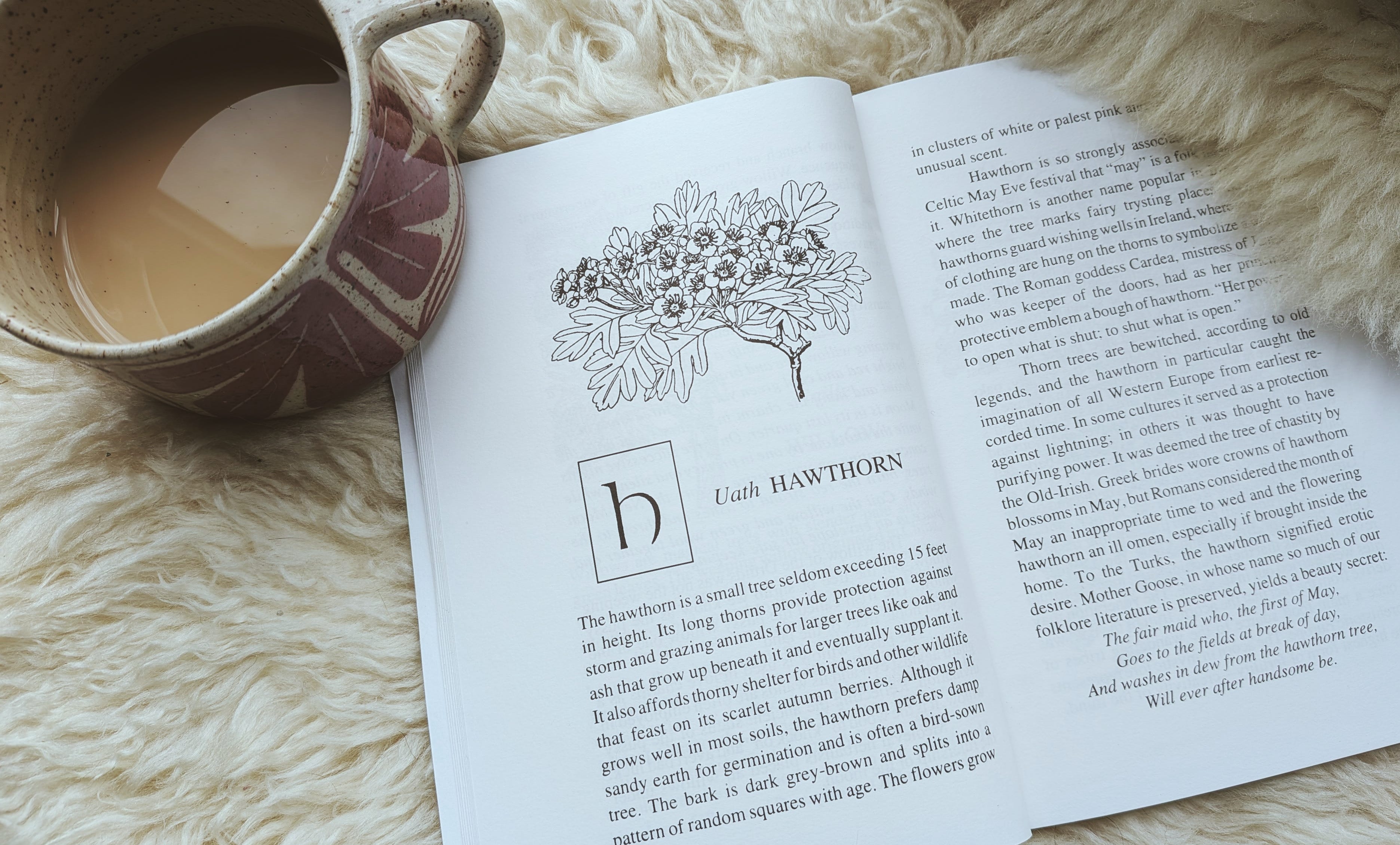
Respect the Hawthorn tree. Hawthorns have long been associated with fairies and are the gateway to their world. In Ireland, the construction of highways have been diverted in order to not upset the fae (see the Latoon fairy bush in Co. Clare). In my own small garden, a white hawthorn grows which I give a wide berth to be wild for their coming and going.
We can add oaks, holly, rowan and large rocks to the above which have specific fairy associations.

Create habitat. Folklore is full of the fae occupying natural, wild landscapes. The destruction of the environment is a sure way to incur their wrath. Stories of trees being cut, hill forts damaged, springs polluted are often forerunners for a grave future for the perpetrator. Creating gardens and planting trees is a way to keep the peace (in addition to all the more material benefits!).
Recognize Liminal Points of the Calendar Year. Some days of the year are more active for the fae: Bealtaine (May 1), Mid-Summer (June 20-23), Samhain (Oct 31) and Mid-Winter (December 21). In addition to respecting the environment, this practice keeps us in touch with the solar year, further deepening our connection with the earth and seasons.
Kindness and compassion (while also maintaining boundaries). Fairy lore speaks to the fae hiding in plain sight. Now, of course much of fairy lore warns us to mind strangers - it also teaches us to be compassionate and respectful.
Other notable protection examples are turning your clothes inside out, carrying bread or oatmeal with you on journeys and avoiding fairy highways. These are not as practical in everyday life - imagine wandering the woods with loose oatmeal in your inside out pockets while inquiring about the local fairy path so you can avoid it? Might be considered a bit strange these days (but I’d definitely be intrigued by your story).
The fog is rolling in on our greening landscape and I’m off to garden now and check to see if the bird feeder and water dish need filling.
I hope you have a wonderful month of May in your corner of the world. Do let me know if you find a horseshoe along the way!
The veil is thin and you never know who you may meet.
☾ Thank you for being here. If my work resonates, please consider sharing,
subscribing or visiting my online shop. ☾
Comments
Nothing yet. Say the first thing.
Sign in to join the conversation.