
Hi there,
I got back to Addis over the weekend, where temperatures seem to have significantly dropped since I was last here just five days ago.
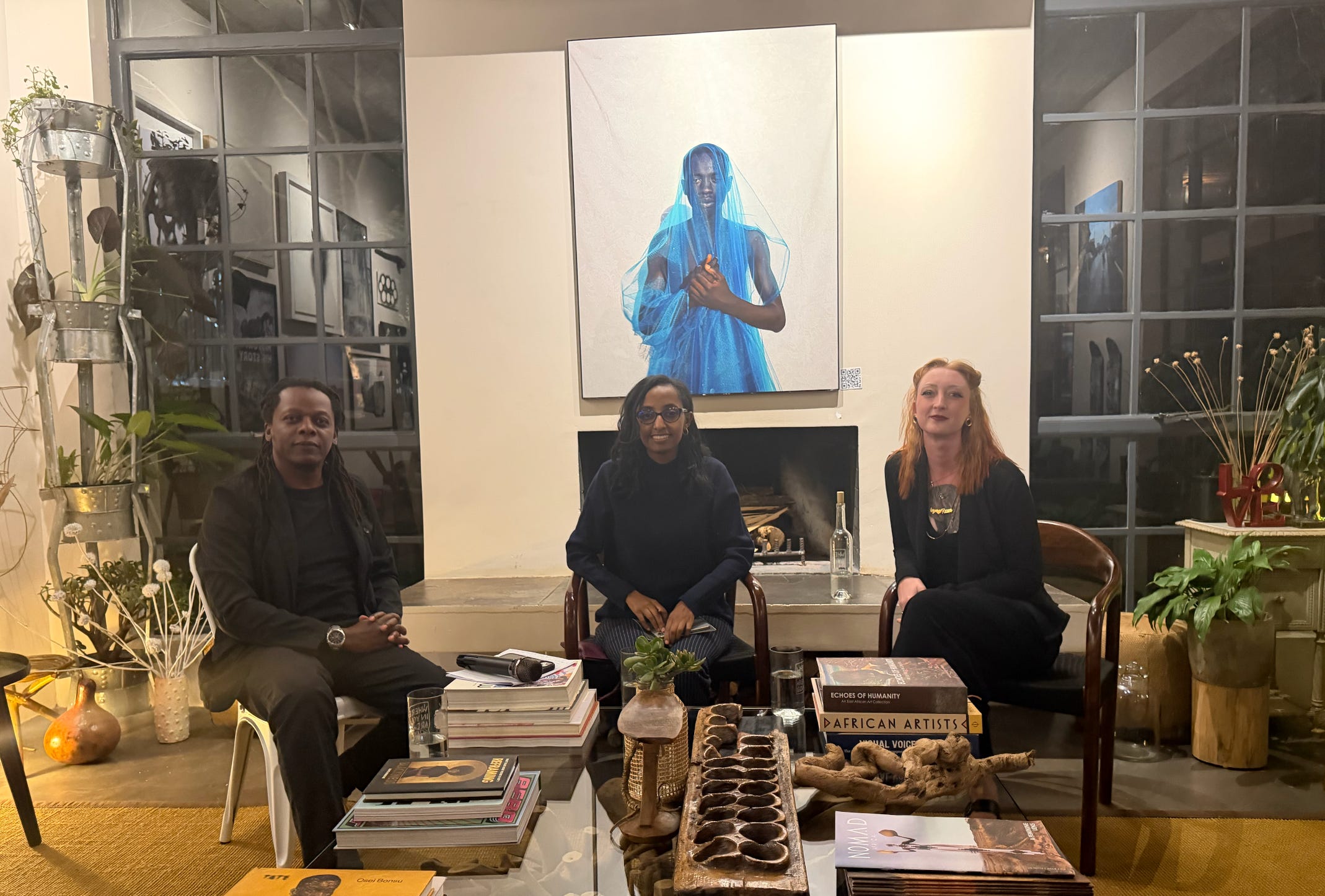
For folks in Nairobi, I highly recommend checking out the exhibition Threads of Resilience at Afrika House. The exhibition, on women working in the Ethiopian garment industry, is open until the 22nd of August. You’ll find more on that in the last update for this edition.
My name is Maya Misikir, and I’m a freelance reporter based in Addis Abeba. I write Sifter, this newsletter where I send out the week’s top 5 human rights stories in Ethiopia.
Now, to the news.
Fighting broke out between the federal army and soldiers of the Tigray People’s Liberation Front (TPLF) over the weekend.
On Saturday morning, “intense clashes,” as reported by the BBC, took place in the town of Shererina, in the western part of the country’s Tigray region. Many civilians, along with “wounded fighters”, have since crossed over into bordering Sudan.
Here’s an excerpt from the story:
Both the TPLF and the federal authorities blamed each other for Saturday’s clashes. The TPLF-led regional administration accused the federal government of launching an “open war” in the Shererina area.
Why now?
Rebel factions who are fighting have been “waiting for the rainy season to begin because the drones used by the Ethiopian government would be less effective in the rain”, according to a report on France24.
Wounded people received first aid upon arrival in Sudan and were later transferred to a place known as al-Hashaba, according to another RFI report.
Here’s an excerpt from that:
The security source said al-Hashaba, also known as Village 8, serves as an “administrative hub” for Army 70, a TPLF-affiliated armed unit whose fighters fled to Sudan during the Tigray war and later fought alongside the Sudanese army against the RSF.
The fighting (a “breach of their three-year-old peace deal”) had subsided by Sunday, according to a report by Al Jazeera.
The full story on BBC, here, on RFI, here, and on France24, here.
The media regulatory body has given a final warning to two broadcasters: Arts TV and Ahadu FM.
The Ethiopian Media Authority issued the warnings on the same day to both media houses, citing repeated legal and ethical violations, according to the warning letters. The media outlets were accused of broadcasting programs that were against national interest, despite being warned on multiple occasions.
Here’s an excerpt from a story on Addis Standard:
It also accused the stations of violating Article 68(1) (b) by “broadcasting unbalanced information” instead of presenting news and programs in a balanced manner reflecting diverse viewpoints.
No mention of the specific programs that violated the said legal and ethical standards was cited in these warning letters.
The full story on Addis Standard, here. If you’re interested in reading the warning letters (in Amharic), reply to this email and let me know. I can send them your way.
Five Ethiopians were executed for drug-related charges in Saudi Arabia last week Monday.
This follows the recent updates on the Ethiopians on death row in Saudi Arabia, of which there are at least 79 more at “imminent risk of execution”.
Here’s an excerpt from the latest report on Human Rights Watch:
“Saudi authorities are executing marginalized Ethiopian migrants after court hearings that sometimes barely last a few minutes without a lawyer or a translator,” said Joey Shea, senior Saudi Arabia researcher at Human Rights Watch.
How did the Ethiopians end up smuggling hashish (the charge for which they were executed)?
Here’s another excerpt:
The five men were “physically and mentally weak” after their arduous journey from Ethiopia as well as unemployment and poverty and felt they “had to accept that job despite not knowing what the job was,” the source said.
The man told them to carry a package with unknown contents a short distance and where to deliver it, and the man then disappeared.
The full update on Human Rights Watch, here.
The communities that live in formerly volatile areas along the Kenya-Ethiopia border are taking part in a peace meeting.
The communities on the opposite side of the border (the Dassanech from Ethiopia’s Omo Valley, and the Turkana from northern Kenya), who used to “clash over cattle, fishing grounds, and grazing land”, have been brought together over common climate change struggles.
Here’s an excerpt from the story:
Turkana and Dassanech elders, youth and local leaders now meet regularly to discuss resource sharing and conflict prevention instead of preparing for retaliation.
The full story on The Standard, here.
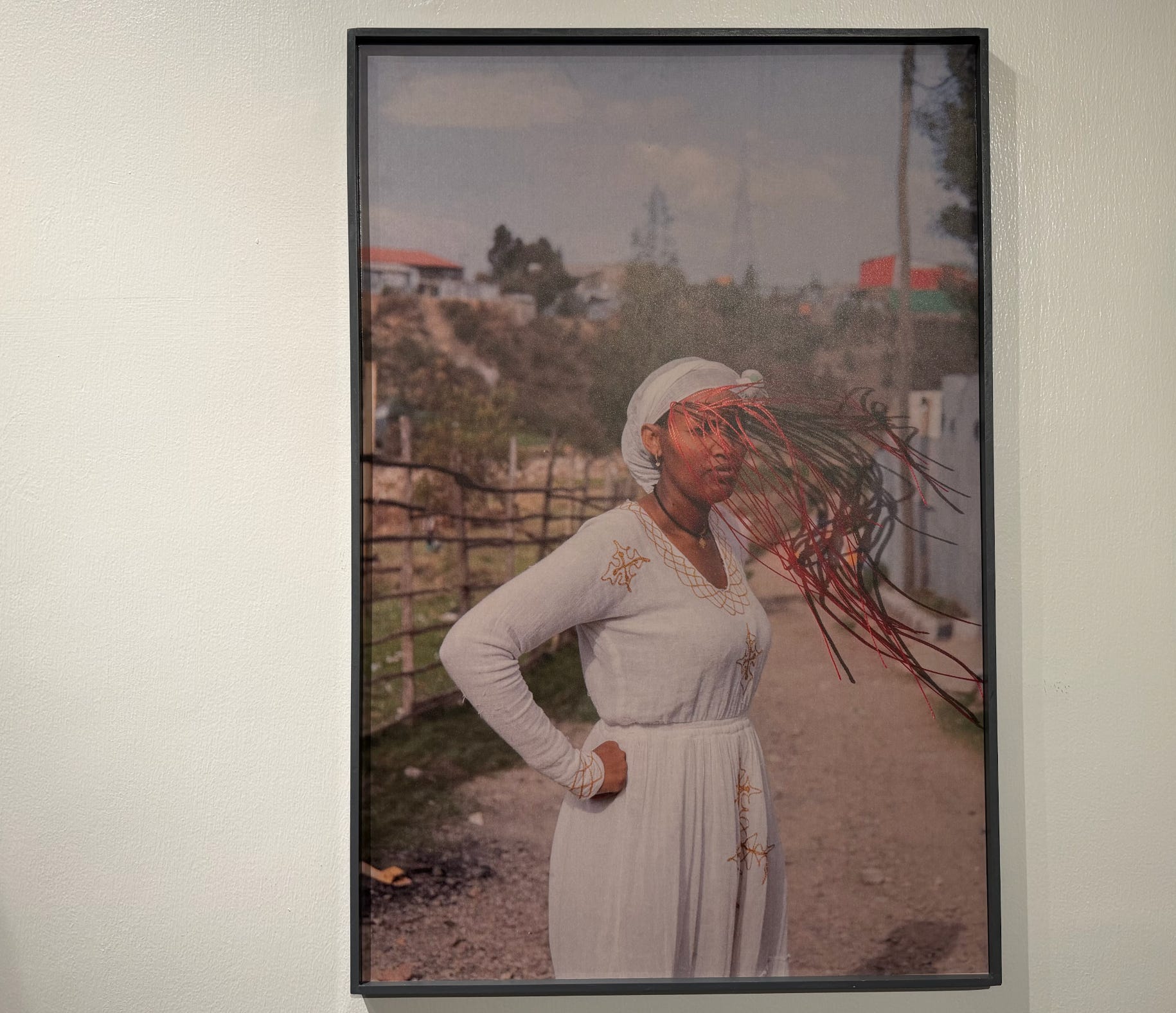
Last week, “Threads of Resilience”, an art exhibition centered on the women working in Ethiopia’s garment industry, was opened in Nairobi’s Afrika House. The exhibition was a collaboration between photographer Maheder Haileselassie and anthropologist Dr. Olivia Howland.
The exhibition brought together Dr Howland’s research on garment workers in Ethiopia (as part of a larger study), photographs taken by Maheder, and the contributions of eight garment workers who took part in the exhibition through a process known as photovoice.
Photovoice is a participatory method in which the workers receive basic photography training and take photos in response to prompts. The photos they took then became part of the exhibition.
The exhibition addresses serious worker rights violations that women working in Ethiopia’s industrial parks experience. Their pay is barely enough to survive on, the hours are long, and the women are constantly exposed to heat and harmful chemicals, to name a few.
But it’s also about the personal lives, dreams, and ambitions of these women, and the things and people they hold dear.
You can find updates on where Maheder is exhibiting her work on her Substack here.
That’s all for this week. I’ll catch you next Monday.
In the meantime, if you know someone who might be interested in this, share and let them know!
No posts
Comments
Nothing yet. Say the first thing.
Sign in to join the conversation.