
Good Time Girl is a recurring column exploring complicated, angular, real, “bitches” in film (CARBs for short). My inaugural subject is May from the 2002 film of the same name, which is seeing a resurgence among Gen-Z for its Y2K nostalgia and Angela Bettis’ convincing portrayal of isolation and wanting connection. Enjoy!
I hate dolls.
This hatred began with ambivalence and a bit of mischief. At the age of three, my mother bought me some Scandinavian dollhouse with all the minimalist wooden furniture and a neat little family of 4. I displayed no interest. Thinking I had stage fright and she needed to give me space in order to bond with the toy, she left me alone with the doll family only to return and find all 4 dolls hung by their necks in the rafters of the little structure. She knew better than to buy me dolls again, and I knew better than to let my more macabre tendencies be on display (I found writing to be a safer outlet for my more macabre predilections after that).
This ambivalence has since morphed into a veritable hatred: I see doll play things everywhere, from the babydoll dresses all waifs in Brooklyn wear to Sandy Liang everything to scalloped socks scrunched down into Mary Janes (I was once a schoolgirl and did this, but now that feels too stunted on my body, like I want to relive a time I didn’t enjoy). That said, I’m biased: I’ve wanted to be a capital-w Woman since the age of 6, which meant at the time that I wanted lots of black and gold skirt suits a la ‘80s Gianni Versace, gold lipstick tubes, and a chic briefcase. I’m not, nor have I ever been, part of the market for dolls.
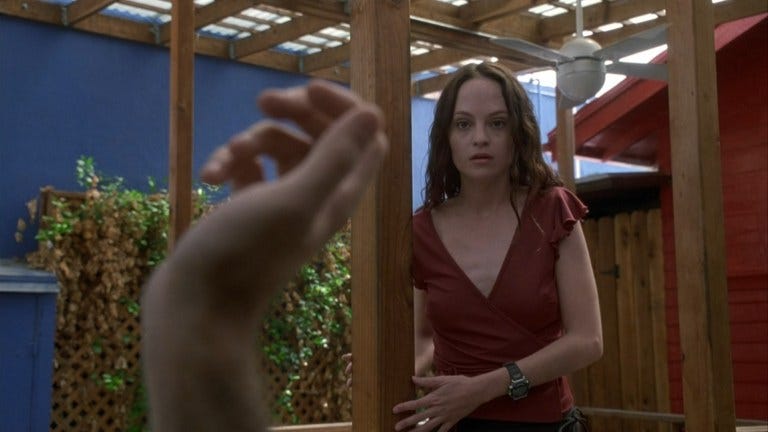
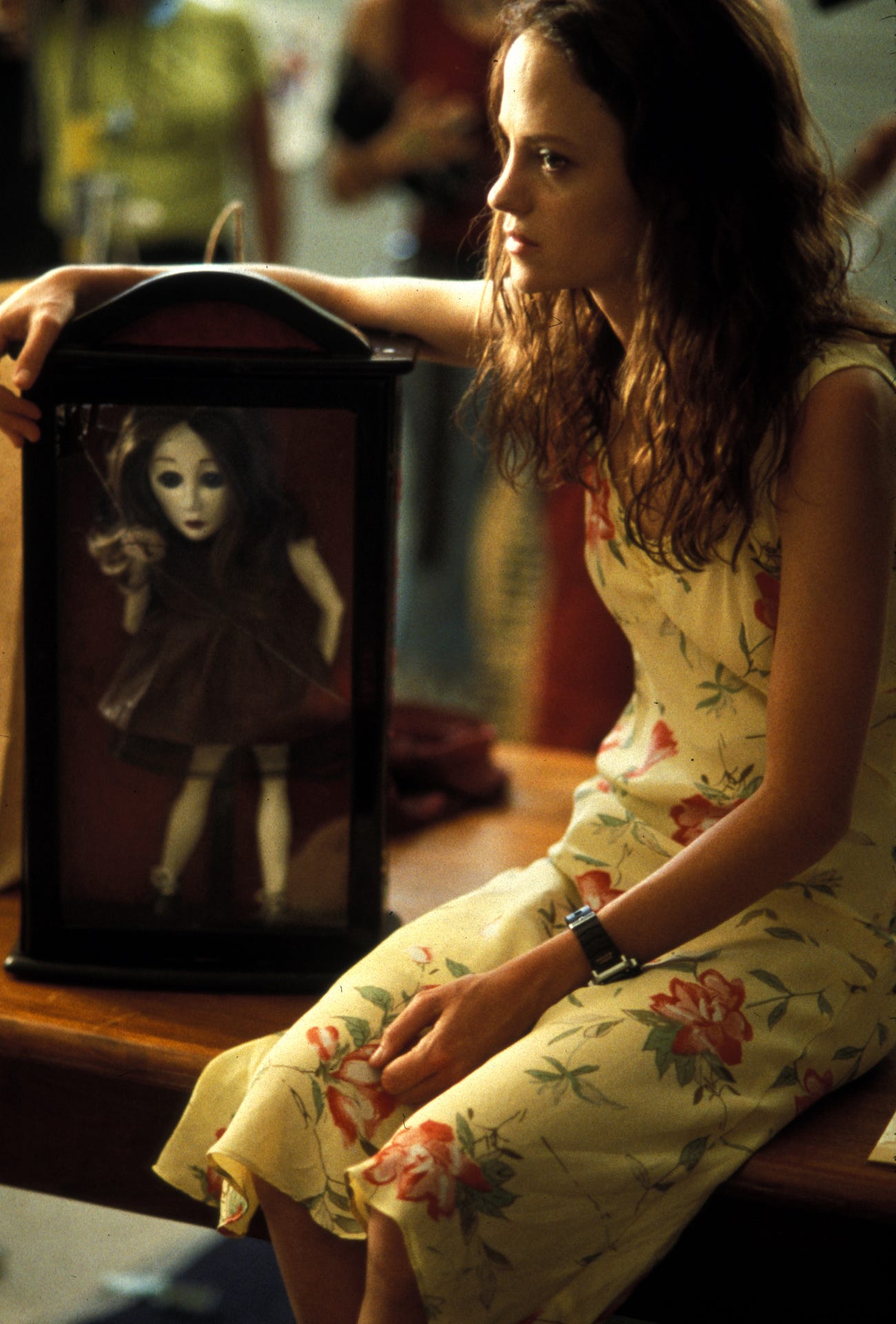
So when May opens with the titular girl’s mother handing her a handmade, wan-eyed doll in a glass case, I knew where we were going: a bildungsroman of bloody self discovery. This isn’t a diss towards writer-director Lucky McKee—I found the brusque yet complete cold opening of May’s lazy eye, her mother’s shame around her looks, and the responsibility of the caged doll to be contained and claustrophobic. I knew May would have a hard time. But just how hard of time was at a scale I was unprepared to encounter.
Starring an unnerving yet mesmerizing Angela Bettis, May is about a woman’s struggle to connect with those around her. She’s been raised as a recluse, told to cover herself and conform to what others might like. Yet once she’s given her doll, of course called “Susie,” there is no reason for her to continue to try to connect with others or continue to experience the discomfort these attempts create. Instead, her world becomes Susie, her self-declared “best friend.”
This isn’t to say May can’t function—in fact, she’s incredible at mundane hobbies, from reading about amputation in her free time to making her own lacey, patched clothes that scream DIY corpse bride. She would do well in New York, but in the sun-bleached strips of Los Angeles, May goes to work as a vet tech cleaning up dog guts and pulling needles out of torsos when the veterinarian drops them mid-operation. Her only respite is staving off flirtations from her horndog lipstick lesbian coworker Polly (Anna Faris) and ogling Adam the mechanic across the street (Jeremy Sisto). Then she goes home to do laundry, sew more clothes, and tell Susie the doll how she will ask Adam on a date.
Despite her awkwardness around others, May wants to break free from her mother, her psychic connection with Susie, and the idea that she isn’t loved or valued. Early flirtations with Adam at the laundromat are cringe at best: Bettis adds the flourish of May not only not knowing how to inhale a cigarette but also between which fingers to hold it. It’s like watching a baby deer try to stand on three legs.

Yet there is a sense of openness and desire to May that is undeniable, even off-putting to those around her. When Adam has her over to watch a film he made, a horror short that devolves from a couple on a picnic date to the two people eating each other alive for both physical and sexual ecstasy, May doesn’t flinch. She loves it: Later in his bedroom, she bites his lip and proceeds to rub his blood over her face and chest.
“It’s like your movie,” she says to Adam, who looks at her horrified. May is shocked by his reaction. She saw the film he made and wanted to be what he wanted. She even enjoys the potential bloody play. His swift rejection confirms that she is too much to be loved, that she needs to go back inside the glass box where she belongs.
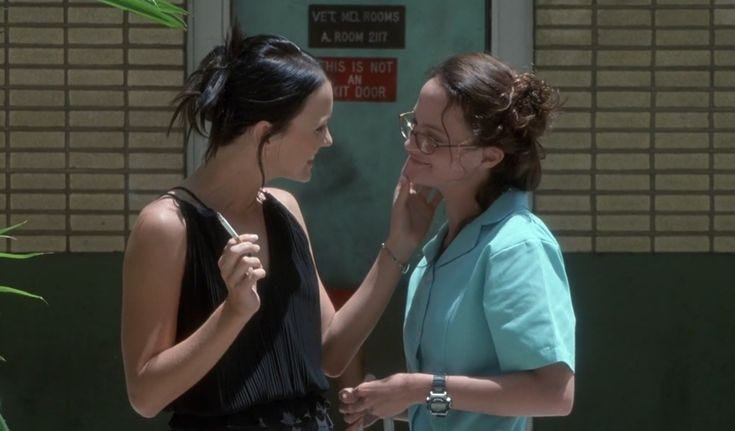
This similar betrayal from Polly only amps things up further. Early on, Polly witnesses May stab herself in the thumb as a form of “relaxing.” Polly asks for May to do the same to her, which elicits first surprise then arousal. Faris is incredible in this role: I now can’t stop saying “we can hang out, and eat some melons or something.” She practically Pepé Le Pews May into an evening together: Once again, May doesn’t flinch.
What May cannot really do is figure out how to verbally communicate her desires. The sudden closeness she feels toward Polly after their night together is quickly undercut when she shows up at Polly’s apartment and sees another woman in her bed. Despite Polly’s insistence that May is her “number one hot mama,” she once again feels deeply rejected and is unable to communicate her own needs. She has become a plaything for the two people who matter to her most—used, then thrown away.
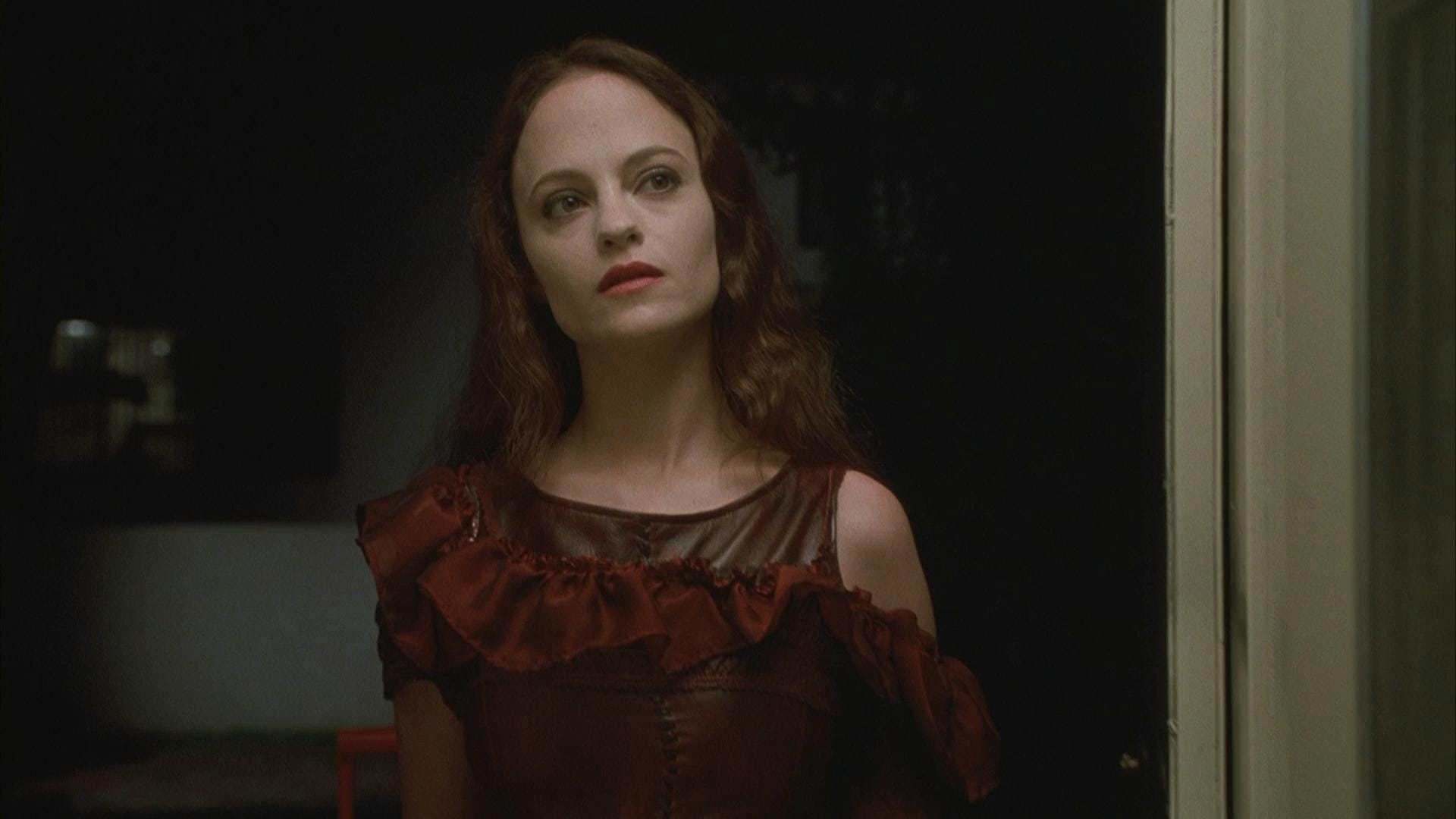
The gory journey of May becoming her uncaged self is one for horror canon. I don’t want to spoil too much, but watching this woman transform physically into her most confident self by any means necessary evoked more empathy for me than revulsion. McKee and Bettis manage to make what could be hack slasher moments into unnerving acts of self-actualization. May moves through the world the only way she knows how: Motivated by the desire to be seen and understood.
Bottom line, I love May because she tries. The brightest women of my generation are destroyed by stasis: Maintaining the same weight since high school, assuming they will get that opportunity just because they exist and have been told that “it” will happen for them, hoping to be plucked off the shelf. They wait. May doesn’t. She tries, to a fault, to get what she wants—love, friendship, and understanding from those around her. And who are we to fault her for that?
No posts
Comments
Nothing yet. Say the first thing.
Sign in to join the conversation.