
A funny thing happens when you release an indie film in 2026. You start the week thinking you’re a producer. By Friday, you’re a CEO of a small but complicated retail empire.
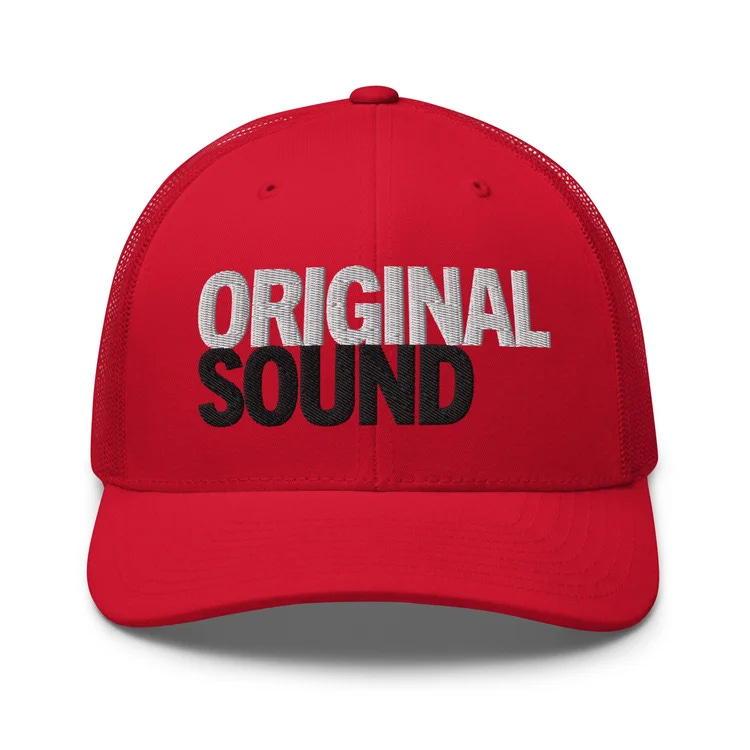
When we decided to launch the Original Sound merch store, I was thinking about aesthetics. The curve of a hat brim. The weight of the t-shirt fabric. Whether the logo should feel downtown cool or retro.
What I got instead was a crash course in interstate tax law. Because you no longer just make a film or stage a piece of theater. You run a business.
Which means you start thinking about things you never imagined caring about: protecting the margins.
Let’s say you sell a $30 t-shirt through a print-on-demand partner like Printful. On paper the math looks clean. Maybe the shirt costs about $20 to produce and ship. You clear around $10.
Lovely. Except.
If you don’t have your paperwork in order, the tax system can really mess you up. First, Printful charges you sales tax on the wholesale cost of the shirt. Then you’re legally required to collect sales tax from your customer on the retail price. Suddenly that $10 margin starts shrinking, and you go from having a clever additional revenue stream to owning a hobby that loses money.
So how do you avoid double taxation? Paperwork of the bureaucratic variety.
Since we shot the film in New York, we had already registered our LLC with the NYS Department of Taxation & Finance. It took around two weeks for us to receive our “Certificate of Authority”, which allowed us to be tax exempt on some purchases during production.
That same Certificate meant we were authorized to file a different form with Printful. The form itself has all the glamour of a DMV waiting room. It’s called ST-120. It took me three times to get it right, but once our ST-120 was accepted by Printful, it functioned as what they call an “alternative document” in roughly 30 other states.
In other words, by uploading one piece of paperwork, we unlocked tax-exempt wholesale purchasing across most of the country.
It felt like finding free money in the couch cushions of the internet.
If you’re a remote seller and your revenue stays under the Economic Nexus threshold (usually about $100,000 per state), this is a golden ticket to protecting your margins. (And I’d be remiss if I didn’t mention how fun it was learning what an “Economic Nexus” is.)
Trucker hats and t-shirts turned out to be the easy part. The real adventure was the vinyl.
We wanted a limited run of 250 records of the Original Sound soundtrack. The kind of artifact someone might still own twenty years from now. I don’t even own a turntable, but vinyl is apparently all the rage with Gen Z, and they are a meaningful part of our target audience.
After getting the tracks mastered, we had to get “electro-formed stampers” made by a place called The Bakery in LA. They helped us find a pressing plant called Physical Music Products in Tennessee that could handle the high-fidelity pressing we needed for the Erik Blicker and Glenn Schloss score.
We’re taking pre-orders now for our late April ship date, because pre-orders build the tribe early. We had our first three orders within the first 15 minutes of it going on sale. When those 250 fans spin that record, they aren’t just listening to music. They’re invested in the film’s theatrical and downstream runs.
Of course, once you’ve built a small interstate retail operation, the next question becomes: how do you turn merch into a marketing strategy?
Now that the store is live, we’re sending merch boxes to our principal cast with simple instructions: Open the box. Film your reaction. Pretend you are extremely excited about a trucker hat.
Those clips will give us fun social media fodder. Suddenly the merch promotes the film, the film promotes the merch and everyone gets to watch professional actors who are super jazzed about a trucker hat. Marketing departments used to pay a lot of money for this kind of content. Now it arrives via UPS.
Getting the store online was not glamorous. There were approximately 72 hours of staring at Squarespace fulfillment profiles, re-sizing photos, creating return policies and ticking off legal checkboxes required for Google marketplace listings. It was less “indie filmmaking” and more like managing a regional warehouse.
But once the heavy lifting is done, something magical happens. The system runs itself. Our vinyl ships from Tennessee. Our t-shirts ship from the cloud. Orders appear while I’m off creatively solving some other problem.
If you’re launching a creative project in 2026, here are three things worth knowing when setting up your own online empire:
1. Protect your margins.
Get your state’s sales tax certificate and find out which other states will accept it. Avoiding double taxation can save you up to 12% on every order.
2. Price for the strict states.
Some places, like California, don’t honor certain certificates. Bake that tax into your retail price so you’re not eating the cost.
3. Automate everything.
Your goal is not to become a full-time merch manager. Your goal is to build a system that runs while you’re busy creating things.
In an earlier Distribution Diary post, I talked about how publicity campaigns unfold like a string of dominoes. One move activates the next. Press leads to awareness which leads to audience momentum.
Merch is another domino. Except this one also helps pay for the next round of dominoes.
Now that the store is up and running, we can turn our attention back to the next big question: how do you engineer a boffo opening weekend for an indie film?
Comments
Nothing yet. Say the first thing.
Sign in to join the conversation.