
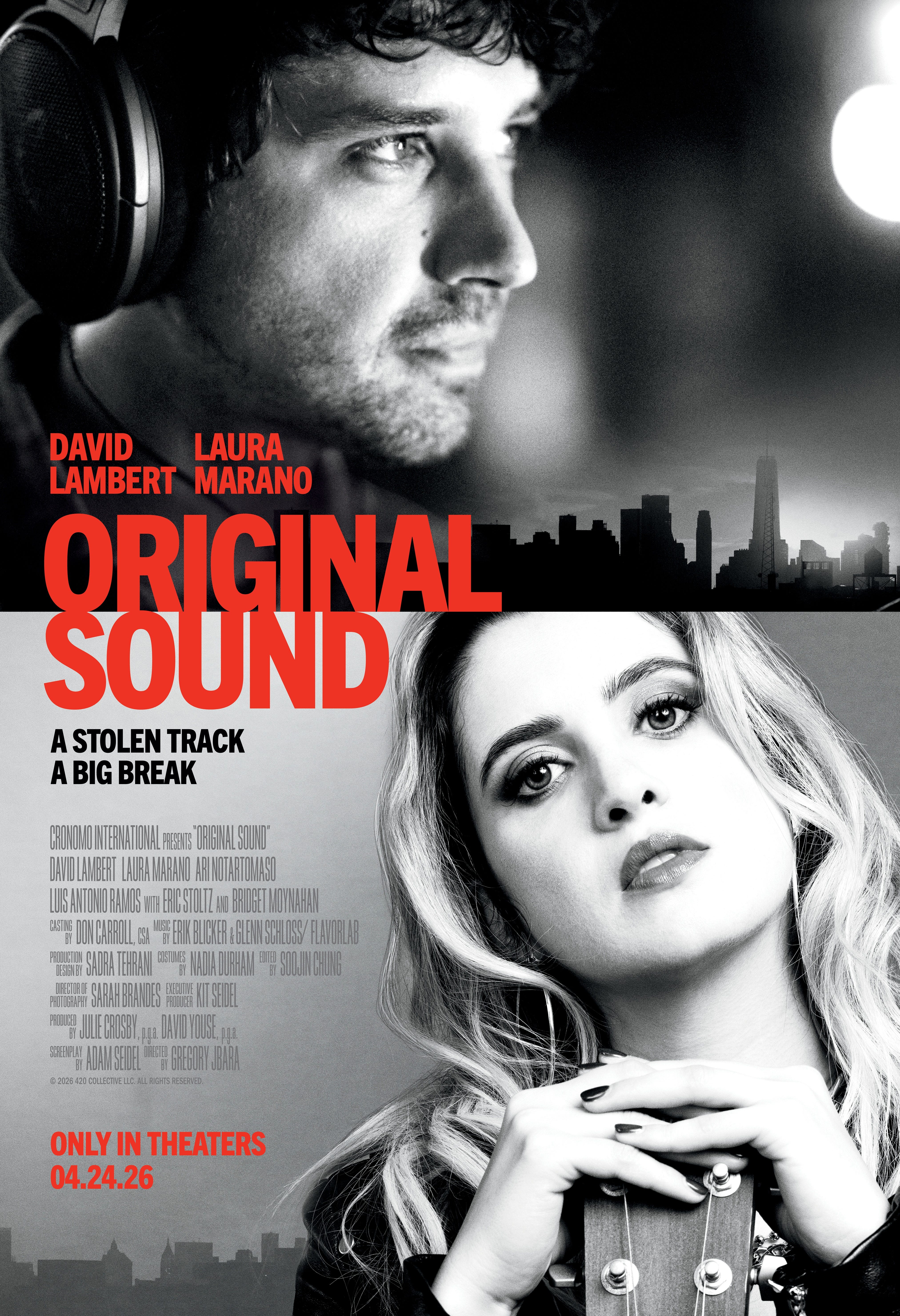
Last Friday night, I was doing what one does in Buenos Aires on a balmy summer eve: drinking excellent and ridiculously low-priced champagne, eating Chinese and watching a movie with friends.
And about when Brad Pitt hit yet another snag in F1, my producing partner David Youse (five hours behind me and still at work in California) started texting what can only be described as excited producer dispatches about the press launch of our feature Original Sound.
“50,700 views on Instagram.”
“70,000 views on IG. Insane.”
“122,000 views. Off to rehearsal. Good night.”
Because I’m not on Instagram, his updates included screenshots and rapidly escalating enthusiasm.
Within that first day, we racked up 597,000 views, 24,000 interactions, 759 saves and 445 shares.
Okay, these aren’t Mr. Beast or Markiplier stats, but these are very good numbers. (David assured me several times.)
And where, you may ask, did those numbers actually come from?
They came from the very first move in our release campaign: an exclusive “first look” with Playbill. Because distribution campaigns don’t have to begin with the biggest outlet. They begin with the first domino.
We first placed an exclusive “first look” of the film’s poster and stills with Playbill, which published the story on their website. To amplify it, cast members Laura Marano, David Lambert and Constantine Maroulis collaborated with Playbill on an Instagram post promoting the article.
For those outside the theater ecosystem, Playbill might not immediately sound like the obvious starting point for a feature film campaign. But for us, it was perfect. Because Original Sound didn’t begin as a film. It began as a play at off-Broadway’s legendary Cherry Lane Theatre, a space with so much theatrical history that A24 recently purchased the building.
So the project already had a natural community around it. People in the New York theater world knew the title. Some had seen the play. Others had heard about it through the Off-Broadway grapevine, which remains one of the most joyfully disorganized communication systems ever invented.
Instead of trying to launch everywhere at once, we started where the story already had roots.
Playbill has about 1.2 million readers, and the collaborative Instagram post with the cast expanded the combined reach to more than 11 million people.
That first domino activated an audience that already understood the project.
The next morning we widened the lens. Our trailer debuted exclusively with Entertainment Tonight Online, which immediately expanded the conversation from theater insiders to general entertainment audiences.
The announcement was widely distributed across entertainment outlets and picked up by other publications. On social media, amplification from Entertainment Tonight, Broadway World and others created a combined reach of roughly 28 million people.
Different outlet. Different objective. Playbill built credibility. Entertainment Tonight built scale.
Then on Monday morning the campaign moved into another lane when Collider debuted new images from the film as part of their spring preview. Collider reaches a slightly different audience again, mainly people actively tracking upcoming movie releases.
This kind of sequencing matters. Distribution campaigns rarely begin with one giant splash. They’re built like a string of dominoes. Community credibility tips into mainstream entertainment awareness tips into film audience discovery.
If you’re launching a creative project—a film, a play, a podcast, a book—the instinct is often to ask: how do I reach the most people?
But scale without context rarely converts. Momentum usually starts somewhere more specific. A play about a missing show dog might bubble up in Modern Dog. A horror flick might first target Bloody Disgusting, where people actually enjoy being terrified. A documentary about tech bros might launch through Wired or TechCrunch. A theater-born movie might start with Playbill, as we did.
You’re not trying to reach the entire internet. You’re trying to wake up a corner of it that already understands your story.
Of course, the press and social posts are only the visible part of the campaign. Behind the scenes, our shared Google Drive marketing folder is expanding faster than a teacup pig over a five-year growth spurt (HT WSJ), and our brains are wrapping around influencer outreach, soundtrack rollouts, paid media strategies, and our new best friend from merch world, Printful.
It’s not a red-carpet premiere, but it’s where distribution actually lives.
Awareness, of course, is only the first step in distribution. The real excitement now is betting on which domino falls next.
Comments
Nothing yet. Say the first thing.
Sign in to join the conversation.