
We love The Bear’s use of time, and have documented (or obsessed over; potato potahto) every shot of clocks in Season 2 and Season 4, as well as examining their significant absence in “Napkins.” Season 5 has given us more; you can see all the shots from the first half here.
Now, the final course of time-shots from this beautiful, messy, delicious series.
Like the preceding episodes, “Raspberries” chooses not to heavily feature clocks, nor does it introduce new ones (outside of certain graphics).
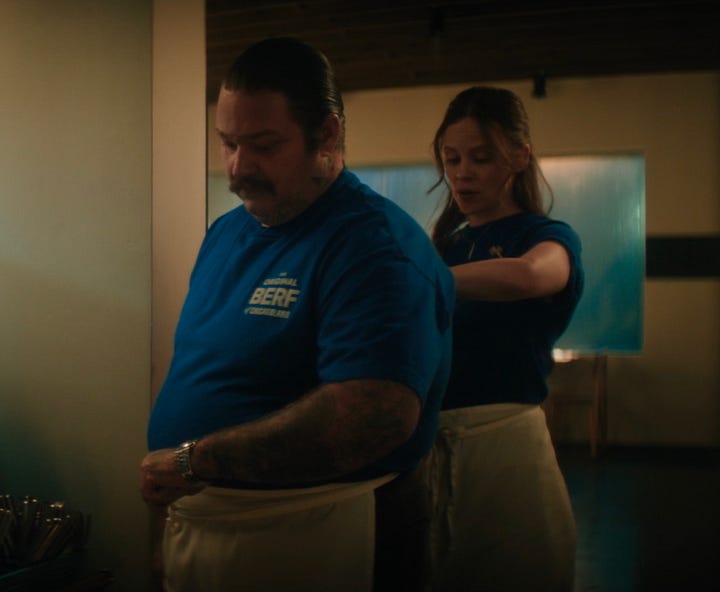
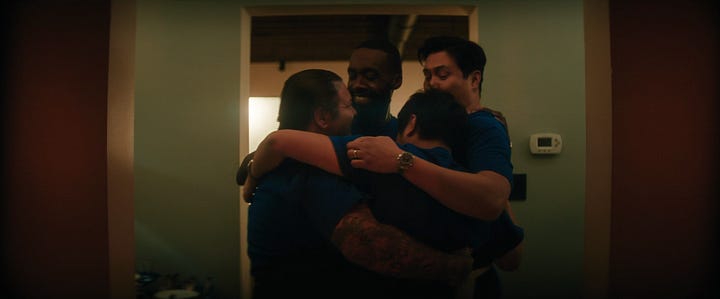
But “Raspberries” does two particular things: repeatedly shows Jessica (Sarah Ramos) checking her watch in every scene including the above, once joined by Neil (Matty Matheson); and it drills down on granular, minute-by-minute progression as everyone agonizes over when — or whether — the first reservations will show.
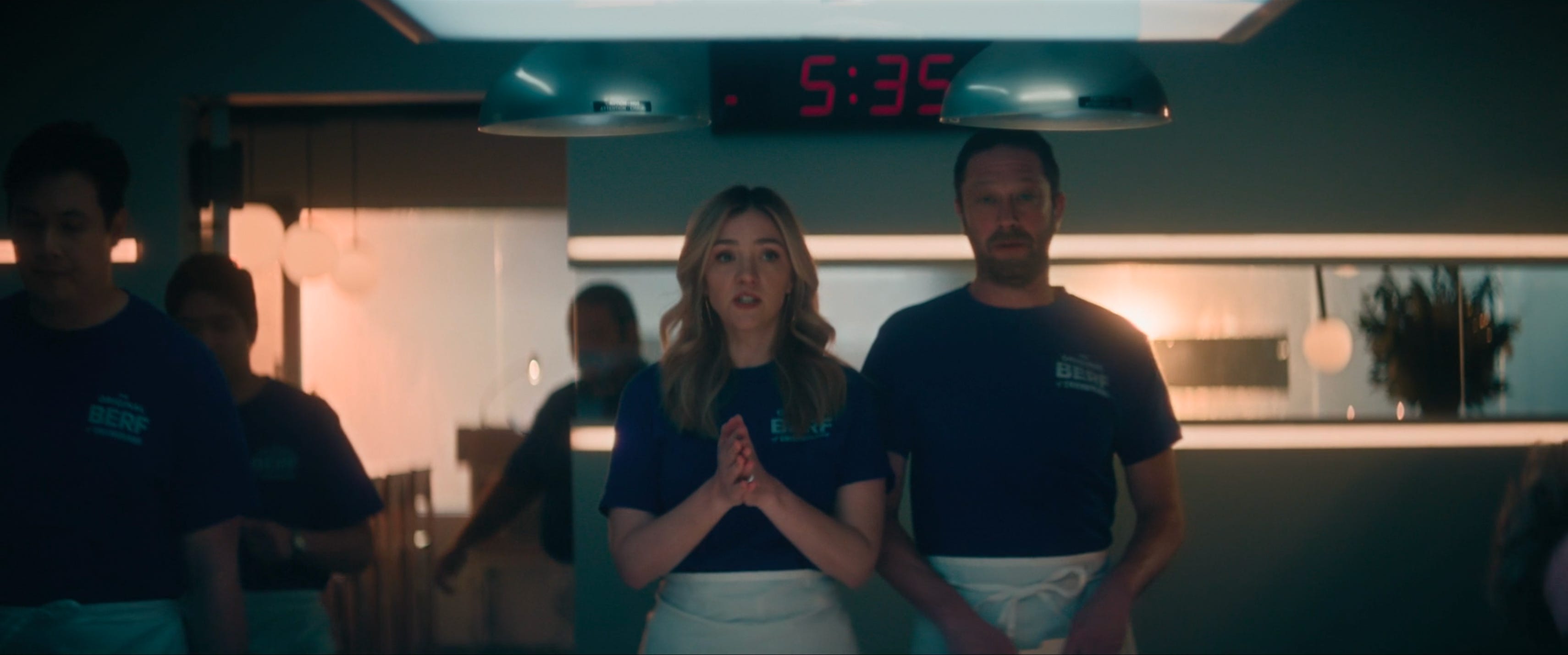
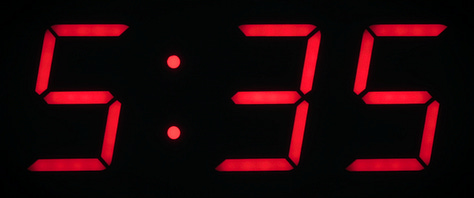
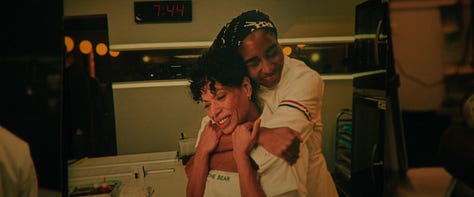
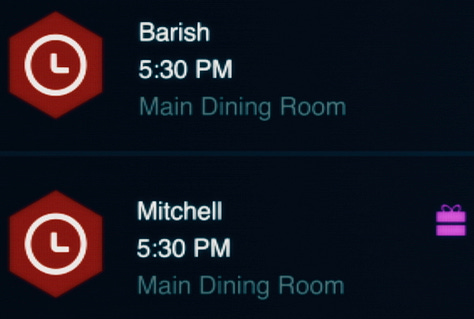

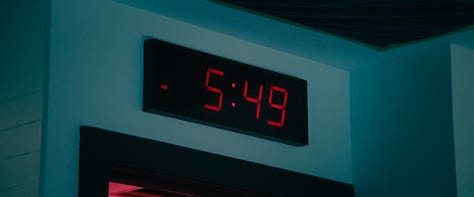
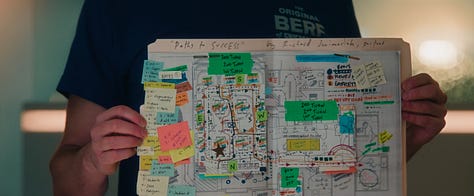
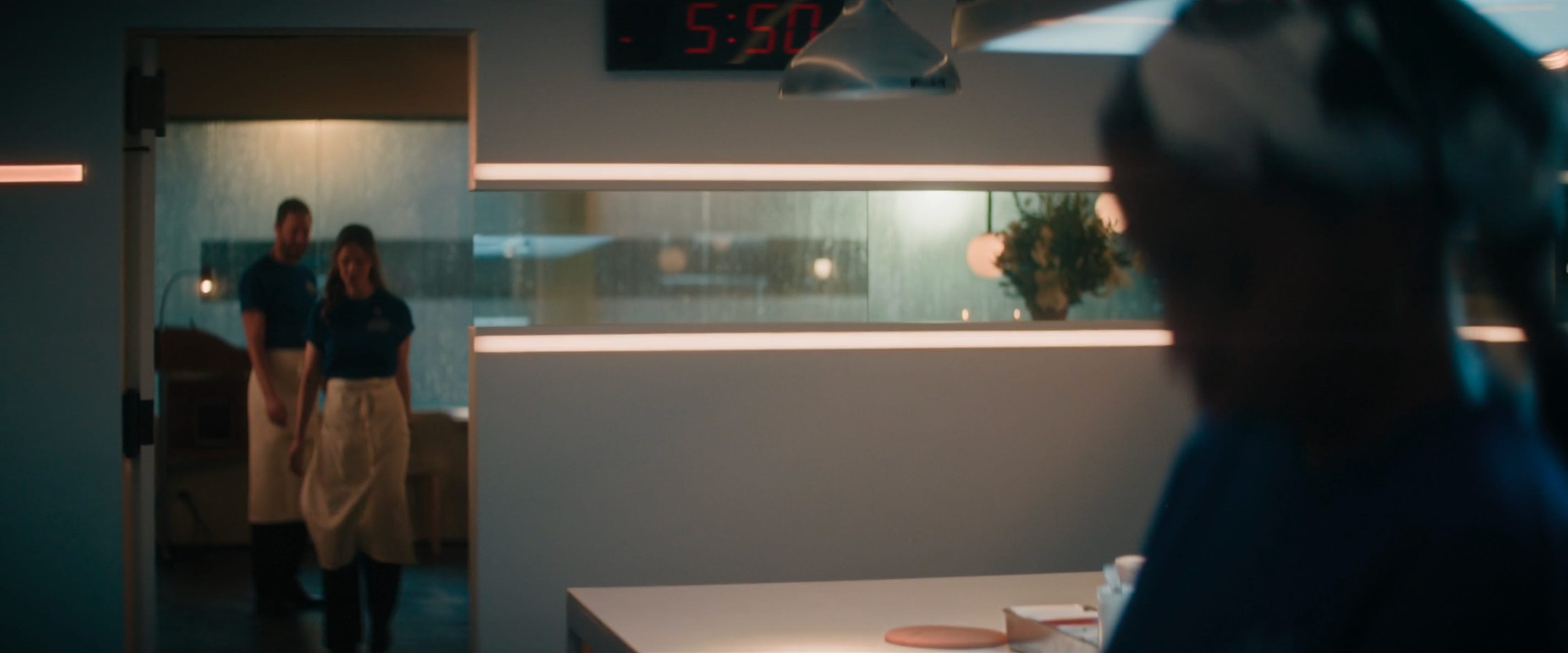
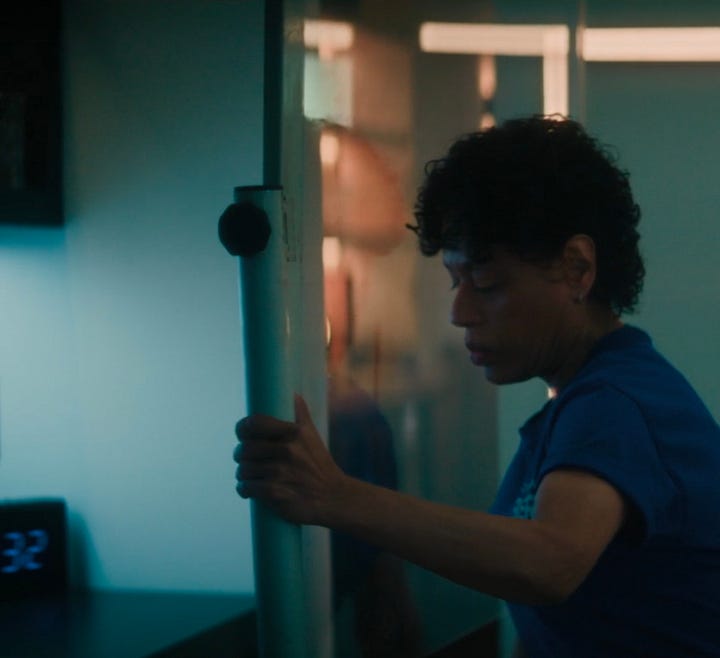
Because of the season’s ‘one season, one day’ conceit, getting clock times exactly right is even more important than ever, and “Raspberries” nails the brief.
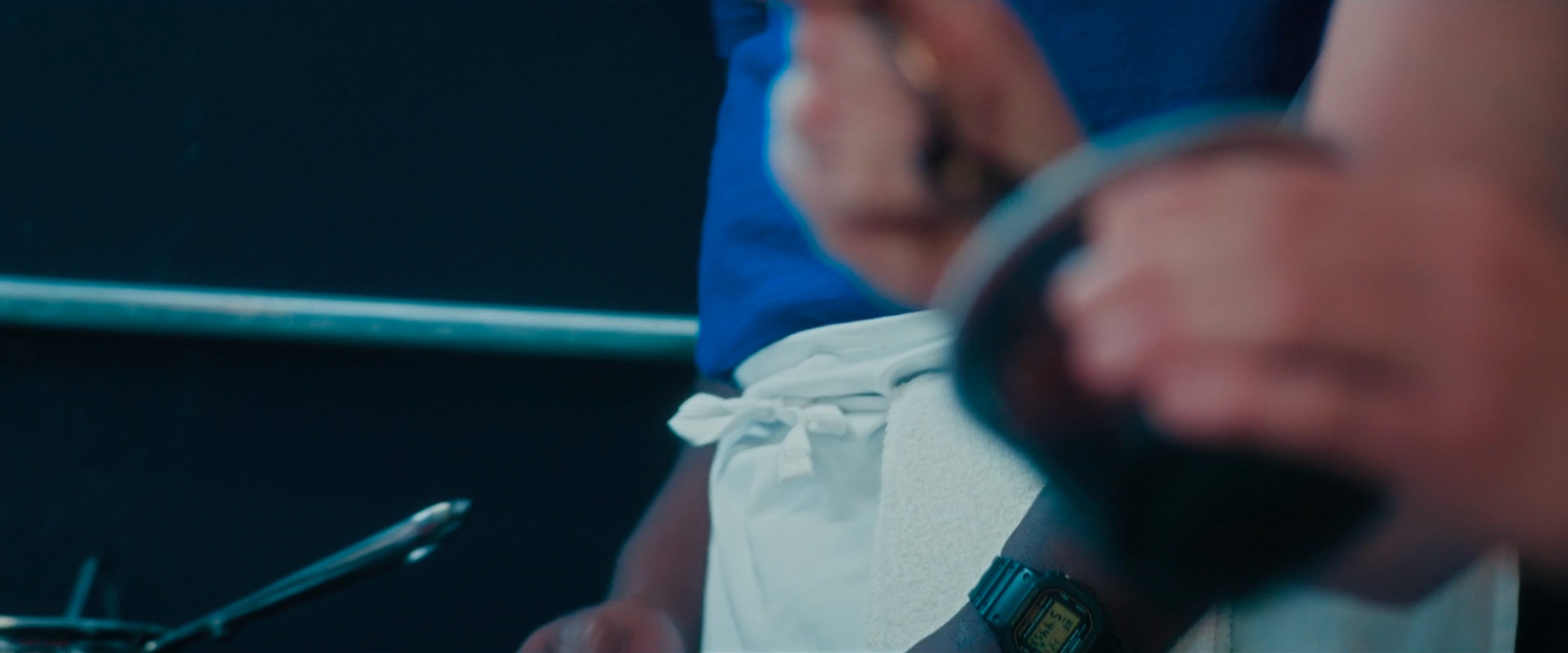
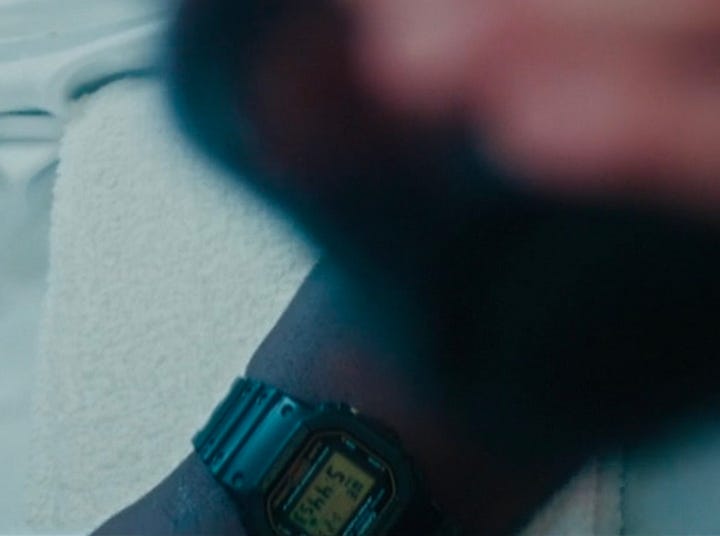
Even the barest glimpse of Marcus’s (Lionel Boyce) Casio shows the correct time.
After an opening montage onslaught of mostly sub-second-long shots — the booking system, place settings, a clock, staff dashing madly — “Focaccia” settles into its rhythm, full of long, steadicam oners, and yelled-out orders and times and needs.
It is all hands on deck, and that deck is under siege.
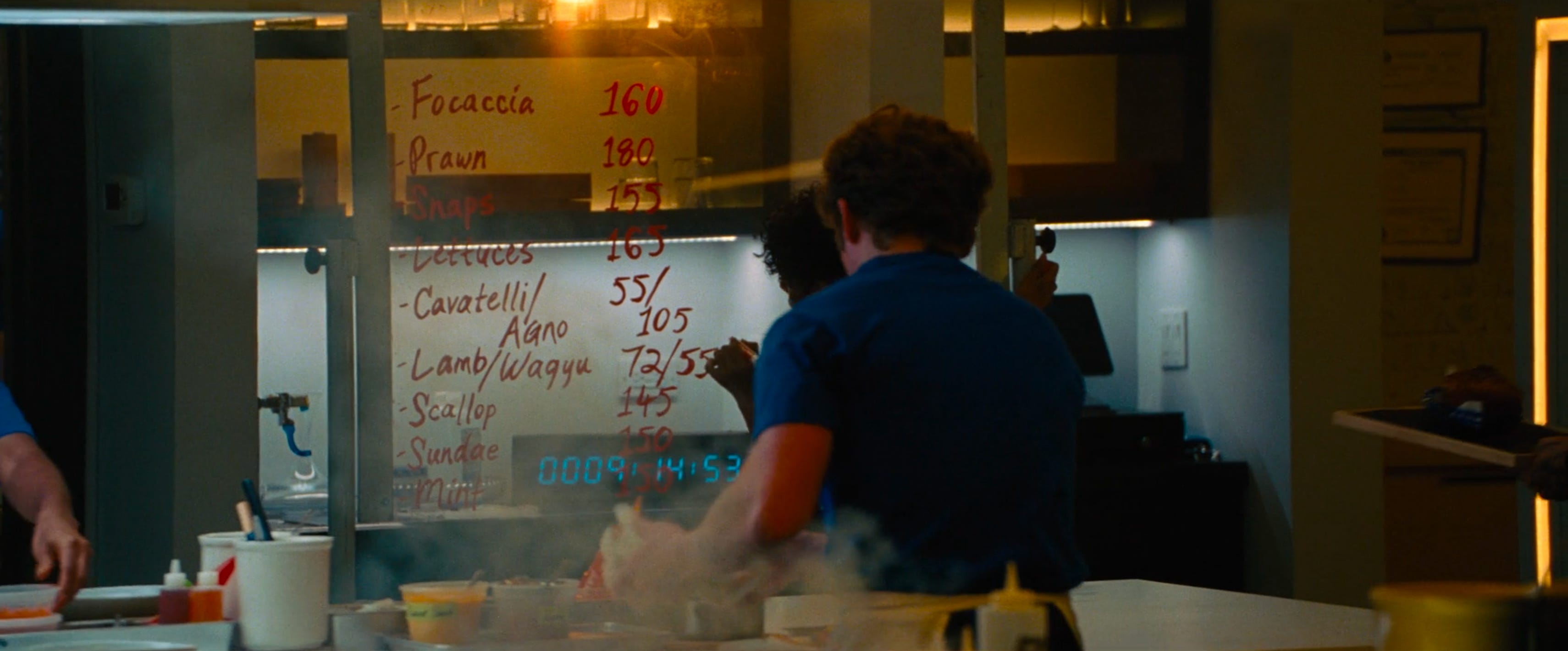
Check how this wipe (used through the episode to make oners run seamlessly together) turns into the ubiquitous red clock, which cuts to closeups of working hands, which includes three timekeepers as Jessica calls “two minutes!” while Rene (Rene Gube) wears a watch while working in front of the ticking blue clock.
The D-plot about Uncle Jimmy (Oliver Platt) selling his watch continues, with Ritchie turning away a prospective buyer who drove all through the rain.
Though clocks often fill our screen and are seen on the edges of shots, characters don’t need to look at them to be aware of how quickly time flies.
Even once characters do start having more side-conversations, the pace keeps flying.
“Do we have any ideas?”
”One.”
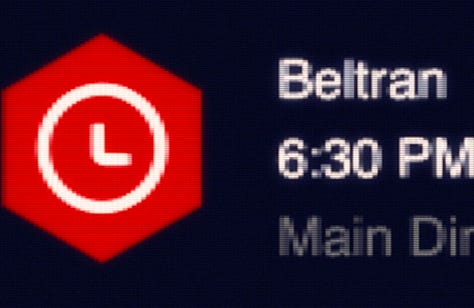
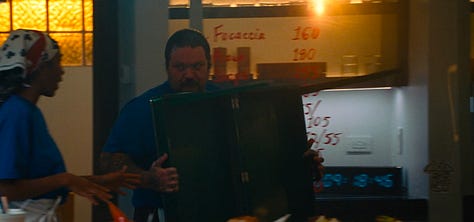
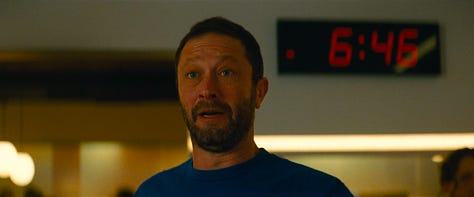
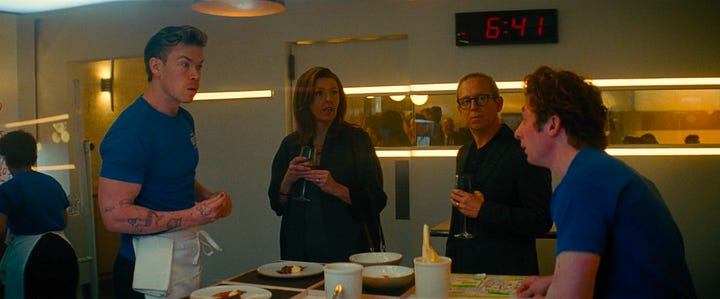
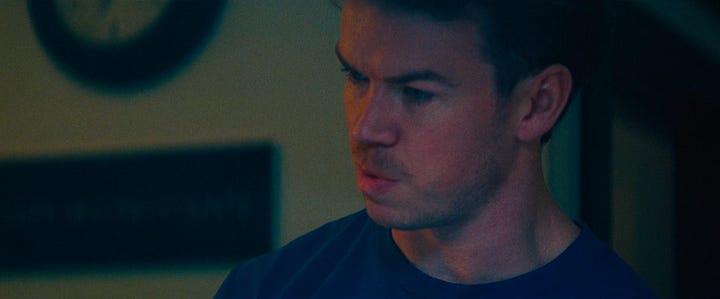
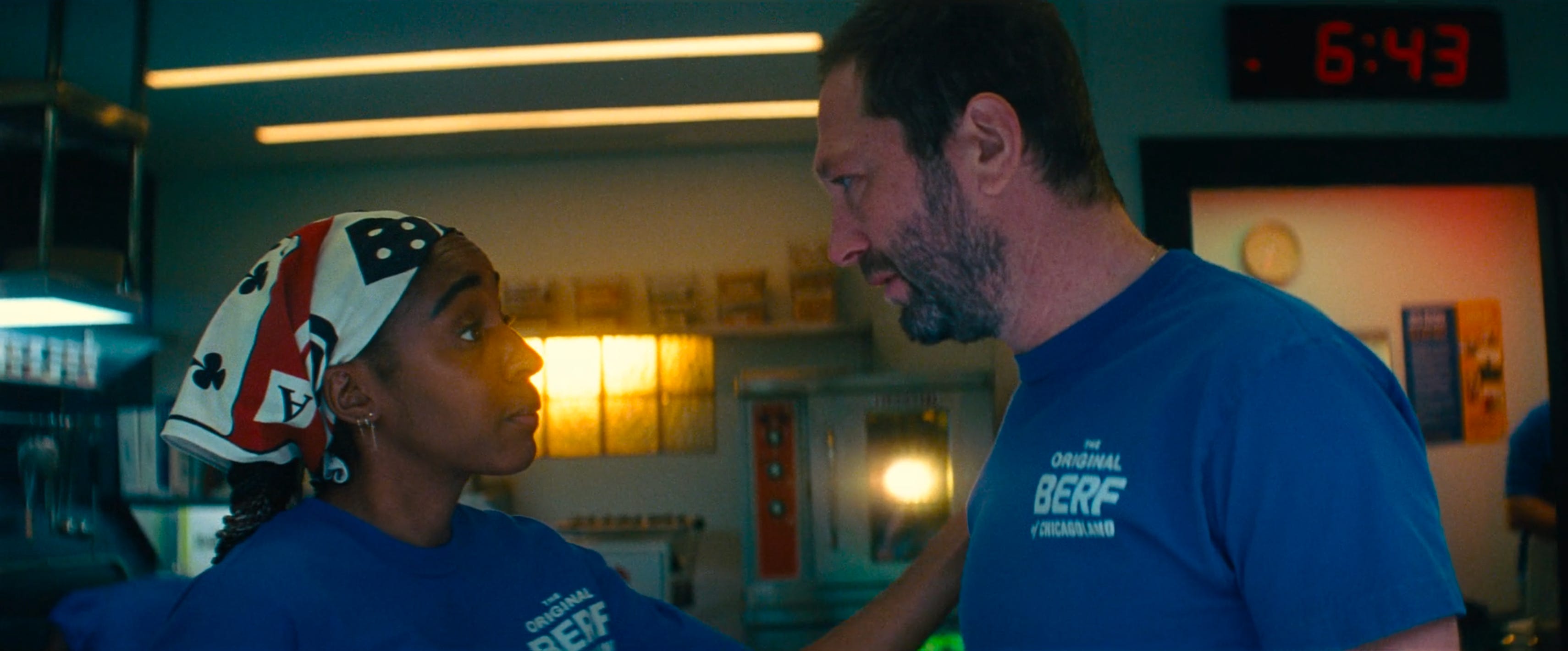
Nothing and I mean nothing ramps up stress like your previously estranged mother unexpectedly turning up at your workplace, especially right after your shift manager has dictated your turns have to come down from 15-minutes-per to 10-minutes-per.
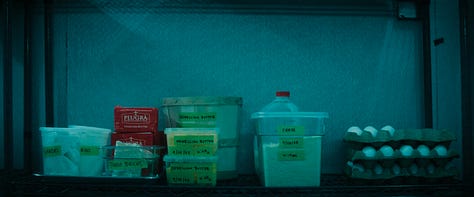
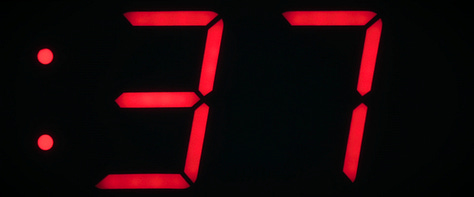
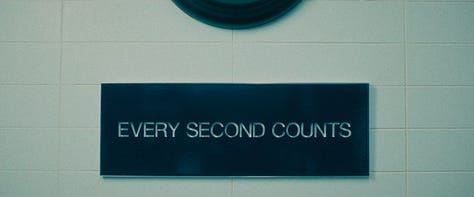
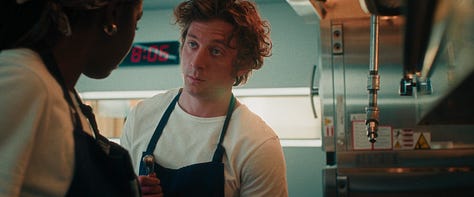
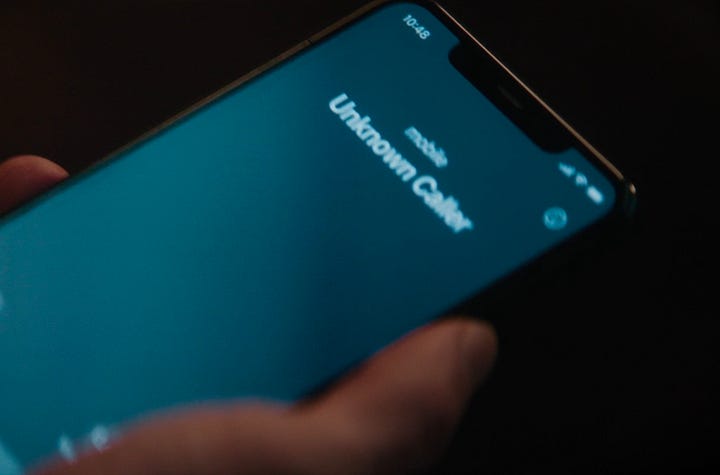
Jessica suddenly having a fun little remote is a nice gag; it also means our ‘main’ red kitchen clock is no longer what time it is, but how much time is left of each turn, counting down.
Which is why outside of a few beautifully deployed flashbacks, they rarely show this clock in situ during service . . . except for this crucial moment (though the seconds are obscured, for which the editors give much thanks).
Turns out time is especially relative when you’ve just dropped a very important lamb.
In an episode where everything is tense, where waitstaff wait on their starting blocks until diners finally check their phones and say ‘car will be here in a minute’ and move from their table, we still take time for a long, slow sip of wine; to linger over the beauty of food porn; for Sydney to signal to Carmy he should teach Tina some plating techniques, even if it would be faster for him to do it all himself; to let characters have conversations about responsibilities and passions.
“There’s a lot I need to say.
”We got time for that. Don’t let the ice cream melt.”
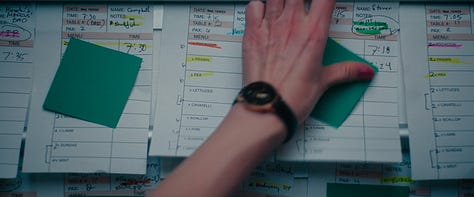
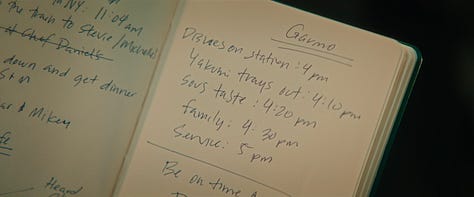
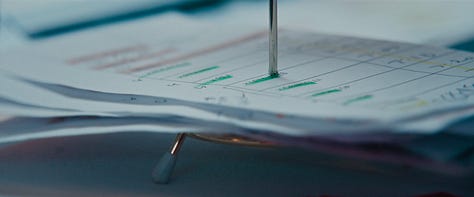
Various episodes of The Bear have toyed with going clockless, and at first it seems the finale will as well; especially as the first shot of Syd in the kitchen is framed so the clock is just barely not-visible.
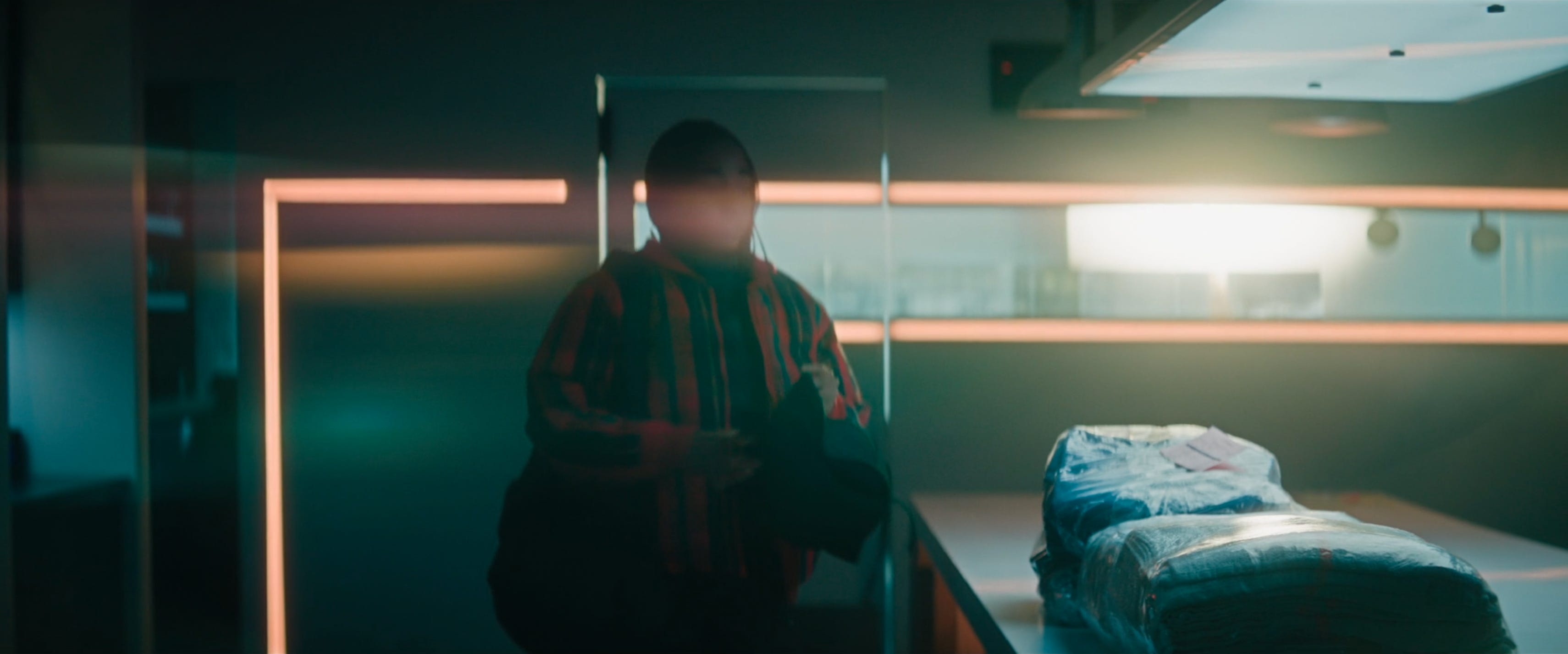
But then we get the clock and handwritten times, in quick succession, only to not show them again for the next hour. It’s as though it wants to show them so we’re not anticipating, them get rid of them.
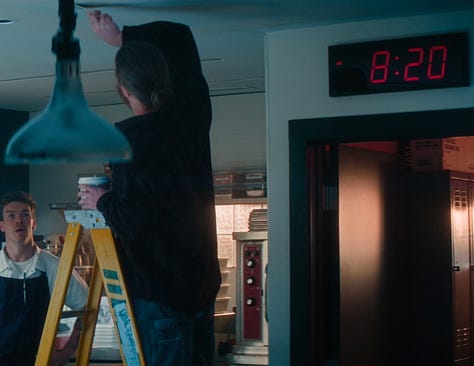
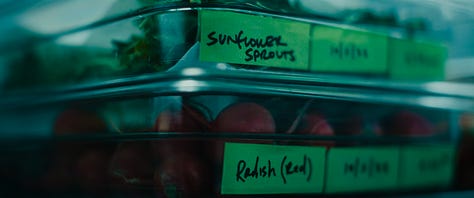
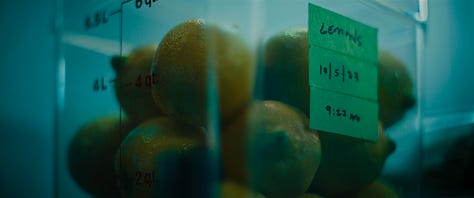
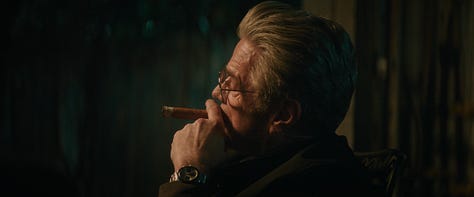
Clocks and the ‘real [ish] time’ structure of the season are no longer the point. Though the familiar timekeepers we’ve seen the last five seasons continue to be present in various ways, in the final episode they’re only a few shots up front, then a few glimpses, a flash of a watch on someone’s hand, and in the back of our mind.
Because it may be the end, but it’s also a beginning, and it’s also just another day, and yet time moves on whether we want it to or not, and whatever we do, the seconds continue to count.
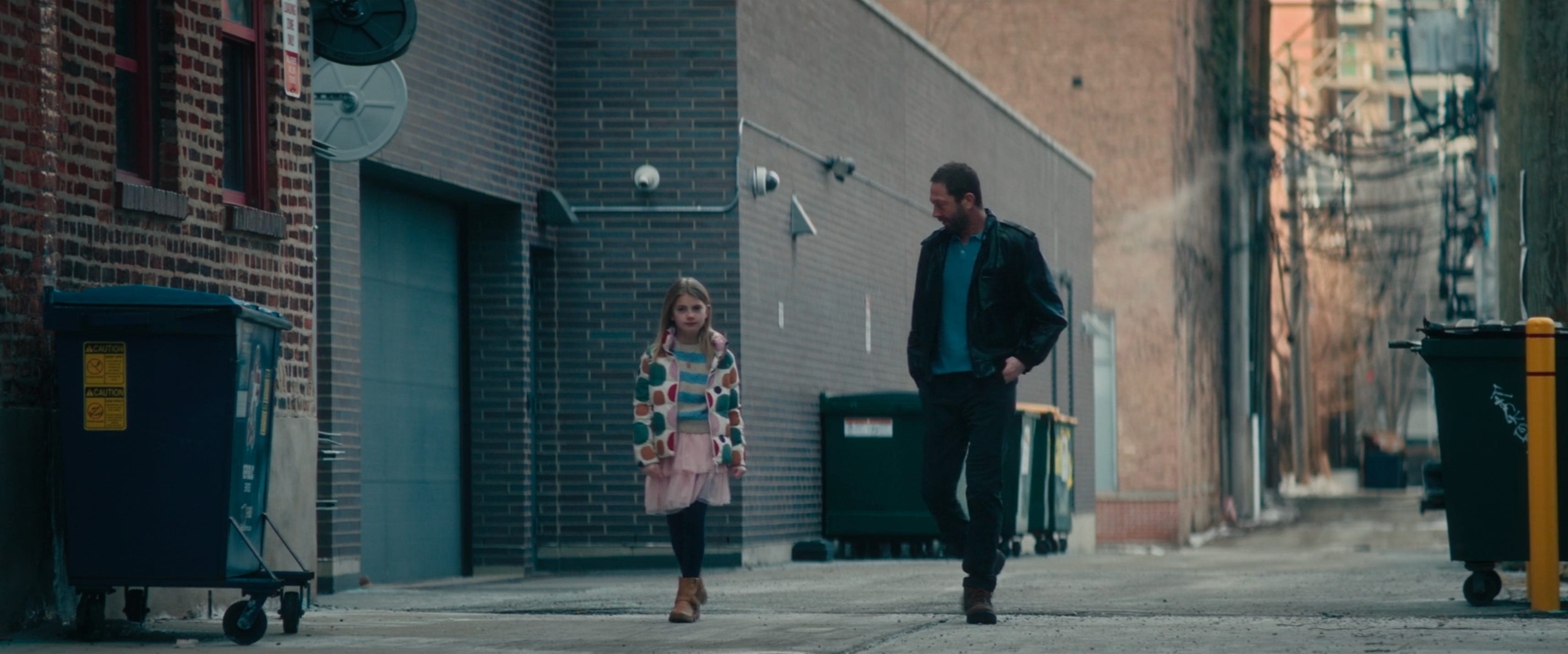
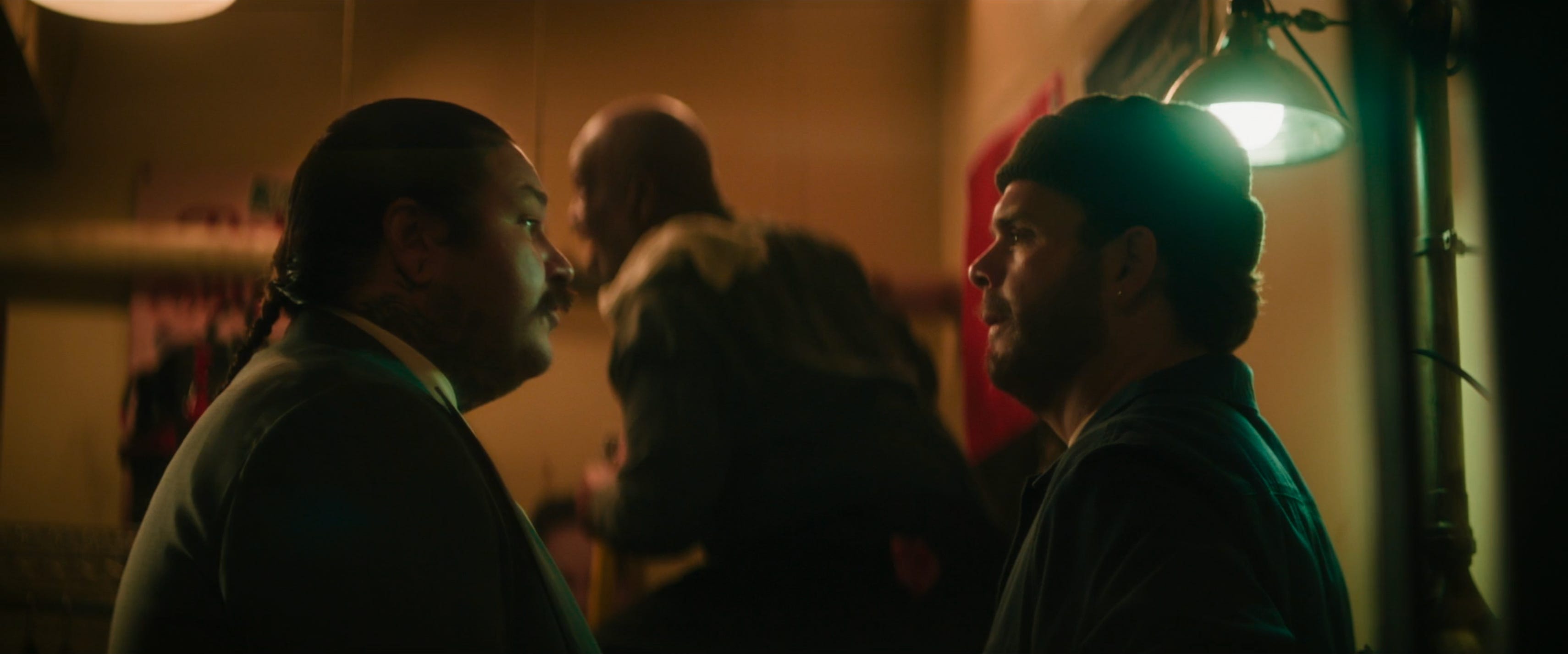
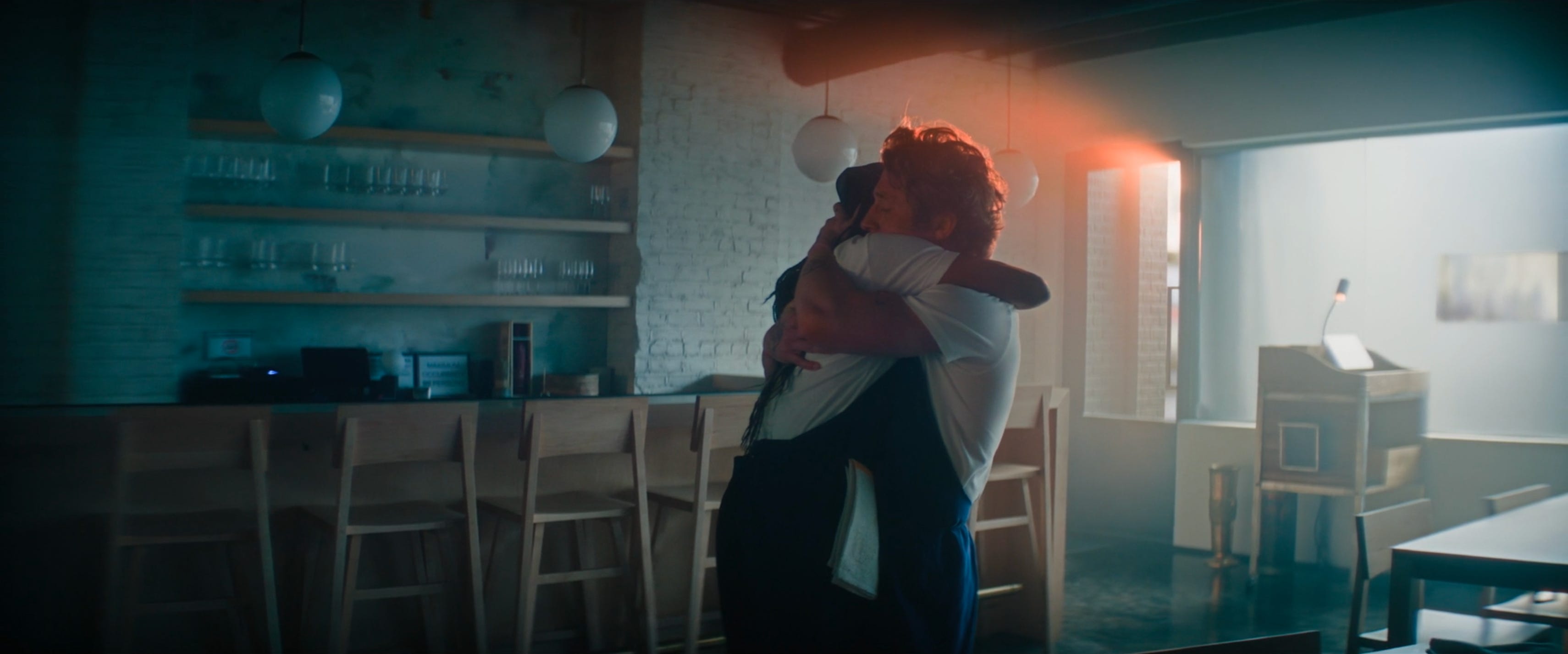
Exactly like film sets, in a kitchen when someone wants more time but doesn’t want to tell you how long it will actually take, it’s “just a minute.”
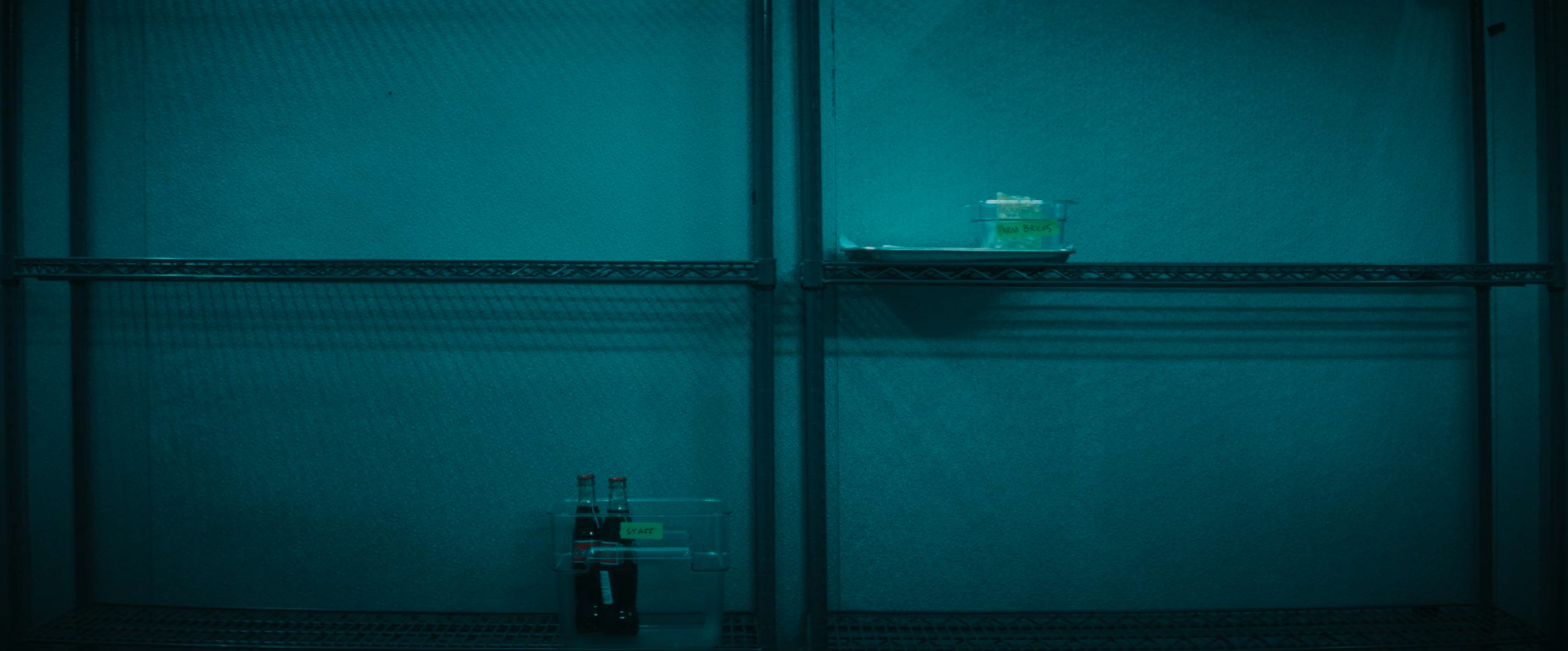
“What do we do tomorrow?”
”Do the same again?”
Comments
Nothing yet. Say the first thing.
Sign in to join the conversation.