
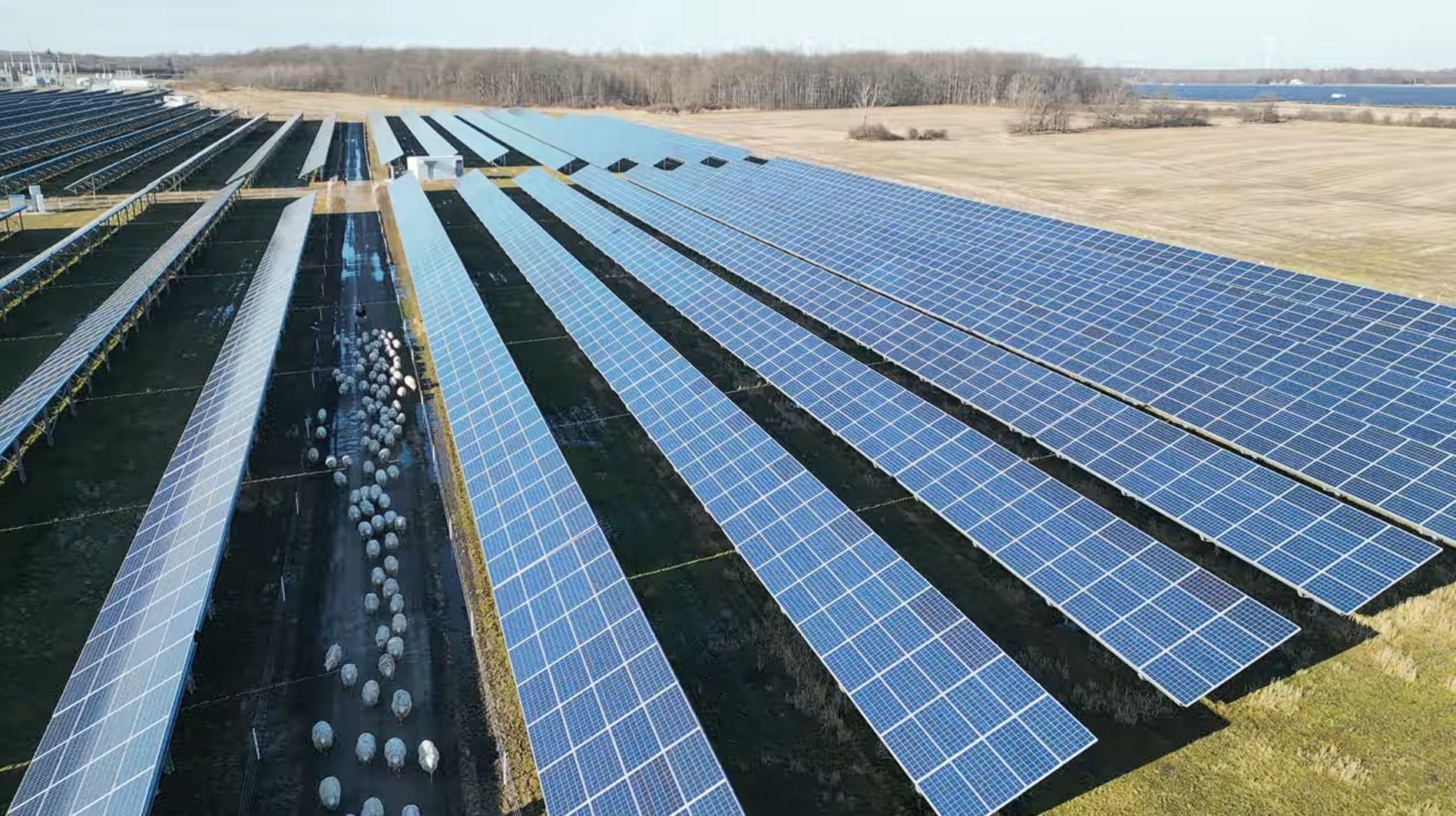
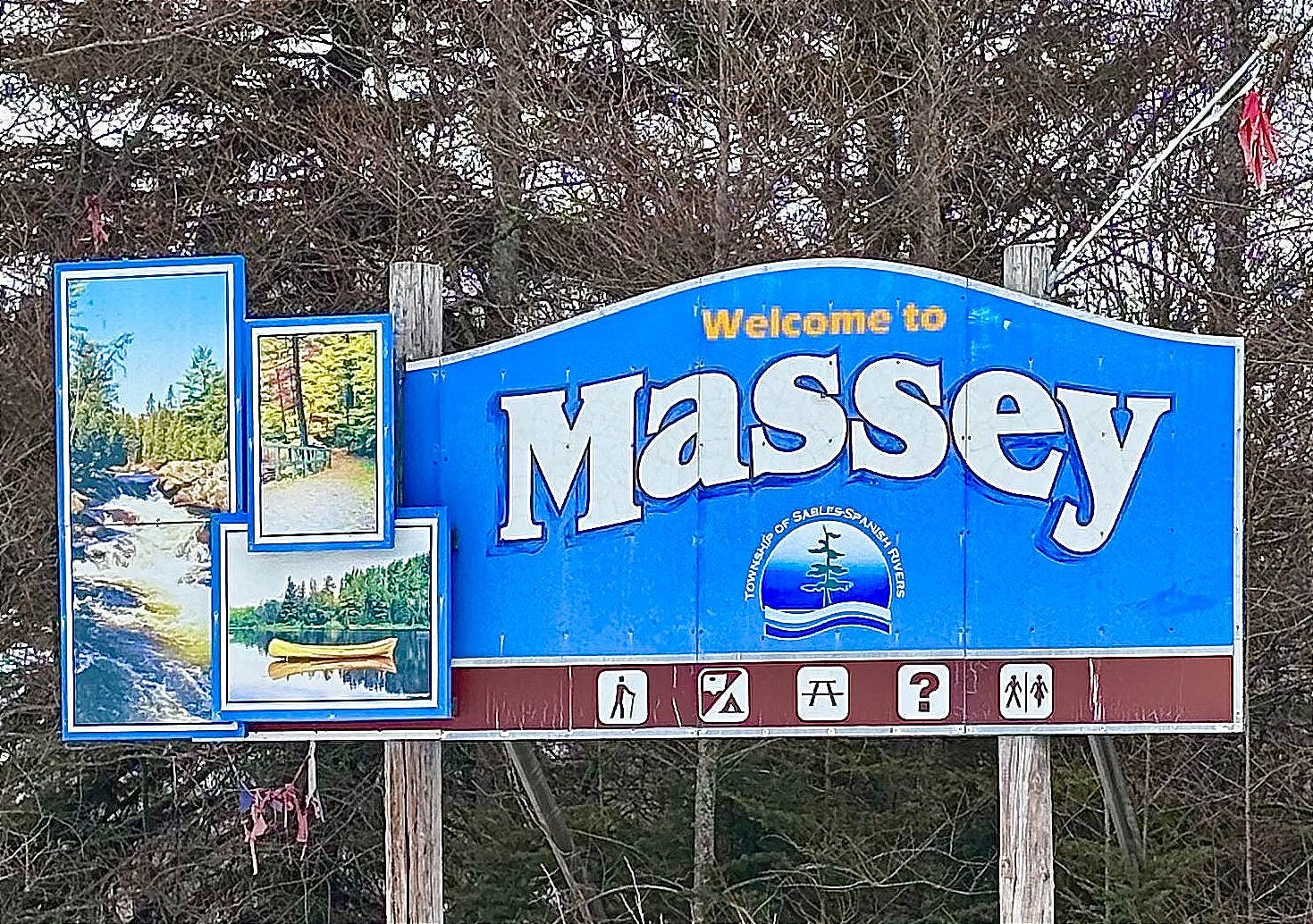
A solar farm project proposed for 243 hectares northeast of Massey has dominated local council discussion and debate in the Township of Sables-Spanish Rivers for several months. At a couple of contentious council meetings, elected officials split on the issue, while local residents came out in force to express their opinions (both for and against). The often heated conversation continues on local social media groups and, presumably, in the diners and coffee shops of Massey and surrounding communities.
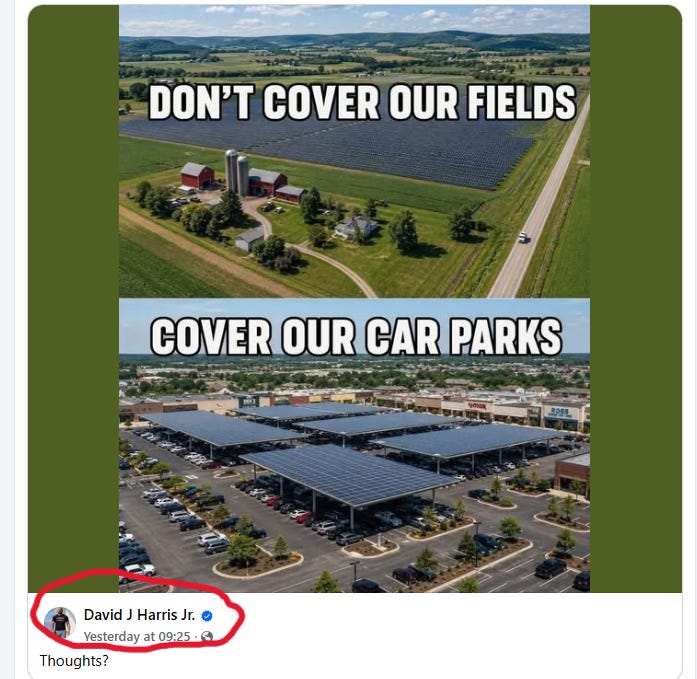
While careful attention to Council meetings and agendas reveals a methodical approvals process in action, in the heat of argument it’s not always easy to tease out what has actually happened, what might happen, and what is still set to happen down the road. In fact, gauging by a lot of what is posted online about the project — much of it sourced from MAGA-adjacent, US-based anti-renewables influencers like David J. Harris Jr. and Alexandra Fasulo — it might be tempting to conclude the solar farm has been imposed on an unwilling community through nefarious backroom dealing.
Enter the Ontario Indigenous AI & Technology Council (OIATC), a relatively new organization with a mission “to improve the digital systems that deliver services to First Nations,” and one of its founders, Massey resident Russell Jones. Jones, a member of nearby Sagamok Anishnawbek First Nation, published a detailed and professional summary of the Massey Solar approvals process on the OIATC website.
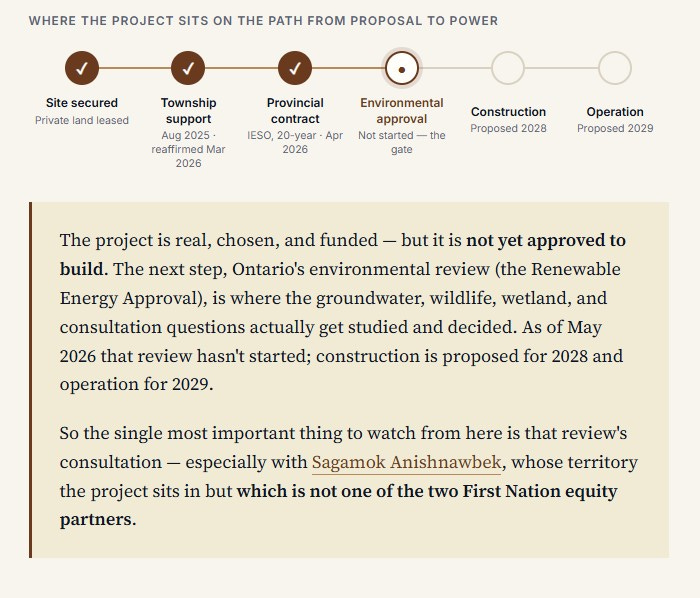
Styled as a “living document,” Jones’s explainer lays out the timelines and details surrounding the proposed solar farm, and shows how much of the confusion around the process comes from its complexity.
The full document:
The Massey Solar Project in 2026: what’s been decided, what’s still ahead
As Jones points out, five things are happening at once, but on different timelines and at different speeds:
the project proposal itself,
the municipal decision to support application,
the provincial Independent Electricity System Operator awarding of a contract to the developer,
necessary consultation and partnership-building with First Nation communities,
and, finally, a full-scale provincial environmental review.
And while, presumably, all five of these steps must be taken before a single panel is installed, much of the local opposition seems to be leaping to various conclusions unsupported by the process. That does not mean local opponents are wrong, necessarily; but they do seem to have jumped out ahead of the facts, and are relying often on unsupported and contentious claims.
For instance, environmental accusations about renewable energy projects — the effects on local land, water, and wildlife — are expressed mostly without contextual reference to the larger issue of fossil-fuel driven climate change, which is the scientifically accepted reality renewable energy is designed to address.
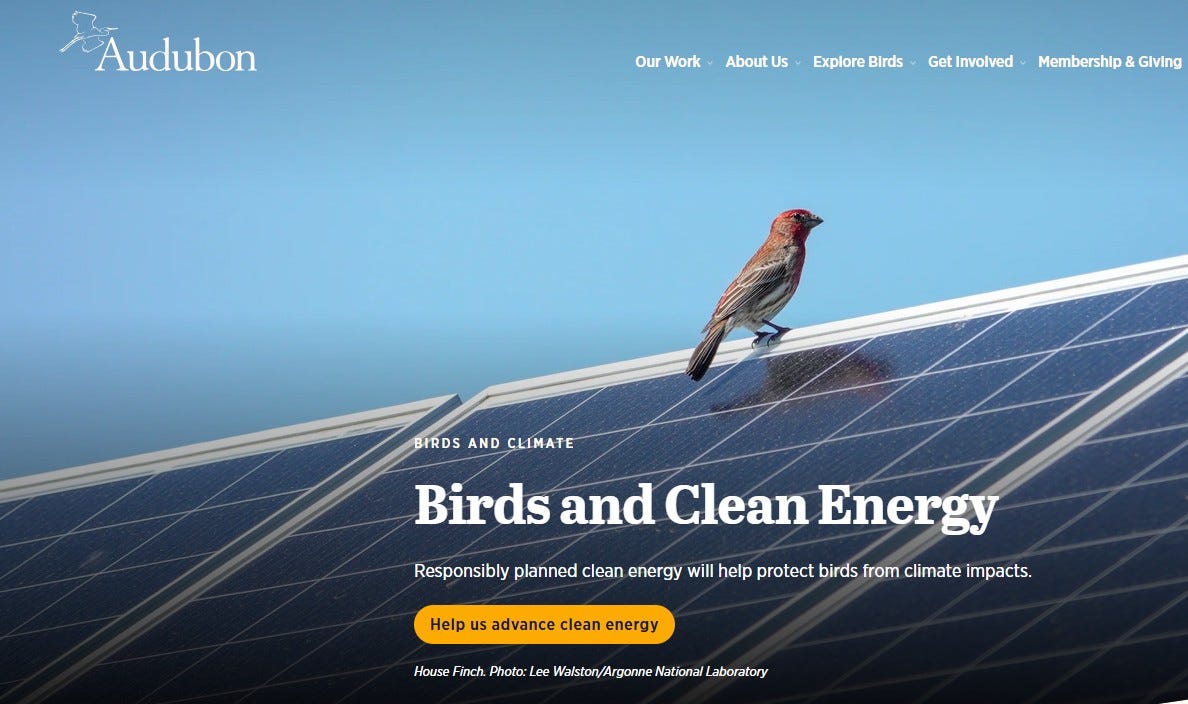
The idea that birds are endangered more by wind turbines or solar panels than they are by a warming planet is simply not supported by the scientific consensus, and prominent bird conservation groups agree. Concerns about loss of usable farm and or grazing land seem to ignore the very real shifts in solar farm practices, like the use of grazing stock to manage vegetation growth beneath the panels, as recently reported in the Toronto Star.
Shore Report contacted Russell Jones to ask why he’d put his document together.
“Honestly, curiosity. It's in me to research things I'm curious about, and I'm a believer in sharing what I find, plainly and without opinion or bias where I can manage it,” Jones stated.
“I wanted a single place where a resident or a member could see what was settled, what wasn't, who decided what, and where to look for the primary sources. The fact that the project sits on Robinson Huron Treaty territory and on Sagamok's traditional territory, while the named equity partners are two other First Nations, made that map worth drawing carefully.”
As the explainer points out, the fact that Sagamok has not yet had a voice in the plans does not mean they won’t be a necessary part of the process:
Sagamok Anishnawbek has not, as of May 2026, been formally consulted under the Crown’s duty to consult — because that duty attaches to a provincial decision (the REA) that hasn’t been made yet. Sagamok’s Director of Claims and Negotiations submitted emailed objections that were read into the township’s record in March 2026.
The Mayor has also said publicly that Council heard verbal interest from Chief Angus Toulouse in Sagamok community participation. Both of those things are early-stage; neither substitutes for formal consultation, which is owed by the Crown when the REA is filed.
Jones is careful to note he does not view his document as “a position paper.”
“As a Sagamok member, I expect to participate in any community consultation that Sagamok runs. As the author of the explainer, on behalf of OIATC, I am keeping a clean line between reporting and advocacy.”
Jones’s work has received a flood of positive online reaction in Massey and wider Sables-Spanish River Township. No doubt, his project explainer will be consulted as the next approvals stages come to the community.
Shore Report will continue to follow this story.
Shore Report acknowledges the North Shore of Lake Huron is the traditional land of the Anishinabek and the Métis Nation. This is Treaty 61 (Robinson-Huron) territory. Anishinabek have lived in the Great Lakes region for thousands of years. Shore Report is very grateful to live and work here.
All written content in this issue is © Shore Report 2026
Advertisement
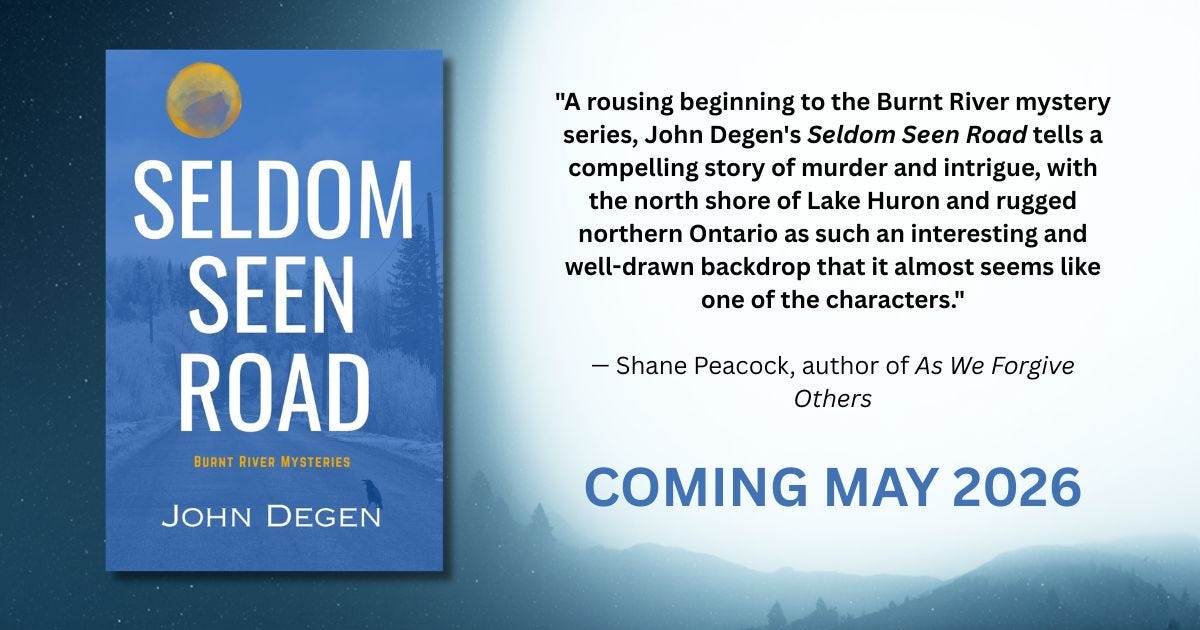
John Degen’s new mystery novel, Seldom Seen Road — set on Lake Huron’s North Shore — is making national headlines.
Meet the author and get your copy signed at the Blind River Public Library, Saturday June 13th, 2:30 pm or the Thessalon Public Library, Friday June 19th, 7 pm.
Wherever fine books are sold.
Thanks for reading Shore Report — Covering Lake Huron's North Shore! This post is public so feel free to share it.
No posts
Comments
Nothing yet. Say the first thing.
Sign in to join the conversation.