

A decade ago, prestige beauty largely stopped at the jawline. Skincare occupied the world of efficacy, ritual, and expertise. Meanwhile, body care remained comparatively functional: body wash in the shower, maybe a lotion after, and little distinction beyond whether you preferred lavender or warm vanilla.
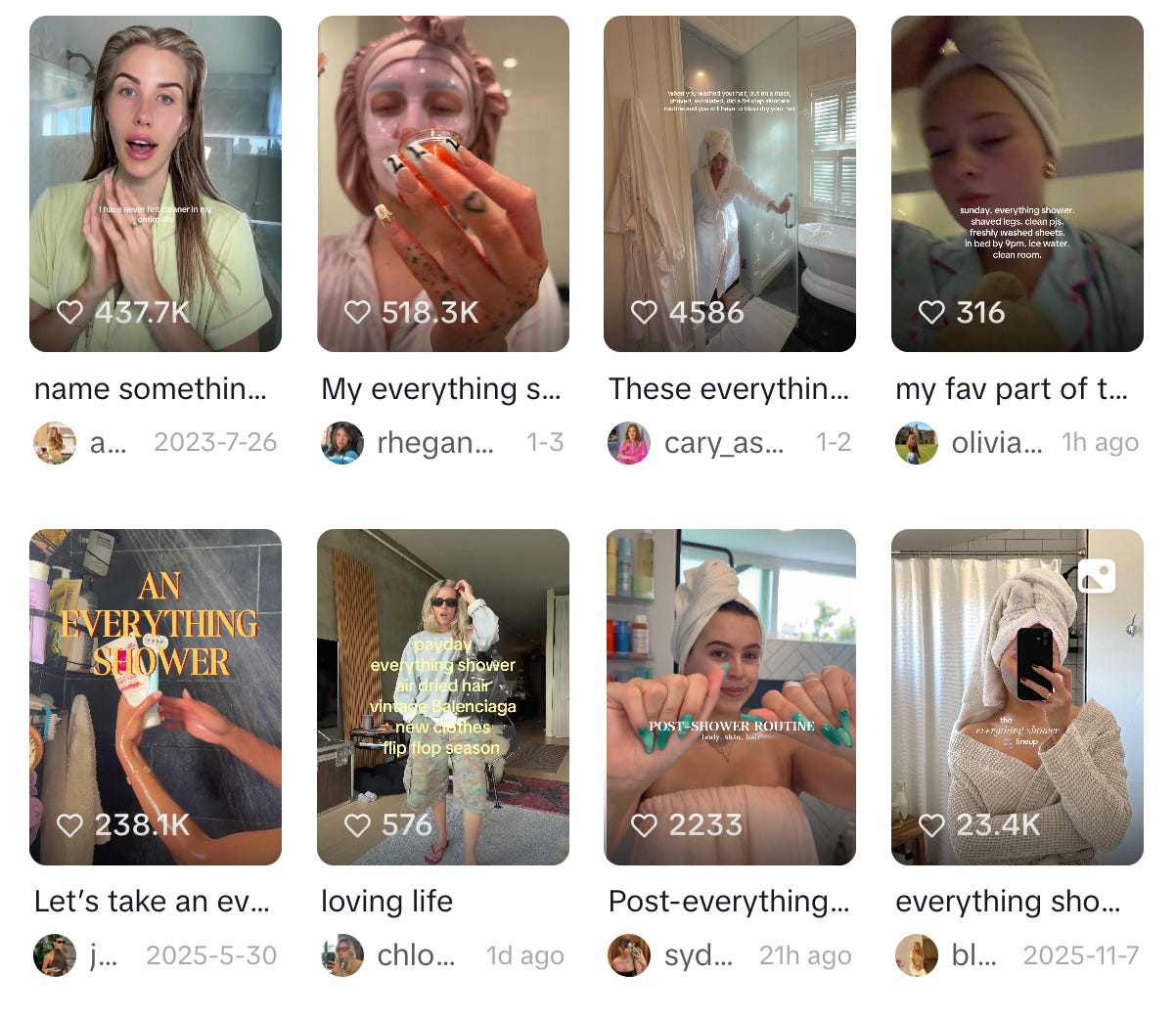
Today, body care has become one of beauty’s fastest-growing and most ritualized categories, accelerated in part by creators sharing formerly private routines online. The “Everything Shower” has evolved into its own genre of content, featuring lengthy routines involving exfoliating bars, dry brushing, body serums, oils, retinol lotions, and scent layering with the same level of detail once reserved for facial skincare. Summer “glow routines” promise brighter, smoother skin from head to toe, while body-focused products are now merchandised and discussed through the same lens as skincare: active ingredients, elevated packaging, and long-term skin health. In the process, body care stopped being something consumers passively used and became something they actively curate.
The broader bath and shower market is projected to exceed $90 billion globally over the next decade as consumers gravitate toward premium routines. At the same time, a new generation of brands has helped reposition body care as wellness.
Soft Services addresses concerns like Keratosis Pilaris (KP), rough texture, and body acne in a way that feels less clinical, shifting conversations that once lived in dermatologists’ offices or anonymous forums into the mainstream beauty conversation. The brand pairs treatment-focused products with highly designed packaging and editorial language that removes some of the shame and secrecy historically associated with those concerns.
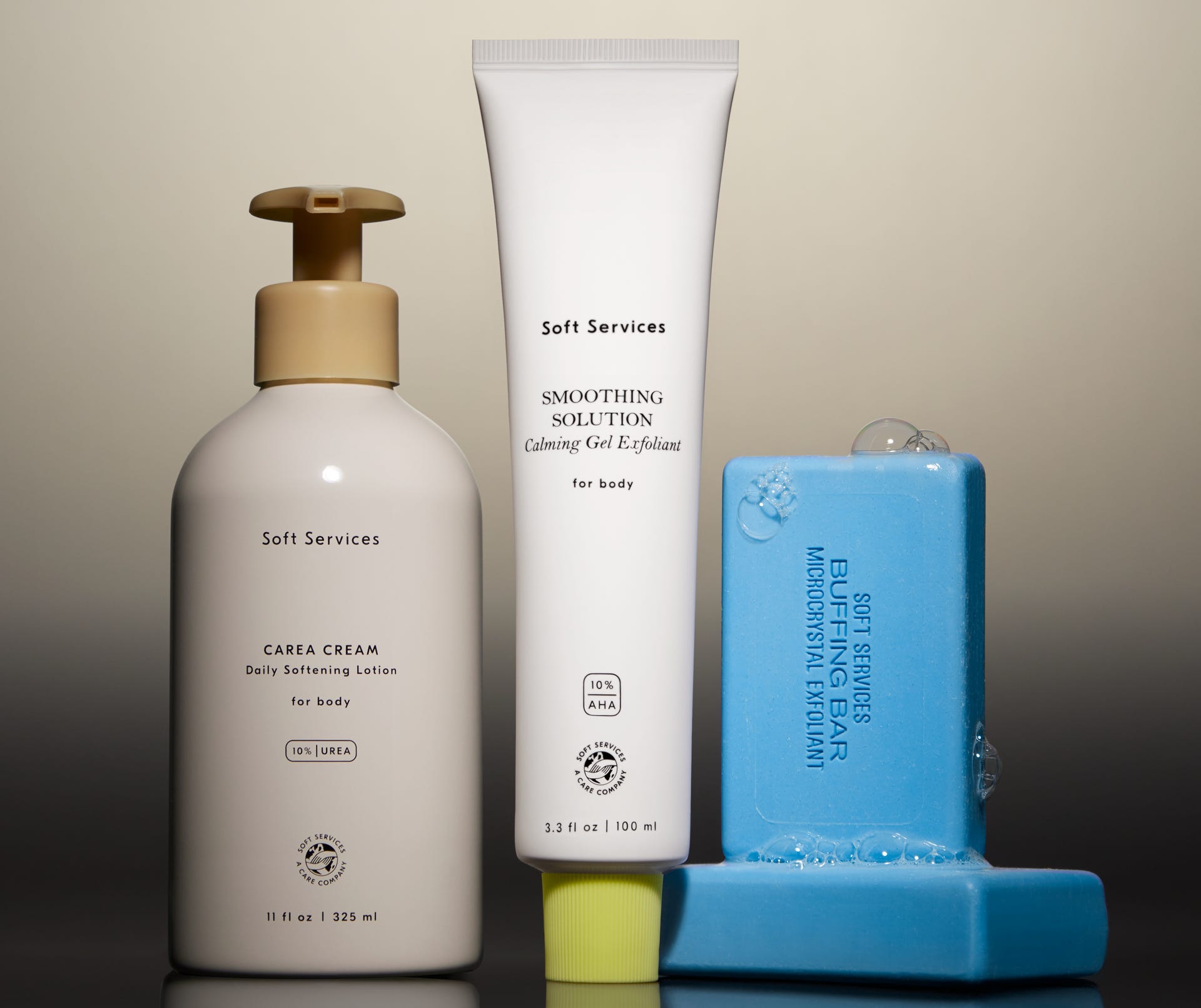
When Rebecca Zhou launched the brand in 2021, she saw a significant gap between how consumers treated facial skincare versus body care. “Every other category, such as facial care, hair, and even nails, had an ecosystem of solutions, education, editorial coverage, and products that felt sophisticated,” Zhou explains. “But when the conversation turned to body skin, people had largely accepted things like KP, ingrowns, or body acne as something they just had to live with.”
At the time, many body-care products fell into one of two categories: generic or overtly clinical. “The opportunity sat in closing the gap between function and emotional framing,” Zhou says, creating products that delivered real efficacy while still feeling elevated and desirable.
Importantly, the appetite for these conversations already existed. “People were already trading body care secrets in this insider way, with strangers on Reddit or with friends in a whisper,” Zhou says. “TikTok brought those experiences into the open.”
That shift also changed consumer behavior around the category itself. Nécessaire brought ingredient-forward body products and minimalist packaging into the prestige beauty conversation, making consumers think differently about products they once passively picked up at the pharmacy. I still remember ordering the brand’s eucalyptus exfoliating wash online for the first time in 2020 and feeling vaguely ridiculous doing so — why was I shopping for body wash the way I bought clothes? Now that behavior feels entirely normal.

Creator routines echo that same sentiment where body care is no longer treated separately from beauty or skincare, but as part of a broader lifestyle and ritual ecosystem. Looking through creator Chanel Tyler’s ShopMy storefront, body-care products sit alongside skincare, makeup, and wellness products within curated routines and everyday essentials rather than being siloed into their own category.
“I always tell my audience to shop for bodycare the same way they shop for skincare: intentionally,” Tyler explains. “Whether it’s your face or your body, it’s still your skin.”
That shift has transformed not just what consumers buy, but how they engage with the category emotionally. “People are slowing down and becoming much more intentional with body care instead of treating it like an afterthought to showering or bathing,” she says. “There’s a much bigger emotional and sensorial connection to body care today. Texture, scent, layering products, creating a calming ritual — all of that matters to consumers now.”
Importantly, many of the rituals now associated with modern body-care culture online didn’t originate there. “As a Black woman, this concept never felt entirely new culturally,” Tyler says of the rise of “Everything Shower” content. “I grew up with a deep emphasis on bodycare — really cleansing and caring for your body properly, moisturizing thoroughly, layering creams and oils, and making sure your skin felt nourished instead of stripped or dry after showering.”
What social media did was make those routines visible, aestheticized, and aspirational to a broader audience. “I think people are craving those moments of care and softness for themselves right now,” Tyler says. “Body care naturally fits into that.”

ShopMy’s creator data suggests body care is no longer being treated as separate from skincare, but as part of a broader beauty and wellness ecosystem. Among more than 120,000 public skincare collections on the platform, roughly one-third now include body-care products alongside traditional facial skincare.
The overlap is concentrated in categories adjacent to skincare itself: body lotions and creams, body oils and serums, body sunscreen, hand treatments, and exfoliants appear most frequently within skincare-focused collections. Rather than organizing products strictly by function or body part, creators increasingly appear to think about skincare and body care as a continuous head-to-toe routine.
The category’s commercial growth reflects that behavioral shift. While Bath & Body sits mid-pack within beauty on raw linking volume growth, it has emerged as one of the strongest categories for purchase behavior and revenue generation. According to ShopMy data, Bath & Body GMV grew nearly 400% year-over-year, significantly outpacing skincare’s 120% growth during the same period.
Importantly, body care’s revenue growth is accelerating faster than link growth itself, suggesting consumers are not just engaging with the category more often, but shopping it more intentionally as a curated part of their beauty and wellness identities.

The rise of body care points to a broader shift in consumer culture: people are no longer separating utility from identity. Categories once considered purely functional are now expected to carry the same emotional, aesthetic, and aspirational weight as fashion, skincare, or fragrance.
That helps explain why body care has become so commercially powerful online. Consumers are not simply buying products to solve a problem or complete a routine; they are buying into a version of themselves and the life surrounding that routine. The shelf matters. The scent matters. The packaging matters. Even the ritual itself becomes part of the product.
In many ways, body care represents the next evolution of the beauty industry’s expansion into lifestyle. Routines that once happened privately are now documented, aestheticized, and monetized in real time. The result is a category that no longer functions as passive maintenance, but as an active form of self-expression.
No posts
Comments
Nothing yet. Say the first thing.
Sign in to join the conversation.