
Last week, I built a tool to analyse successful sci-fi trailers. I put about 30 trailers from popular films through it, focussing almost entirely on modern, high performing examples.
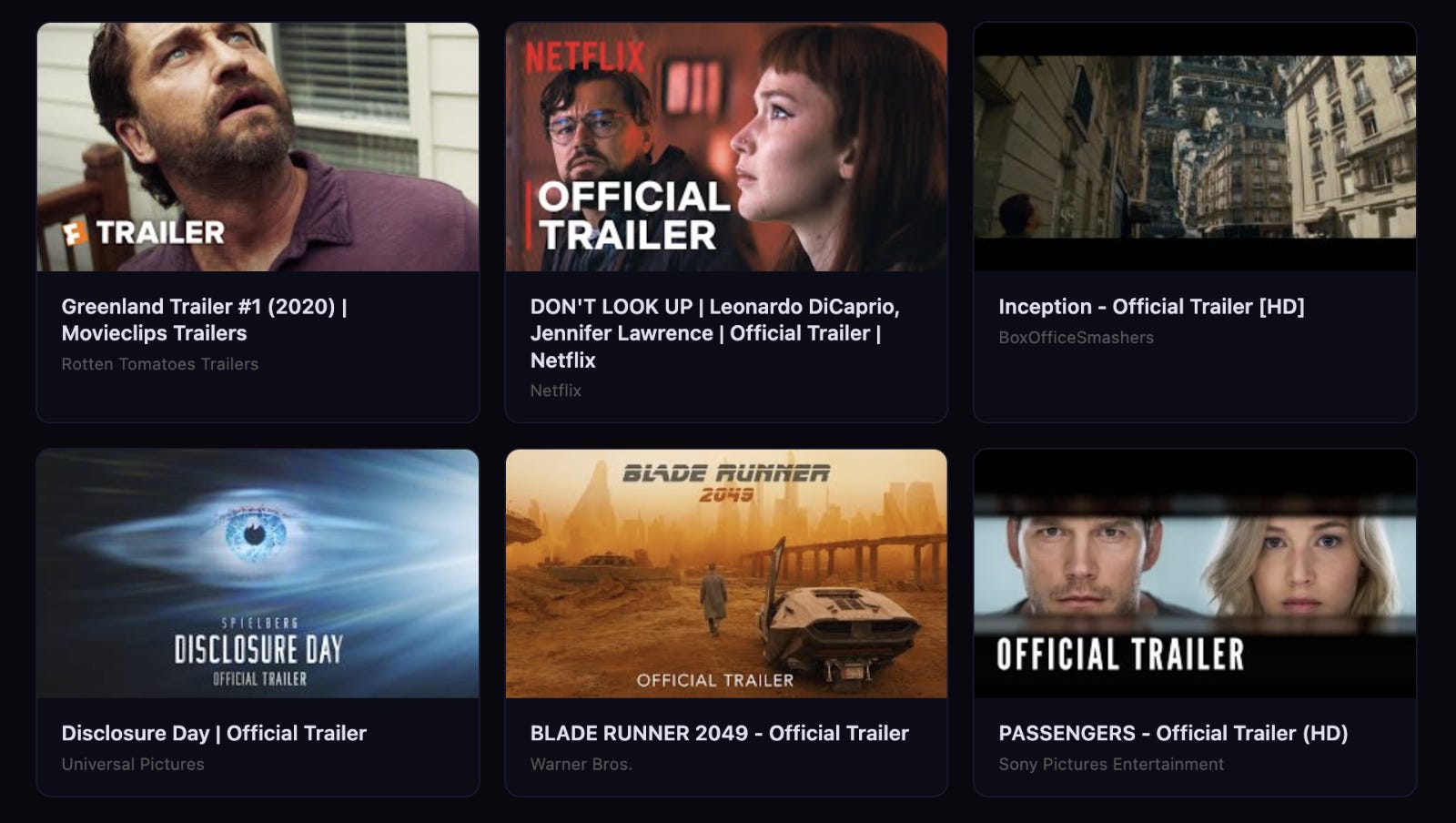
Aside from generating a pretty visual for each one, the data all fed to a spreadsheet that I then gave to Claude. I asked the bot to assess key features and compare them to the script I had for the trailer I’m planning to create for entry to the Future Vision XPrize, a competition looking for film ideas for an optimistic future story.
The main success metric Claude used was the like:view ratio.
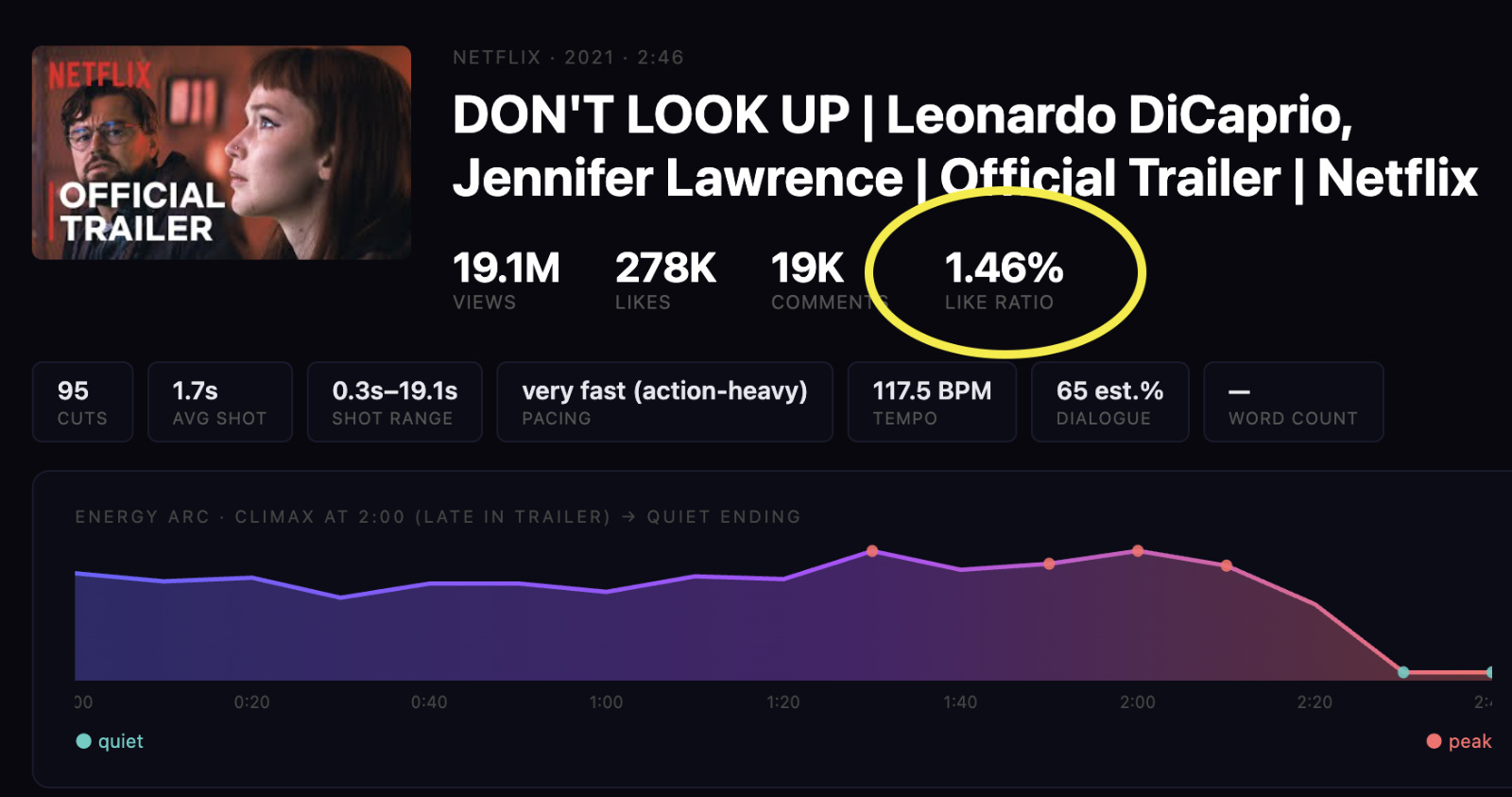
A few things stood out:
Almost every successful sci-fi trailer opens quietly and climaxes in the second half. Early climaxes underperform.
Humor — even light, single beats — correlates strongly with like ratios. The trailers without any humor cluster at the bottom.
The highest-engagement trailers lead with personal stakes and reveal existential ones. The ones that open with "the world is ending" without first giving you someone to care about tend to underperform.
Four techniques appear in almost every successful trailer: voiceover, intercutting, slow motion, and smash cuts.
Looking at the draft I’d written, a couple of things became clear: I didn’t have a standout protagonist to lead the action and make people care, and it wasn’t funny at all.
We also recognized that the number of cuts in my draft was on the low end. Not a deal breaker, but something to consider. Plus I didn’t know what a smash cut even was.
We set about rewriting it with the data in mind.
We chose Josinda as the protagonist, since she is the main character of the timeline that arrives on Kyron, so her arc mirrors that of the trailer.
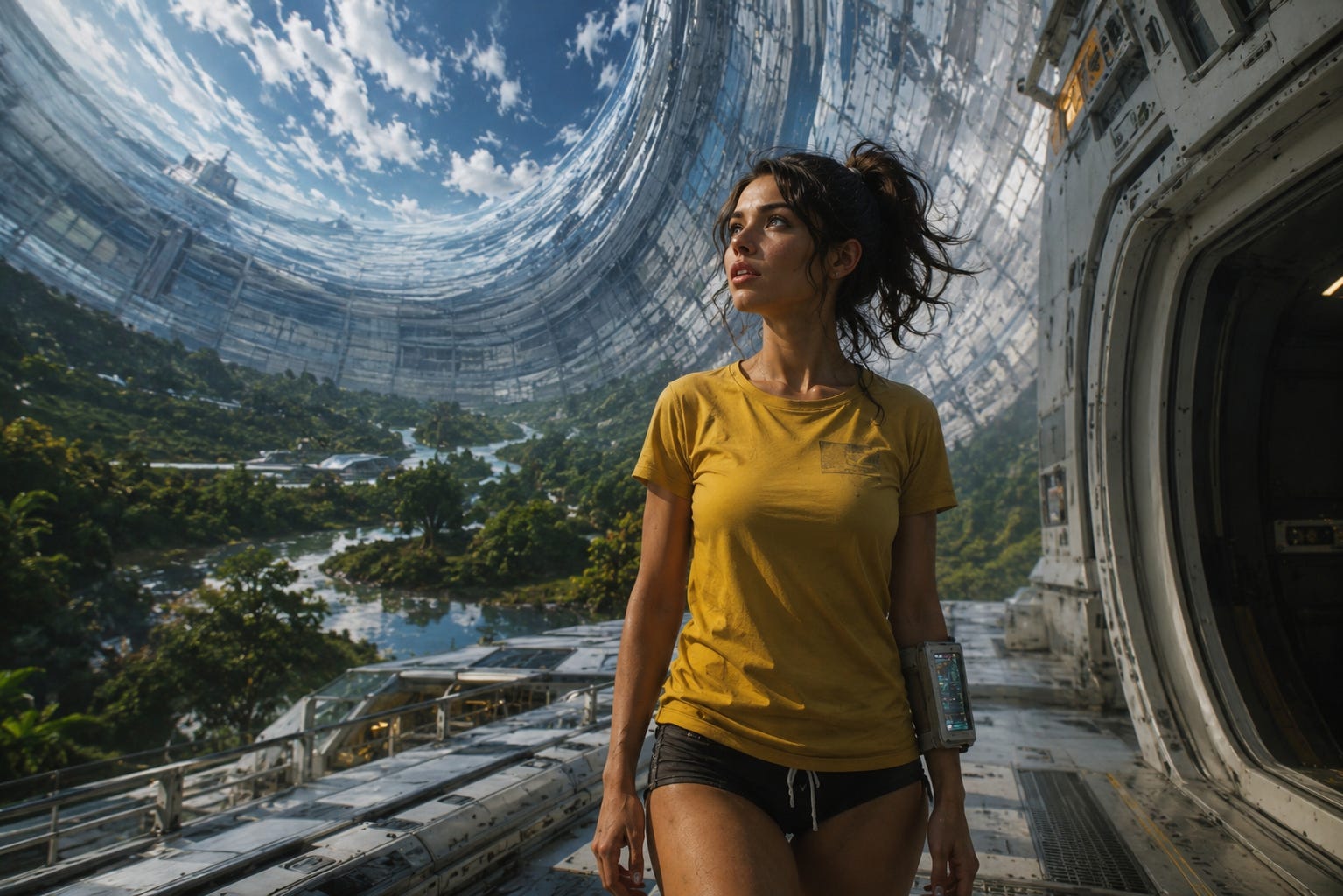
We inserted a voiceover to introduce the world — that of Iqbal, a teacher who explains the origin of the mission to a group of children.
We drafted 71 shots over 2m50s, so on par with the standards, and the arc peaks in the second half, with an emotional reset about halfway through, in which Iqbal finishes his story and we see him for the first time as he take the kids for a 0-gravity frolic in the middle of one of the cylinders. Their squealing delight is a light-hearted reframe from the stress of landing on a foreign planet and interacting with the planet’s inhabitants, who are smarter than the humans originally give them credit for.
Once we had a new script mapped out, I asked Claude to look back over it with the data in mind, and in true AI form, it gave me the good…
Running through the checklist — fast pacing, significant humor, personal-then-existential stakes, mixed VO, clear protagonist, conflict established — J2K sits almost exactly in the Hail Mary / Inception zone: 0.68–0.84. Those are the two trailers that share the most structural DNA with what you've built.
…followed by the not so good…
The Cloud Atlas short trailer sits at 0.32 and the extended version at 0.45. Both suffer from the same problem: multi-timeline ensemble sci-fi is the hardest category to trailer because the audience needs to track too many threads at once. J2K has four storylines and asks the audience to hold Josinda, Jia Wei, Kaylah, and Igbal in mind simultaneously. The Cloud Atlas warning is real.
The opening 20 seconds is also the longest “no character on screen” opening in the dataset. 2001 gets away with it because it’s 2001. For an original IP with no pre-existing audience, that's a risk.
…and then the suggested fix…
The one thing that could genuinely push it above that ceiling is if the concept reads as immediately shareable on first watch — “wait, humans are the aliens” is the kind of logline that travels.
A couple of the trailer examples, like Passengers, have a few high action shots to open and then go to a quieter introduction to the world. I had written a quiet entry with a camera view slowly moving towards the ships floating through space, with a voiceover of Iqbal saying to his class, “We come from Planet Earth — a thriving, beautiful, green and blue pearl. A beacon of life and the origin of consciousness. None of you will ever see where we came from. But you carry the weight of our destiny.” Then the camera would pass through the walls of the vessel and come out on a brightly lit interior of a giant cylinder with islands and seas, beautiful architecture, and transport vehicles moving along the length. Birds fly in the sky, and clouds float overhead. The music swells. His voice continues, “This is all you'll ever know.”
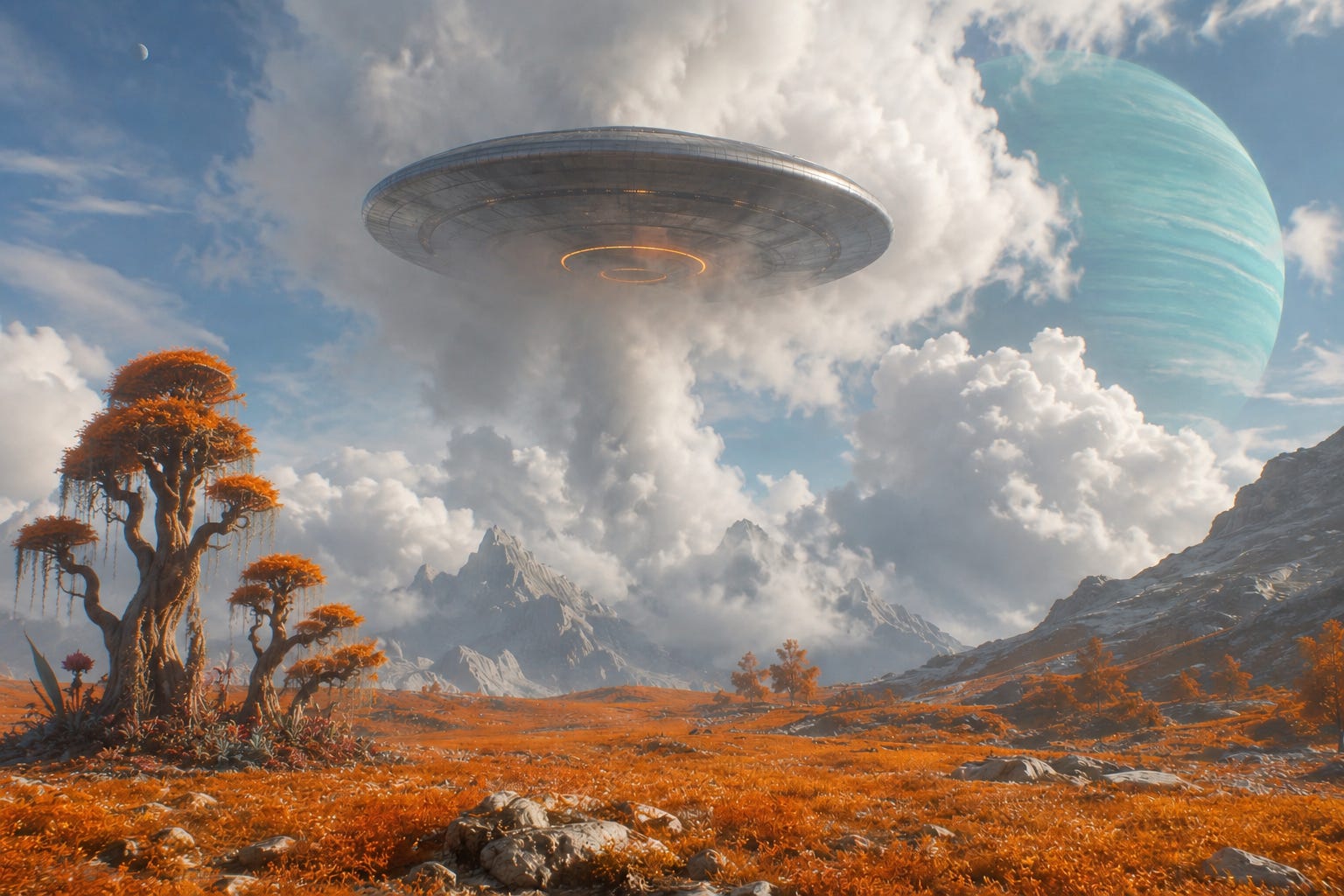
To combat the quiet boredom, we inserted three quickly flashed up scenes from later in the trailer: A disc-shaped aircraft descending through an alien atmosphere, Josinda’s face as she steps out onto the surface, the children playing in midair.
Then we’d move to the quiet dark and the introduction to the world.
Those initial, high energy shots should be copies of images I’m already building as part of the script, so easy enough to paste them at the beginning to grab your attention.
So now I have a full shot list with only a few TBDs remaining. I think I’m ready to create my character sheets and world sheets and begin to work through the storyboard.
Wish me luck getting AI to imagine these alien scenes and life within a cylinder!
More updates soon.
PS. I know that 30 trailers is a pretty tiny dataset. I’ll keep repeating and refining this process over the next few weeks. I’m in a rush!
If you want to help me, jump in and run a few of your favorites to add to the next spreadsheet:
Comments
Nothing yet. Say the first thing.
Sign in to join the conversation.