
I’ve been thinking about this a lot lately and writing about it helps me sort it out so bear with me.
Some artists create work and want it to sell as fast as possible. Or sell as much as possible. And the work might not be accessible in terms of content or subject matter or style. And that’s where we start talking about trends which I hate that word. I genuinely hate it.
But the public latches onto trends. Whatever that means at any given moment. Abstract art. Street art. Pop surrealism. Figurative work. Photography. They go up, they go down, they shift depending on where you live and work, depending on where you put yourself out there, whether that’s social media or open calls or solo shows or art fairs or all of the above.
The thing is we have no idea what the public thinks. We just see what we see. And the public is everyone. People who want something that matches their couch. People who want color in their game room. People who collect because they love comic books or because they fell in love with a piece at an art fair and didn’t know anything about the artist. People from every walk of life, every income level, every relationship with art imaginable.
So who is your audience really.
Here’s what I actually believe. As an artist, our job is to tell our particular story. To create work because we have to. Because we want to. Because we love to. We challenge perception. We challenge reality. We challenge the public. We challenge life itself. Sometimes we challenge death.
Artists think visually. And I believe we think differently. Not better, not worse. Differently. The way we process the world ends up in the work whether we intend it or not.
So for me, we just have to keep doing what we are led to do. Keep creating where we are led to create.
If we create for the trends, whether it’s drip paintings or spin paintings or zombie formalism or whatever is happening right now, it becomes something else. It becomes capitalism. It becomes commercialism. It becomes about the product and the sale.
And I’m not saying that’s wrong. I’m genuinely not. That is a completely valid choice and there are artists doing it brilliantly. But it is something different. It is a different practice with a different relationship to the work and a different relationship to the audience.
When you’re thinking about who your audience is, there are really two very different conversations happening.
When you’re creating a product, your audience is a market. You’re thinking about what sells, where it sells, who buys it, how to reach them. That’s legitimate. That takes real skill and knowledge and it’s its own kind of work.
When you’re in the studio toiling over a painting. When you’re photographing for photography’s sake. When you’re spending hours on a sculpture that comes from your heart and your gut and somewhere you can’t even fully explain, that is a different conversation entirely. That work wants to find the right person. Maybe you also want to sell it for the right amount of money and that’s okay too. But the relationship between you and the work and the eventual audience is different. It’s more like a match than a transaction.
I don’t have a clean answer to any of this. I don’t think there is one.
The question of audience is really a question about intention. Why are you making this? What do you want it to do in the world? Who do you want to receive it?
Those answers shape everything. The work itself. Where you show it. How you talk about it. What you charge for it. Who you invite into your studio.
And sometimes those answers change. Sometimes you make work from the gut and it sells fast and that’s great. Sometimes you make work you think is accessible and nobody responds to it for years and then something shifts. The audience finds you when it finds you and you can influence that but you can’t control it.
What you can control is whether you keep making the work that calls to you.
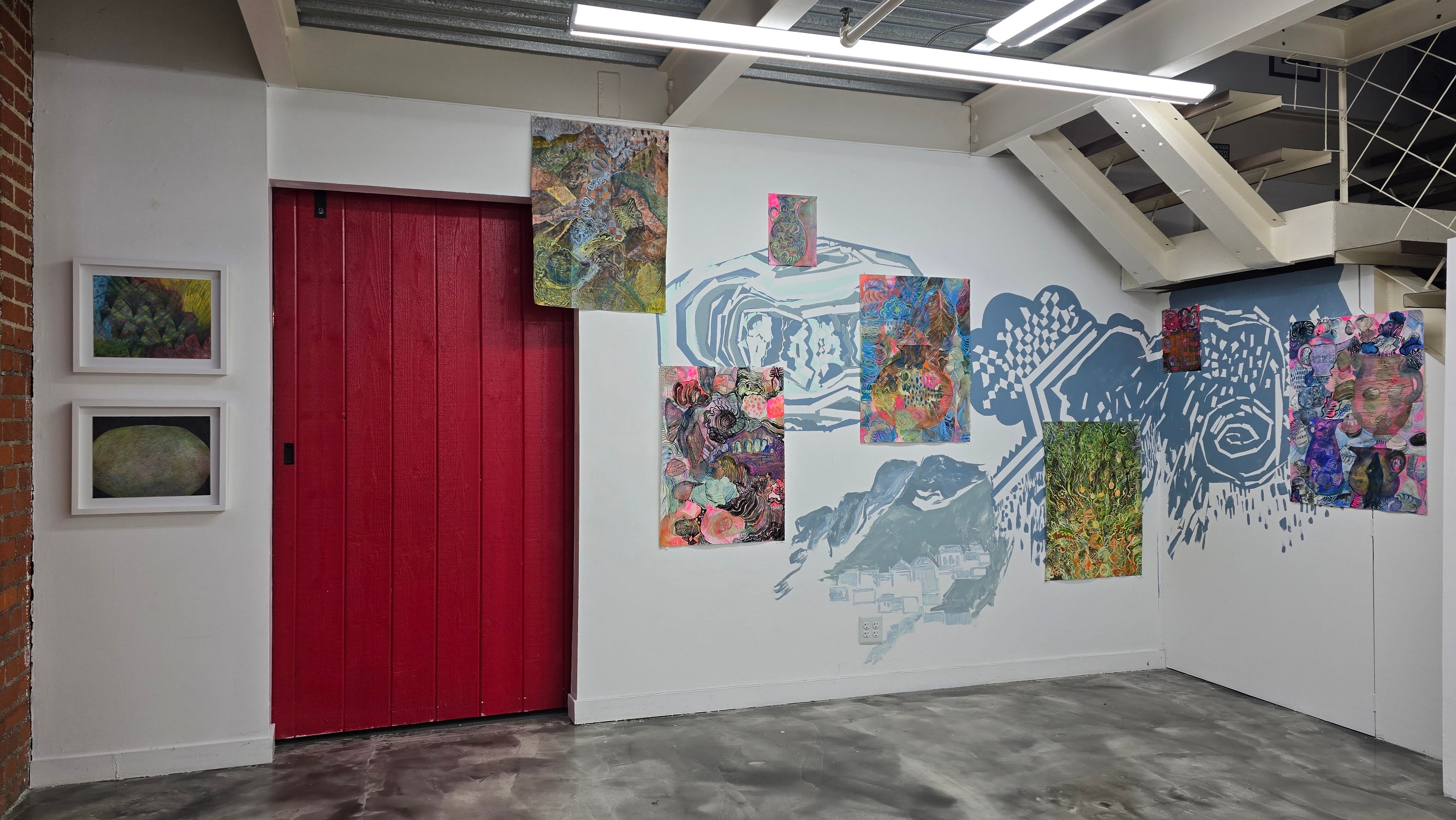
Emily Araujo at Shoebox Projects
No posts
Comments
Nothing yet. Say the first thing.
Sign in to join the conversation.