
For most of my career, being professional meant sanding yourself down. You dressed a certain way. You wrote a certain way. You learned to smooth every rough edge until nobody could object to what you said (or remember it).
The highest compliment wasn’t that you were original. It was that you were polished.
If you sounded thoughtful and articulate, people assumed you knew what you were talking about. Looking professional was often enough to convince people you were.
Then AI showed up.
Today, anyone can generate a flawless LinkedIn post in ten seconds. It’ll have a compelling hook, a personal anecdote, three practical lessons, and a reflective question at the end.
The result is that competence has become remarkably easy to imitate, and once everyone can sound competent, competence stops being interesting.
I found myself thinking about that while scrolling LinkedIn this week. Instead of another leadership framework or productivity carousel, these were the posts that stuck with me.
A New Yorker cartoon from the incredibly talented Rich North.
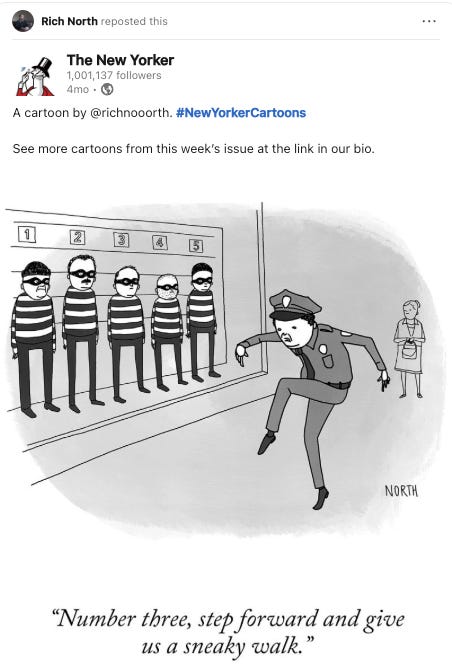
A perfect observation about the quiet panic of office life.
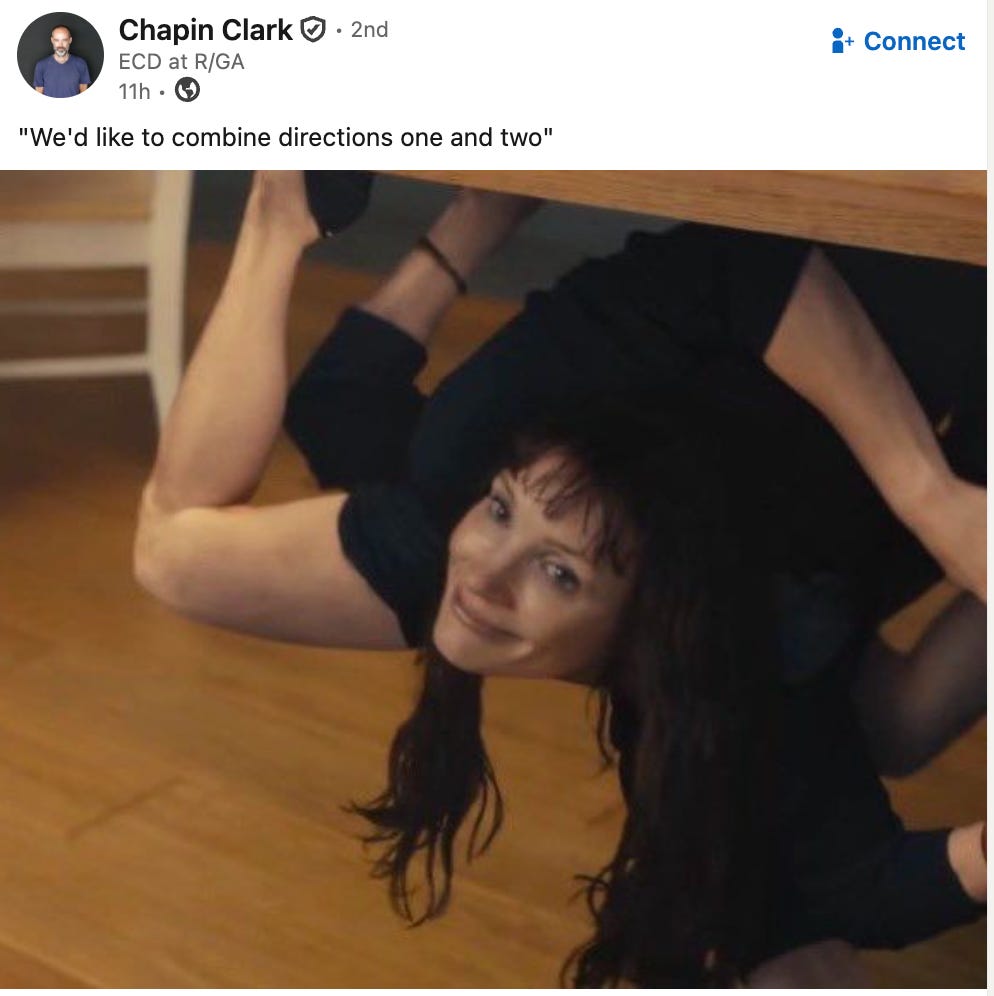
A creative director who summarized the feedback to every creative presentation.
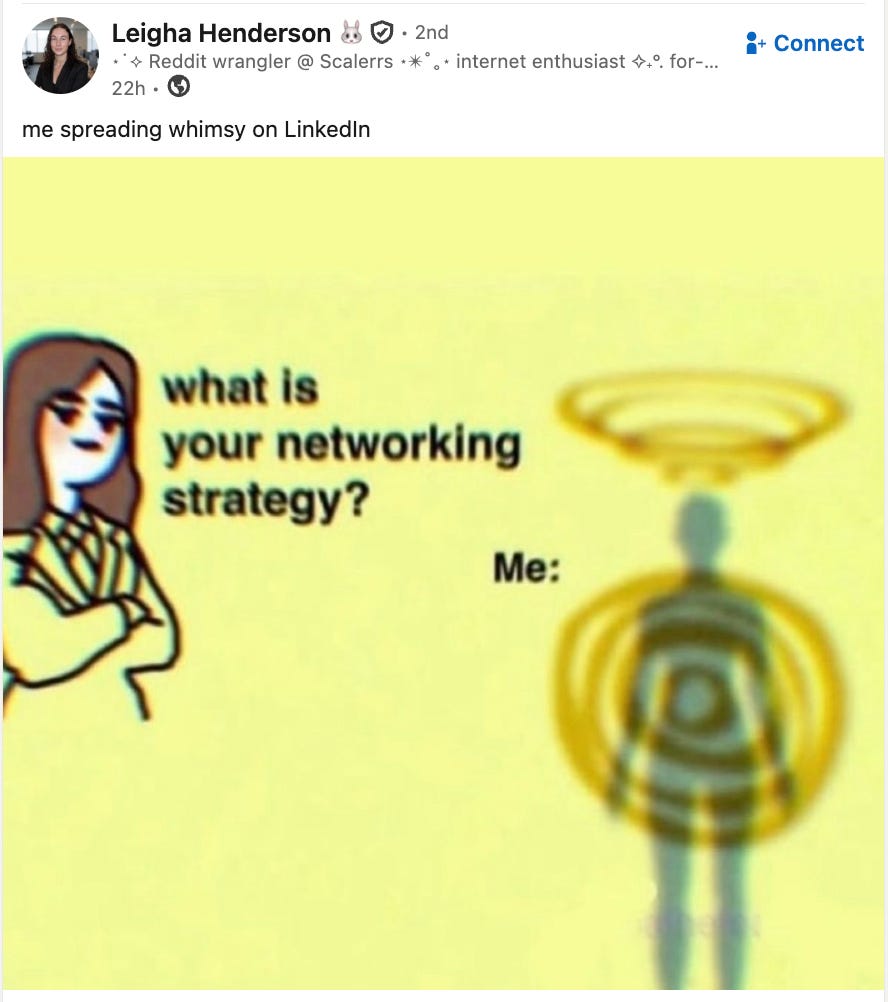
Someone suggesting good vibes beats cold outreach.
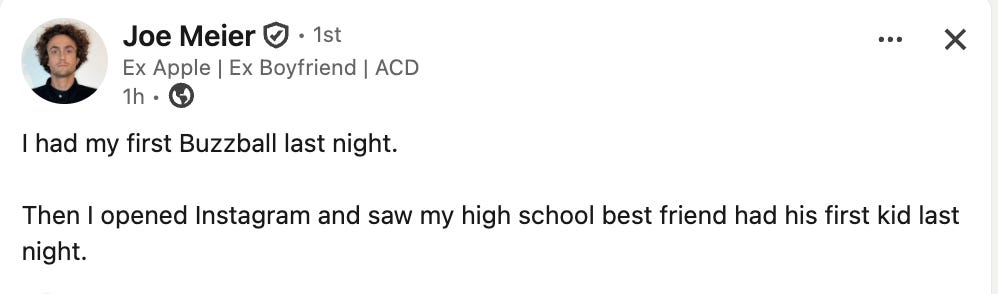
Two sentences that somehow captured an entire stage of adulthood. (For the uninitiated, these are Buzzballz: link)
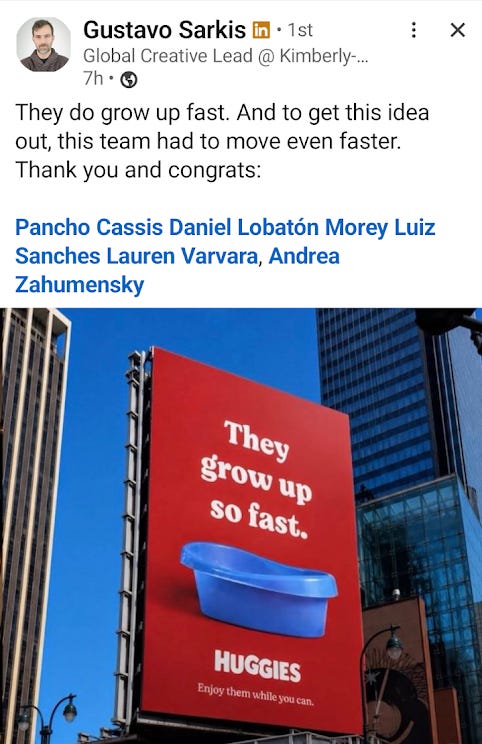
And finally, a Huggies billboard that said more about parenting in six words than most brand manifestos manage in six hundred.
For years, many of us confused professionalism with polish. We wrote like corporate communications departments even when we were simply introducing ourselves.
We rounded off opinions, softened our humor, and edited away the little quirks that made us memorable because we assumed professionalism required impersonality.
Then AI mastered that voice almost overnight.
The funny part is that we spent the last decade teaching ourselves to write like companies. AI just graduated at the top of the class.
It didn’t ruin professional writing. It commoditized it.
And markets have a funny way of responding to commodities. As soon as something becomes abundant, people start searching for whatever is scarce. In this case, the scarce thing isn’t intelligence or grammar. It’s perception. It’s taste. It’s the ability to notice something that everyone else experienced but nobody thought to put into words.
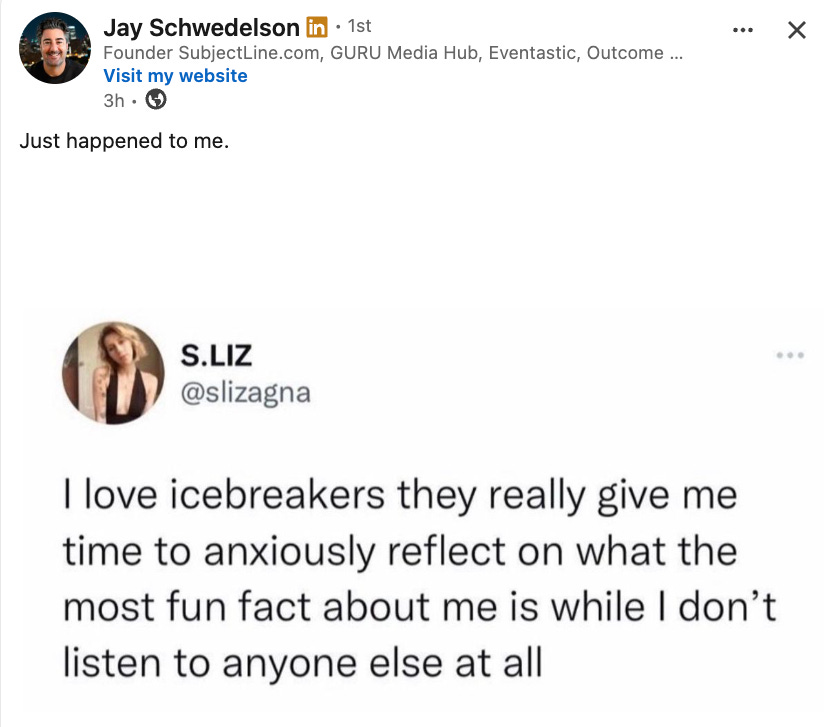
That’s why I don’t just see six jokes when I look at those screenshots. I see six moments of attention. Someone noticed the absurdity of office icebreakers. Someone recognized the impossible logic of client feedback. Someone realized adulthood can be measured by the widening gap between BuzzBalls and baby showers.
None of those ideas came from better prompting. They came from paying closer attention to ordinary life.
I predict that’s the skill we’ll value more and more over the next decade. Not because AI lacks intelligence (it clearly doesn’t) but because intelligence is becoming abundant. Original perception isn’t.
For years, the safest way to build a professional reputation was Ironically, the moment machines mastered that style,
to sound a little more like a company.
it stopped being worth imitating.
The next generation of professionalism won’t belong to the people who produce the cleanest writing. It’ll belong to the people who consistently notice what the rest of us overlook.
Because AI can generate a competent paragraph.
But it can’t live a life interesting enough to notice one.
Comments
Nothing yet. Say the first thing.
Sign in to join the conversation.