
Pearl Jam was in heavy rotation, Nirvana had already changed what music sounded like, Guns N’ Roses was making music videos longer than some sitcoms, and nobody had a phone in their pocket unless it weighed five pounds and had an antenna.
At St. Thomas, football was its own universe. There were state championships, packed Friday nights, and future college stars and NFL players walking the same hallways as the rest of us. There was enough mythology around the program to make a skinny 14-year-old think, “Yes, I belong here.”
Spoiler alert: I did not belong there.
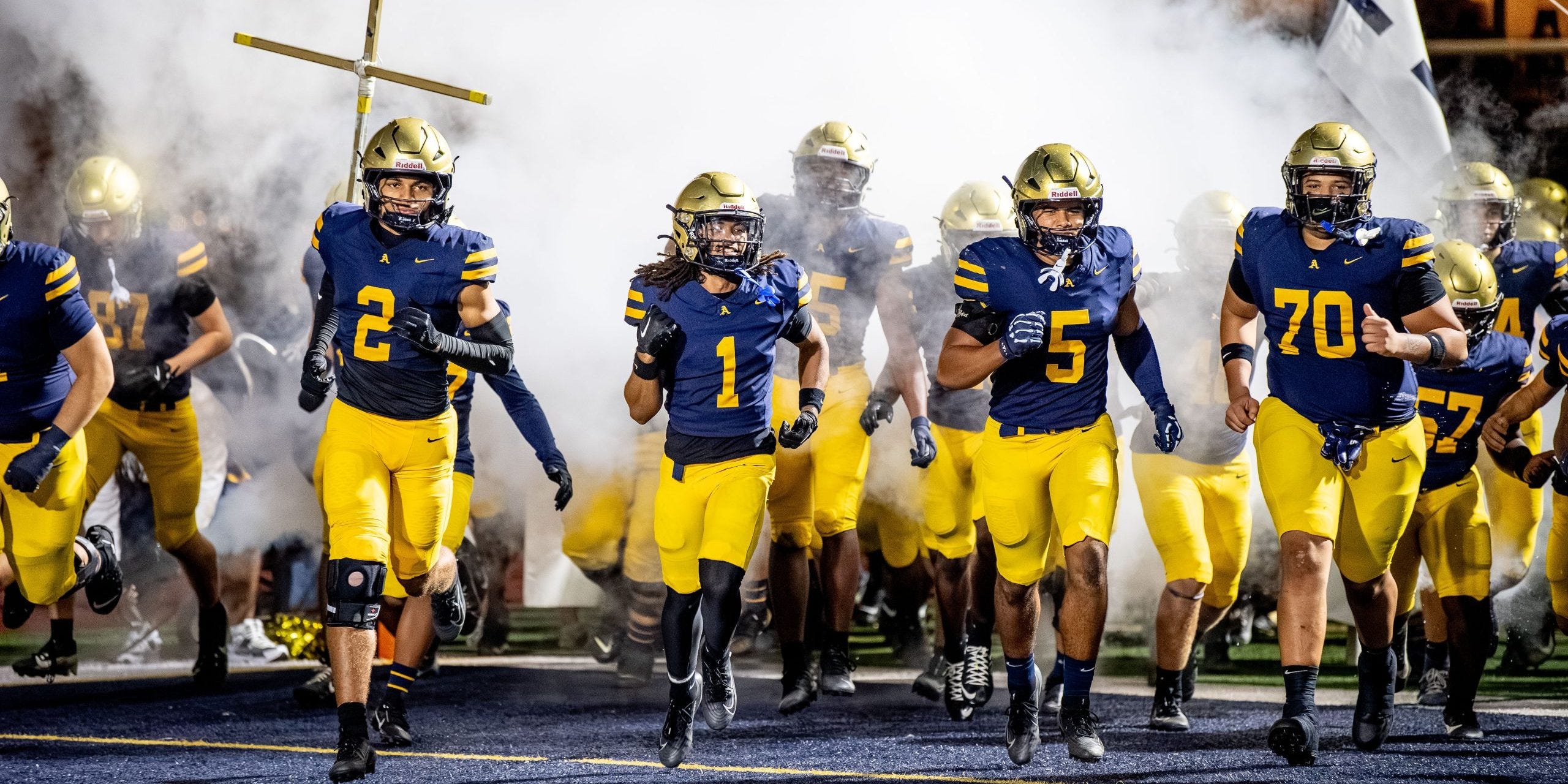
I’d played flag football at St. Mark’s in middle school, which wasn’t the résumé line I thought it was. Still, I was tall, and somewhere in my teenage brain, tall apparently translated to offensive lineman.
On the first day, everybody broke into groups by position. I walked over to the offensive linemen and immediately noticed a slight problem: these guys were enormous.
I was surrounded by kids who looked 50 to 100 pounds heavier than me. I looked less like an offensive lineman and more like someone who’d wandered over from AV club looking for an extension cord.
The coach looked at me and said, “You got to put on some weight, son.”
Fair.
What I hadn’t considered was everything else involved in becoming a football player.
Practice started, and suddenly there was running, conditioning, drills, repetition, and more running, all of it in August in South Florida, where the air has the same consistency as soup.
I was one of the slowest guys on the team, which at least gave me plenty of time during our runs to reconsider the decisions that had brought me there.
It was also the first time I understood something about sports I’d never considered from the stands. The game is the part everybody sees, but nobody buys a ticket to watch conditioning. Nobody makes a highlight reel of a kid doing the same drill for the 47th time, and nobody cheers while you’re exhausted, sore, and trying to find enough energy to do it again.
The guys playing under those Friday night lights had spent an enormous amount of time doing exactly that.
I had spent three days doing it and was already reconsidering my future.
Then came Labor Day. I looked at the schedule and discovered we had practice while my friends were going to the beach.
That’s when I discovered my true calling: retirement.
Three days into my high school football career, I hung up the cleats with zero sacks, zero pancakes, zero scouts, and an undefeated record against serious injury.
I went back to something I was actually good at: being a student.
At the time, it felt like a small and pretty funny failure. More than 30 years later, I realize those three days gave me something I needed. Two things, actually. One turned out to be about being a dad. The other took a little longer to show up, and it was about the work I do for a living.
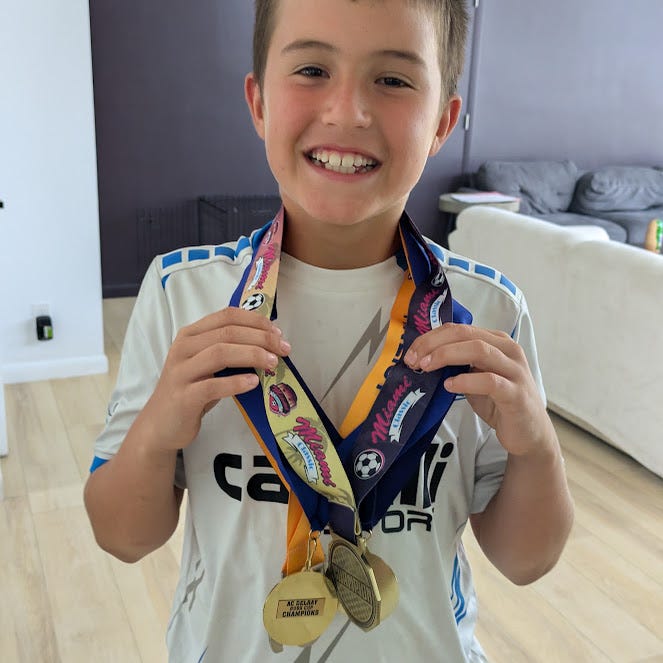
Today I have two sons who play sports and take school seriously, and now I get to watch the part I escaped after three days.
I see them come home beat up from practice with homework waiting. There are tests the next morning, projects due, practices that run late, and games on weekends. Their bodies can be exhausted while their brains are somehow expected to switch gears and start doing math.
Sometimes school is hard because they’re tired. Sometimes sports are hard because school already took everything out of them. Sometimes everything hits at once.
That’s when my legendary three-day football career comes in handy.
I know what it feels like when your body says it’s done and there’s still work waiting for you. I just listened to my body almost immediately.
They keep showing up.
I can’t teach my kids much about what happens on the field because they’re already better athletes than I ever was, which admittedly is a very low bar. But I can help them with the part I know. I can help them manage the workload, prepare for a test, push through a rough week, and understand that sometimes you have to do the work when you’d much rather be asleep.
I wasn’t the athlete they are, but I can help them be the students I learned to be.
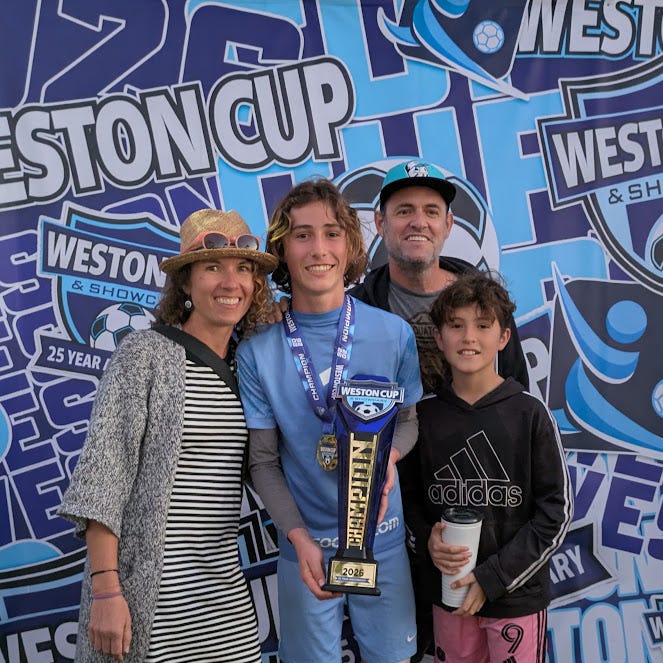
Being their dad has also taught me that those two things aren’t separate. The kid who walks through the door after practice doesn’t suddenly become a fresh student with a full battery. He’s the same exhausted kid who just spent two hours asking his body to do difficult things.
Sometimes the most useful thing I can offer isn’t advice. It’s understanding why he’s tired in the first place.
It took me much longer to realize that my three-day football career had also taught me something about being a writer and making things for a living.
We mostly see the Friday night version of other people’s creativity. We see the finished ad, the published article, the book on the shelf, the film at the festival, the campaign everybody’s talking about, or the idea that seems so obvious once somebody else has already had it.
What we don’t see is Tuesday afternoon, when it was terrible.
We don’t see the blank page, the seventeen headlines that weren’t funny, the script that died in a meeting, the idea everyone loved until someone with a bigger title walked in, or the writer staring at a sentence for 45 minutes before deleting it.
That’s practice. Creative work has conditioning too. It just doesn’t usually involve tackling anyone.
Making things for a living can mess with your perception of how easily good work comes to other people.
Someone publishes a great piece of writing, and we see the writing, not the eight bad openings that came before it. A campaign wins an award, and we see the case study, not the dead ends, the client feedback, the budget cuts, and the dozens of people who dragged it across the finish line.
You see the Cannes Lion. You don’t see the folder called FINAL_v7_FINAL_USE_THIS_ONE_2.
You see the brilliant idea. You don’t see the 40 mediocre ones that paid for it.
They didn’t come out of nowhere. They emerged from a series of brutal practices.
I’ve spent enough years writing and making things to know how dangerous it is to compare your unfinished work to somebody else’s highlight reel.
The creative people I admire most aren’t the ones who magically produce brilliance every time. They’re the ones who keep showing up when brilliance doesn’t show up with them. They write another page, try another headline, rebuild the deck, rewrite the script, take the useful note, ignore the terrible one, and kill the thing they loved once they realize it isn’t working.
Then they come back tomorrow.
That’s what I hope my kids eventually understand about what they’re doing right now. The game matters, but so does the practice nobody watches. The grade matters, but so does sitting down to study when you’re exhausted. The finished thing matters, but so does everything it took to get there.
And occasionally, quitting matters too.
I’m glad I quit football. I wasn’t going to the NFL, I wasn’t going to become an offensive lineman, and I wasn’t particularly interested in spending Labor Day at practice.
But quitting doesn’t mean the experience was wasted.
Those three ridiculous, sweaty days gave me a lasting respect for athletes, more empathy for what my kids are going through, and eventually, a better understanding of the work I chose to do.
Because the finished work is Friday night. It’s the article people share, the campaign people remember, the idea that gets approved, or the thing you’re proud enough to put your name on.
But most of being a writer, an artist, a designer, a filmmaker, an athlete, a student, or anyone trying to get good at something happens Monday through Thursday, when nobody’s watching, when it isn’t working yet, and when you’re still practicing.
Sometimes the things you quit still teach you something.
And sometimes the worst offensive lineman in St. Thomas Aquinas history grows up to be a pretty useful dad.
Comments
Nothing yet. Say the first thing.
Sign in to join the conversation.