
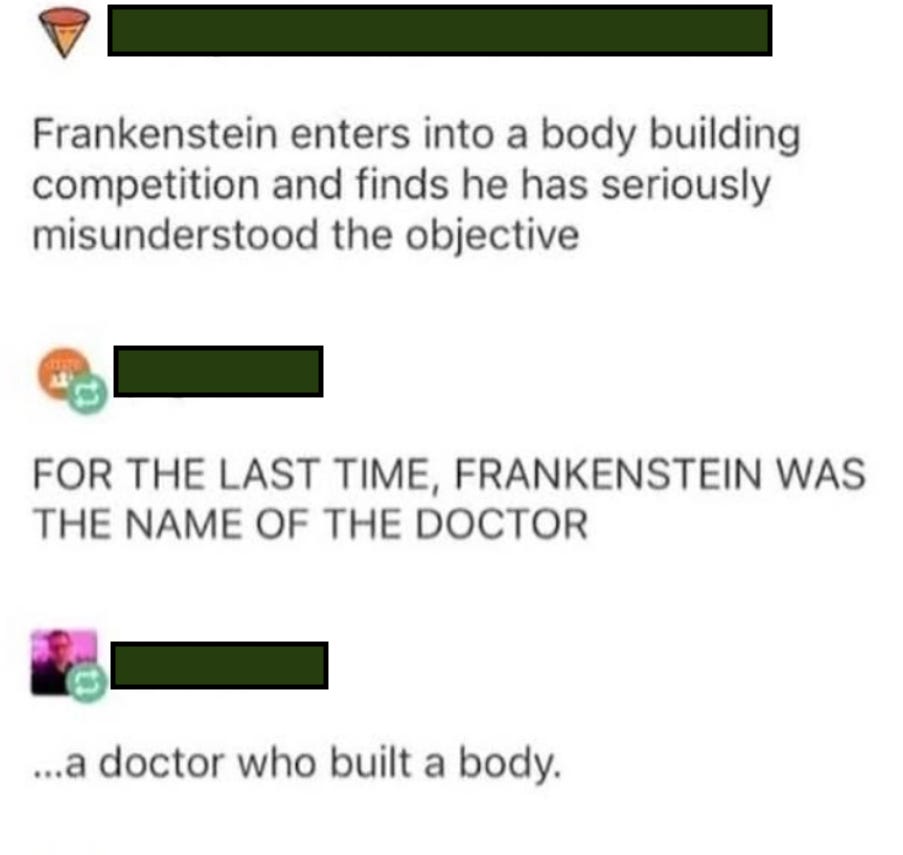
Why has Mary Shelley’s Frankenstein fascinated generations of readers (and theatre-goers, film-goers, comic book fans, Hallowe’en mask makers and more) for over 200 years? And why, if you say the word Frankenstein, does some pompous poltroon assume you are talking about the Creature, because everyone but him is too uncultured to know who’s who?
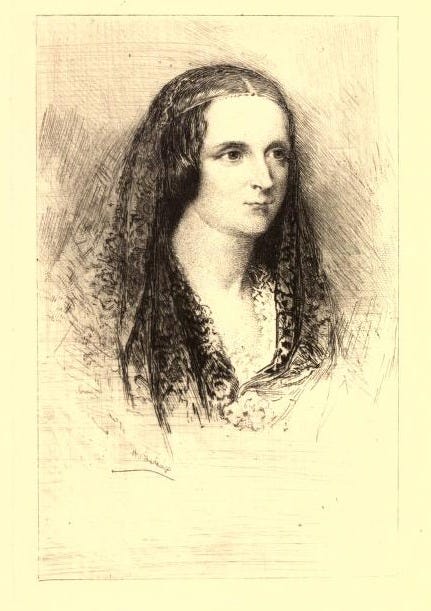
In this first episode of our Gothic season – and the first of a two-parter about Mary Shelley – we discuss just a few of the myriad questions posed by this work of genius. We look at the themes of isolation and landscape, talk about the often-overlooked female characters, appreciate the elegant craftswomanship of the structure and consider the stories behind the ‘spark of life’ that animates Frankenstein’s creation. We also cover some aspects of Mary Shelley’s own life – with more to come on that in our next episode.
The cliché would have it that ‘Frankenstein is the real monster’, but can we find some sympathy for the brilliant but obsessive student who lacks the age and guile of the silver screen’s ‘Dr Frankenstein’? And while the rejected, persecuted Creature is a natural focus of readers’ sympathy, we conclude that some of his attitudes wouldn’t be out of place on a manosphere forum.
Whether you are a devoted Frankenstein re-reader or have only encountered the work through popular culture, you are equally welcome and we hope you’ll enjoy listening to our thoughts. Students studying the book for A-level might even come away with some useful ideas to ponder over the summer.
Next time on She Wrote Too, we’ll be looking at two of Mary Shelley’s short stories – Transformation and The Mortal Immortal, which share some of the philosophical questions of her most famous work. If you would like to read them in advance, you can find them freely available online.
After that, we’ll have an episode about Mary Wollstonecraft, and how she used elements of the Gothic to express her radical ideas about the rights of women. Wollstonecraft also features in our book, She Wrote Too: Women whose words changed the world, which you can buy here:
Thanks for listening to She Wrote Too! This post is public so feel free to share it.
Comments
Nothing yet. Say the first thing.
Sign in to join the conversation.