
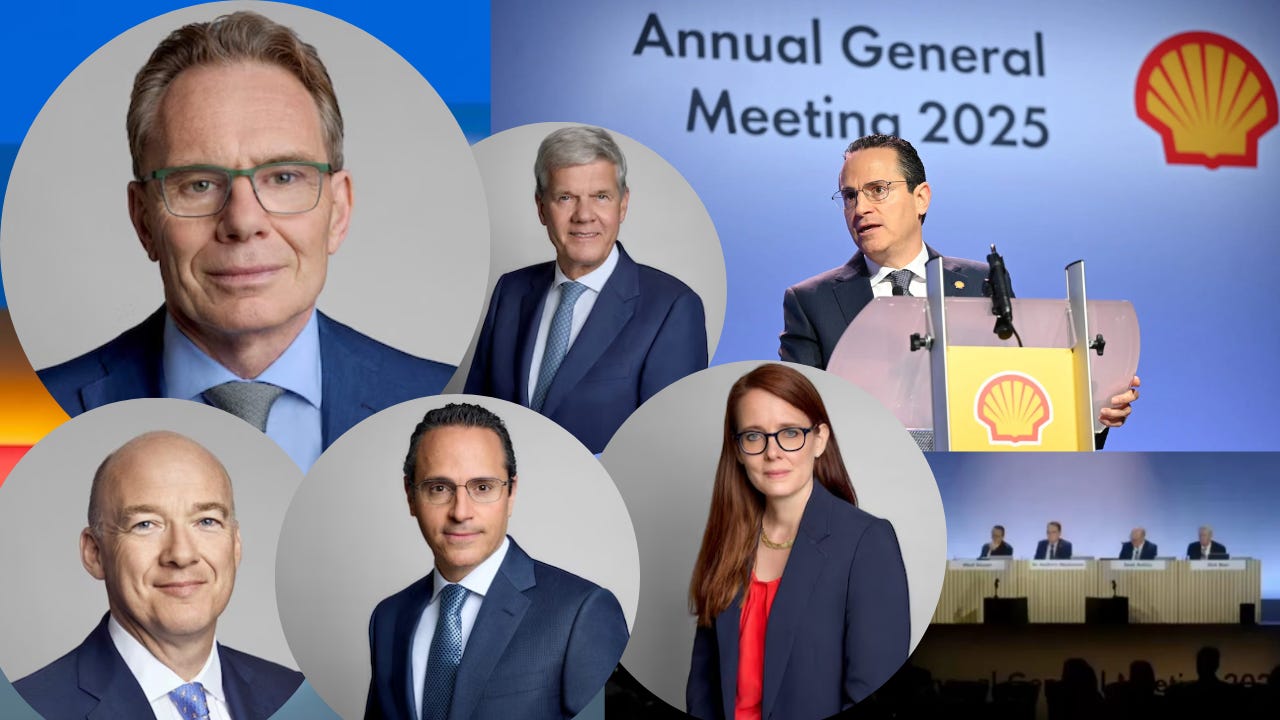
There are some annual general meetings where tension creeps in gradually, almost imperceptibly, as the questions begin to sharpen and the room warms to its themes. Shell’s 2025 AGM was not one of those meetings. The tension was there from the outset — visible, audible, and, in the silence that followed the Chair’s opening remarks, unmistakable.
There was no applause.
The CEO received only a polite and measured response.
And yet, when the first shareholder rose to speak, the room shifted — not dramatically, but decisively — as applause broke out with a warmth that had been conspicuously absent just moments earlier. It was a small moment, but one that revealed a deeper truth about the dynamics of the meeting: the emotional centre of gravity did not sit with the Board.
It sat with the shareholders.
What unfolded over the next three hours was not the usual asymmetry of an AGM — a Board presenting, shareholders reacting, and dissent emerging in uneven bursts. Instead, this felt like the public expression of something that had been building persistently over months of prior engagement.
On one side sat a group of shareholders and activists who had arrived not to explore their views, but to assert them — informed, organised, and consistent in their line of questioning, particularly around Resolution 22, the shareholder proposal concerning Shell’s LNG strategy and climate alignment. On the other sat a Board that was equally composed, equally prepared, and notably unwilling to concede ground, articulating a strategy that was clear, internally aligned, and delivered without defensiveness.
This was, in effect, conviction meeting conviction.
In most settings, that is precisely the combination that risks escalation. When neither side is seeking to persuade nor willing to retreat, the conditions for disorder are usually present. And yet, despite those ingredients, the meeting did not tip into mayhem. It held — and held consistently — from beginning to end.
The focal point of much of the discussion was Resolution 22. In formal terms, its level of support was significant but far from decisive: approximately 20.5 per cent of votes cast, equivalent to around 13 per cent of issued share capital once turnout — itself roughly 64 per cent — is taken into account.
And yet, in practical terms, the resolution exerted an influence on the meeting that far exceeded its numerical backing. By any reasonable estimate, between 30 and 40 per cent of the total meeting time was absorbed by questions, responses, and exchanges relating directly or indirectly to this single issue.
This is the AGM paradox in its clearest form: voting power and speaking power do not operate on the same axis. A determined minority, particularly one that is organised and persistent, can set the agenda of a meeting without commanding anything close to majority support. Shell’s 2025 AGM offered a textbook illustration of that dynamic.
In this context, the role of the Chair becomes pivotal, and here Sir Andrew MacKenzie and the Board demonstrated a level of composure that was notable not for its flair, but for its restraint. There was no attempt to dominate the room, no visible effort to shut down dissent, and no drift into defensiveness. Instead, the tone was measured, responses were structured, and the pace of the meeting was maintained with a steady hand.
CEO Wael Sawan, while receiving a more muted reception at the outset, reinforced this approach by remaining focused on strategy and long-term positioning rather than engaging in reactive exchanges. The CFO, a role too often overlooked in AGM commentary, was also quietly central. Sinead Gorman played an important stabilising part — grounding the discussion in financial clarity and anchoring it when it risked drifting into abstraction or ideology.
Together, the executive presence did not seek to win the room — it sought to hold it.
What is less visible, but no less important, is the extent to which the meeting appeared to be carefully prepared — not just in process, but in place.
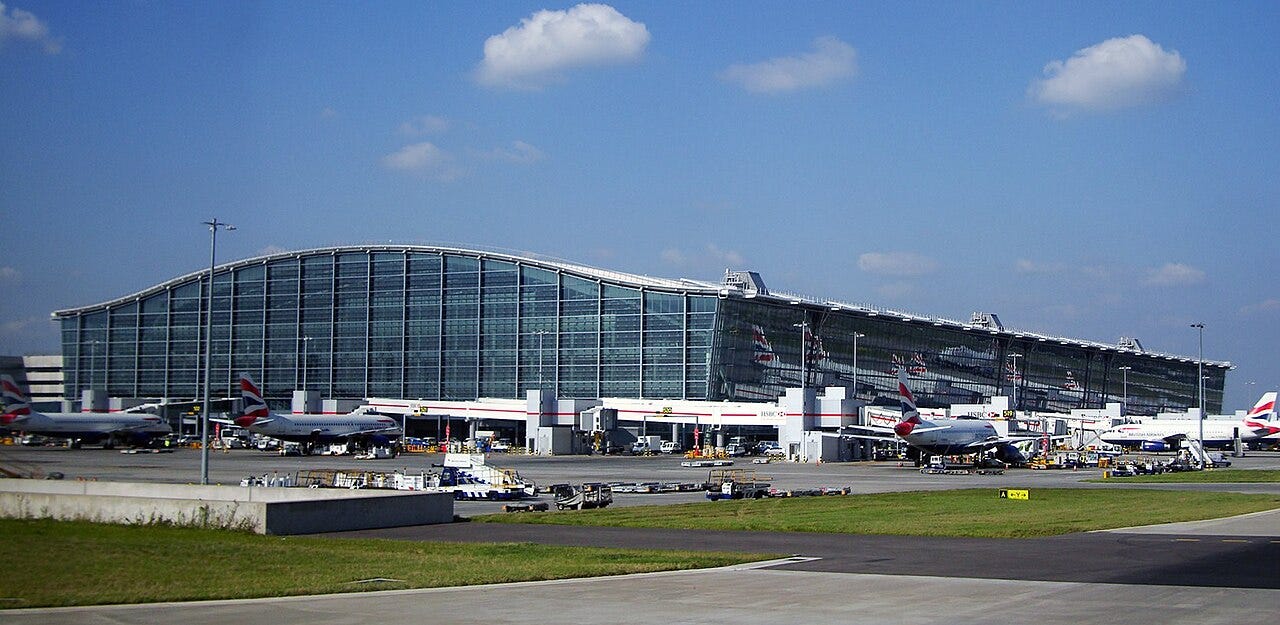
Shell chose to hold its 2025 AGM at the Sofitel Hotel at Heathrow Terminal 5 — a decision that, on the surface, may appear logistical, but in practice shaped the entire character of the meeting. Heathrow operates under strict security controls and legal restrictions that limit the scope for protest and disruption. From the Company’s perspective, this offers a clear advantage: a controlled environment in which proceedings can run to time, attendees (both in-person and online) can be heard, and the business of the meeting can be conducted without interruption.
This context matters. AGMs at Shell and other large listed companies have, in recent years, become increasingly charged, with protests at times escalating beyond vocal dissent into situations that raise genuine safety and security concerns for attendees, staff, and organisers. Against that backdrop, the choice of venue can be read not simply as an exercise in control, but as a logistical response to ensure orderly, safe, and structured discourse.
From another perspective, however, the choice of venue raises more complex questions. For some stakeholders, Heathrow represents not just a secure location, but a constrained one — where the conditions for participation are subtly, but materially, altered. The boundary between orderly conduct and managed access becomes harder to distinguish.
Against this backdrop, the smooth handling of questions, the sequencing of speakers, and the overall flow of the session take on additional meaning. These outcomes point not only to effective coordination across the Company Secretariat, Investor Relations, Corporate Affairs, registrar, and external advisers — but also to a broader orchestration of the environment in which engagement takes place.
These are the actors who rarely feature in post-AGM commentary, and yet their role in shaping the conditions of the meeting is profound. Good governance, in this sense, is not simply what happens on stage; it is what is engineered off it — and, in this case, where it is staged.
Shell’s 2025 AGM did not feel improvised. It felt constructed — not in a performative sense, but in the sense that the infrastructure required to manage a high-tension meeting had been deliberately put in place. The venue was part of that infrastructure.
That preparation is all the more striking when set against the broader trend in the UK market, where several large listed companies — including AstraZeneca, BAE Systems, Clarksons and Haleon — have moved, in practice if not always in name, toward virtual-only AGM formats.
Shell could have done the same. Given the history of fractious meetings and the predictability of contentious questions, a more controlled, remote format would have been an understandable choice.
Instead, the Board did the opposite. It chose to hold an in-person meeting — in the unlikely setting of Heathrow Terminal 5 — and, in doing so, accepted a higher degree of exposure. That decision appears to have been recognised, and perhaps even respected, by shareholders in the room. It is difficult to ignore the possibility that part of the meeting’s stability derived from that very choice: the willingness to show up, physically and visibly, in a forum designed for challenge.
And yet, as with other recent AGMs — including BT’s, Marks & Spencer’s and Rentokil’s — there remained a notable gap between executive visibility and broader board presence. While the Chair and executives were physically present and engaged, most Non-Executive Directors were not in the room and instead joined virtually.
This raises a familiar but increasingly important question in hybrid governance: what does it mean to be “present”? Attendance, in a technical sense, may be satisfied through virtual participation, but accountability is also a matter of perception. Directors who are present but unseen occupy an ambiguous space, particularly in a forum that is, at its core, about visibility and dialogue.
It is not a flaw unique to Shell, but it is one that continues to surface — and one that boards will need to address more explicitly as expectations evolve.
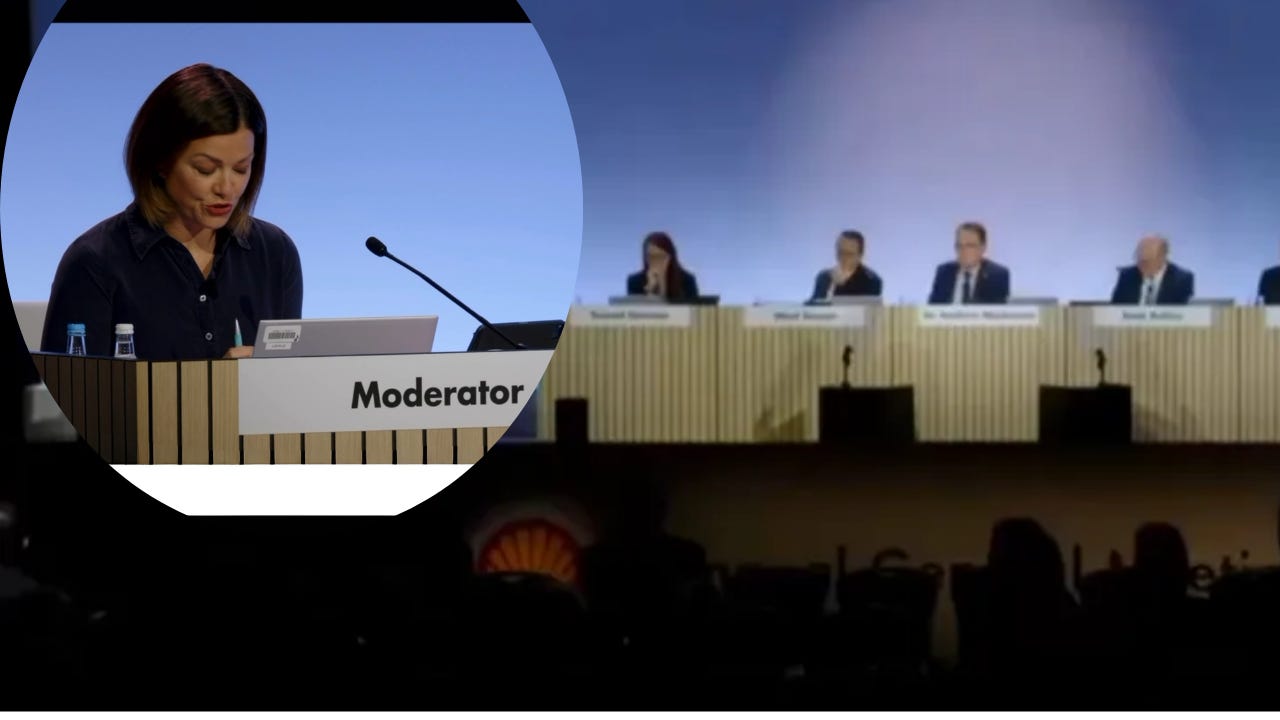
One of the more unusual — and quietly effective — features of the meeting was the presence of an external question moderator, renowned broadcaster Hannah Vaughan Jones. In principle, this is a structure that sits somewhat uneasily with traditional governance instincts, where the Chair and Company Secretary are expected to retain full control of the meeting, including the handling of shareholders’ questions.
In practice, however, Ms Vaughan Jones’s role functioned less as moderation and more as mediation. By managing the flow of questions, smoothing transitions, and preventing conversational pile-ups, she acted as a form of temperature control — absorbing potential friction before it could escalate.
It is a subtle intervention, but in a meeting where conviction on both sides was strong, it may well have been one of the factors that prevented pressure from turning into disruption.
If structure and preparation created the framework, it was the behaviour of individuals that gave it substance. Retail shareholders — often characterised as unpredictable or overly verbose — played a notably constructive and measured role throughout.
Importantly, this was achieved without the meeting descending into disruption. Contributions were, for the most part, orderly, respectful, and allowed to run their course without the need for intervention or removal of participants — a contrast to the more heated scenes observed at recent Shell AGMs.
There were moments of levity too. One of the first retail shareholders to speak, as questions transitioned from the coordinated set, commended the Board and participants for what he described as the first “conflict-free” AGM in some time. Another delivered a characteristically impassioned intervention on behalf of Freedom Pass holders. Alongside these were more forward-looking contributions — including questions, from myself and others, on widening participation and engaging next-generation investors.
These interventions did not dilute the seriousness of the meeting. If anything, they humanised it — introducing variation in tone while preventing the discussion from hardening into a purely adversarial exchange.
Taken together, the explanation for the meeting’s stability becomes clearer. This was not a case of tension being absent, but of tension being distributed — across preparation, structure, facilitation, and behaviour — rather than concentrated in a way that might have led to breakdown.
Shell did not avoid confrontation. It designed a forum capable of containing it.
🏆 TEA Cup Honours: Most Improved AGM — Shell 2025
Not because it was flawless, and not because disagreement was resolved, but because a meeting that contained all the ingredients for disorder instead delivered something far more difficult to achieve:
Control without suppression.
Engagement without escalation.
And, perhaps most importantly, a reminder that even in today’s more polarised governance environment, the AGM can still function as it was intended — a place not of performance, but of accountability.
Comments
Nothing yet. Say the first thing.
Sign in to join the conversation.