
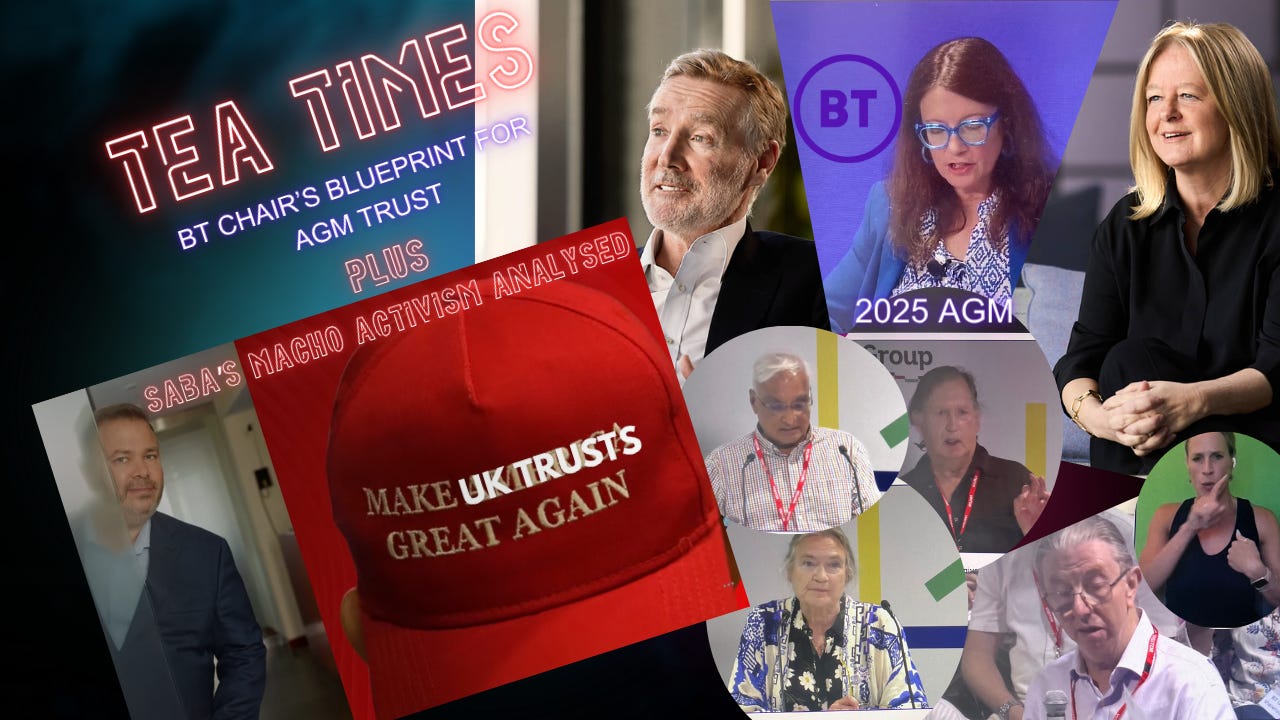
AGM season is back. And with it, that familiar theatre of British capitalism — the polite questions, the long memories, and the currents you only sense if you’ve been in the room long enough.
But something feels different this year. Beneath the civility, the tempo is changing.
In this TEA Cups & Mug edition, we move between three very different stages:
A boardroom in calm, capable hands;
A battlefield where activism is starting to look less like engagement and more like siege; and
Unexpectedly, a dark highway in northern China — where seven dogs reminded 270 million people what loyalty really means.
Governance isn’t only about structure; it’s about behaviour. The same patterns repeat, whether you’re in an AGM, a hedge fund, or watching seven dogs cross a highway in the cold — the truth always shows in how we act.
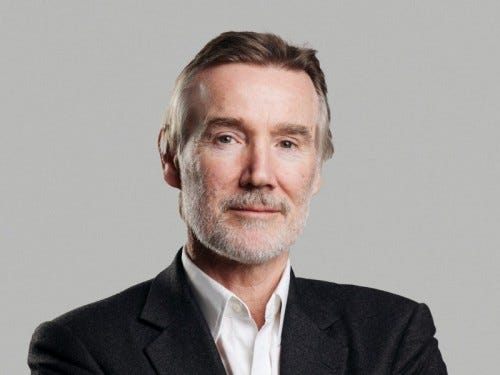
At BT’s 2025 AGM, Chair Adam Crozier didn’t perform leadership — he practised it.
In a room full of “Tell Sid” shareholders with stories as long as their holding history, he managed to create something rare: a meeting that felt calm, credible, and, above all, listening‑oriented.
Not flashy. Not defensive. Not choreographed. Just good governance.
In our feature, we unpack what we’re calling the BMLC model — Balanced, Mindful, Listening‑oriented, Conciliatory — and why Crozier’s stewardship may quietly be defining the next era of AGM culture.
👉 Scroll on or read the full feature here.
Then there’s the other end of the spectrum: Boaz Weinstein and Saba Capital aren’t playing the old City game. They’re rewriting it — louder, faster, and with less patience for persuasion.
Call it activism. Call it strategy. Or call it what it increasingly resembles: pressure without explanation.
At Edinburgh Worldwide Investment Trust, Saba’s campaign has shifted from engagement to escalation — unsettling, relentless, and often culturally tone‑deaf.
Even those of us who see activism as a force for good are left wondering:
Is this reform — or siege? Boaz, bro, you’re losing me…
In our analysis, we explore what this new strain of macho activism tells us about the shifting rules of corporate confrontation in the UK.
👉 Scroll on or read the full analysis here.

And then, something utterly different. A viral video. Seven dogs. One silent pact: no one gets left behind.
Their unity, captured on a freezing Chinese highway, pierced through millions of scrolling thumbs — a masterclass in instinctive leadership, loyalty, and collective protection.
No hashtags. No posturing. No agenda. Just integrity on four legs.
Which leaves governance folk with a piercing question: In all our polished frameworks and fiduciary codes, what have we quietly forgotten?
👉 Scroll on or read the full article here.
In this edition of TEA Times, we explore:
The Crozier Blueprint — how calm, listening-led stewardship works in practice.
The Rise of Macho Activism — when engagement turns into escalation.
The Human Factor — what a pack of loyal dogs can still teach us about trust, systems, and staying together.
Whether you’re in the AGM room, on the register, or watching from the sidelines, the question remains the same: What kind of system are we really building — and who is it meant to serve?
How Adam Crozier’s calm, listening‑oriented stewardship is redefining what a good AGM looks like — for legacy investors and next‑generation owners alike.
I’ve been attending AGMs for more than twenty years. Most fall into one of two camps: formulaic, compliance‑heavy meetings with almost no real engagement, or overproduced PR showcases that feel more like a leadership photo‑op than a forum for long‑term owners.
BT’s 2025 AGM was neither. Like its 2024 meeting, it felt calm, credible, and genuinely contemporary — and that’s no small thing in a room full of older retail shareholders whose individual questions often ran well beyond ten minutes. At its heart was Chair Adam Crozier, who ran the meeting in a way that would satisfy seasoned institutional investors while still feeling grounded enough for the small shareholder who has held BT shares since the “privatisation‑era” days.

BT’s audience tells its own story. This was not a room full of Gen Z or digitally native millennials. It was mostly legacy retail investors: the kind who still favour telephone engagement, printed annual reports, and the familiar ritual of an in‑person AGM.
At first glance, that can feel at odds with a company positioning itself as a digital‑first telco under a forward‑looking CEO. But in context it makes perfect sense. BT’s shareholder DNA was shaped in the era of mass privatisation, alongside the iconic “Tell Sid” campaign. That era still colours who shows up and how they engage.
Adam Crozier is not a governance disruptor in the usual sense. He is a seasoned FTSE chair, with deep experience at BT and more recently at Whitbread, a company with a similarly significant retail shareholder base. He is not chasing trends or trying to perform “next‑gen” values. Instead, he naturally embodies the qualities that next‑generation investors increasingly value: composure, clarity, accountability, and respect for the forum.
He doesn’t need to stage‑manage modernity. He simply practices good governance, consistently and well.
Crozier’s approach fits what I now think of as the BMLC model of AGM stewardship:
Balanced
Mindful (including sincerity)
Listening‑oriented
Conciliatory
And for once, the tone wasn’t defensive. It was constructive. It wasn’t flashy. It was measured. In a room where many questions ran long and some shareholders clearly carried years of accumulated frustration, that steadiness mattered.
From an academic perspective, this lines up with Stewardship Theory, which suggests leaders are motivated not only by control or self‑interest, but by a duty to serve the long‑term interests of the organisation and its stakeholders. Crozier didn’t just preside. He stewarded: calmly, accountably, without posturing.
From a regulatory standpoint, the UK Corporate Governance Code asks Chairs to “facilitate constructive relations” and ensure the “effective engagement” of all shareholders. BT met that expectation in a hybrid format, with a majority of attendees still drawn from BT’s legacy retail base. That’s why the meeting felt like more than a procedural checkpoint — it felt like a live feedback loop.
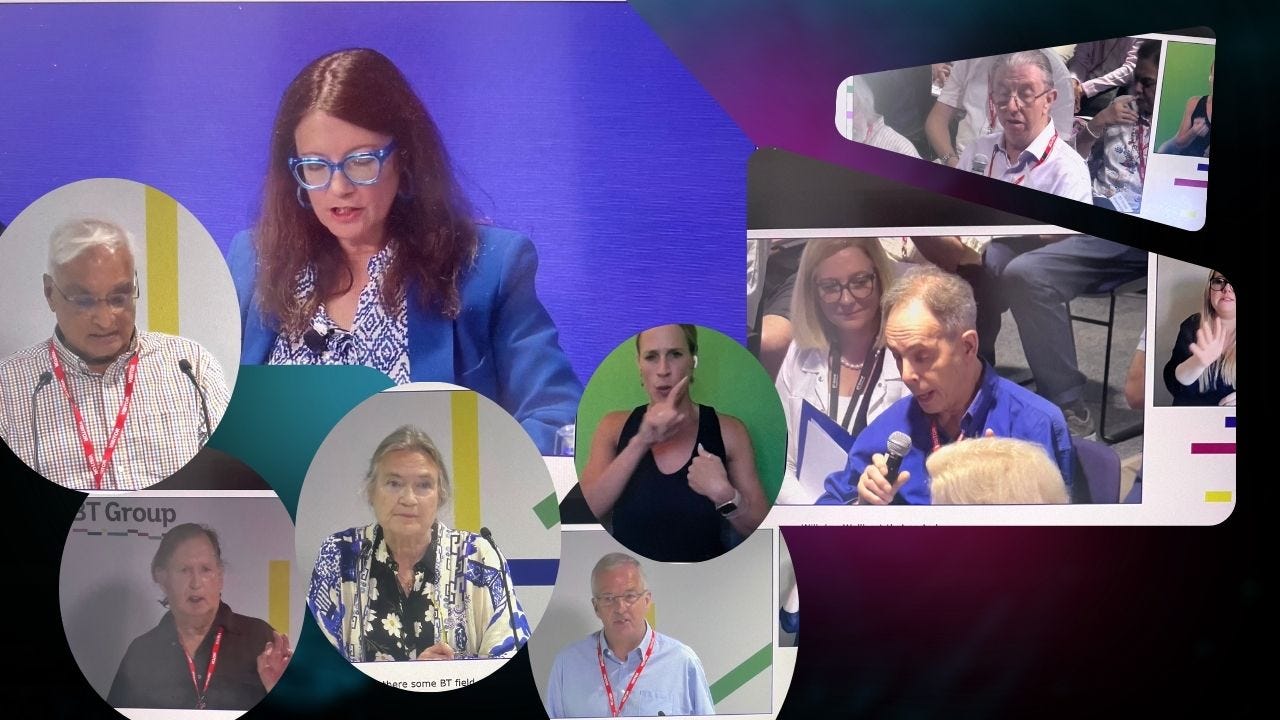
I judge AGMs less by the slides and more by how questions are handled. On that measure, Crozier came out strong.
He acknowledged each shareholder by name, including those joining virtually. Even online questions were attributed clearly and given context so they didn’t feel like disembodied text on a screen. He also matched tone well: calm when challenged, warm when thanked, and firm when needed.
He brought in the right people at the right time — Consumer CEO Claire Gillies, for example, took on digital‑inclusion topics, while Group CEO Allison Kirkby kept the focus on strategy and long‑term direction. When there was no immediate answer, he still signalled that the point would be taken forward — especially around NED visibility and hybrid access.
The result was a meeting that respected shareholders’ time while still allowing space for proper discussion. There were no deliberate interruptions, and the room never tipped into chaos. That is easier to describe than to deliver.
This wasn’t theatrics or “chair flair.” It was governance facilitation, done well.
As someone who has spent years advocating for more inclusive investor engagement, I asked this:
“Why aren’t BT’s NEDs physically present, while executives are? And how is BT engaging nextgen and underrepresented shareholders?”
Crozier’s response was direct, respectful, and thoughtful. He acknowledged the shift to hybrid governance, explained BT’s committee‑based oversight model, and stressed the importance of transparency — without falling back on generic reassurance. There was no deflection. No polished PR line. Just adult‑to‑adult discourse.
That matters, because it showed that the board is listening to the people asking the question, not just the question itself.
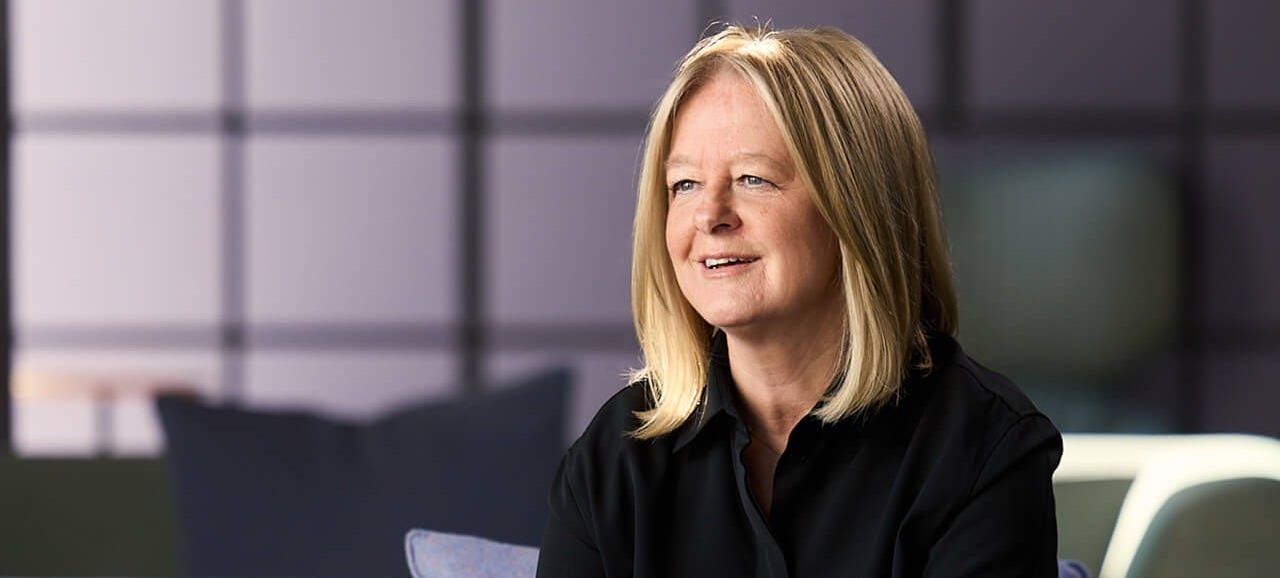
The dynamic between Chair Adam Crozier and Group CEO Allison Kirkby was textbook. Crozier led the room. Kirkby brought clarity and depth around strategy and execution. They reinforced each other without duplicating roles — the kind of balance that strong governance structures are meant to produce.
Where the model showed slight strain, however, was Non‑Executive Director visibility. Crozier confirmed that not all NEDs were physically present. While committee chairs attended in person, others joined virtually. That may be practical in a hybrid setting, but it still raises a legitimate governance question.
The FRC’s expectations are about accountability in both substance and presence. When directors are effectively “present but unseen,” it invites scrutiny — and fairly so. Accountability is not only about whether they show up, but about how clearly they show up.
The Company Secretariat do not usually get the spotlight, but they were clearly central to BT’s 2025 AGM. Led by Company Secretary Sabine Chalmers, the team operated seamlessly alongside the Chair, ensuring that questions — both in‑room and online — were captured, organised, and fed into the meeting without friction.
Over nearly three hours, around two dozen retail shareholder questions were handled with care and discipline. That is no small feat in a forum that can easily tip into disorder. It was a clear demonstration of what strong governance infrastructure looks like in practice: invisible when it works, indispensable when it mattered.
What that revealed was a board that understands its audience — and why those shareholders attend. BT treated the AGM not as a procedural box‑ticking exercise, but as a live feedback loop: a chance to listen, observe, and engage with a core segment of its investor base.
That is not just good governance. With hybrid formats, it is also smart strategy. When executed well, they remove barriers for time‑poor and digitally native investors. When executed poorly, they create a two‑tier experience. BT’s 2025 AGM firmly landed in the former camp.
The meeting was strong, but not flawless. The main area for evolution is how NED presence is signalled.
If directors are attending virtually, shareholders should be able to see that clearly and understand what meaningful engagement looks like. A few simple steps could help:
Virtual NED Lounge: an open space before or after the AGM for informal exchanges with Non‑Executive Directors.
Digital Badges: clear labels showing which directors are online and available.
Short Video Introductions: brief clips that explain who the NEDs are, what committees they chair, and how they oversee BT’s strategy and risk.
This is not a cosmetic “enhancement.” It is the logical next step in an era of shareholder empowerment and governance‑led accountability.
There was also a moment of unexpected levity. After the meeting, I created a light‑hearted, ABBA‑inspired parody video, reimagining the BT board as a disco band (I’m so Gen X!), opening with the line: “I called you last night from Glasgow.”
It’s meant to be playful, but it captured two underlying truths. First, many older retail shareholders still instinctively gravitate toward traditional channels like phone‑based engagement. Second, moments of familiarity — like the shared Glasgow connection between Chair, CEO, and one particularly vocal shareholder — subtly shape the tone of the room.
Neither undercuts governance. Both remind us that AGMs are, at their core, human forums as much as they are formal ones.
We do not need Chairs to be corporate celebrities. We need them to be engaged, sincere, disciplined, and capable of holding a room — without dominating it.
Crozier didn’t try to impress. He created a forum that felt safe, inclusive, and productive. That is what governance feels like when it works well.
In one of the UK’s most experienced Chairs, BT delivered one of its most future‑ready AGMs. The takeaway is simple:
Be Balanced.
Be Mindful.
Be Listening‑Oriented.
Be Conciliatory.
Or in short:
🟢 Be More Like Crozier.
Saba Capital’s campaign at Edinburgh Worldwide Investment Trust reveals a shift from engagement-led activism to coercive control battles. Shareholders, use your voices and vote at the 10 April EWIT General Meeting and 2026 AGM at the end of April!
There was a time when activism in the City, however bruising, still observed a certain etiquette.
You pushed. You lobbied. You wrote stern letters. You threatened a vote. But somewhere beneath the choreography sat an assumption: the point was to improve the company, not to terrify it into dismantling itself.
Saba Capital’s campaign against Edinburgh Worldwide Investment Trust feels different.
Not because activism itself is new. Nor because American hedge funds have suddenly discovered Britain. But because the style is different: louder, harder, more theatrical, less explanatory. More macho. More troll than steward.
And that is why the comparison that comes to mind is not the old playbook of Elliott Advisors at Alliance Trust—for all its aggression—but something altogether more contemporary: the negotiating style of Donald Trump.
No, a boardroom battle is not a war. Edinburgh Worldwide is not Iran. But the resemblance lies not in scale, but in method.
Modern Trump-era diplomacy has followed a recognisable pattern:
escalate early
create uncertainty
keep intentions deliberately vague
force the other side to act under pressure
The goal is not simply agreement. It is leverage through instability.
Saba’s campaign at Edinburgh Worldwide operates in much the same register.
Jonathan Simpson-Dent, the trust’s Chair, has been unusually explicit—most recently in the shareholder Q&A on Friday 27 March.
Saba now owns roughly 30%. But in a register characterised by weak retail turnout and opaque platform mechanics, that can be enough. At EWIT’s forthcoming AGM at the end of April, a minority stake may translate into effective control.
The board’s warning is stark: once control is lost, it is lost.
More striking still is what remains unsaid. The board says that Saba Capital has declined to clearly articulate what its nominees would do if installed. Simpson-Dent invited all three nominees—and, implicitly, Boaz Weinstein—to face shareholders directly. No response was received.

Shareholders are therefore being asked to vote in a state of partial information.
That is not accidental. It is the strategy.
Just as in geopolitical brinkmanship, ambiguity becomes a tool. The absence of detail is not a flaw—it is leverage. It keeps the opponent off balance and compresses decision-making into a narrow window.
The result is what we are seeing at EWIT:
a board proposing a near-total tender offer—not because it wants to, but because it feels it must act before the ground disappears beneath it.
This marks a cultural break from the older British model of activism.
When Elliott campaigned at Alliance Trust, it was combative. It criticised performance, challenged governance, and sought board change. But the conflict still resolved within a recognisable framework: negotiation, compromise, eventual settlement.
It was activism as reform.
Saba’s approach feels closer to activism as siege.
Across multiple UK trusts—Edinburgh Worldwide, Herald, Impax—the pattern is similar:
build a significant minority stake
apply sustained public and private pressure
exploit voting mechanics
force boards into binary outcomes
The most striking feature is not that boards are resisting. It is how they are responding.
They are not proposing incremental reform.
They are contemplating self-liquidation.
That is extraordinary.
What this latest episode exposes is something deeper than a dispute about performance.
It is a battle over the wrapper.
Investment trusts are not just pools of assets. They are structures:
with governance rules
with liquidity constraints
with voting dynamics
with implicit promises to shareholders
In normal times, those structures fade into the background. In contested situations, they become everything.
This is where the parallel with modern financial activism—and with the themes explored in recent discussions of private credit—becomes clear.
When trust in the structure weakens:
liquidity becomes political
valuation becomes negotiable
and control becomes decisive
In that world, the question is no longer:
“What are the assets worth?”
It is:
“Who gets to decide what they are worth—and when?”
Edinburgh Worldwide adds another twist: retail ownership.
Roughly half the register is held by tens of thousands of individual investors. But those investors are:
dispersed
often passive
frequently held via platforms that do not effectively mobilise voting
The result is a familiar paradox:
economic ownership does not translate into control.
A 30% shareholder, in the right conditions, can become dominant.
This is not unique to EWIT. It is a structural feature of the UK market—one that has been largely ignored until now.
And it creates fertile ground for a new kind of activism:
not majority ownership
but effective control through participation asymmetry
Call it what it is: macho activism.
Not because it is uniquely aggressive—activism has always been aggressive—but because it prioritises:
domination over persuasion
speed over consensus
outcomes over process
It is comfortable with collateral damage.
And it is comfortable with the idea that the target may need to be broken in order to be “fixed.”
In EWIT’s case, that means a board arguing—openly—that it may need to shrink or effectively dismantle the trust to protect shareholders from what comes next.
That is not normal activism.
That is escalation.
There are two ways to read this moment.
The optimistic view is that this is a necessary correction:
discounts are real
governance needs sharpening
retail passivity needs to be challenged
In that sense, Saba is simply forcing a long-overdue reckoning.
The darker view is that the method matters.
If activism becomes indistinguishable from coercion—if ambiguity replaces transparency, and pressure replaces engagement—then the long-term consequence is not better governance, but weaker trust in the entire system.
Because once boards start acting defensively—once they pre-emptively dismantle vehicles to avoid capture—the line between stewardship and survival becomes blurred.
The real story here is not Saba versus Edinburgh Worldwide.
It is the emergence of a new grammar of power in markets.
You can hear traces of that mindset in Boaz Weinstein’s recent appearance on the Money Stuff podcast, where the discussion ranged across closed-end fund activism, liquidity, discounts, trapped capital and the strategic value of pressure. The tone was revealing: cool, opportunistic, structurally fluent, and entirely at ease with the idea that contested vehicles can be forced into outcomes their stewards would never voluntarily choose.
One that looks less like the quiet persuasion of traditional City engagement, and more like the high-pressure tactics of modern geopolitics:
escalate
destabilise
force a decision
And let the other side deal with the consequences.
The tragedy of Edinburgh Worldwide is not that an activist has arrived.
Activists have always arrived.
It is that the rules of the encounter have changed.
And once that happens, it is no longer just a fight about value.
It is a fight about what survives.
Quick Fact Note: The March 2026 footage from Changchun, Jilin, is real—seven local village dogs (Corgi, German Shepherd, Goldens, Labs, etc.) roamed a nighttime highway together, likely drawn by instinct (a female in heat). Viral tales of theft and a 17km escape were debunked, but their genuine unity remains a timeless lesson.
In an age saturated with fleeting online content, some stories cut through the noise, resonating deeply with millions. One such story, a viral video that has captivated over 270 million viewers, features seven ordinary dogs on an extraordinary display of loyalty. What began as a simple recording on a cold stretch of highway in northeastern China quickly evolved into a profound reminder of something humanity seems to be losing: unwavering loyalty, selfless protection, and the unbreakable bond of a community.
Imagine this scene: a busy highway, cars whizzing by, the constant hum of danger. And there, walking with an almost cinematic purpose, are seven dogs. At first glance, they might appear to be strays, abandoned and fending for themselves. But a closer look reveals something far more organised, almost strategic.
Leading the pack is a small Corgi, low to the ground, constantly turning its head, as if checking, counting, ensuring no one is left behind. At the very heart of this moving formation is a German Shepherd, at the center of attention. Yet, it’s not alone; it’s surrounded, guarded, and protected by the others – Golden Retrievers, Labradors, and a Pekingese flanking its sides.
It’s a peculiar, diverse collection, moving like soldiers escorting a comrade through enemy territory. Despite the roaring traffic and the clear danger, the dogs don’t scatter. They don’t panic. They maintain their formation, driven by an unspoken rule: “We’re not going to leave a dog behind.” It’s a scene that feels like a war story, played out on an asphalt stage.
The above frame captures the pack’s tight formation under streetlights, with the Corgi scouting and others flanking protectively.
The true gravity of their journey becomes clear in the footage itself. These dogs weren’t just wandering; drawn by natural instinct, they moved as one through the night. Without a roadmap or GPS, relying only on memory and an incredible sense of loyalty, they stayed together amid the chaos.
Their tight-knit trek showcased a formation that never broke. Even as the world watched, they didn’t succumb to a “dog-eat-dog” mentality. Instead, they embodied something ancient, something profoundly human: a covenant. “We’re all staying together,” their actions declared. “We all get there in the end, or we don’t make it at all.”
Quietly, without fanfare, their unity endured. Every single one of the seven dogs represented local homes, different lives – united by one instinctive journey, one unbreakable bond.
The stark context highlights the brutal realities some animals face. But it was a viewer’s comment that truly hit home: “Dogs show loyalty. Humans who harm them show far less humanity.” Ouch. But undeniably true.
This story resonated with 270 million people because, as the video’s narrator suggests, “it’s what we’re missing.”
We live in a time where everything feels fragmented. Our communities, our families, our nations, even truth itself, seem to be breaking into pieces. The prevailing message often encourages self-preservation: “Look out for yourself. Protect your own. Get ahead. Don’t get dragged down by somebody else’s weakness.”
Yet, on that frozen highway in China, seven dogs rejected all of that.
The strongest slowed down.
The smallest led.
The group was protected.
The pack endured.
There were no hashtags, no social media campaigns, no performative gestures. It was just them, acting out of pure loyalty and love.
This stark contrast forces us to ask: “What the heck is wrong with us?” We, the species supposedly most loving and humane, are building systems where the most vulnerable are discarded, where the innocent can be exterminated. We struggle with empathy, often failing to understand another’s story, quick to judge rather than connect.
The desire to “join the dogs” isn’t about abandoning humanity; it’s about longing for a society that looks at a wounded companion and says, “Hey, everybody, slow down. We carry them.”
Somewhere along the way, we stopped acting like the humans we’re supposed to be, stopped embodying the best of us, and started justifying the worst.
Perhaps these seven dogs, through their simple, unwavering actions, are here to remind us of something ancient, something simple, something profoundly true:
You don’t leave your own behind.
Not on the highway, not anywhere.
We all get home together.
These dogs didn’t just stay united; it’s a powerful hope that their story can point us back to ours. Let their journey be a catalyst for reflection, urging us to rediscover the empathy, loyalty, and collective responsibility that truly define what it means to be human.
This article draws inspiration from the real dogs of Changchun, Jilin, and their unforgettable viral moment, along side this compelling commentary by conservative broadcaster, Glenn Beck.
Credit where it’s due—thank you to the filmmaker and these loyal companions.
Comments
Nothing yet. Say the first thing.
Sign in to join the conversation.