
It’s budget season in our fair city. At the outset, we see two diametrically opposed visions, one offered by Mayor Donna Deegan, the second by City Council president Nick Howland.
Lurking in the background is the not-yet-known November 3 election outcome, when Floridians will vote to approve or not approve constitutional Amendment 3. If approved, the Amendment’s radical reduction in local property tax revenue has the potential to derail the Mayor’s vision and solidify Howland’s vision. Amendment 3 promises to upend local government service provision as we know it, and will do so as early as January 2027. That’s right. After our FY 26-27 is in full-swing.
Our Tallahassee wonders never fail to illustrate their collective wisdom.
Mayor Deegan presented her FY 26-27 budget proposal to City Council last week. Now, it’s up to City Council’s powerful finance committee, in whom the citizenry entrusts responsibility for presenting a final budget proposal to City Council, to debate the merits of Deegan’s budget detail. Between mid-August and September’s end, a seven-member, all-male committee will scrutinize every line item and present a final budget proposal to City Council on September 22.
From the get-go, the Mayor and City Council’s powerful president, who appoints Council’s finance committee, have set the stage for a great debate.
Our mayor does not speculate on November election outcomes. Her budget proposal begins with current revenue projections. If Floridians vote to reduce local government revenues and services, our mayor has said, we will adjust expenditures mid-year as needed. No doubt, she is a pragmatic optimist.
City Council President, At-Large Group 3 representative Nick Howland, on the other hand, supports Amendment 3’s property tax revenue reduction, and asks his Council colleagues to make dramatic cuts in anticipation of shortfalls that total $150 million in 2027 and $300 million in FY 27-28.
Who knows? Dramatic service cuts proposed by City Council’s finance committee in September might help the public understand what’s at stake in November.
Deegan’s $2 Billion budget proposal is essentially flat, with a mere 1% increase over our current budget. The 1% is dedicated to salary and benefit increases for first responders. Deegan’s priorities include public safety and infrastructure, this last including not simply physical infrastructure such as roads, sidewalks, and septic tank removal, but also what we might call human infrastructure—parks, libraries, children’s services, arts and culture, health care, and affordable housing.
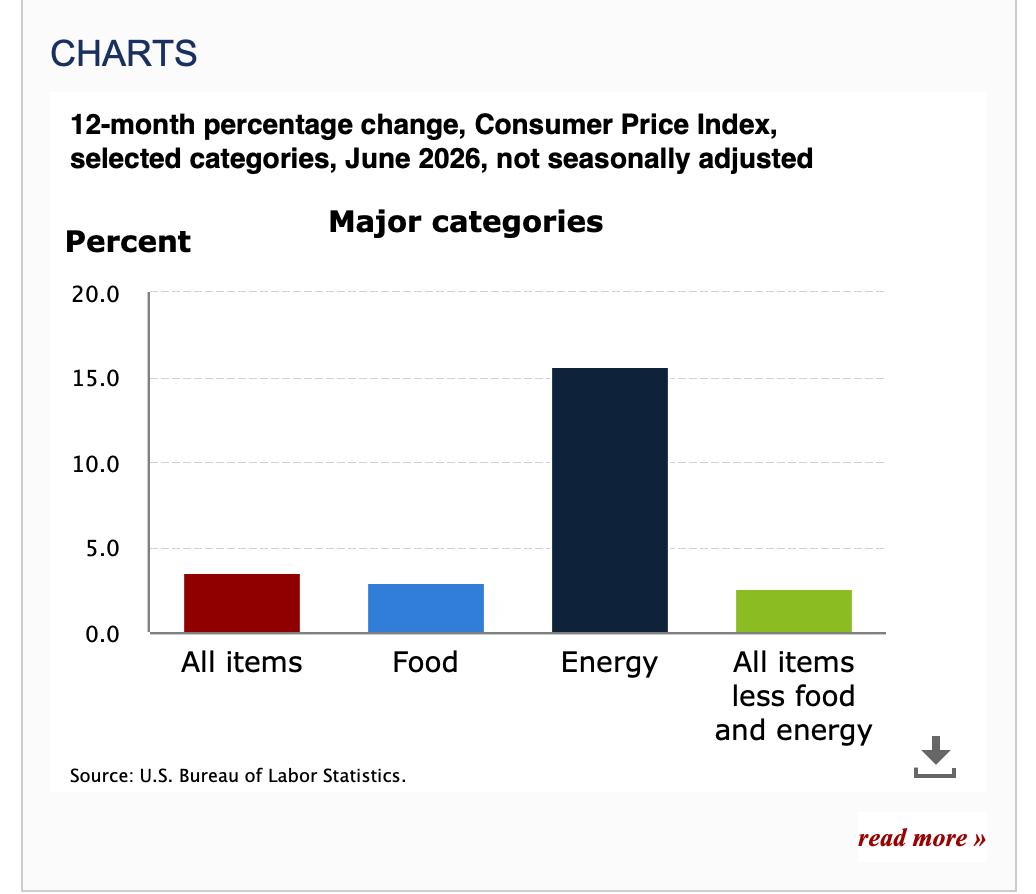
No matter what we hear from DOGE City Council types1 as they debate the Mayor’s proposal, profligate, as in “wildly extravagant,” does not describe her budget. According to the Bureau of Labor Statistics, core inflation (excluding food and energy) is currently running at 2.6%, and energy inflation is running at just under 16%. One percent, one could argue, does not even keep pace.
In making her case, Mayor Deegan provided a useful frame for how we the citizenry might think about local government. She wishes, she said, “to challenge” how we understand local governmental services. “Too often,” she said, “we divide city services into two categories: core and discretionary,” and pit these two against one another. Traditionally, it’s an either-or proposition.
“Police and fire,” paving roads, and trash removal are considered “core,” she argues, while “everything else gets labeled as optional.” But, she says, government “doesn’t work that way in practice.”
Deegan views local governmental service provision as an holistic, integrated system. “When one part fails, costs show up somewhere else. When one part improves, the whole improves.” To illustrate, Deegan offered that
“Housing that keeps workers near jobs is workforce infrastructure. After school programs that keep children safe and parents employed are economic infrastructure. Nonprofits that stabilize families are public safety infrastructure. Arts and culture that support small businesses and attract talent are economic development infrastructure. Telehealth that diverts non-emergency care away from emergency rooms is healthcare infrastructure. Libraries that support literacy, job searches, small business resources, and technology access are opportunity infrastructure. Parks that improve wellness and create places of belonging are civic infrastructure.”
These, she argues, are not “discretionary” services; rather, she calls them “upstream core investments.”
Teach a man to fish . . .
We know, based on a Florida Times-Union piece, that Nick Howland embraces the core versus discretionary understanding, the traditional dichotomy Deegan challenges.
According to David Bauerlein’s reporting, Howland “considers the core obligations of city government to be public safety, infrastructure such as roads and sidewalks, and services such as garbage collection, transportation for people with disabilities, the park system and permitting for new construction.”
As quoted by Bauerlein, Howland explains that he is interested in “protecting the core (services) and trimming extras so we can invest more on what matters,” that is, core services. It’s notable that Howland includes transportation for vulnerable people and parks in his definition of core. If those are part of the core, what about public libraries and children’s after-school programs?
Clearly, how we understand “the core” will matter mightily in this year’s budget debate.
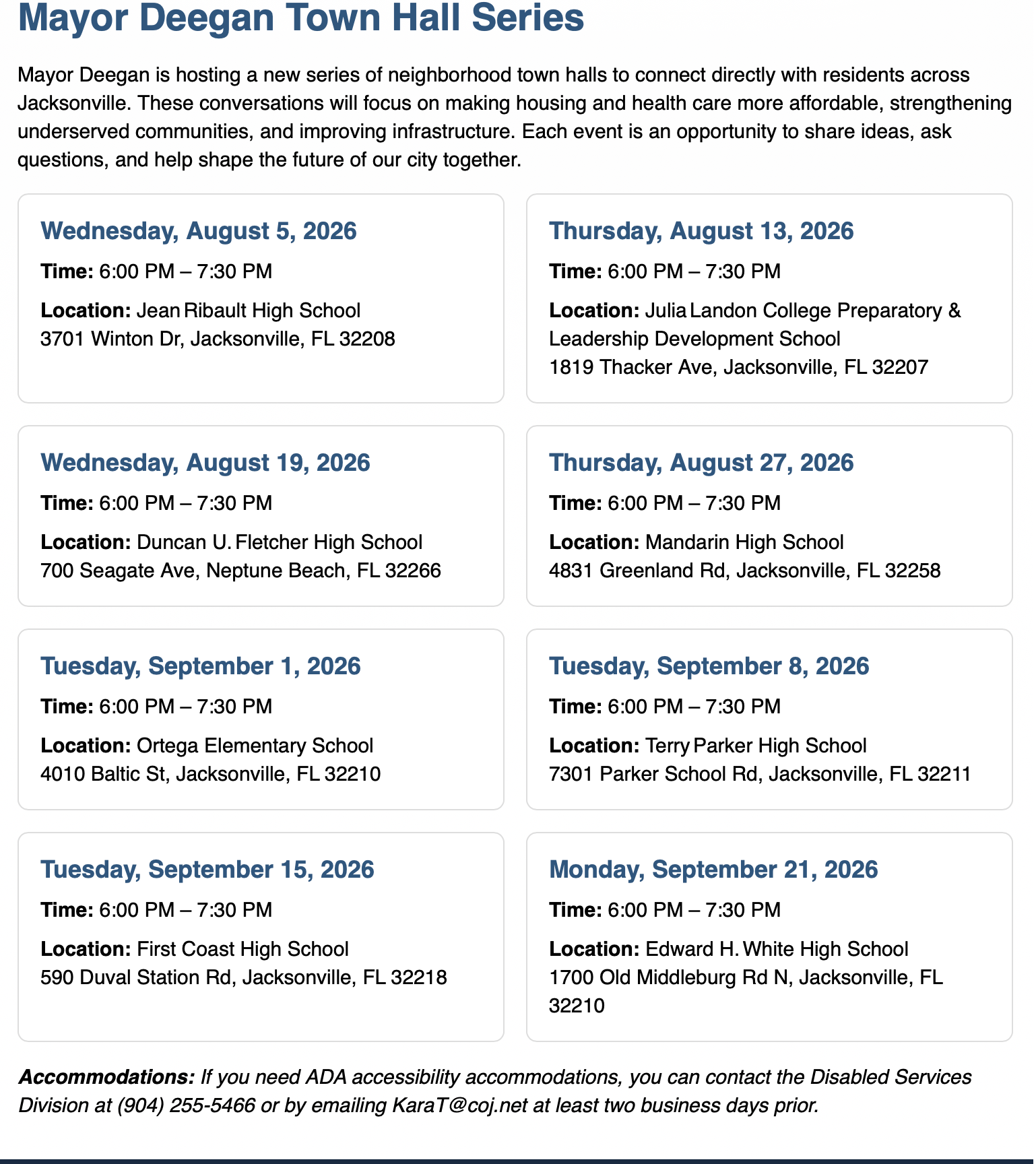
Multiple opportunities to participate in this year’s budget debate include a series of mayoral town hall meetings, and a set of six day-long finance committee budget discussions.
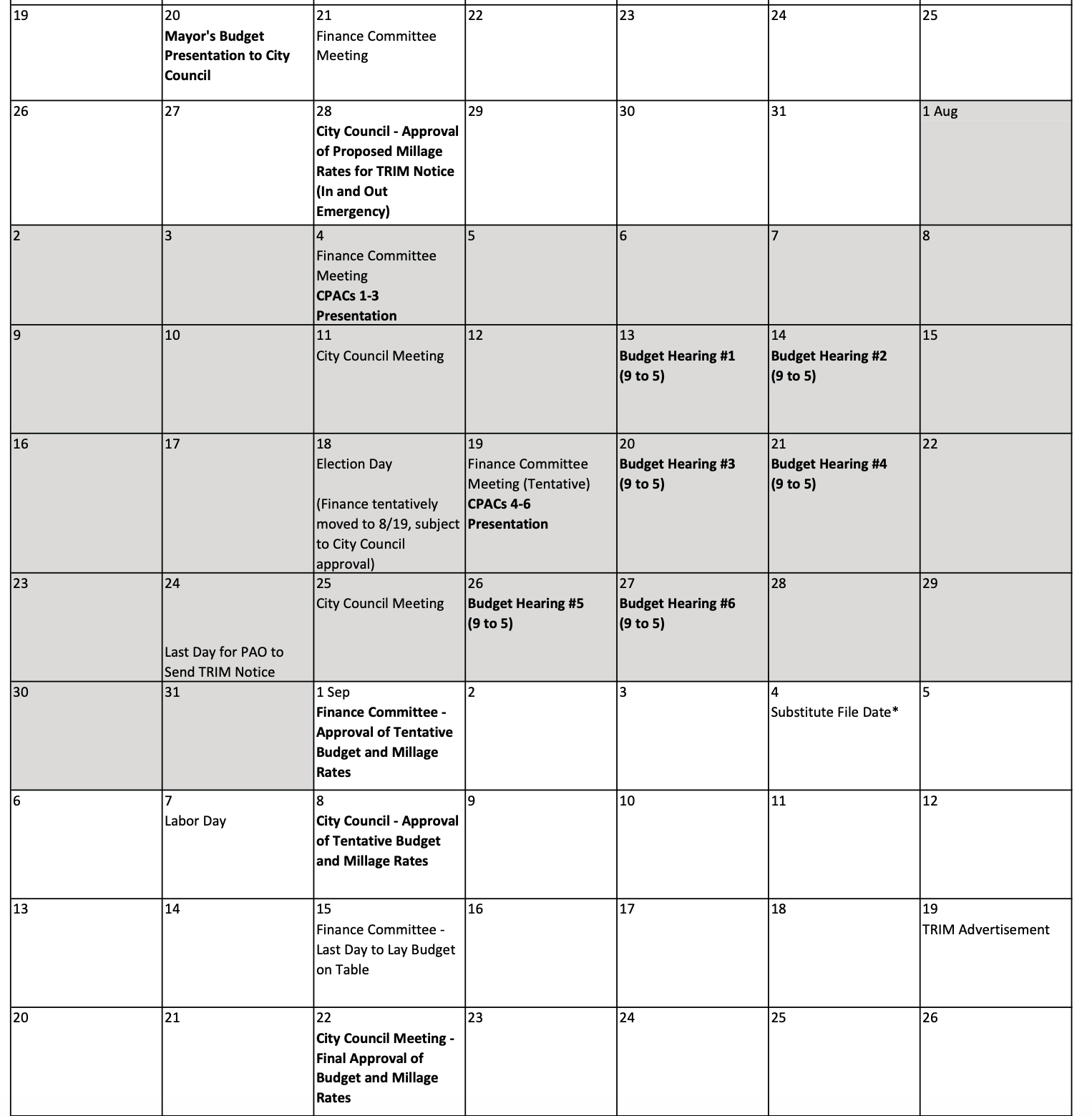
If six day-long meetings sound like just too much, folks can pick and choose. The finance committee will debate specific budget categories according to a detailed schedule found under the finance committee’s 2026/2027 budget information tab. If, for example, you’re only interested in public libraries, show up around 11 a.m. for meeting #2, scheduled for Friday, August 14, 2026.
Cheers everyone. Can’t wait for the games to begin.
And think about how you understand core.
3 DOGE committee members serve on the finance committee: Rory Diamond, Mike Gay, and Chris Miller
Comments
Nothing yet. Say the first thing.
Sign in to join the conversation.