
Question for today: Spilling the tea on beta reader response and how I used the feedback to make the novella better. And an EXCLUSIVE to this newsletter bonus cut!
Dear Friend & Loyal Reader:
Today’s topic is beta readers. A beta reader is a very special person who agrees to read a “best I can do” draft and give feedback about what works, what doesn’t work, places the narrative sags or drags, and even thematic issues.
In the past, I gathered a “street team” of early readers who agreed to read the draft, give feedback, but then also leave an honest review on reader sites (Goodreads, Amazon, BookBub, etc.) when the book launched.
This time I put out the call only to read and give feedback (not review though I imagine some of them will voluntarily), and several people offered to beta read Strawberry Moon Mystery. I sent the doc off to them and waited for responses.
Their responses were gold.
Here’s a tip: It’s good to get different types of readers involved at this stage. They bring different skills to the table.
One of my readers caught inconsistencies in the timeline. Attention to detail. Great catch!
One thought I had too many details, especially in the opening scene, and because of that feedback I was able to tighten the paragraphs. I tend to overwrite description. I get carried away with setting the scene: the smells, the sights, the way the air feels, the noises. It’s good to get a reminder that a little goes a long way.
Conversely, another reader LOVED the sensory details. This tempered my revisions to fall somewhere in between too many details and not enough.
The thing is, no writer or book will please all readers or please them the exact same way. We writers can only do the best we can do.
Another beta reader suggested I had gone too heavy on the theme. Totally spot on! Readers don’t need philsophies or theme bashed over their heads. Readers are smart and intuitive. They catch the themes consciously or subconsciously and don’t need the author talking down to them, or reiterating the point ad nauseam. Fixing this was probably the most delicate operation in my revision process.
I actually caught something myself while revisiting the manuscript. When I wrote the book the first time, I called the author character “Bobbie-Ann.” In the beta version, I’d changed the name to “Barbara” based on a beta reader’s feedback. Then I realized I already HAD a Barbara in the series (the English Dept. administrative assistant at the fictional Longfellow College in Portland, Maine.)
So, I changed Barbara back to Bobbie-Ann.
Once again, I went through the entire manuscript checking for inconsistencies in the timeline, typos, purple prose, overly-long and detailed descriptions, and most import, any too on-the-nose statements of theme. I aimed for subtlety. While I can’t say I succeeded in being as subtle as a literary novelist, I toned it down a few notches until I felt the book was as good as I could get it.
I saved one of my major cuts in a file because I kind of liked it. You can read it below.
Liv felt a thrilling twinge of rebellious satisfaction and lifted her chin. After being raised in a privileged environment much like this one, she’d rejected her family’s lifestyle in favor of a career in private investigation. Her boutique agency, Lively Investigations, now specialized in intellectual property, corporate security, and insurance fraud, but she’d started out with the more prosaic background checks, cheating spouse cases, and process service jobs. Eschewing privilege and nepotism, she’d taken a chance on herself, and finally her ambition had begun to pay off.
Her life was a study in contrasts. She drove a basic sedan but indulged her taste for designer clothing labels and original art. She loved takeout pizza and old X-Files episodes, but ordered Veuve Cliquot by the case and patronized the opera. She’d dated both suitable doctors and unsuitable con artists–not to mention a flirtation with a certain FBI agent who popped in and out of her life with maddening regularity. A social chameleon, she considered her ability to mingle in diverse situations–both highbrow and low–an asset to her career.
Tonight was definitely on the highbrow side.
It’s not that this passage is horrible or anything. It simply didn’t add much to the forward momentum of a novella story that required a snappier pace. The backstory “info dump” wasn’t necessary, so I replaced it with:
These days, she wasn’t sure where she fit in. While she’d ditched the country club lifestyle of her parents in favor of what they considered a “seedy” career in private investigation, she still enjoyed some of the trappings.
If you’d like to be a beta reader for me in the future, shoot me a reply email. I will put you on the list and will contact you before I send the manuscript to make sure you have time and energy to give feedback. (If you offer and I sent you the manuscript, I do expect that you’ll read it and send some notes back.)
Tomorrow I’ll share how my love of Victorian houses, quaint coastal Maine villages, and musty used bookstores inspired the setting when I was writing the novella.
Look for The Inside Scoop, Day 5 tomorrow.
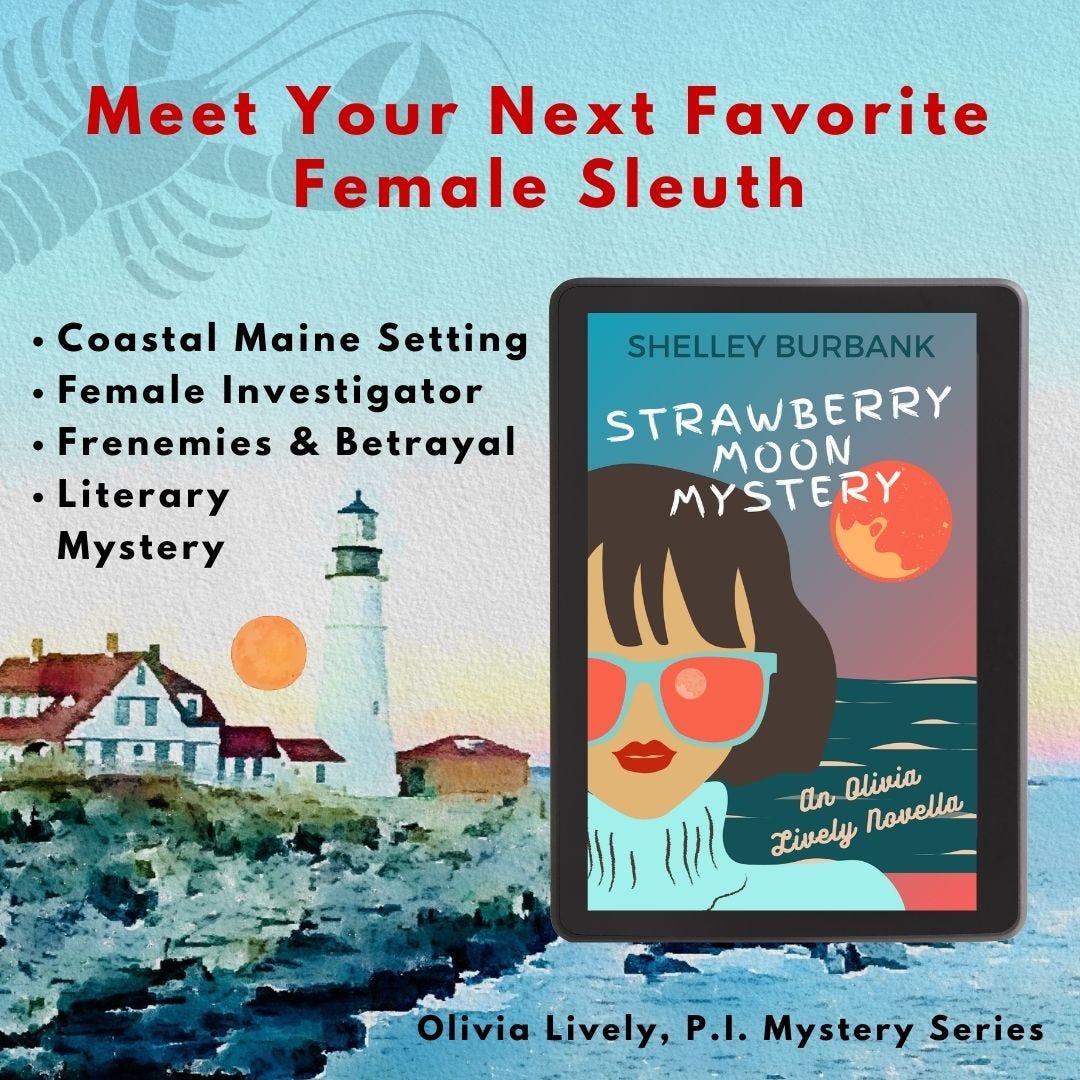
If you haven’t scooped up Strawberry Moon Mystery and want to read it, click the link to Amazon below the graphic.
No posts
Comments
Nothing yet. Say the first thing.
Sign in to join the conversation.