
Hello, my name is Apoorva Sripathi and I’m a writer, editor, and artist. This week’s paid subscriber newsletter is a recipe for a dal makhani-type dal, which is usually made with ulundhu/urad, but I’ve substituted with black lentils aka beluga lentils to make life easier. I hope you’ll give it a go.
I have been writing recipes here for a year and a half now and your support makes it possible. If you have enjoyed reading the introductions and wondered what the recipes are like, become a paid subscriber and peruse the archives. The ones I share here are always ones I cook at home – I don’t defer to trends, only seasons – employing leftovers, recipes that have heart and not flash, as well as those that are utilitarian and joyous. So please support my work by becoming a paid subscriber. You can also follow 💌shelfoffering on Instagram.
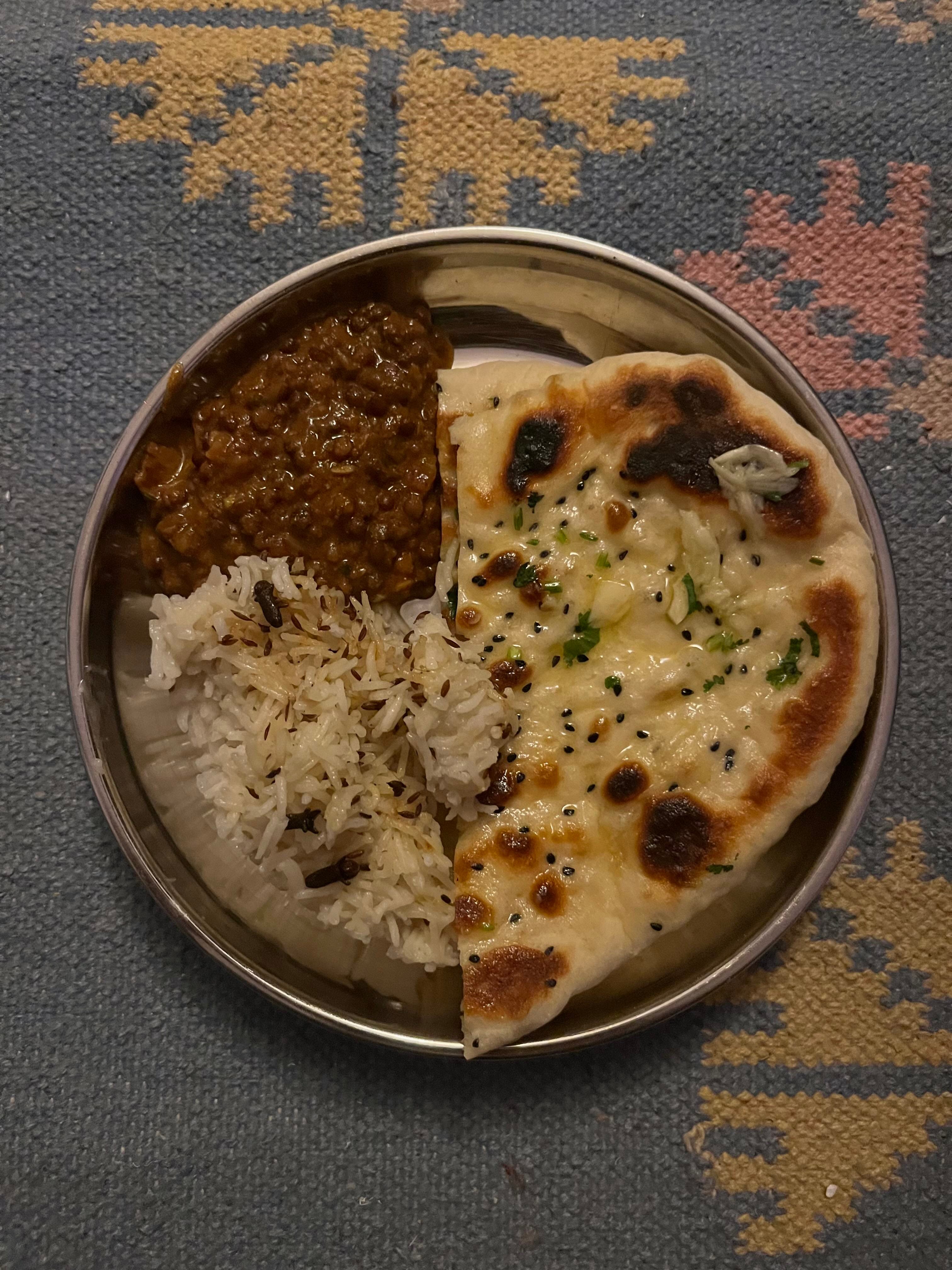
One of the best parts of growing up/evolving is discovering new things. For instance, I learnt how pleasurable any song can be on vinyl. That Kane and Abel by Jeffrey Archer is a terrible but arresting book and took me only a day to finish reading it. And that dal makhani is made with the same ingredient that gives vadai and dosai their body and heft. I’m still fascinated by the last fact. I’ve seen my mother make dosai batter every week, and every week she shows me the silkiness that ulutham paruppu (the whole black/whole or split white gram) can achieve – a silkiness that can easily rival unbaked meringue or cream – in contrast with the grittiness that ground rice produces. Together, this grit with the silk, they come together to form a thick viscous mixture that can be spread, steamed, and fried.
Knowing this, it isn’t surprising anymore what ulutham paruppu can achieve in a dosai batter or in dal makhani. The more you simmer, the more luscious the dal becomes – a fact that stands true for any dal you make, time is the most essential ingredient1. The more that lentils can break down and release their starch, the creamier they are; coconut milk is completely unnecessary unless you’re making a Sri Lankan-style dal/paruppu.
But dal makhani as its name implies is a dal that’s enriched by butter (and cream), ingredients that (I think) are secondary to the gram’s own velvety texture but important nevertheless. Key to my improvisation then lies in a pulse that’s similar to the black gram. Enter the beluga or black lentil. Both pulses are black but only the beluga is a true lentil whereas the black gram is the darker cousin of the moong bean. Either way, you’ll want a heavy pulse that will break down into mush – so Puy lentils are out but whole masoor aka brown lentils or split red lentils, the ubiquitous south Asian ones available in the West are great!
It goes without saying then that dal makhani is a celebratory dish, but that shouldn’t mean you restrict it so. I find such dishes are a celebration of the bounty before us, a celebration of the everyday, and an honouring of what you already have at hand. Make and eat it with steamed rice, rotis/chapathis, or naan and biryani. Proceed accordingly.
Comments
Nothing yet. Say the first thing.
Sign in to join the conversation.