
Last week, I went up to Portland, Maine with my friend, romance scholar Jayashree Kamblé for a romance scholarship writing retreat. My goal was to write up the paper version of research I presented 5 years ago at the Pop Culture Association Conference about the romance reader stereotype.
The dataset was complete. The analysis and a thorough literature review were done. Heck, I had a whole paper written already, organized into a coherent narrative with citations basically organized and ready to go. This seemed like an achievable task for a 4-day retreat.
Did I achieve my goal? Or was it really about the epiphanies about romance scholarship that I made along the way? Follow along on the journey.
I’ve got everything I need: 10 books. 4 notebooks. 85 highlighters. 15 binders full of research print-outs, highlighted with notes. Zotero pulled up, filled with all of my sources, also highlighted, negating the need for those binders and some of the books, but sometimes it’s nice to be able to search for text, while sometimes I need a physical reminder that research exists (hence the binders).
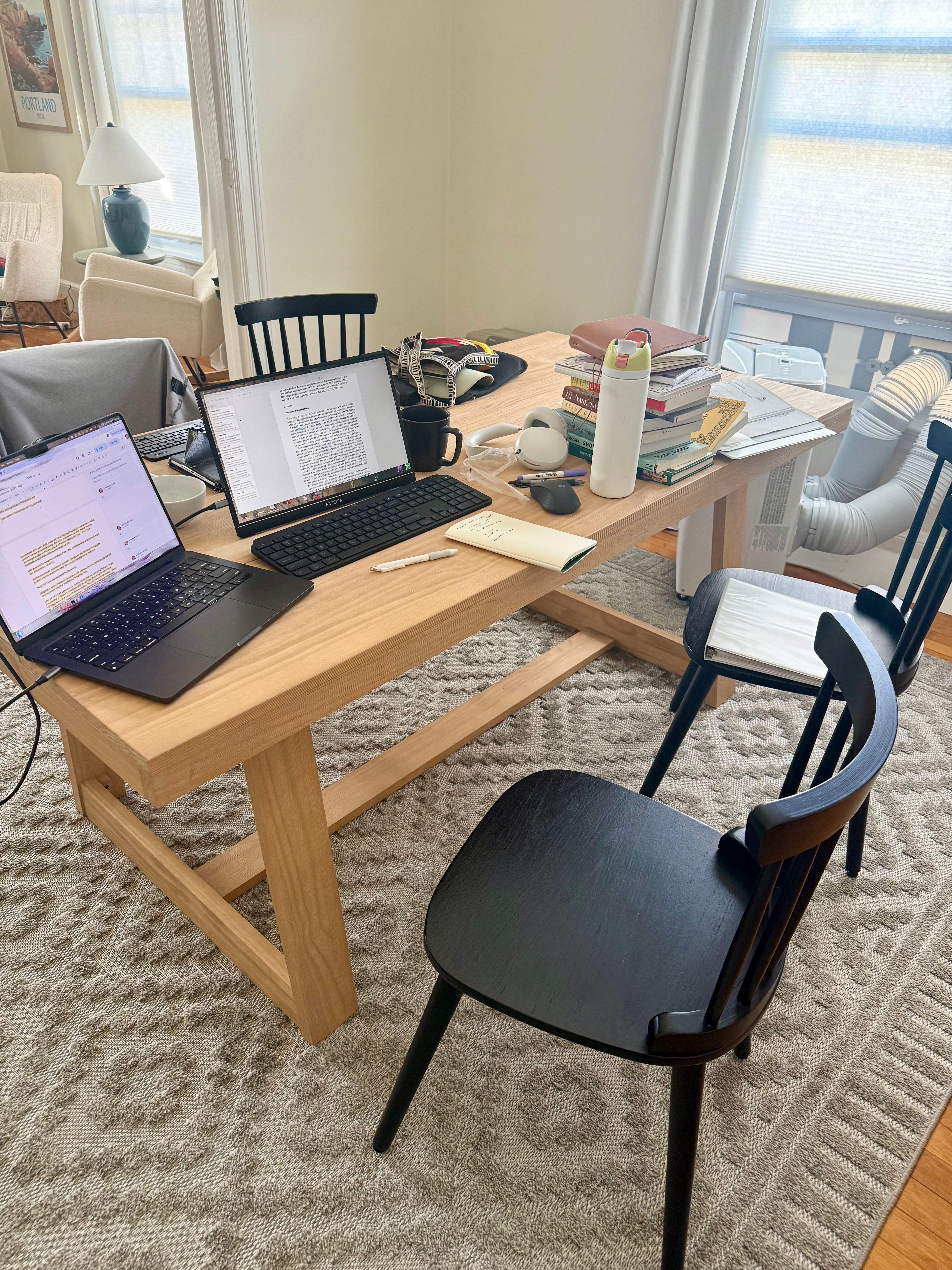
I started the day by re-reading a bunch of articles from my binders, thinking that since it had been 5 years, I may need to brush up on the sources and maybe some new insights would jump out with fresh eyes. Turns out, I had read them so thoroughly and repeatedly that I basically had them memorized.
Next, I rewatched my presentation, which past-Andrea helpfully released on YouTube.
First, I marveled at how white-blonde my hair was. It’s amazing it didn’t fall out!
Next, I realized that past-Andrea actually did a really good job with this paper, and all I had to do was go back to my data, clean up the data visualizations, and I could basically just rewrite this into more of a standard scholarly paper.
Then I fell down a rabbit hole of researching publications so I could determine which style to use when writing the paper, and then I also ended up finding more scholars I needed to deep dive into…
Time for dinner! We walked to Paella, to savor the Mediterranean, and on our way home took some photos in Portland’s most desirable tourist destinations: this train track and Mr. Bagel. Jayashree suggested we make duck face poses for the latter photo op.
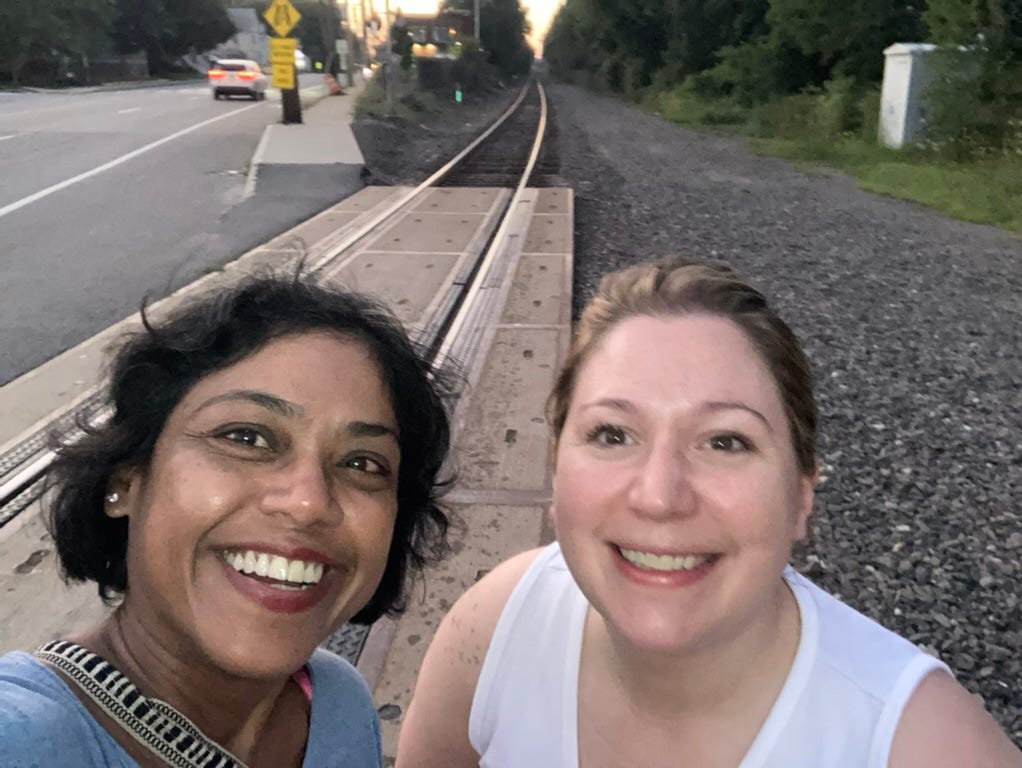


Jayashree and I chatted until late about many romance topics. (Do I recall any of the specific topics at this time? No. But believe me - it was GREAT.)
Every time I dig into the romance stereotype work, I worry that the conclusion is too obvious. Cool, I measured something that we all kind of assumed - that society at large holds a stereotype about romance readers - and measuring it has some value. The stereotype is tied to romance being associated with women, which again seems like a duh?
But maybe I’ve just been marinating in it for too long, so everything feels like a foregone conclusion?
I do think there’s something in here about attitude change and genre adoption, or more broadly, how and why people choose leisure activities and adopt related identities for stigmatized activities. Like, if we all agree that society sees being a romance reader as kind of cringey, what would motivate anyone to start?
Overall, it feels like this is the canvas for a bigger picture I’m trying to draw: it’s a necessary foundation, but in and of itself it’s not that exciting. I think I’m struggling to just let it be a canvas, but I need to let it be so that I can move on.
We had plans today: do some work, then tour a historic mansion and go to a local romance event.
First, the work: I pulled up my romance stereotype data set in Wizard 2 and remembered that I needed to clean up the survey data, which is to say: completely restructure it for more robust statistical analysis.
The last time I took a math class was in 11th grade, and I’ve never taken a statistics class in my life. Who knew my interest in romance novels would take me to these new and exciting places?!
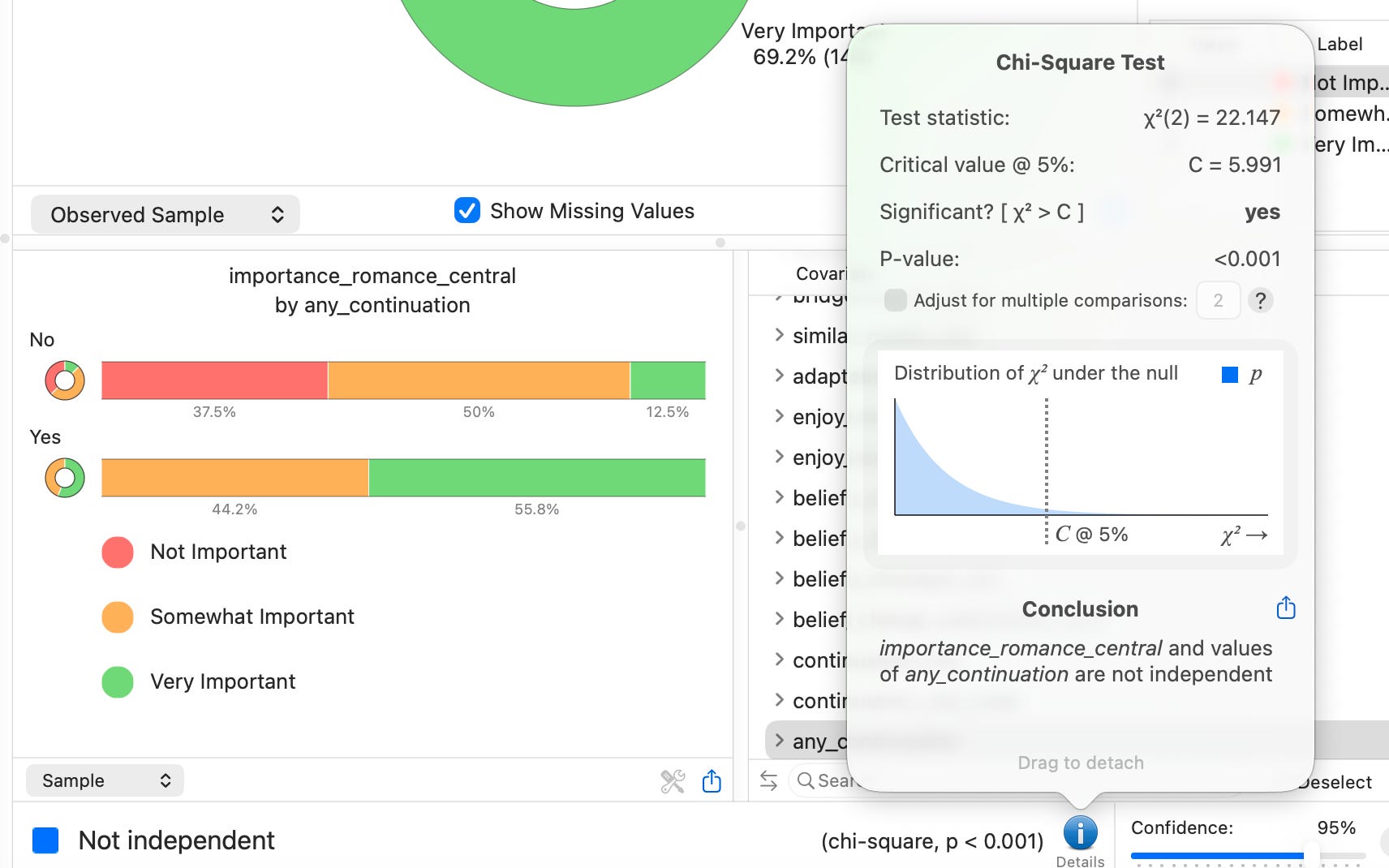
I will assume you’d like me to gloss over the details here, and so I will. Suffice it to say, after 6 hours of this, I was ready for a break. (Go to the footnote for a challenge related to the screenshot below.1)
I drove into downtown Portland. Man, these drivers are polite! The city I live in north of Boston has a population density just slightly less than Portland’s, but the traffic and level of aggression is about 30 times greater.
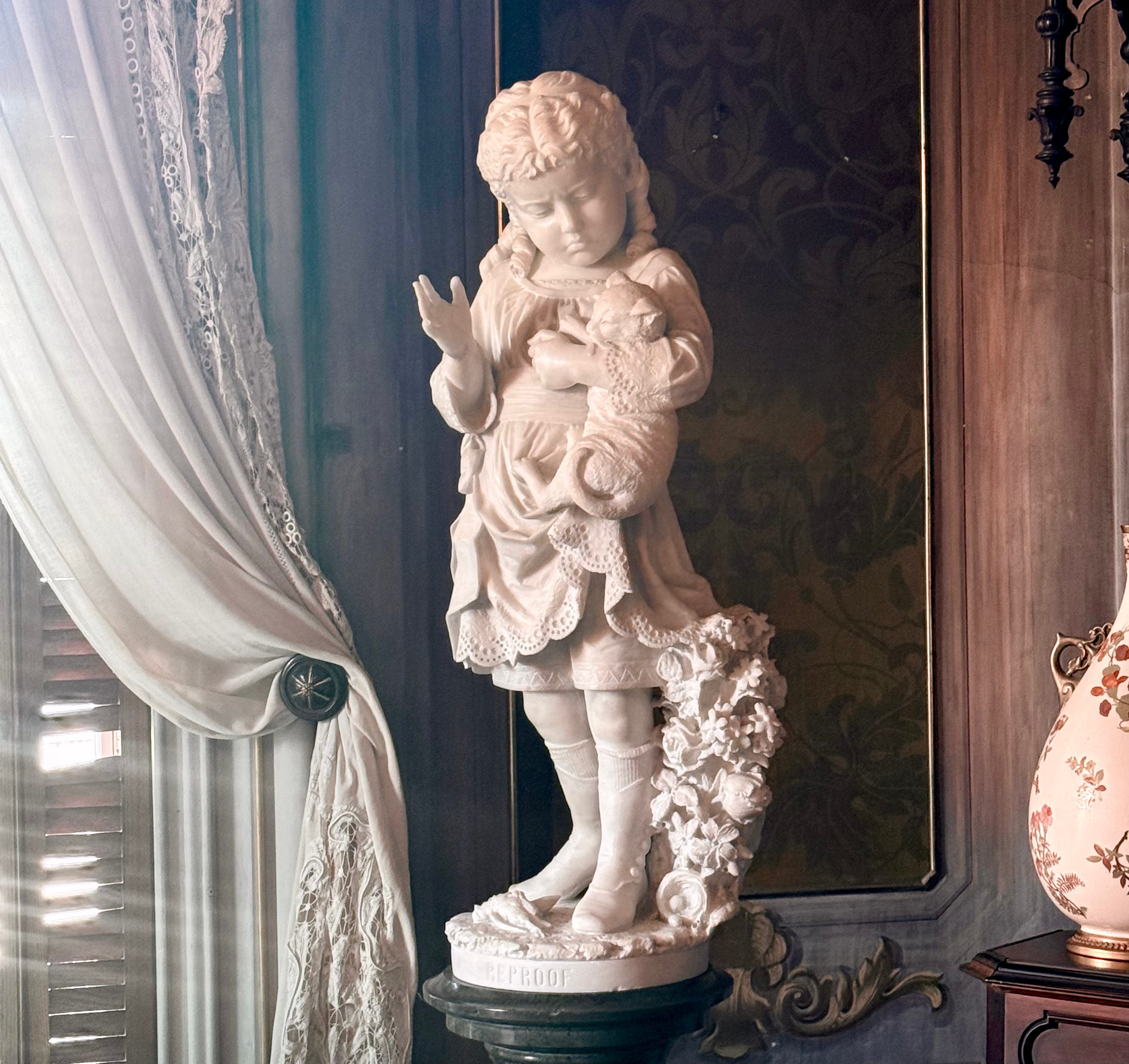
We visited the Victoria Mansion for a guided tour, which I’d highly recommend. Great history and lots of beautiful architecture, paintings, furnishings, and more, including this sculpture of a small girl spanking a naughty kitten.
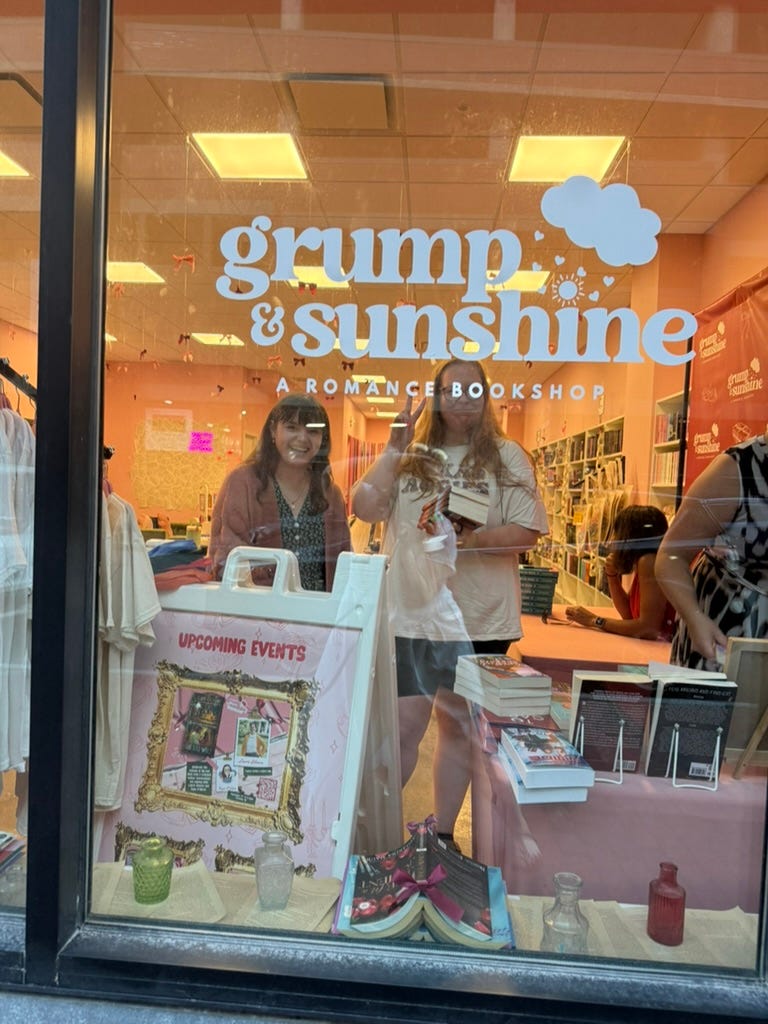
After a quick dinner at Becky’s Diner, where we were served by an ethereal creature who surely moonlights as a muse for fine artists, we headed to a reading at Portland’s romance-only bookstore, Grump & Sunshine.
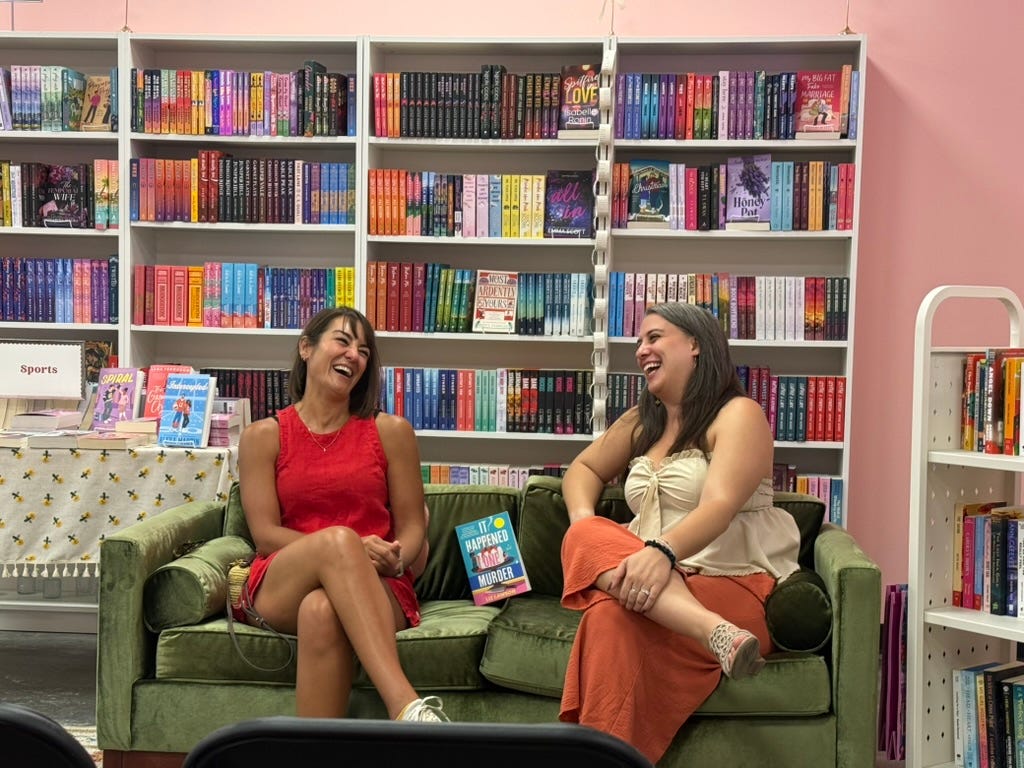
After the reading, Jayashree and I had some time to browse and I asked the owner, Cassidy, for recommendations for the dirtiest books in she had in the store.
Once again, Jayashree and I stayed up late talking, but after retiring to our rooms, I foolishly pulled up my data again and continued hacking away at my analysis until 4 am with Couple’s Therapy playing in the background.2
I realized that the more I got into my own data, the more a story emerged about the features and benefits of romance that genre-competent readers recognized vs. how the genre naive have a harder time distinguishing features of an example from features that define the whole (genre).
This is already something I’ve been poking around in, related to my “Rereading Reading the Romance” project, specifically: are the features of what defines an “ideal” or “failed” romance consistent across time and readers? My hypothesis is that the benefits are fairly consistent, the emotional experiences are fairly consistent, but that some features (as a way to achieve those outcomes) are shifting for readers based on the context of our time, society, and lived experiences.
This then reminds me that I need to come back to structuring the reading/question guide for that project. I already recorded (and edited!) an episode with Shelf Lovely Jess about The Fulfillment by LaVyrle Spencer as part of this project, but I haven’t started scheduling recordings and lining up my full list of readers yet because I want more precise, curated questions. Also I’m still figuring out if I want to commit to reading all 40 books… (I definitely don’t, but I need to come up with a defensible methodological reason to explain which I choose to cover and which to skip.)
This also reminds me that I have submissions for “Romance Novel Collection” that I need to publish on here...
My eyes are drifting shut with my finger on my computer trackpad. Heartburn creeps up my throat and I don’t sleep well — is it the German chocolate cake we shared after the reading, or am I overwhelmed by unfinished romance scholarship projects?
Half the day is gone before I wake up. I feel like hot garbage. I stare at my data for a bit, then admit defeat and try reading my comfort scholarship: Narrative Impact: Social and Cognitive Foundations.
Normally I’d be soothed by Green & Brock’s orderly framework for narrative transportation, but on this day, it just makes me think of applications within romance, and instead of pollinating the little flower garden of ideas in my head I feel like a swarm of bees is chasing me through a garden maze, herding me toward a minotaur at its center…
That reminds me: I need to reread Feeling Judged: Reflections on Pornography and Romance from a Minotaur Milking Farm, an article by Laura Vivanco in JPRS.
ARGH! No more new ideas! Yes, everything is related, Andrea! Create some boundaries around scope!
I pulled out one of my 4 notebooks and sketched out the major concepts I’m interested in, drawing lines between them to show how they’re connected. Everything is connected to everything else, with arrows going every which way.
I fully admit defeat and take a nap.
When I wake up, Jayashree is cooking pork chops. We have a nice dinner with great conversation, updating each other on the work we’ve been doing during the trip.
Jayashree reminds me that sometimes it’s less about the work done on the trip and more about the thinking that’s generated that results in tangible work later.
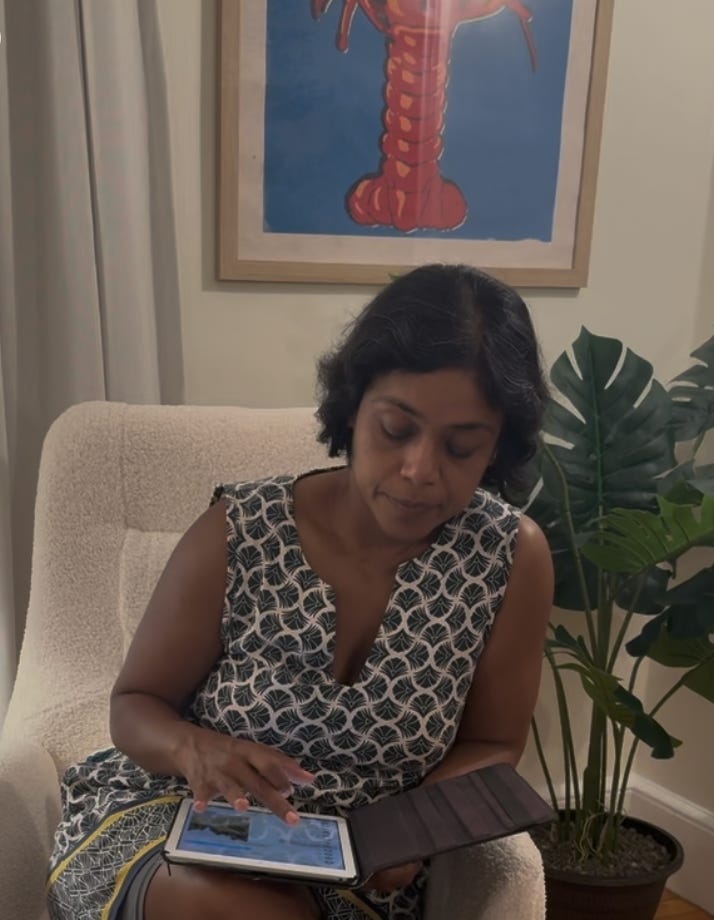
We’ve been talking a lot about why romance reader discourse seems to shy away from talking about sex in detail and we sketch out ideas for Jayashree to say more on camera. I play around with locations and angles in our AirBnB. This is one location that was rejected because the lobster tail in the poster behind Jayashree looks like a penis with testicles. But on later reflection, maybe that would have been visually appropriate given the subject matter?
I’ve allowed too many romance scholarship projects to pile up in my mind. I feeeeel like they’re done, because I’ve presented a paper at a conference or written about it on Substack, but I haven’t left them in a place that actually allows me to move on and build upon them.
I need to choose what I most need to finish, and then FOCUS. I need to be comfortable leaving some projects unfinished, and accept that while I could try to publish something about it, it’s not in line with my current interests.
The body of work I’ve outlined could take 3 lifetimes to complete. The romance reader stereotype work in and of itself could probably be a book. I’m obviously interested in the topic, but is this how I want to spend my time?
On our walk home from dinner on Day 1, I was explaining ADHD to Jayashree — we get a lot of dopamine for starting something and from urgency. So, if I announce a project, launch it, and get data, then have the urgency of a deadline to create a presentation, dopamine is sustaining my interest and hyperfocus. When the milestone is passed and the urgency is over… that’s where I get into trouble. It would be so much more interesting to start something new!
There’s a reason why the formats I’ve successfully maintained3 (the podcast and Substack) force me to break things up into bite-sized chunks.
Check out is at 11 am, so we spend the morning packing up and then just before we leave, I record some short videos with Jayashree. The lighting and staging was impeccable.
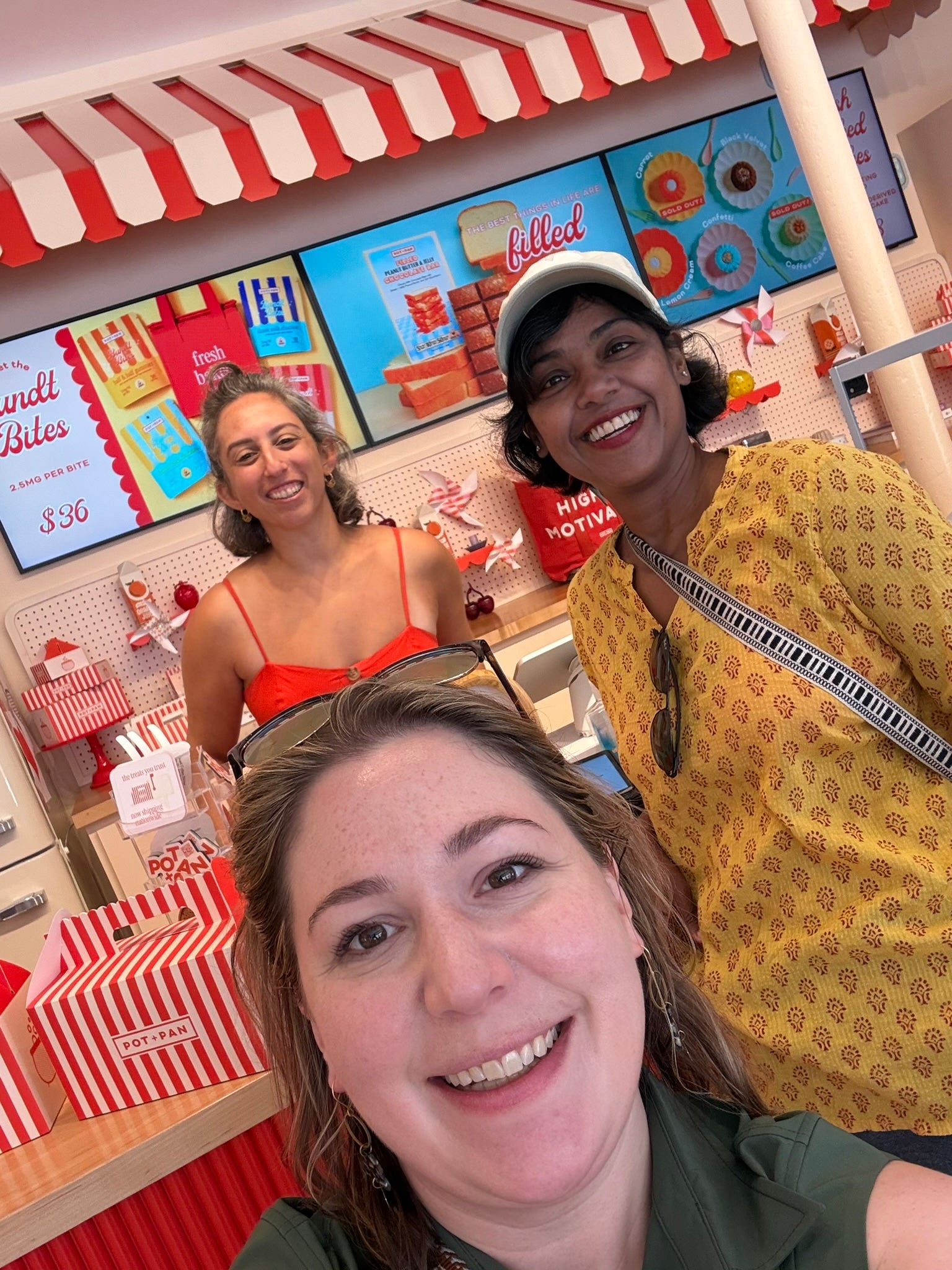
Before dropping Jayashree off at the airport, we visit some more local establishments. At Pot + Pan, everyone gained new knowledge: Jayashree and I learned that it was more than just an adorable shop with baking implements and spices, and Dunia (one of the owners) got a list of romantasy book recommendations, exclusively provided by Jayashree.
Our last stop was Back Cove Books. I picked up Woman Hating by Andrea Dworkin (because I remember taking issue with a lot of her work, but figured it was time for me to reconsider), the latest Murderbot novella, and some books for my daughter.


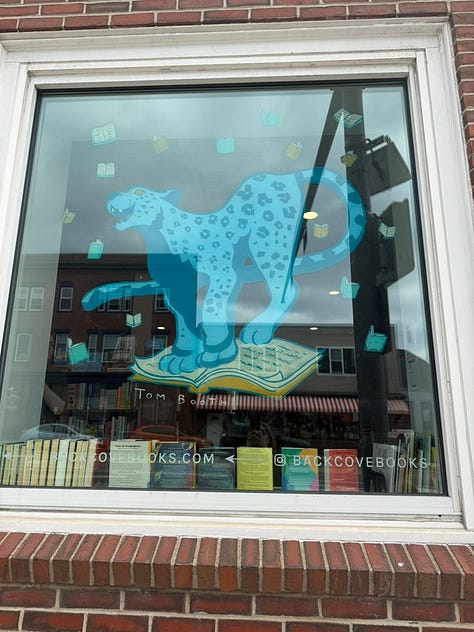
They had a very respectable romance section (but I am wondering why it was hidden in a literal vault). Jayashree pointed out Ilona Andrews’ This Kingdom Will Not Kill Me and described the premise, and I immediately downloaded the audiobook for the ride home. (It was so good!!)4
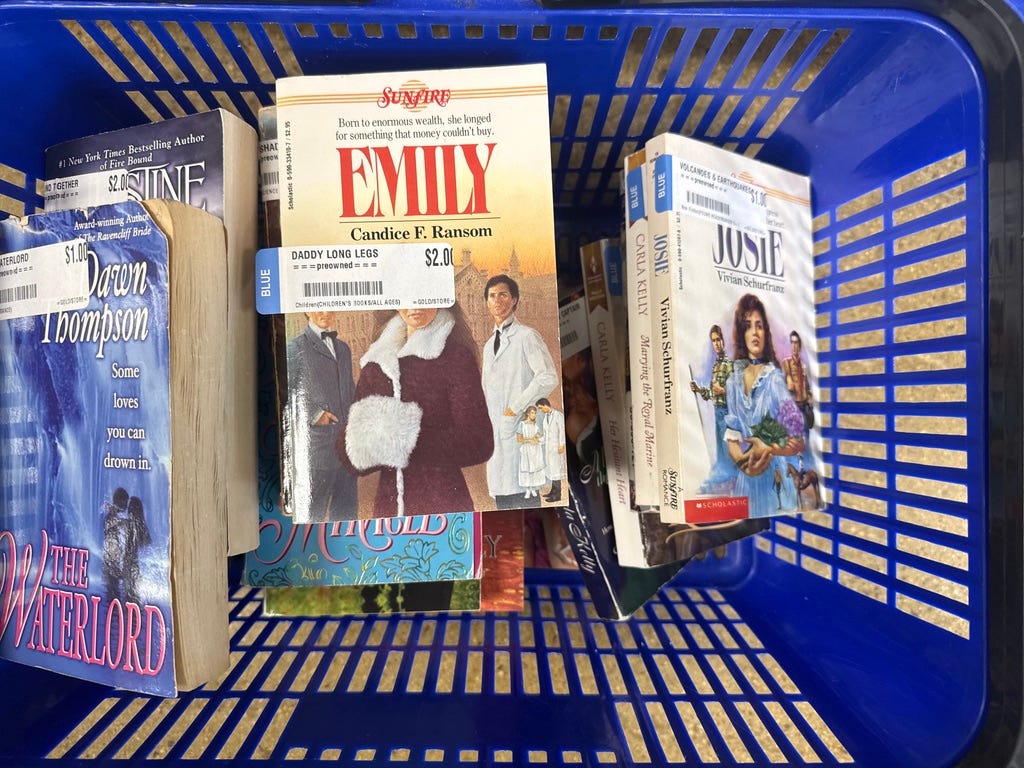
Jayashree and I tearfully bid each other adieu at Portland’s delightfully quaint airport, and I made one last stop: Goodwill. I had stopped at Portland’s Goodwill several years back when I drove up to pick up 15 boxes of Harlequins someone was giving away for free, so I remembered they had a decent romance selection.
And boy did they deliver! I definitely hit the jackpot with these two mint condition Sunfire romances. I already have these in my collection, but these ones are in much better condition, so I will likely release the others back into the wild. Or keep them as reading copies? Ug, being a collector is so hard!
When we were speaking with Dunia in Pot + Pan, Jayashree explained that we were on a romance research writing retreat, that she’s a scholar who studies romance, and then spoke about my podcast.
I’ve had the pleasure of hearing Jayashree explain what I do to others a few times now, and it’s something along the lines of, “she podcasts and writes about romance but what’s unique is she actually engages with the scholarship!” This inevitably leads to me explaining that actually I have a whole day job in B2B marketing and I just do this stuff for fun.
Oh right! I do this for FUN! Nobody is making me do this, and there’s no external incentives, really — I don’t need to publish so I can get tenure or for any reason tied to making money. I’m doing this for personal satisfaction.
Having a 4-day retreat to exclusively focus on my research unintentionally created more angst, because by having some time to actually sit with all of these ideas (not tied to a specific conference deadline or post/episode), it just kind of chafed that I have all these ideas and not enough time to work on them.
I knew I didn’t necessarily have enough time in the day-to-day sense, taking into account work and family responsibilities, and also having other hobbies. I think the realization was more that I don’t have enough time in the scheme of a lifetime.
I like exploring ideas, and investigating ideas thoroughly and rigorously. I like being cross-disciplinary, and mixing social psychology with archival research and literary theory and communications. I even like randomly trying to figure out how statistics works, when it serves me and my interests. I know I have ADHD, and recognize how it’s both something that empowers me and challenges me. See: time blindness (you’ll see the evidence of that throughout this post).
I have a milestone birthday coming up — I’ll be turning 40 in just a few months. It’s a good time to reflect and be intentional about planning the latter half of my existence.
I’ve started a lot of things — what do I want to finish? And how am I going to create the conditions under which I can make it happen?
Wow - that got incredibly existential!
I hope you enjoyed this descent into madn— account of a romance research writing retreat. If you have any ideas about what you think my greatest contribution to the field of romance scholarship could be, I’d appreciate if you could let me know!
OK statistics nerds: what insight does this data give us? This is from a survey of people who didn’t read romance prior but tried the Bridgerton novels after watching the adaptation on Netflix.
“importance_romance_central” was the response to this question: “When seeking out other romance novels, how important are each of the following to you? [Story primarily focuses on romance].” Other questions in the series had options like “ [Story is set in a similar historical period & location (Regency-era London)],” “[Characters are racially diverse],” “[Setting is luxurious or glamorous],” and other features of the Bridgerton adaptation. If I recall correctly, none of the other options had a statistically significant correlation with “any_continuation.”
“any_continuation” takes the response to this question “Do you plan on reading more romance novels?” and groups responses like “Yes, I plan on reading other romance novels by Julia Quinn,” “Yes, I’ll read more Bridgerton novels,” and “Yes, I have already started reading romance novels by other authors” as “Yes,” and “No, I am done for now” as “No.”
Based on this data, how would you present these findings?
Add your response to the comments. Everyone who gets it right gets bragging rights for eternity and a lifetime subscription to Shelf Love’s podcast and Substack.
Dame Jodie Slaughter is always telling me to watch more TV!
“Successfully maintained” is a conversation for another day. I was reminded of a chart I once made for myself where I tried to quantify my “romance content” output per week, looking across podcast episodes, Substack posts, and research projects, to see if, in some way, my output was consistent but just spread across many channels. So for example, when I only had a podcast, if I released an episode every week, my Avg. per week would = 1. Once I had a Substack, if I released 26 podcast episodes and 26 Substack posts, my average would still = 1.
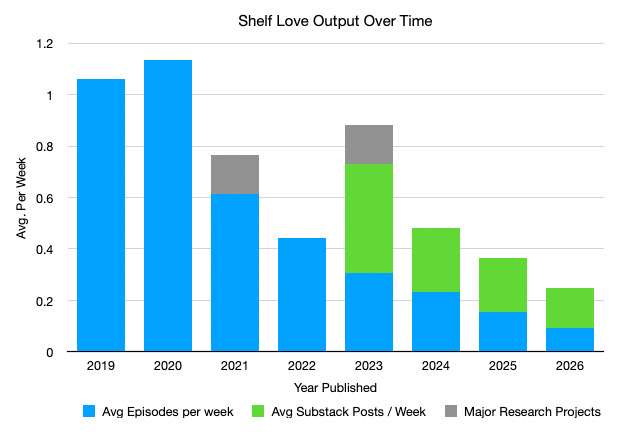
The data does not support that I’ve had a steady output. At the same time, I think there’s been a big change in the depth of what’s underneath what I release.
I’ve read more Ilona Andrews in the last week — I love the world building, but their work is a bit too light on the romance for me, generally. This is to say, I enjoy their books but more as fantasy.
Comments
Nothing yet. Say the first thing.
Sign in to join the conversation.