
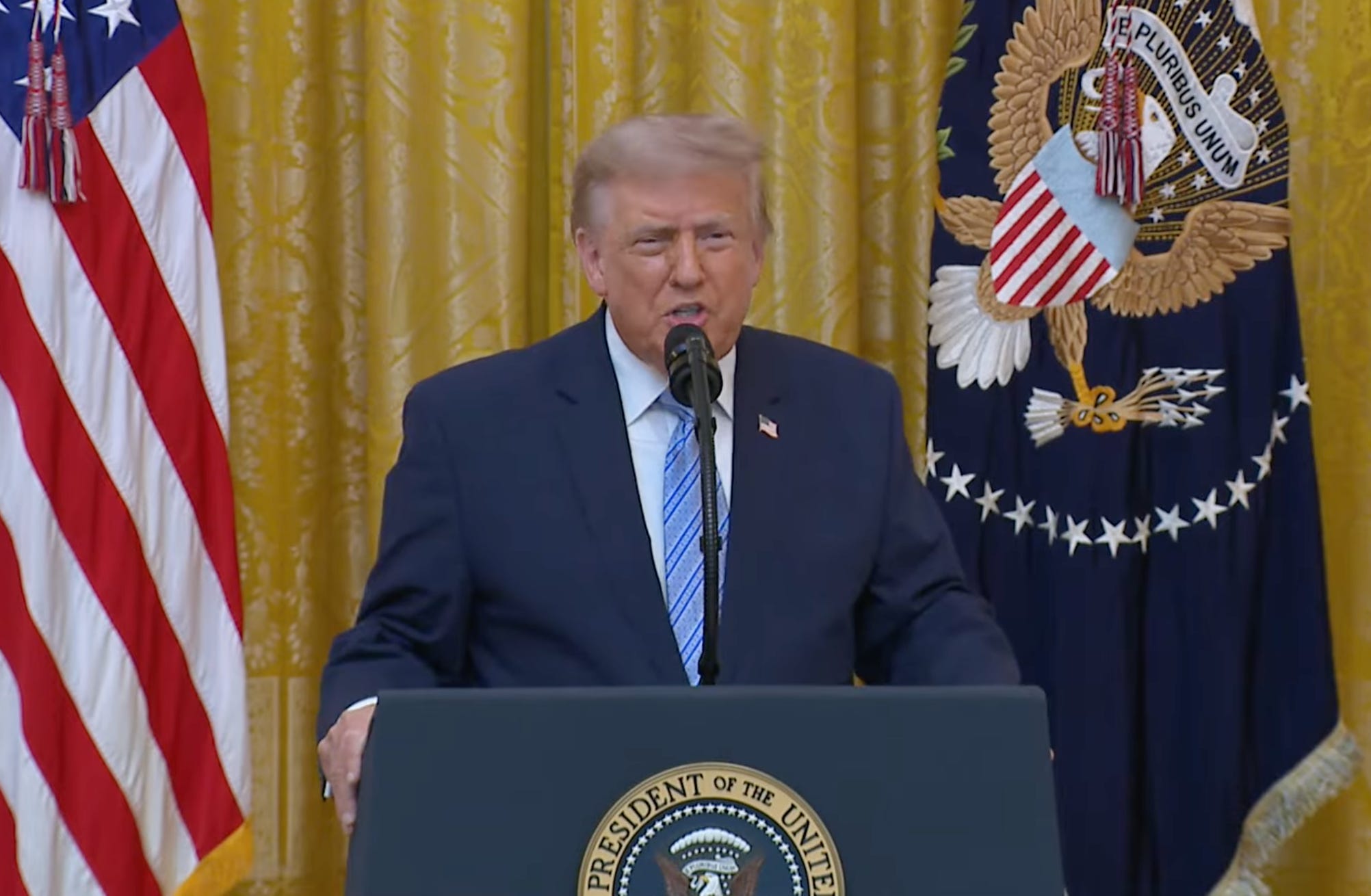
On 16 July 2026, President Donald Trump delivered a prime-time address to the nation on the security of American elections. The occasion was the release of a large tranche of declassified intelligence records – gathered, as he explained, by the White House Government Transparency Task Force he created in May, reviewed by the staff of the President’s Intelligence Advisory Board and vouched for by his intelligence agency chiefs.
The documents themselves come from across the American intelligence and security apparatus: assessments and memoranda of the National Intelligence Council, working under the Office of the Director of National Intelligence; CIA reporting; raw FBI intelligence and investigative files; internal NSA correspondence; and analytical products of the Department of Homeland Security and its Cybersecurity and Infrastructure Security Agency.
The address had a single foreign protagonist, and that protagonist was China. Trump announced that the People’s Republic of China had carried out “the largest compromise of election data in history”, illicitly acquiring 220 million US voter files, with data from at least 18 states “bought, stolen, or hacked”. He read out CIA reporting that in mid-2018 the Chinese Communist Party’s policy was to leverage every domestic and foreign element opposed to him in order to reduce his votes, force his resignation or prevent his re-election; that Beijing sought to turn American business leaders against him; that it wanted to pay American journalists to write negative articles about him. He accused a “deep state” within the intelligence agencies of massaging his daily briefings to conceal Chinese election meddling, and demanded investigations, firings and, “if appropriate”, criminal charges.
Across roughly sixteen minutes and five announced areas of concern, Russia was mentioned exactly once. It appeared inside a quotation from an intelligence assessment, as one item in a list – the judgement that America’s adversaries, “including at a minimum Russia, China, Iran, North Korea, as well as non-state groups, have the capability to compromise US election infrastructure”.
No Russian operation, no Russian actor, no Russian intent was mentioned. In an address built on declassified intelligence about foreign interference in the 2020 elections, the country that the US intelligence community actually caught interfering in those elections had been quietly written out of the script.
The omission is structural rather than marginal. The most substantial analytical document in the released tranches is the National Intelligence Council’s (NIC) assessment “Foreign Threats to 2020 US Federal Elections”, dated 19 August 2020 – a paper that appears twice across the releases – once as a standalone document and once appended to the China voter-file records. It makes sense to read it alongside the NIC’s January 2020 memorandum on vulnerabilities in US election infrastructure and the DHS/CISA report on threats to voter registration databases. Taken together, these documents – the very documents the president invokes – contain seven findings on Russian malign influence and interference that his address did not touch.
President Putin authorised, and a range of Russian government organisations conducted, influence operations aimed at denigrating Joe Biden’s candidacy and the Democratic Party, supporting Trump, undermining public confidence in the electoral process and deepening America’s sociopolitical divisions.
The assessment names the Ukrainian MP Andriy Derkach and the Russian influence agent Konstantin Kilimnik, among others – spread corruption narratives about Biden centred on Ukraine and the energy company Burisma, laundering them through US media outlets, US officials and prominent US persons, some of them close to the Trump administration.
These proxy actors were conspiring, as the election approached, to orchestrate a high-profile corruption scandal implicating Biden and the Democratic Party at the very peak of the 2020 presidential campaign, with the stated aim of defeating Biden and ensuring Trump’s victory.
Russia continued to use state media, social media and other online platforms to denigrate Biden, the Democratic Party and the American political “establishment” – content the intelligence community judged largely favourable to Trump, criticising his administration only where its policies ran counter to Russian interests.
Russian actors circulated claims of voter fraud resulting from mail-in balloting and called some US primary processes “rigged” by the Democratic Party.
Since 2019, the Lakhta Internet Research troll farm – successor to the notorious Internet Research Agency – together with Russia’s Foreign Intelligence Service and the GRU, employed cadres of American and other foreign authors to place anti-American, US-focused political content on English-language news platforms, including a site called “United World International”, seeding these narratives into Western media through the authors’ own US contacts.
The assessment’s comparative matrix of foreign efforts to manipulate the American political landscape – covering roughly the four years to 2020 – marks Russia as “observed” in nearly every category it tracks, from covert influence on public opinion to the targeting of election processes and legal processes, and records that Russia leaked intelligence-acquired information to damage US political figures more often than Iran did. The one concrete infrastructure intrusion in the released files also belongs to Russia: the NIC’s January 2020 memorandum states that Russia almost certainly monitored all US state election networks during the 2016 cycle, accessed election-related infrastructure in at least two states and exfiltrated voter data from at least one.
None of this is contested material. The internal correspondence released alongside the assessments shows that the only serious analytical dispute inside the intelligence community concerned China – whether Beijing’s activity amounted to more than low-level, exploratory steps. The Russia findings sat undisturbed at the centre of the mainline judgement while the argument next door raged over how to characterise Chinese intent. It is precisely this arrangement that the president’s address inverts: the contested China material becomes the headline, and the uncontested Russia material disappears.
Why? One explanation is uncomfortable enough to state plainly, because the evidence for it was documented in real time, by the US government itself, in the autumn of 2020. Some of the narratives that the intelligence community attributed to Russian influence operations were narratives that Trump himself employed in his 2020 campaign.
Consider the Burisma story. In May 2020, Derkach released edited audio recordings – doctored, as later Ukrainian investigations concluded – purporting to show Biden tying a billion dollars in US loan guarantees to the dismissal of a Ukrainian prosecutor in order to protect Burisma, where his son Hunter sat on the board. In September 2020, the US Treasury sanctioned Derkach, describing him as “an active Russian agent for over a decade” with close connections to Russian intelligence services, running a covert influence campaign against the 2020 election. The route from Derkach to the Trump campaign was not hidden: he had met Rudy Giuliani, the president’s personal lawyer, in Kyiv in late 2019, handed over documents purporting to show Biden family corruption and photographed the exchange for his own Facebook page. And the narrative duly arrived on the biggest stages of Trump’s campaign.
Or consider mail-in voting. In early September 2020, an intelligence bulletin from the DHS Office of Intelligence and Analysis assessed that “Russian malign influence actors” had been amplifying allegations of election-integrity problems in vote-by-mail programmes since at least March 2020, that Russian state media and proxy websites had denigrated postal voting as lacking oversight and creating vast opportunities for fraud, and that during the February Iowa caucuses those same outlets had claimed the contest was “fixed”. The contemporaneous reporting did not leave the parallel to inference: the bulletin, journalists noted at the time, described a Russian campaign amplifying precisely the claims that the president had been pushing for months. Trump had spent the summer asserting, without evidence, that mail-in balloting would produce the “scandal of our times”, down to the claim that foreign countries would print millions of fraudulent ballots. The Russian operation and the presidential campaign were running on the same messaging rails, in the same weeks, and the American government’s own analysts said so while it was happening.
I will resist the temptation to extend this list into murkier territory. My point does not require it. Two prominent, well-documented narrative streams – the Burisma corruption story carried by a sanctioned Russian agent, and the mail-in fraud story amplified by Russian state media – suffice to explain why a presidential address devoted to foreign interference in 2020, built on the intelligence community’s own declassified findings, might prefer not to mention Russia at all. Presenting those findings would remind the country that the intelligence community judged Russia to have worked for Trump’s victory, and that some of Trump’s own campaign themes moved in lockstep with Moscow’s.
Which brings me to the conclusion this episode forces. The declassified files are, on their own terms, a testament to the quality of American intelligence. In 2020, US agencies detected Chinese reconnaissance of state systems, tracked Iranian spearphishing, mapped a Russian influence operation down to its named proxies and its troll-farm publishing fronts, flagged that Russian disinformation was converging with domestic campaign messaging, and preserved their internal disagreements with a candour that any European service might envy. Honestly, the US intelligence community remains, arguably, the best in the world.
And then the political leadership takes this work – has full, privileged, immediate access to all of it – and utterly squanders it. It selects the contested finding and buries the established one. It converts an internal analytic debate into a “deep state” conspiracy. It stands before the nation with the products of world-class collection and analysis in hand and reads out only the paragraphs that flatter it, deleting the adversary whose operation it once echoed.
The tragedy of the 16 July address is not that the intelligence was bad. It is that the intelligence was good – and that between the analysts who produced it and the public it was meant to protect stands a political leadership for which intelligence is not a picture of the world but a quarry of quotations.
Democracies can survive hostile foreign influence operations. What they cannot survive indefinitely is leadership that treats its own best institutions as raw material for the very narratives those institutions were built to expose.
No posts
Comments
Nothing yet. Say the first thing.
Sign in to join the conversation.