
The glare of the operating room lights seems to make my breath shallow as I stand at the doorway- or perhaps I’m short of breath because I’m staring at the naked body of a man stretched out on a metal table, his skin painted with a coat of orange antiseptic. Am I going to make it through this without fainting? I take a deep breath and enter.
I have been invited by famous heart surgeon Jack Copeland to observe an open-heart surgery.
Since I’ve been hired to raise money for the capital campaign for a new Heart Center at the University of Arizona, he feels this experience will help me tell a better story. I know this is a huge privilege, so I don’t want to blow it. Keep breathing. Keep a wide stance, feet on the earth. You are just the observer. It’s not you on the table.
Just scrubbing in and suiting up has given me the impression that I’m going on a journey into outer space. Everything and everyone looks foreign in here. I feel foreign to myself. So I’m intent on following instructions. Stand where they tell you to stand. Keep your mouth shut. Stay out of the way. No fainting or vomiting dramas.
Music plays over the speakers. Right now, it sounds like Mozart. Dr. Copeland has told me the music is important to him, and it will change during the hours we’re in here. This is a multiple bypass surgery, so it will take some time. Many kinds of music will be appropriate to accompany the chapters of this story. There will be many movements to this symphony.
The nurses are assembled, each in a certain position, like actors standing on their mark onstage.
In walks Jack, as I’m now allowed to call him. But within the professional, hierarchical medical protocol, he’s Dr. Copeland all the way. He is a kind of god. They say he is the second most famous person in Tucson, next to the basketball coach, Lute Olsen. Short, but huge in our estimation, sandy-haired and not yet slumped from too much surgery, he has an easy manner with a sly sense of humor, but a wicked temper if he feels crossed or short-changed. Everyone is on alert.
The tray of impressive, shiny operating instruments is on a table within his reach. He commands these one by one, and they are delivered instantly by the nurse in charge. “Scalpel!” And it is handed to him.
It begins.
The first cut is the hardest. (Is that a song?) A slice through the orange chest that, up until now, looked fake. But the trickle of blood tips me off that this is the real thing. I see the layers of skin and fat and muscle that encase the chest, and now we’re down to the bone.
Out comes a saw, just like in a meat market, and before I know how to react, the rib cage is open. They are prying it apart and wrapping it into an open position with something that looks like piano wire. I am aghast. It is brutal, even though Mozart’s music is not saying so. Blood is cleaned away. I vow never to have open-heart surgery. Dr. Copeland’s canvas is being cleansed for his work, which is something between a plumbing job and fine art.
Now the music changes to a Gregorian chant, and I see that we’re in a temple. The heart is exposed to the level of the pericardium, the outer covering, a kind of rind around a pulsing piece of fruit.
Copeland motions me forward. He wants me to see up close.
My breath is sucked in, my eyes surely widen, and suddenly the meat market-turned -temple has taken me to something beyond my earthly experience. Inside this anonymous man, whom I’ve now forgotten about, since everything is now draped except his open chest, is the covering of the human heart. It is white. Pearly. Glistening with promise. It is gorgeous. Literally breathtaking. It looks like the surface of the moon. There is no blood now. And underneath the pearly covering beats what now looks like much more than a pump. It looks like a world of mystery, alive and pulsing before my very eyes.
“Does it make you want to be a surgeon?” Copeland asks me.
I’m stunned. “No, “ I shake my head, “but…” I am mute, awed. What I am seeing has left me without words.
What is almost flattening me at this moment is not gore or horror, or a desire to master the medical intricacies I can’t even imagine. It is the mystery. The stunning mystery of the human body, of this gorgeous heart that keeps it going. This heart that has earned so many myths and legends. This heart that is credited with being the seat of passion, of hurt, of courage, of knowing.
No, I don’t want to be a surgeon. I want to be a mystic. An explorer of the mysteries of the heart. I don’t want to master outer space, the daring adventure into the world of science and technology. I want to go deep into inner space. That’s what I know now.
Don’t get me wrong. I know I’m privileged to have a job like this. It’s exciting to be representing surgeons, cardiologists and scientists who are trying to find a cure for heart disease. It’s a feeling of being part of the cutting edge. I’ve loved many parts of my development career at two universities. I love wearing power suits and carrying an impressive business card and knowing exactly what my role is. I like having colleagues and being part of something large.
At the same time, looking at this inner moon, I want to explore; something in me knows there is another call coming. Another world to explore. I can’t see around the bend in this river, but I hear the roar of a change coming. This anonymous man, whose heart will be lifted out of his body to be repaired, who will be kept alive with a heart/lung machine, whose repaired heart will go back into his chest, who will be sewn back up to the music of the Eagles and even some rowdier country western victory music, this man who will be glad to be alive even with all the recovery he will face, who will have no idea I was in the room, has given me a gift today. Heart to heart. His heart has spoken to mine.
***
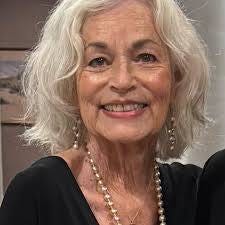
Pam Hale authored the award-winning book, Flying Lessons: How to Be the Pilot of Your Own Life. She created Sand Spirits Insight Cards and workbook, and authored countless articles, book forewords and contributions. She has been a teacher, a photographic artist, a fundraiser and consultant, an energy healer and life coach, a spiritual companion, and she created Earthskin Design™ photographic fabric creations, sewn by women refugees. A mother, grandmother, and great-grandmother, Pam lives outside Tucson, AZ, with her husband, Jon Trachta. She is working on a series of children’s inspirational books and a memoir, Traces of Silver.
Comments
Nothing yet. Say the first thing.
Sign in to join the conversation.