
Author’s note: The following short essay, inspired by the great poet Theodore Roethke, was composed in response to a prompt from a writers’ group in Las Vegas: “Aliens are about to land! Before they do, they will read only one communication: your essay. Create the greeting you would like the aliens to read before they land somewhere on Earth.”
April 6, 2026
“I learned not to fear infinity,
The far field, the windy cliffs of forever,
The dying of time in the white light of tomorrow.”
—Theodore Roethke, “The Far Field”
Dear Visitors,
Welcome! I greet you warmly and fearlessly. You are a “Sidereus Nuncius,” a “Starry Messenger” in the words of Galileo Galilei, one of our most brilliant scientific minds. Galilei was among the earliest explorers of the vast universe that you have traversed, and regardless of which part of this spectacular wilderness you have come, I trust that your journey has been peaceful and rewarding. And oh, what sights you must have seen! Galaxies, suns, planets, moons, vast clouds of swirling cosmic dust, black holes! How spectacular a journey, but also how frightening! Thanks to the work of Galilei’s successors and their ingenious telescopes, we now know that the universe and its innumerable galaxies are a vast caldron of relentless fire and constant change, and we marvel at the technical knowledge that has enabled your fabulous journey. As we say on Earth, “Kudos,” and “Thumbs up!”
Given your superior technology, I suspect that you already know much about us and our planet. As you rush—or should I say glide?— toward us, I ask you to ponder the epigraph to this greeting. It is an excerpt from a long poem by the American writer Theodore Roethke. I choose these few lines because they include words that are quite relevant not only to your impending visit but also to our experience of that visit: “infinity”; “forever”; “time”; and “light.”
On December 25, 2021, the James Webb Telescope, the most powerful telescope ever built by humans, was blasted into the heavens. The stated goal of this marvelous instrument was to probe deep space for what our scientists call the “original light” of the universe; that is, light emanating and remaining from what we call the “Big Bang,” the initial cataclysm that our scientists theorize created the universe and all the myriad life forms that inhabit it. The James Webb Telescope is thus traveling towards infinite light in the “forever time” of our universe, and revealing billions of tomorrows whose dawns we shall surely cherish.
As you approach our planet, what one of our astronomers dubbed a “tiny blue marble in the vastness of space,” I would ask you to imagine the James Webb Telescope as symbolizing what is most indicative of the “human spirit”: our collective determination to search and to understand the unimaginable unknown that surrounds us; and our refusal to fear either the actual search of this cosmos or what we may discover. Perhaps the “windy cliffs” of planets in distant galaxies known only to the stars. We build magnificent telescopes and launch them into space with gigantic rockets because there is so much out there that we do not know, and because the light that we hope to discover may tell us much about both our origin and our destiny. Perhaps your location in some distant corner of this universe, and in a realm of time totally different from ours, means that you already know much more about the origins of life, yours and ours; and also more about the ultimate fate of all life everywhere, which some of our scientists believe will ultimately return to the nothingness from which it escaped and evolved.
So, while you are here, I hope you will take the “time”—however you measure it—to tell us what you know about this vast, violent, intergalactic cosmos that we all call home. If you can travel here from there, well before we can travel from here to there, then your scientific knowledge far surpasses ours. We would welcome as much of the treasure trove of your expertise as you would be willing to share.
I assure you that most of us here are quite generous and welcoming to strangers, so you need not fret about where to land. I would suggest, however, that you let us know your approximate arrival date and time (preferably using our number systems) a few days in advance so we know what to expect and when. I suggest picking a large airport near one of our major cities. Your choice. And should you need accommodations, just let us know how many rooms you would like. All of our large cities have plenty of hotels available.
One other point. As you eavesdrop on our electronic communication, you will probably hear the word “aliens” on some radio or television program, or on a podcast from some political egomaniac who thinks he or she is, well, really important. Ignore such nonsense. You are “Starry Messengers,” and we believe that you are visiting us because you are genuinely curious about us and our planet. We are here for you, and we trust that you will enlighten us with your knowledge of our mysterious, perhaps sacred beginnings; and also fortify us against fearing the far field from which you have come.
Oh, and should you arrive at night, no worries. As the owner of an American hotel chain promises, “We’ll keep the lights on for you.” Enjoy your visit!
Cheers,
Michael W. Shurgot
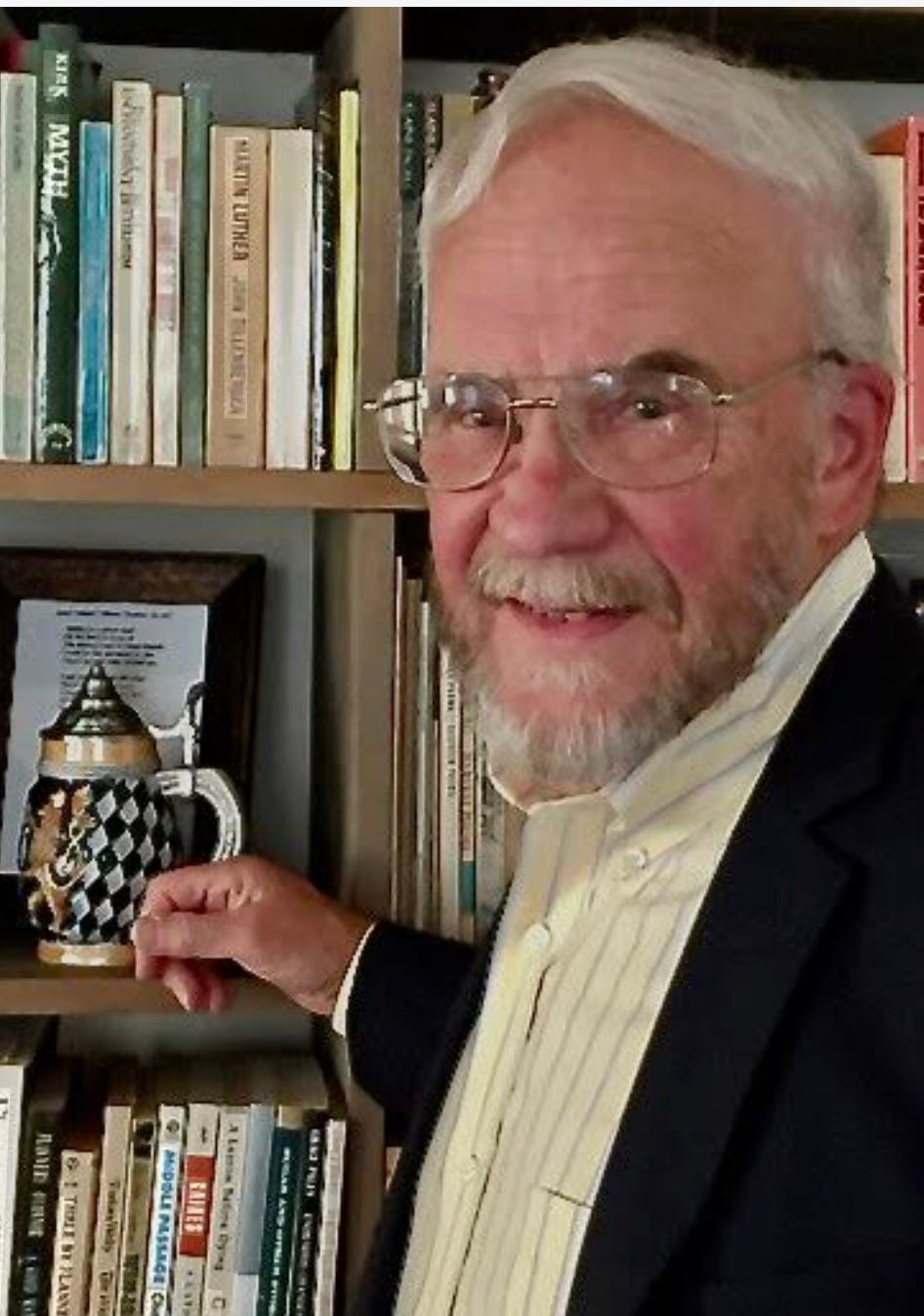
Michael Shurgot published his memoir, Could You Be Starting From Somewhere Else? Sketches From Buffalo And Beyond in 2014 through the Createspace Independent Publishing Platform. Today, he is a retired Shakespeare scholar and professor, and the author of essays, short stories, a memoir, and three nonfiction books (focused on Shakespeare’s characters and plays). His newest releases are novels that compose the Green River Trilogy: Green River Saga (Sunstone Press, 2020); Raven Mountain: A Mythic Tale (Sunstone Press, 2023); and Seotse: A Visionary Tale (Sunstone Press, 2024). Visit the author at MichaelShurgot.com.
Comments
Nothing yet. Say the first thing.
Sign in to join the conversation.