

Just tonight, I was reading I Is for Innocent by the late Sue Grafton, and I lingered over the following passage describing the area around a house in an affluent neighborhood of “Santa Teresa,” a fictional California city similar to Santa Barbara:
“I crossed the Spanish tiled entertainment terrace, complete with custom-built,
black-bottom swimming pool, lava rock waterfall, spa, wading pool, and koi
pond surrounded by short, perfectly trimmed hedges of lantana and yew. I descended a flight of stairs and followed a flagstone path to a wooden bungalow tucked up against the hillside.”
The scene described in this paragraph, among many in Grafton’s novel, radiates authenticity. Grafton selects precise physical details to convey a mood as well as a scene. Indeed, the peaceful scene serves as a façade, for the house and its surrounding neighborhood are central to a private detective’s murder investigation. Ultimately, Grafton illustrates how human beings, prosperous and poor alike, remain dangerous, to themselves as well as others.
I emphasize the skill and value of Sue Grafton’s descriptive ability, because during my years as an English graduate student in the mid-eighties, many critical theorists tended to dismiss “reality” as an arrogant presumption. Literature, to such theorists, was not “about life” but self-reflexive language of inescapably indeterminate meaning. The greatest talents didn’t have to worry terribly much about plot, imagery, characterization, and research for factual accuracy. Oh, those elements had their place, but the real subject of literature was language itself.
French theorist Jacques Derrida, a champion of the radical linguistic skeptics, famously said, “There is nothing outside the text.” While Derrida did not mean nothing exists outside the text, he does mean nothing can be definitively known about the world beyond words, as words’ meanings are always filtered through layers of subjectivity, prejudice, and imprecision. Okay, but does that mean writers need no longer respect and represent physical imagery, characters’ distinctive speech patterns, and credible plot twists? Need that mean that ethical judgment should be suspended—nay, paralyzed—because of an element of epistemological indeterminacy? Where do we go with this? The Holocaust didn’t really happen? Slavery might have been all right and even helped the poor slaves? Convicted murderers should be declared innocent and released from prison because prosecuting attorneys’ words and evidence do not necessarily correspond to a world beyond the self? Police can shoot anyone they please because who’s to say whether they did or not? Relativism that emphasizes complexity helps us learn tolerance. Relativism that worships indeterminacy opens the door to complete abandonment of ethical standards, and nothing delights a demagogue more than creating ruses that defy accountability. In that world, Donald Trump won the 2020 election, and George Santos was a volleyball star at Baruch College.
While literature can entail self-reflexivity, then, it can also reflect what we call “life.” Literature can deepen our empathy, as well as educate us about history, politics, and human relationships. It can console us when we are depressed and distressed, and it can unlock doors of repression and oppression. Literature can help us understand we’re not alone. Characters in a novel or play—and corresponding people in real life—might suffer hardships similar to our own, and knowing this can deepen compassion and connection. Precise description and empathetic evaluation do more for genuine tolerance than do preachments about indeterminacy.
Credible plot, characters, scene-setting, and physical description are not merely concerns of lesser talents seeking best-seller status, but essential elements of compelling writing—and fiction especially. Given that, evaluation of many a fictional work depends partly on verisimilitude: do a novel’s characters, voices, and milieus convince us they could really exist? Does the author’s depiction reflect, say, authentic police or courtroom procedures? Those procedures do exist, and a skillful writer of fiction aspires to credibly depict them.
Writers of murder mysteries have long valued verisimilitude. Facts matter, even in much fiction. Sure, speculative and fantasy fiction can create new and unique worlds, and I’m fine with that. However, meticulous research still merits respect, and murder mystery writers in addition to Sue Grafton, continue to inspire me with their concern for accuracy. Think of Michael Connelly, J. A. Jance, Patricia Cornwell, Kathy Reichs, and Robert B. Parker, among many others. These writers aim to get their essential facts right, at least in the sense that they create believable scenes and dialogue in which each character sounds distinct. The writers might stretch some details a bit far and overdo the violence so that it seems sensationalistic, but then they’re open to criticism if it feels overdone. Wanting to entertain doesn’t necessarily mean a novel should become the equivalent of a three-hundred-page car chase. Reflection and romance can also entertain readers.
Facts matter, then, even for fiction writers. It’s one thing to create an alternate fictional reality. It’s another to dismiss the concept of reality as an arrogant conceit. I continue to be inspired by the skill and descriptive integrity of writers who take their research and our ethics seriously.
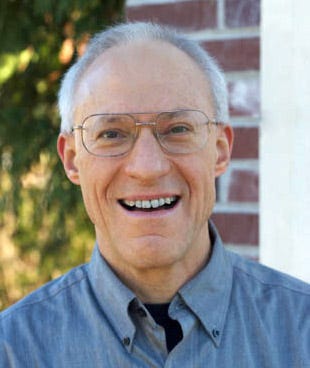
David D. Horowitz founded and manages Rose Alley Press. His latest poetry collection, from Rose Alley Press, is Slow Clouds over Rush Hour. He recently edited Purr and Yowl, a cat-themed poetry anthology published by World Enough Writers. His poems have been published in many journals and anthologies, including The Lyric, Raven Chronicles, Terrain.org, Coffee Poems, and Sparks of Calliope, and his essays regularly appear in Exterminating Angel.
Comments
Nothing yet. Say the first thing.
Sign in to join the conversation.