
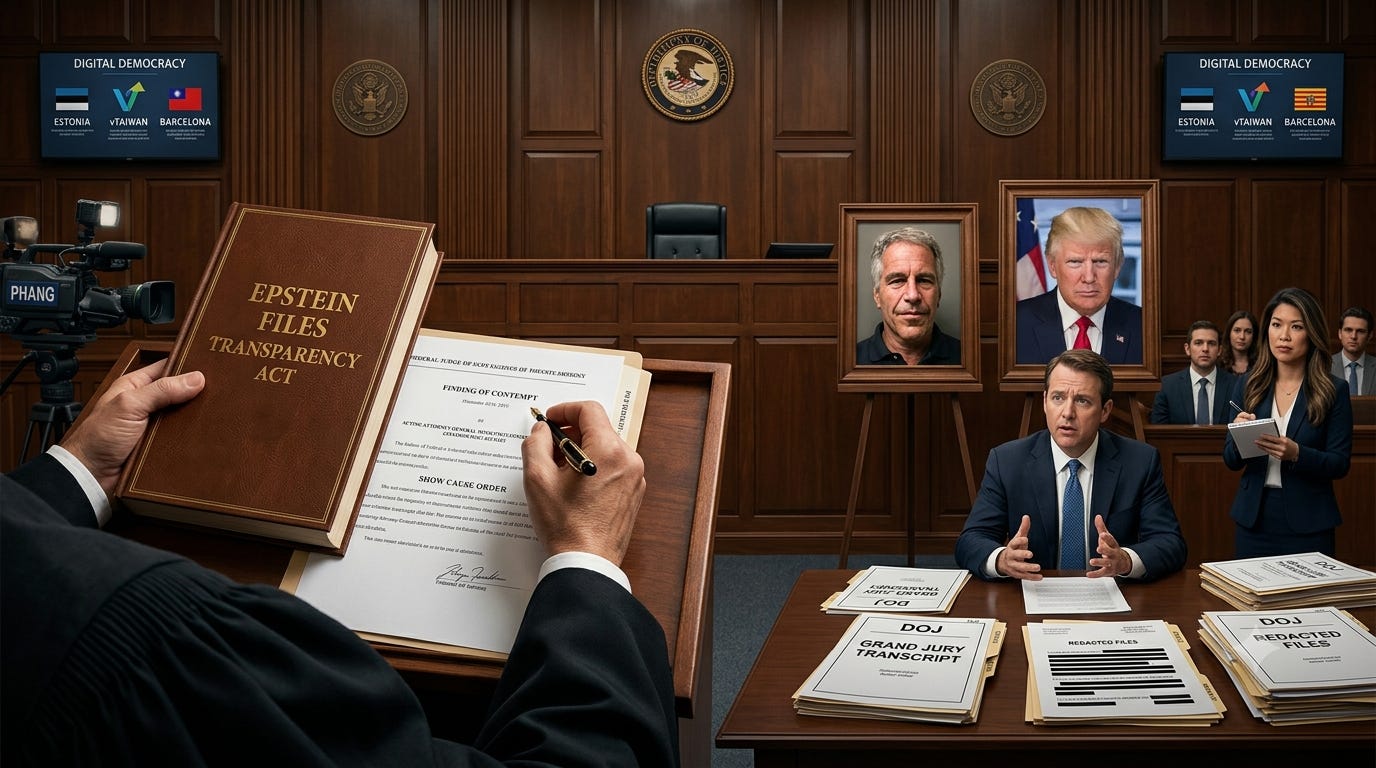
A federal judge has a decision to sign. On one side sits a law Congress passed with near unanimous support. On the other sits the Acting Attorney General of the United States, asking to be let off the hook for ignoring it.
Legal analyst Michael Popok read the Justice Department’s latest filing in Phang v. Blanche and predicted it wouldn’t land well with the judge. He’s not wrong. When you strip away the legal language, the Department of Justice is asking Judge Emmet G. Sullivan to accept that following a court order is optional if you don’t like the order.
Congress passed the Epstein Files Transparency Act in November 2025, and President Trump signed it, mandating the release of the Department of Justice and FBI’s investigative files on Jeffrey Epstein. The deadline for full release was December 19, 2025.
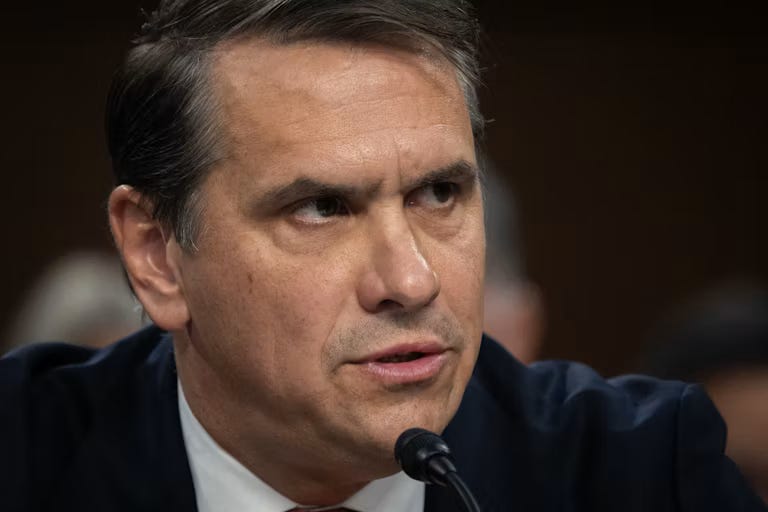
The DOJ missed it. Partial releases trickled out in December, January, and March, totaling roughly 3.5 million pages by the government’s own count. But the pattern raised red flags fast: one of the earliest productions included a 119-page grand jury transcript redacted in its entirety, plus another 400 pages fully blacked out in the same batch.
Independent journalist and attorney Katie Phang filed suit on April 27, 2026, represented by Brendan Ballou and Samuel Ward-Packard of the Public Integrity Project. Her theory wasn’t a standard public-records request. She argued under the Administrative Procedure Act that the DOJ’s noncompliance with the Transparency Act was itself unlawful agency action, and that withholding the files caused her direct, documented harm as a working journalist unable to finish stories she had already started.
On June 25, 2026, Judge Sullivan agreed. In a 48-page opinion, he found that Acting Attorney General Todd Blanche had effectively conceded the violation by never substantively disputing Phang’s core claims in court. Sullivan ordered the DOJ to either produce the remaining files or show cause by July 2 explaining why it legally could not.
Among the specific items Sullivan ordered addressed: unredacted names of possible co-conspirators, emails referencing a “torture video” and sexual activity with minors, FBI interview notes involving a woman who alleges President Trump assaulted her when she was a minor, a batch of foreign-language documents the DOJ had not reviewed, and the redaction log the Transparency Act itself requires the department to keep and publish.
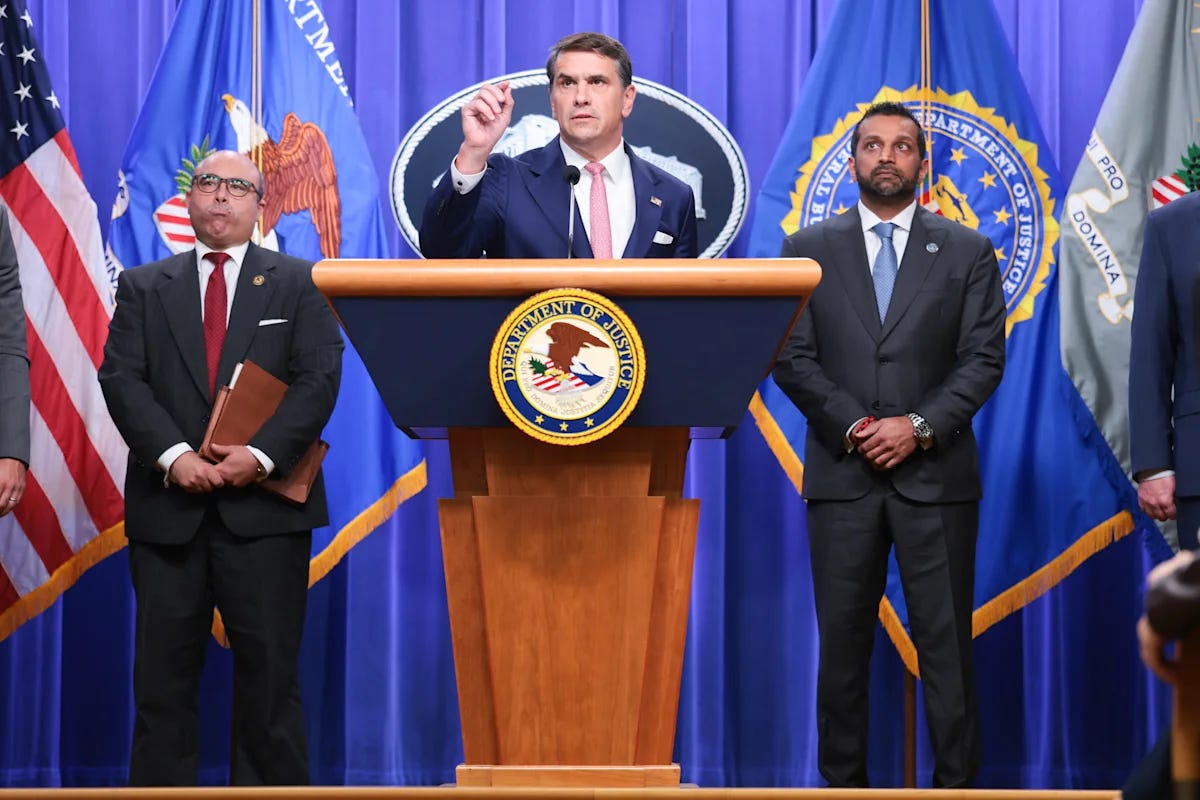
That last one matters more than it sounds. The law doesn’t just require the DOJ to release documents. It requires the DOJ to show its work on every document it chooses not to release.
When the DOJ filed its July 2 response to the show-cause order, it didn’t argue it had complied with the law. It argued Phang shouldn’t have been allowed to sue at all, that citing an “offer” from the court somehow softened a direct order, and that turning over the foreign-language documents wasn’t required because, by the department’s own account, it does not review documents that aren’t written in English.
Here is the argument, as reported in Phang’s own contempt filing: Blanche told Congress months ago that reviewing the foreign-language documents was “impracticable.” Congress didn’t formally object at the time. So, in Blanche’s telling, silence from Congress means he’s now permanently excused from ever reviewing them, court order or not.
Read that again. The federal agency responsible for enforcing the rule of law is arguing that an unanswered email to Congress functions as a permanent exemption from a federal judge’s order.
On the FBI interview notes specifically, the July 2 show-cause filing was signed by Associate Attorney General Stanley Woodward, the third-highest position in the department. Woodward argued the handwritten notes could not be produced due to “technical limitations” in scrubbing them of victim-identifying information, and asked the judge for a 60-day extension so the Solicitor General could weigh a possible appeal. Woodward previously represented Walt Nauta, Trump’s aide and co-defendant in the Mar-a-Lago classified documents case, before his Senate confirmation to the DOJ post in October 2025.
Phang’s team asked for a $1,000-a-day fine until the DOJ complied. On July 21, 2026, Blanche’s office filed a reply calling the contempt push “absurd” and Phang’s arguments “hyperbolic rhetoric.” The brief closed by asking the judge to reject sanctions entirely, preserve DOJ’s right to an immediate appeal, and pause everything while that appeal plays out.
Judge Sullivan has not yet ruled on contempt. But his June opinion already told Congress and the public what the record shows: the government isn’t disputing the facts. It’s disputing whether it has to answer for them.
This isn’t an abstract legal dispute for people who follow court dockets. It’s a live demonstration of what happens when the only mechanism forcing government transparency is a single overworked federal court, a single journalist willing to sue her own government in her own name, and a single nonprofit law firm absorbing the legal costs.
Congress wrote the law. It didn’t write in an enforcement mechanism. When Representatives Massie and Khanna tried to force compliance through a related criminal docket, a different judge told them, correctly, that they’d need a separate civil case. It took an outside citizen, not an elected body with subpoena power, to build that case from scratch.
That is the structural problem underneath the Epstein story. It’s not just one department stonewalling one journalist. It’s a governance system where the people who wrote the accountability law have no real tools to enforce it once they’ve passed it, and the people who are supposed to enforce it get to decide, unilaterally, how much of that law they feel like following.
Ask yourself: what happens when no one is looking, and there’s no journalist with standing to sue?
A note before you keep reading: I don’t want to put the truth behind a paywall. But I’m an independent journalist with no corporate backup, no newsroom, and no institutional budget behind this work. If you’re able to subscribe, it directly funds this reporting. And if you genuinely can’t afford it right now, reach out to me directly. I will give you a gift subscription. No one gets locked out of this story over money.
Comments
Nothing yet. Say the first thing.
Sign in to join the conversation.