
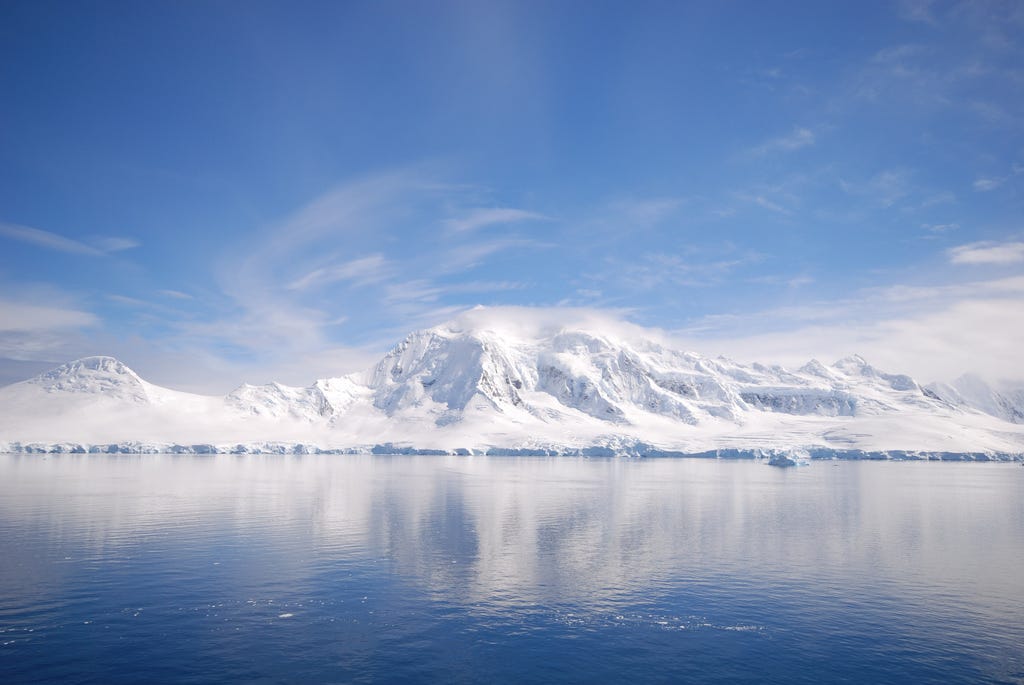
The earth recently experienced its coldest day since 2012, at Concordia station in Antarctica. It’s winter there, and the sun doesn’t come out at all at this time of year, making extreme cold normal. However, the temperature of minus 119.4 degrees Fahrenheit on July 18, 2026 is even cold for winter in Antarctica. The mainstream news has some opinions on why this is happening based in meteorology, and I have a few of my own, based on the true science of weather and climate, orgonomy.
This is certainly a significant event, and it needs to be taken seriously. Obviously, not knowing that people all over the world have been restoring the earth’s natural climate with simple free energy devices called orgonite means that the writer can’t possibly get to the bottom of it. The missing piece in the narrative is that we do in fact influence the climate, but not at all in the way that meteorology and climatology claim. It would be helpful for people to not be left in the dark, but rather to understand the energetic changes taking place in the earth’s atmosphere and learn how they actually contribute to climate change, both in positive and in negative ways, and how easily imbalances can be corrected.
It’s a major problem for mainstream science writers on climate when the facts contradict the dominant narrative they are being paid to promote. Then they are obligated to come up with reasons why the reality doesn’t match what policy makers need reality to be in order to push their agendas.
Let us look at the news story from Live Science, analyze the information, and decipher the contradictions using some facts that may not be known to the writer. I initially got a laugh from the headline on Yahoo, but the story itself is more frustrating than amusing.
After some normal reporting on the temperature experienced in the early morning of July 18, the article quickly degenerates. A comparison to hot temperatures in the northern hemisphere is made, which is completely irrelevant considering it is summer here.
The extreme chill at Concordia stands in sharp contrast to the sweltering heat that many countries are currently experiencing. North America and Europe have been battling heat waves this summer, with Western Europe recording the hottest June on record. Meanwhile, wildfires are raging in Canada, the U.S., France, Spain and other countries.
When wildfires are associated with hot weather, this is a complete misunderstanding of what causes fires. When I crossed a street in Las Vegas in July of 2017 while gifting orgonite, I thought my shoes would catch fire. But they didn’t. Heat, even over 100 degrees, simply does not cause the landscape to erupt in flames. Wildfires are a different problem that we have also been tackling through orgonite gifting, but not because they are caused by hot weather.
The article goes on to justify the narrative that the world is getting hotter. The world was getting hotter. Orgonomic science and the widespread neutralizing of deadly energy sources negatively impacting the atmosphere has caused this problem to reverse. Their reasoning for increasing temperatures is greenhouse gases. Orgonomy proves that the reason for increasing temperature is deadly radiation, in particular the EMF emitted by the arrays of cell towers covering the earth.
Globally, average temperatures are going up as humans pump more heat-trapping greenhouse gases into the atmosphere. However, Earth’s weather systems are complex, and climate change doesn’t mean that everywhere gets hotter all of the time.
“Climate change describes the long-term global trends, while individual weather events can still [bring] exceptional cold,” Carugati said. “Antarctica is influenced by complex atmospheric processes, so an extreme low temperature at one location does not contradict the broader picture of global warming.”
Likewise, a hot day doesn’t mean the world isn’t getting cooler. It depends on whether one is pushing an agenda, or doing real world scientific experiments and observations in weather and recording actual results without a preconceived idea that must be preserved.
The story explains that in Antarctica “the atmosphere is extremely dry and stable, and under clear skies, heat continuously escapes to space because there are no clouds, allowing temperatures to fall to extraordinary levels.” This is in agreement with what we would see in a high OR atmosphere. Very clear skies are common, as well as dramatically dropping temperatures. Orgone energy has a purifying effect on air and causes lower temperatures, while DOR causes stagnation, with lingering air pollution and warmer temperatures.
In addition, the article explains that “planes can’t fly to Concordia once winter sets in.” We have documented for years the difficulty of airplane flight in high OR conditions. We see planes regularly going off course, and when OR is too high, there are few to no flights, sometimes for days. On DOR days, it seems like all flights come through at once to make use of the brief window of opportunity. Flight cancellations have been a huge problem for the airline industry since 2021. Airlines often come up with reasons why flights turn around and go back where they came from, but these tend to be specious, like disruptive passengers or problems with the loo.
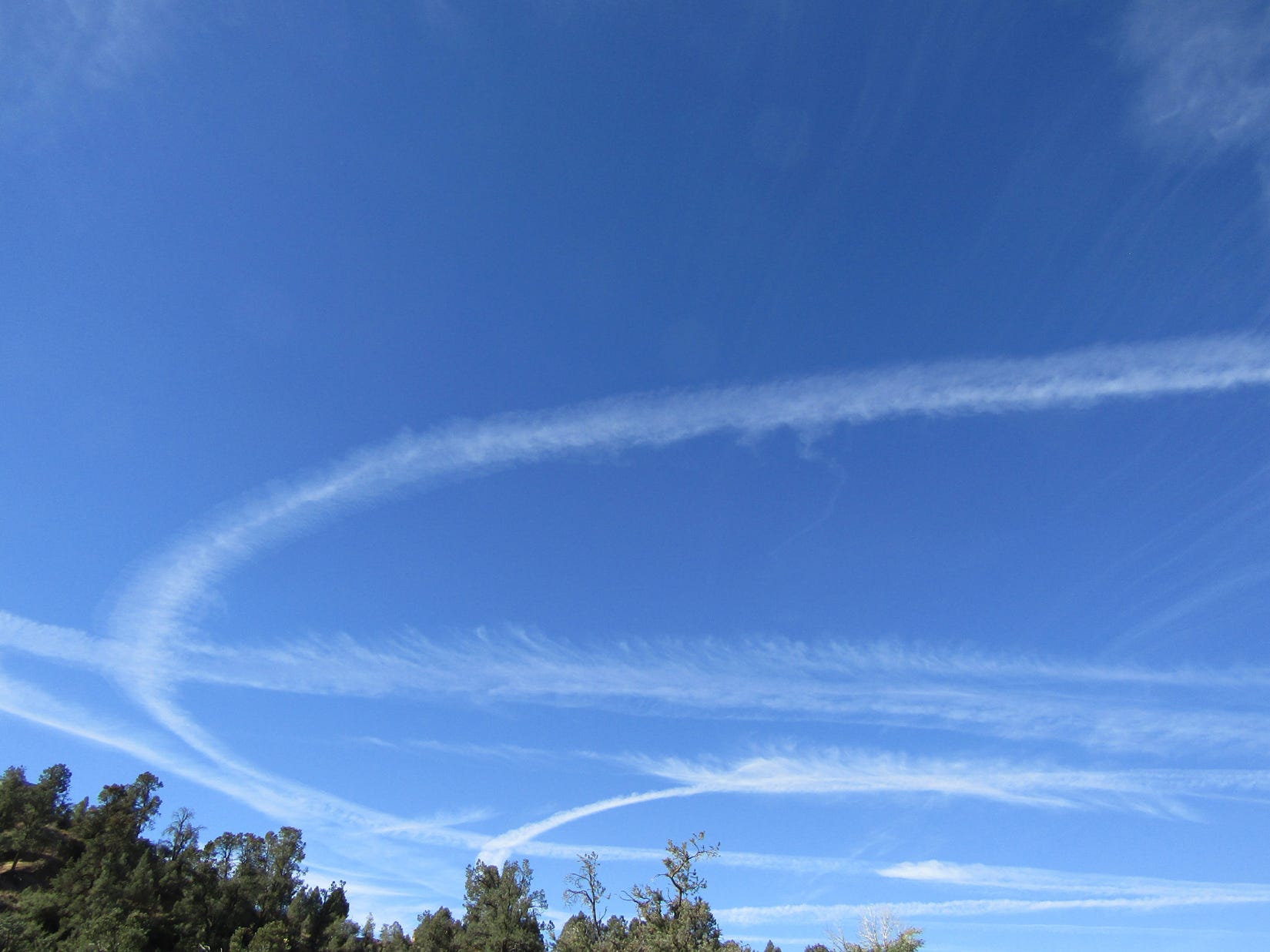
The coldest temperatures recorded at Concordia station and Antarctica as a whole were minus 120.5 F in 2010 and minus 128.6 in 1983 respectively. These were both high OR years on earth, coinciding with “El Nino” years or excessively rainy periods, indicative of high OR. Low temperatures are repeatedly correlated with high OR. (The seeming contradiction of clear skies and rain both being caused by high OR is because OR always clears the sky before rain is possible. OR doesn’t always mean immediate rain, but it always means atmospheric clarity, and rain in due course.)
The rest of the article justifies the reasons the earth is getting hotter by cherry picking areas of Antarctica that have had higher than average temperatures, however, still well below freezing. It looks at short periods of time to report one March being warmer than the last, for example. This is in direct contradiction to the earlier statement by Gabriele Carugati of the Concordia station, that climate change describes long term global trends, not the weather from one year to the next.
The article ends with Carugati saying that “Extreme observations like this help scientists better understand atmospheric processes and improve the climate models.” I think that these observations are very important, but models can no longer predict future weather and climate due to the global undoing of the weather control grid. Without a global network of DOR emitters warming the atmosphere and restricting precipitation, all models are out the window. Only real world observation will help scientists to understand climate change, but even then, only if they are allowed to know of our work and even possibly work with us, will they understand how the climate is actually changing, and how they can make a positive impact.
The reason for colder than normal weather in Antarctica is orgonite gifting. Even previous lows correspond with high OR periods. In 2010, we had a torrentially rainy winter in California and the west. This was the year the orgone energy device, the Obolix was invented in Switzerland, creating major improvements in Europe’s air quality and weather.
Of course, this is a global effort impacting the whole world, as Antarctica itself doesn’t have the cell tower arrays we see in populated areas. Every time you gift a cell tower in your community with orgonite, you are effectively ridding the entire planet of weather and climate disrupting technology, as the weather is a holistic system. We take it down one tower at a time, and over the years, the sweeping changes become more obvious, even to those who don’t know what we have been doing.
No posts
Comments
Nothing yet. Say the first thing.
Sign in to join the conversation.