
Music Question: Skip the Singles. Infinite Legacy
Next: My weekly new music radio show. Week 1048.
Musical Thoughts. REM Live in Toronto 2001
The ultimate holy grail? The definitive metric of what “rules” the world? We are told that to build an empire, you need that singular, radioactive three-minute track to punch its way to the absolute top.
Not always true.
If we pull back the curtain on rock history (which we love to do) - we find a beautiful, loud, and defiant paradox.
Some of the most towering, culture-shifting masterpieces ever pressed to vinyl never actually scored a No. 1 single. Kinda crazy cool, no? The songs that defined generations, rewrote the rules of production, and turned arena floors into communal churches never once sat on the throne of the singles chart.
They didn’t need to. These records bypassed the cheap, disposable “bubblegum hook” entirely to build permanent empires of sound. From Seattle flannels to British studio labyrinths, here is a look at eight definitive, immortal records that proved a staggering truth: sometimes, the biggest tracks on earth are the ones that never wore the crown.
The cash never ruled this empire—time did, and it’s still collecting interest.
Mortality! Existential dread! Psychological fractures! No wonder there wasn’t a No 1.
This album is meticulously engineered. The soundscape is brilliant. Time to put the headphones on.
Instead of chasing radio trends, the band forged a continuous audio trip. We hear heartbeat thuds, cash-register clinks, and soaring saxophone lines.
“Money” made a dent on the airwaves. It stalled out long before reaching the peak of the charts. Instead this record became an essential nocturnal ritual for the deep thinkers. They completely bypassed the short shelf-life of pop radio to mount a permanent, decades-long occupation of modern culture. And yes that sync with The Wizard of Oz - while odd - wasn’t on purpose and has been debunked.
Charts glance, legends linger. This one’s on Mount Olympus.
Ancient mysticism meets pure sonic power. Blues-rock riffs morph into enduring folklore.
“Black Dog” bit its way onto the charts (sorry had too forgive me?). The true gravity of the record had nothing to do with commercial metrics. “Stairway to Heaven” was never even released as a commercial single.
Zeppelin famously treated the seven-inch single with absolute disdain. Good for them. Maybe better for us. Sure - radio programmers pleaded for radio edits - the band simply looked the other way. Again good for us.
That opening iron bell tolled…
Back in Black showed us that volume is sometimes the sincerest form of poetry. Turn it up!
Refusing to let crushing tragedy bury them, the band forged a comeback built on concrete-heavy rhythm sections and choruses designed to live in our music loving brains forever.
One strange part of its legacy? They’ve dominated rock radio for decades without ever securing a Number 1 spot on the singles charts. Only proving how irrelevant standard metrics are to true royalty.
Welcome to the ultimate exercise in raw minimalism. No wasted notes. Every guitar strike hitting like a sledgehammer. Let’s not forget those relentless grooves.
No No. 1? Fine. It crowned itself king of beautiful disarray.
This is the sound of rock and roll bleeding out on a dirt floor and loving every second of it. Exile spills out of the speakers like an unruly late-night crowd rushing the stage.
The Stones took gospel, Delta blues, and country, threw them into a humid basement in the south of France.
“Tumbling Dice” made a run for the peak but rolled craps just short of the top spot.
It didn’t matter. This record wasn’t built for sterile, radio-friendly perfection. No, they wanted more. We wanted more. This album was built for neon lights, cheap whiskey, and ringing ears. Every track unspools like a frayed, dust-covered dispatch from the edge of the world, corners torn but the heart still beating loud. Paradise lost. Rock found.
The horns! Keith Richards’ ragged chords! They slice right through Mick Jagger’s vocals.
It’s a glorious monument to the art of being beautifully broken.
If pop is a fleeting summer festival, Sgt. Pepper is the monument built on the empty fairgrounds when the lights go dark.
The Beatles completely abandoned the factory line of the three-minute single. This record is like an avant-garde manifesto. Donning the neon uniforms of a make-believe band, they turned Abbey Road into a laboratory of cosmic accidents. Orchestral chaos. Psychedelia. And backward tape loops until headphones feel like a theater of the mind.
They didn’t need to slice up the tracklist for a Hot 100 trophy. Oh no. they had something else on their minds. the album simply became the culture whole. From its legendary, puzzle-box cover to its final, echoing chord, it forced the world to stop buying pop as disposable entertainment and start analyzing track sequences like literature, where even the tape hiss had something important to say.
Forget the throne. This was a flannel-clad coup d’état that handed a megaphone to the outcasts.
It was a raw, four-chord gut-punch that shattered the music industry establishment with a single feedback screech. Nevermind captured the feral, snapping teeth of underground punk, dressed it in flawless pop melodies, and baptized global radio in a heavy bath of Pacific Northwest sludge. You’re welcome.
“Smells Like Teen Spirit” ignited a global cultural revolution. It famously plateaued at Number 6. A perfect irony for a band that loathed commercial polish. Fueled by Dave Grohl’s sledgehammer percussion and Kurt Cobain’s beautifully fractured lyrical riddles, the quiet-loud dynamic became a generational heartbeat.
It fundamentally rewrote the cultural script, stage-dived straight into the status quo, and broke its neck.
Charts track the weather. Ten was the actual storm.
An absolute, unfiltered lightning bolt of emotion remains permanently trapped inside these grooves. MTV turned “Jeremy” into a haunting, inescapable visual juggernaut…the Hot 100 looked the other way. It didn’t matter. Ten was built for a different kind of currency. Its true value was hammered out in the heat and crowd-surfing chaos of a packed arena, where thousands of strangers became a single, roaring choir.
Eddie Vedder’s visceral baritone cuts through the heavy sonic wall like a lighthouse beam in a gale, backed by interlocking guitars that value raw emotional empathy over flashy stadium showmanship. It’s the sound of five guys digging a trench and building a fortress out of feedback and forgiveness.
Sometimes the ultimate power move is turning your scars into a battle cry.
This is a full-blown emotional exorcism disguised as a pop juggernaut. It hijacked the global airwaves by completely refusing to play nice. Alanis Morissette took the jagged shrapnel of a toxic breakup and forged it into a visceral, stadium-shaking anthem. “Ironic” sparked fierce, worldwide debates over grammar definitions while stalling out a mere inch from the Number 1 spot,
The record’s true superpower was its complete lack of a filter. She delivered a sonic truth-bomb like a fiercely loyal best friend who refuses to let you lie to yourself anymore. It’s angry, funny, petty, and therapeutic all at once—capturing the beautiful chaos of real life.
It proved that raw vulnerability could be weaponized, selling millions of copies via word-of-mouth therapy sessions and white-knuckle steering-wheel singalongs.
Forget the sterile metrics of the singles chart—which of these iconic, boundary-breaking albums stands alone as the definitive champion of your vinyl stacks?
If Part 1 proved anything, it’s that the history of modern music isn’t written by the weekly singles chart (Thankfully). It’s written by the artists who dared to look past the immediate gratification of a three-minute pop hook to build something meant for the long haul. A number-one single is a flash of lightning. If we stick with that metaphor: these albums are the entire storm.
These albums hijacked the culture, altered the industry’s DNA, and reshaped the soundtrack of our lives.
All without ever landing a single solitary track at the number-one spot on the singles chart. They traded temporary radio dominance for permanent residency in our record collections.
More legendary, multi-platinum albums that shook the world without ever landing a single song at No. 1.
A soft-focus Southern Gothic.
They offer listeners a velvet-wrapped lifeline in the dark. It actively ducks the spotlight, letting mandolins shimmer like distant stars while orchestral strings sigh beneath a vocals-forward midnight confession. “Everybody Hurts” proved you don’t need a Hot 100 trophy to heal a generation.
The patient, unhurried tempos give ordinary sorrow room to breathe. Thus making this album into a definitive roadmap for quiet resilience. Stipe’s vocals hit like a porch-front confession at 2 AM.
Just close your eyes, take a deep breath, and feel the room grow bigger.
Disintegration gave heartbreak a velvet gown and invited it to slow-dance under a dying chandelier.
The addictive, swirling romance of “Lovesong” clawed its way up to Number 2 on the singles chart. The record’s true soul belongs to the deep end. You find yourself submerged in massive, glacial synthesizers and guitars that echo like a midnight ocean. Smith’s vocals float through the mix like ghostly radio signals lost at sea. The drums beat with the slow, heavy rhythm of a dying heart.
The guitars echo. They warp time. They drag the listener into a dazed, hypnotic drift while the bassline stalks through the mix like a heavy ghost in an abandoned ballroom.
Radiohead basically took a sledgehammer to the glossy, upbeat ‘90s Britpop scene.
They said what if we replaced it with a paranoid cocktail of malfunctioning androids, airport terminal static, and guitars that sound like satellites colliding in orbit? And we loved it.
It generated zero Hot 100 blockbusters. Not one top 10.
They decided to hack the alternative rock blueprint with glitchy, prophetic defiance. Yorke’s fragile, haunting falsetto rides top-shelf over cold circuitry. They were soundtracking our digital anxiety before smartphones even existed.
The tracks breathe like an AI learning how to dream while dissecting the modern feed in real time.
Decades later, OK Computer is still the ultimate code for headphone purists.
The rare album that grows smarter every single year. And The Bends is still my favorite.
Weaponized rage with a catchy hook can completely hijack the room
Staging a three-chord punk-rock opera sounds like a reckless, career-ending dare—until you completely stick the landing.
“Boulevard of Broken Dreams” plateaued at Number 2 on the charts. Yes, but the album’s real triumph was its pure Broadway-meets-moshpit bravado.
This explosive concept piece wrapped post-9/11 cultural paranoia, media brainwash, and teenage angst in massive, stadium-sized hooks. They never had a Number 1 hit—and it didn’t matter at all to the crowds screaming every single word, night after night
Coldplay – A Rush of Blood to the Head
Skip the Number 1 trophy—this record achieved a stealth, soft-spoken ubiquity that just couldn’t be stopped.
“Clocks” hit the Top 40, but the album’s real victory was running a permanent marathon inside the headphones of millions.
Bypassing cheap pop bombast, Coldplay built stadium-sized anthems out of quiet patience and night-sky guitar textures. This is the album where simple, cascading piano lines became a direct pipeline to human longing.
It’s not a desperate shout for attention. It’s a steady, grounding hand on your shoulder. It became the ultimate code for midnight drives, wildcard fresh starts, and heavy apologies.
Kendrick Lamar basically took a single, explosive day in Compton and flipped it into a high-definition cinematic hero’s journey packed with claustrophobic peer pressure and razor-edged street poetry. A cinematic epic out of urgent voicemail confessionals, heavy peer pressure, and exquisite street poetry.
No Number 1 single? No problem. The project went straight from the streets to university syllabi, fueled by insane replay value, deep subtext, and circular callbacks that loop back to blow your mind.
Forget peak chart positions—true cultural earthquakes outlast the numbers every single time.
Licensed to Ill basically dropped like a bomb. It was fueled by pure bratty swagger and stadium-sized rock riffs. Add Rick Rubin’s mad-scientist hip-hop-meets-hard-rock alchemy as well.
Generation-defining party anthems like “(You Gotta) Fight for Your Right (To Party!)” and “No Sleep till Brooklyn” shook youth culture to its absolute foundation. Neither managed to seize the ultimate Number 1 spot on the Hot 100 singles chart. Instead, the album became the first rap LP to top the Billboard 200, weaponizing hip-hop for suburban bedrooms.
Fusing sample-heavy beats with pure mosh-pit energy, it forced the punk and hip-hop worlds into a glorious head-on collision. Decades later, history has totally validated their noise, tracing a direct line from this loud-as-hell 1986 blueprint straight to the future of crossover rap.
Beneath the trio’s cartoonish, larger-than-life masquerade lay a breathtaking musical brilliance
The singles chart? Nah. You can keep’em — which of these iconic, culture-shifting albums is the undisputed champion of your record collection?
Welcome to week 1048 of NEXT. We are back as we try to find you a NEXT, new favorite song. This week, the engine of discovery is firing on all cylinders. We’ve got an absolute powerhouse of a lineup, pulling together incredible live history, sleek electronic rhythms, and stunning alternative debuts.
Top 40 radio tells you what you want to hear, but this show is about what you need to hear. Turn your speakers up, because the discovery starts right now.
If you miss the days when a sweeping, velvet-voiced croon met a sharp modern indie edge, this track is going to hypnotize you instantly. It sounds like a timeless matinee idol fronting a guitar band in the best way possible. Sounds like: The Smiths and Roy Orbison.
This track is a beautiful, raw explosion of emotional energy that builds from a quiet whisper into an absolute towering wall of sound. It’s the kind of song that grabs you by the collar and completely stops you in your tracks. Sounds like: Bright Eyes and The Antlers.
Emily Haines and company are back with a tight, pulsating electronic rocker that feels like a countdown timer ticking away in a room full of dynamite. It’s sleek, danceable, and carries that signature dangerous edge they perfect. Sounds like: Yeah Yeah Yeahs and Phantogram.
This is a sharp, gritty slice of alternative rock that channels a beautifully dark, nineties-inspired vulnerability. It proves she is forging her own distinct musical path with a voice that is both haunting and incredibly resilient. And yes this is Micheal Jackson’s daughter. Sounds like: Foo Fighters and Hole.
The rock pedigree continues, but this track completely shines on its own merits with a stunning, soulful alternative vibe. It’s a powerful, atmospheric debut that signals the arrival of a massive new vocal talent on the scene. Sounds like: Lana Del Rey and Fiona Apple.
Get ready for a jolt of pure rock history, captured live just last year in a stunningly intimate outdoor setting. Roger and Pete are still delivering this 1965 mod anthem with a ferocious, chaotic energy that puts bands a third of their age to shame. Sounds like: The Kinks and The Rolling Stones.
We are doubling down on the legends because this live rendition of their synthesizer-driven ‘82 classic is an absolute “in the groove” tune. Turn it up. Pete Townshend’s guitar work is sharp, hypnotic, and still commands the entire airwave. Sounds like: Pink Floyd and Dire Straits.
This is a brilliant, driving slice of underground guitar pop that hits the ground running and never looks back. It’s packed with crisp hooks, jangly guitars, and a frantic energy that will completely clear out the static in your day. Sounds like: R.E.M. and Guided By Voices.
This track hits you with a warm, soulful rock and roll swagger that feels instantly familiar yet entirely fresh. It’s got a massive rhythm section and the kind of classic, open-road groove that demands you roll the windows down. Sounds like: The Black Crowes and Kings of Leon.
For the lovers of the beautifully weird and the brilliantly fuzzy, this track is your perfect playground. It’s a glitchy, unpredictable indie-rock journey that balances sweet, low-key melodies with chaotic bursts of guitar noise. Sounds like: My Bloody Valentine and Wet Leg.
Lindsey Jordan returns with a track that is bedroom-pop intimacy turned up to a stadium scale. It’s vulnerable, intensely clever, and features a melody that slowly pulls you in until you’re completely hooked. Sounds like: Soccer Mommy and Clairo.
Lost Leaders ft. Samantha Fish – “Maybe It’s Just Me”
When you pair incredible, rootsy songwriting with the fiery, blues-soaked guitar prowess of Samantha Fish, sparks are absolutely going to fly. Tension and groove - dripping with pure musical soul. Sounds like: Tedeschi Trucks Band and Bonnie Raitt.
These beloved indie-pop veterans are back with a track that feels like a sun-drenched, whimsical stroll through a storybook. It’s packed with their signature clever lyricism, lush instrumentation, and an effortless charm that will give you an instant ear smile. Sounds like: The Shins and Camera Obscura.
This is a gorgeous, atmospheric piece of indie-folk that feels like watching the fog roll in over a coastal highway. It builds a quiet, hypnotic momentum that wraps around you entirely, proving that music doesn’t have to scream to get your attention. Sounds like: Fleet Foxes and Bon Iver.
We are closing out this set of discoveries with a beautifully breezy, light-on-its-feet indie track that feels like the first true day of summer. It’s melodic, whimsical, and carries a gentle optimism that will leave you wanting to hit the repeat button immediately. Sounds like: Alvvays and Real Estate.
And that’s a wrap on week 1048 of NEXT. I truly hope we managed to give you that perfect ear smile today. From timeless, velvet croons to beautiful, fuzzy chaos, Remember the golden rule of the underground: new music only survives when we show up for it, so go support these bands and share the noise. I’m Chris Bro, stay curious, and I’ll see you back here next week. Turn it up.
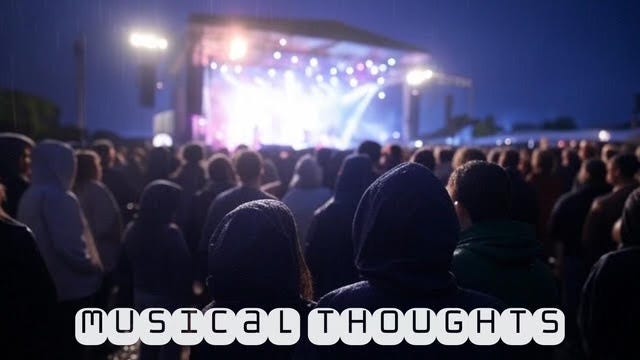
Live music is good for your soul.
On May 17, 2001, just two days after dropping their twelfth studio album Reveal, R.E.M. completely shut down downtown Toronto for a legendary, free midday street-corner hootenanny.
An estimated 20,000 fans packed into the intersection of Yonge and Dundas Streets—some even skipping morning college exams—to witness the iconic Athens alternative rockers turn a MuchMusic broadcast into an unforgettable open-air party. Even when the skies opened up during “The Great Beyond,” prompting an impromptu, a cappella snippet of Creedence Clearwater Revival’s “Have You Ever Seen the Rain?”, the crowd’s energy never wavered.
Michael Stipe was a hyper-kinetic ball of energy, playfully tossing a bowl of fruit into the audience, dodging floating balloons, and leading massive, city-shaking singalongs to “Losing My Religion” and “Man on the Moon” that proved, once again, why live music is absolutely good for the soul.
Thank you.
And remember if you love someone hug them right now.
Comments
Nothing yet. Say the first thing.
Sign in to join the conversation.