
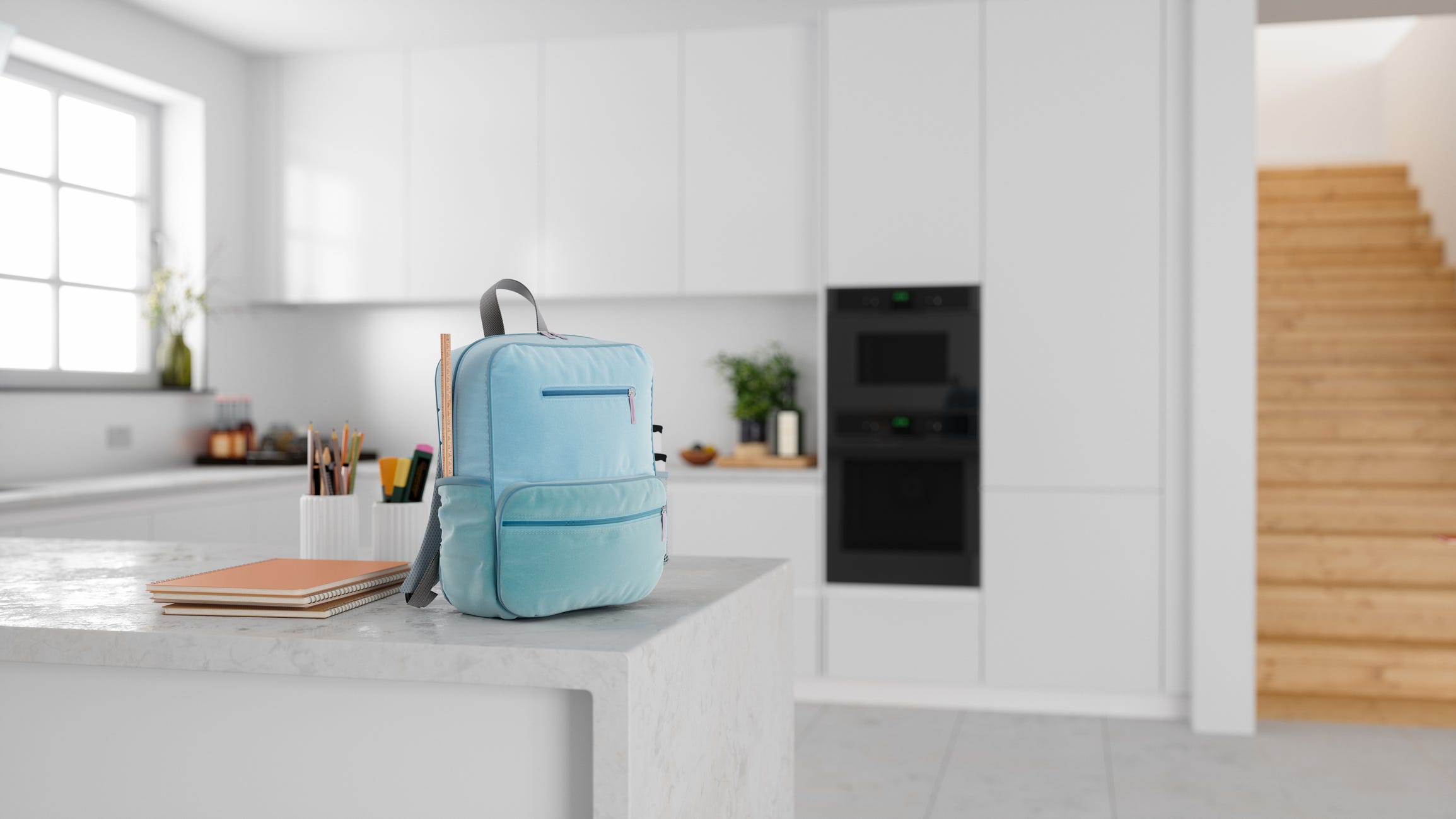
It's August, and in most parts of the country, that means it’s time for kids to return to school. For most moms, that means less momming, and more time in the day to accomplish more things. But before you mindlessly dive into your endless to-do lists, it’s important to ask yourself: Will you spend the next nine months being busy, or will you take the time to find your own fulfillment?
America's hustle culture has transformed busyness into a status symbol. Women are told that the more we do, the more we matter. Busyness has become both a way of life and a badge of honor. If we’re not working, we’re driving kids to extracurricular activities. If we’re not volunteering, we’re planning a friend's birthday party. If we’re not running errands, we’re making lists of what needs to be accomplished before week's end.
According to Harvard Business School analysis, the percentage of Americans who report they "never had enough time" rose 10 percent in the last decade. And a Pew Research survey found that six in ten U.S. adults say they're too busy to enjoy life.
I was guilty of this destructive belief myself. In my job, volunteer work, and personal life, I always believed—at least subconsciously—that the more I took on, the more indispensable and important I became to those depending on me. The busier I became, the less I had to confront all the ways I wasn't actually fulfilled.
This is precisely why too many women's lives overflow with responsibility yet lack realized desires. Society knows exactly what would happen if women were encouraged to want: the world would come undone. Without women's mental and physical energy propping up the system, governments would fall, institutions would crumble, and traditional family structures would collapse. To prevent this, society burdens women with overwhelming responsibilities—work, housework, caregiving—leaving little room to explore their own desires.
And the more society tells women they don't deserve what they want, the more we internalize this message. Eve Rodsky, a former lawyer who studies America's gendered division of labor, calls this "CIYOO"—complicit in your own oppression. Through her research on invisible tasks and mental load, she's found that capitalist patriarchy has profoundly shaped our psyches. “We start believing all the cultural messages we’ve absorbed,” Eve says. “We think we should take pride in picking the florist for our wedding or sending that birthday gift to the in-laws or for wiping asses and doing all the dishes.”
But Eve's studies show women can unlearn these societal messages by challenging internalized obligations and guilt, working toward liberation from within. "When women realize how complicit they've been in their own oppression, they understand it requires both systemic change and individual agency to retire the toxic messaging," she says.
Guilt is the blame we feel for not meeting expectations that we should do something we don’t want to, or can’t do. Guilt is especially easy to trigger when you spend time on yourself because that would require you to make choices that actually prioritize your wants and needs over the wants and needs of others. That might mean missing a kid’s soccer game, ignoring after-hours emails, or asking a sibling to check on an aging parent so you can focus on yourself. Those choices can be hard for women to make. We carry immense responsibilities, which can feel devastating when left unfulfilled.
Many women tell me that "mom-guilt"—the implication that pursuing personal fulfillment somehow harms their children—most often prevents them from pursuing their passions. But mom-guilt is manufactured; it's society's way of reining in women's desires. Caitlyn Collins, sociology professor at Washington University in St. Louis and author of Making Motherhood Work, believes guilt encourages women to blame themselves for falling short instead of questioning inadequate systemic support. "Guilt serves as a regulatory mechanism benefiting men, employers, and government by pushing women to strive harder daily—to do more, take on more, fulfill more needs, meet more desires," she says.

I know this firsthand. My children are now adults, and when I ask if they ever felt neglected when I was working and traveling, the answer is unequivocally no. They're proud of my accomplishments and say my independence forced both their father and stepfather to step up, giving them more equal time with all three parents. Your children won't remember the occasional missed soccer game or field trip; they'll remember when you showed up, fully present, and feel proud you created a meaningful life, encouraging them to do the same.
Psychologist Dr. Aliza Pressman agrees: "When you do what lights you up, you give your child a role model for finding meaning in life—meaning that cannot come only from our kids. If you're suffering because you're not giving yourself time, space, and energy for fulfillment, you're not doing anyone favors. We must show our children they can live happily, that our happiness doesn't rest on them, and that we can find meaning both as mothers and separate from motherhood."
One of the women I interviewed for “Fired Up,” Stephannie Lane Baker, executive director of Emerge Arkansas, an organization training woman for political office, came to realize she used busyness to manage anxiety. Growing up, Stephannie immersed herself in academics and extracurriculars—cheerleading, debate, yearbook, choir—to avoid anxiety exacerbated by a chaotic childhood. As a parent, she embraced the selfless mother stereotype to stay busy, distracting herself from both anxiety and an unhappy marriage.
"I convinced myself my value was based on how much I sacrificed and diminished myself for my children," Stephannie says. During the pandemic, she finally recognized her busyness addiction when she noticed her children didn't miss their packed afternoon schedules. They were content simply being home with her. "I tried motivating them to be busier by describing everything I did in high school," Stephannie recalls. "One day, my daughter interrupted and said, 'Mom, I value my downtime more than that.' I realized if rest and restoration were something my kids valued, it was okay for me to value it too."
Once Stephannie relaxed expectations for her children's busyness, she gave herself permission to be less busy and used that time to explore her own wants and needs. Beyond returning to school and volunteering, she confronted uncomfortable feelings she'd avoided through busyness and began extricating herself from her marriage. She realized her energy, effort, and focus weren't unlimited resources.
The psychological benefits of busyness can distract us from feeling our deeper emotions; busyness makes us feel indispensable, as if we’re the only person who can handle what needs to be done, and it can make us feel important when we’re praised for taking on more. But busyness actually prevents us from living fully by stealing the opportunities for relaxation, stillness, and self-reflection that are necessary to nurture yourself.
Your fulfillment starts where your “shoulds” end. If you find yourself believing you're too busy to nurture your dormant desires, remember: you deserve to value your time as much as you value others'. To nurture your fire, you must invest in it—and that investment starts with giving yourself permission to want more than a completed to-do list.
If you’re ready to nurture your fire, or find clarity in what comes next, I’d love to work with you. Click here to learn more about working with me as your coach.


If you’re looking to unleash your potential, find your personal, professional, or political fire, and to connect with a community who is doing the same, click here to learn more.
Comments
Nothing yet. Say the first thing.
Sign in to join the conversation.