
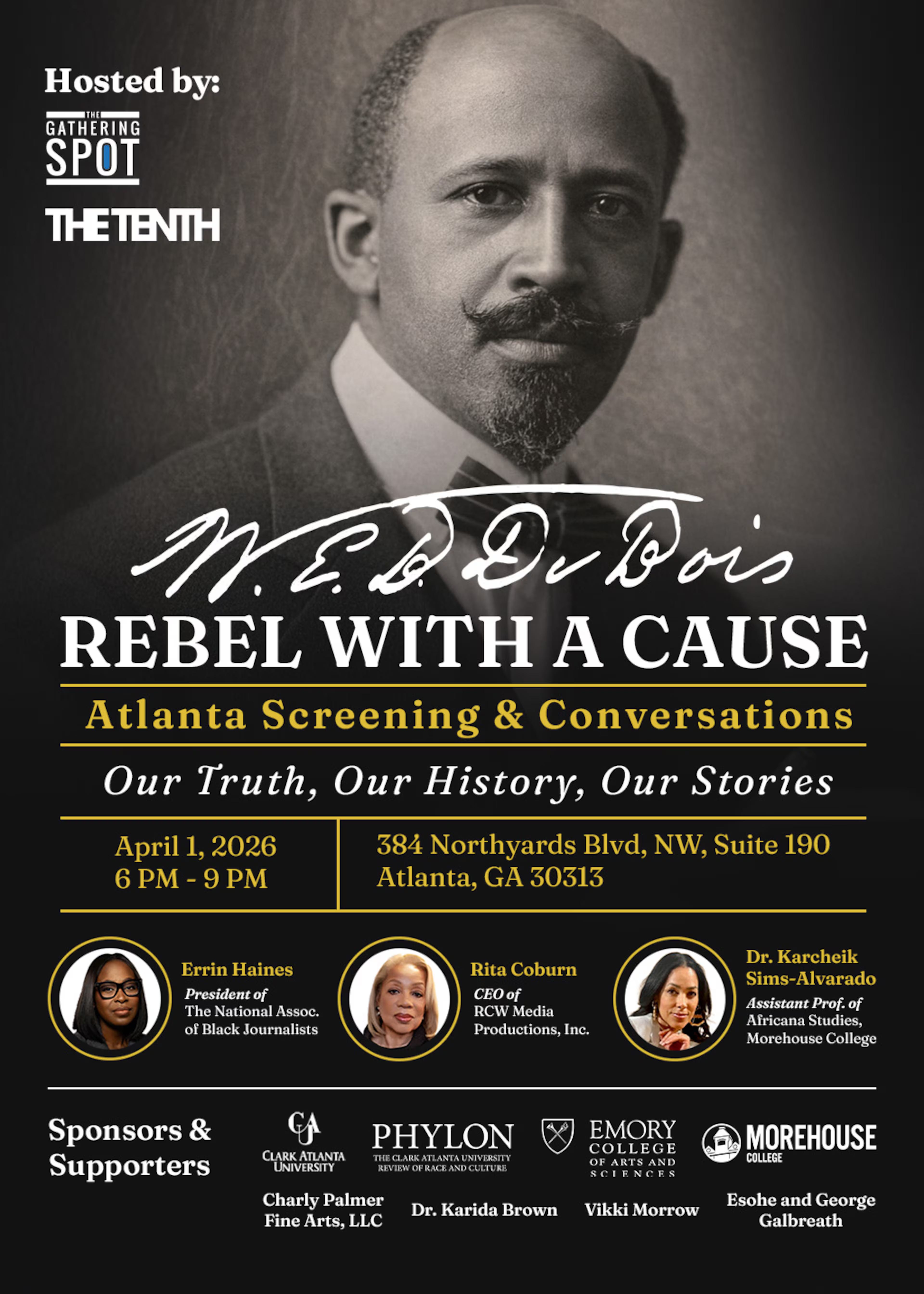
Third spaces. Third spaces. Let the choir, say again THIRD SPACES and then do a round of Hallelujah followed by Community. The Tenth is a Black social club here in Atlanta that hosts lectures, and supper clubs and museum visits and all kinds of things. While not a paying member (Y’all got to get your girl on that NYTimes Bestseller list) they do host free events to the public on occasion and this screening of WEB Dubois’ upcoming documentary “Rebel With a Cause” was right up my alley. Now, I am the only history nerd in my circle so I went alone, but I was really excited to be able to learn more about the father of the Talented Tenth.
I think for many of us that’s all we remember about WEB Dubois. If you had a little more interest you might have read The Souls of Black Folk and had a discussion or two about his philosophical feud with Booker T. Washington. But even fewer know about his calls for peace and travels to Russia, his denouncing of the Talented Tenth philosophy and call for us to return to Africa. He lived to be 93. That’s a lot of living and a lot of ideas to chew on and see strengthened or wither away.
What I loved about DuBois is not his tireless commitment to the uplift of Black people in America, but his ablity to change his mind publicly. So few people do it. He was often wrong. He was wrong to back Woodrow Wilson for the presidency. He believed that Wilson’s gentlemanly Ivy League education and it’s attention to academia and critical thinking would override Wilson’s Southern upbringing. Wilson played him and immediately segregated all federal offices, something that has never been done before. He was wrong to believe that Black people were immune to elitism and that those who had the privilege of education and wealth would help their brothers and sisters in the fields and laundry rooms and even jails. He was wrong to believe in the Constitution and the Bill of Rights so much that he traveled to Russia in the 1950’s to speak about peace, thinking his right to free speech would outweigh everything. He was arrested. He was so wrong. But he was also extremely influential and often right.
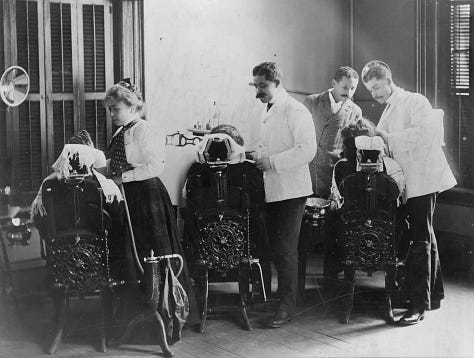
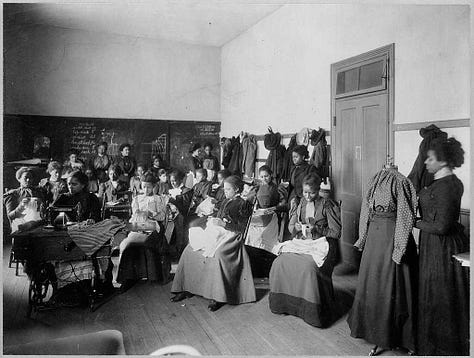
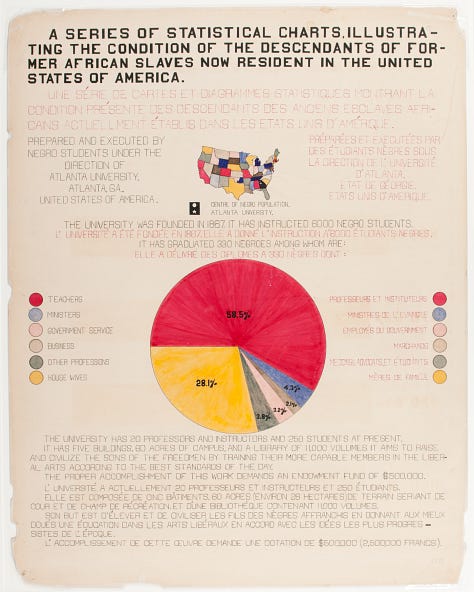
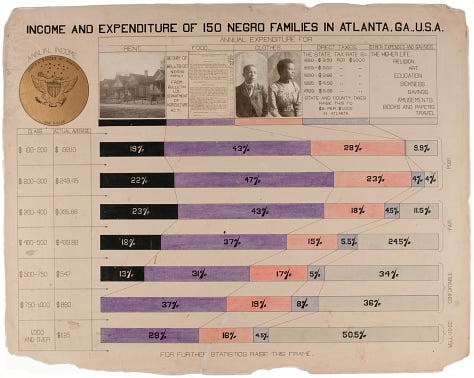
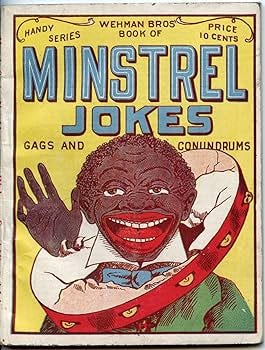
DuBois was one of the first men, Black or White to advance the study of sociology. After the screening I made a note (I should have brought a notebook) to dig further into the 1908 World’s Fair. DuBois curated an exhibit to highlight the advances that Black Americans had made since emancipation. He knew that the only information about Black folks that was making it around the world was caricatures and lies. He came ready with photographs and hand drawn statistical infographs that showed our progress in real numbers, something that had never been done before.
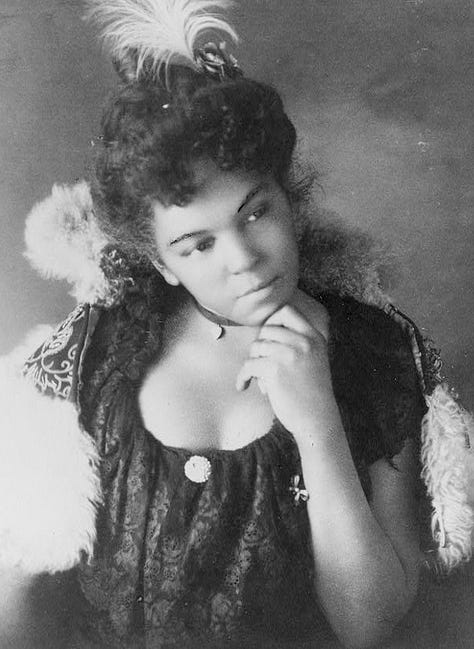
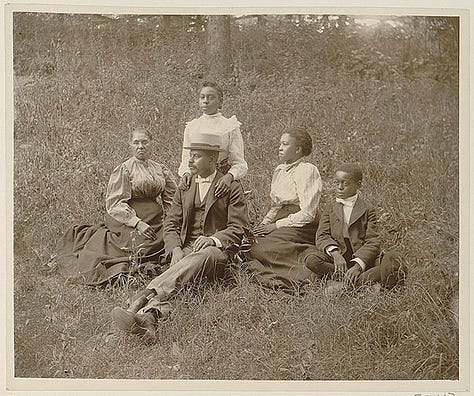
The gathering, as well as the subject matter of the documentary reignited in me a desire to give back to the community through story. What are we sharing with the younger generation, and each other? How can I use storytelling to inspire younger Black people to serve their communities in an effort to life all of us out of the pit of oppression. Where once I’d believed we were making our way further out from Jim Crow I see just how bloodthirsty White supremacists are by how similar their current calls for the kidnapping of immigrant men, women and children. Once you see how ritualistic lynching was you understand that the sadistic glee in which people terrorized Black folks is being reapplied onto Brown folks. What will each of us do? Will we march? Will we fundraise? Will we join organizations? Will we write?
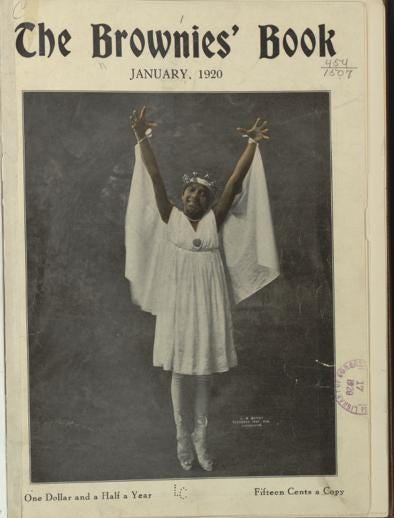
Have you noticed how few Black sitcoms are on television now as compared to 1999? Black families are disappearing from screens. There are no tweens on television. No Moesha, no Jett Jackson, not even the background crew of All That or the Mickey Mouse Club. If it’s bleak now, imagine how dire it was in 1920 when DuBoi began to publish The Brownie’s Book for the Children of the Sun (great title)? I’ll be digging into the archives to see what DuBois thought was necessary to include in his magazine for children.
You may know that he was the editor of The Crisis, the magazine of the NAACP, but how much time have you spent digging into the archives. I didn’t realize, that it included fiction, as well. I’m thinking of doing a summer series on that fiction. Stay tuned.
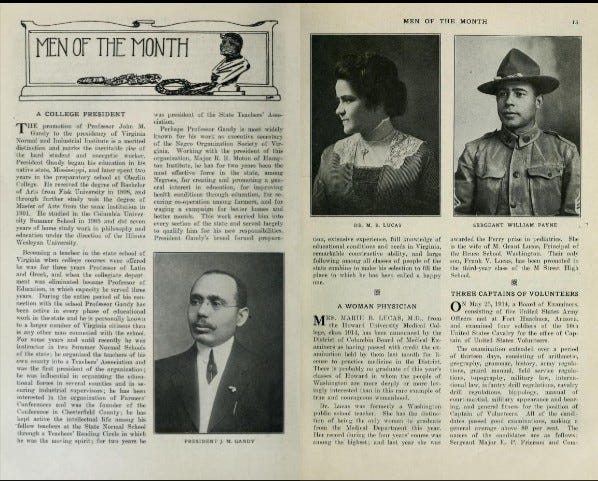
Digitized Copies of THE CRISIS magazine
Of course, over 93 years there will be scandals and crises and mistresses and more. You’ll have to watch to dig into all of that. As docs go, I’d give it 4/5 stars. It’s a little long, but from the comfort of your couch you shouldn’t really feel the time pass. There was something really beautiful about sitting in a room with the director afterwards while she spoke about the importance of archival work and the social justice work that is still yet to be done. The doc debuts on PBS on May 19, 2026 at 9PM.
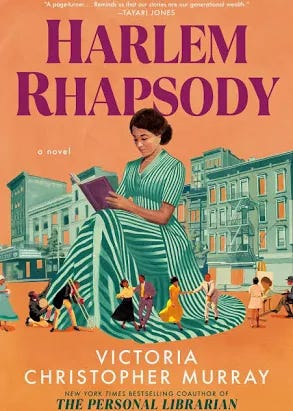
In 1919, a high school teacher from Washington, D.C arrives in Harlem excited to realize her lifelong dream. Jessie Redmon Fauset has been named the literary editor of The Crisis. The first Black woman to hold this position at a preeminent Negro magazine, Jessie is poised to achieve literary greatness. But she holds a secret that jeopardizes it all. W. E. B. Du Bois, the founder of The Crisis, is not only Jessie’s boss, he’s her lover. And neither his wife, nor their fourteen-year-age difference can keep the two apart. Amidst rumors of their tumultuous affair, Jessie is determined to prove herself. She attacks the challenge of discovering young writers with fervor, finding sixteen-year-old Countee Cullen, seventeen-year-old Langston Hughes, and Nella Larsen, who becomes one of her best friends. Under Jessie’s leadership, The Crisis thrives…every African American writer in the country wants their work published there. When her first novel is released to great acclaim, it’s clear that Jessie is at the heart of a renaissance in Black music, theater, and the arts. She has shaped a generation of literary legends, but as she strives to preserve her legacy, she’ll discover the high cost of her unparalleled success.
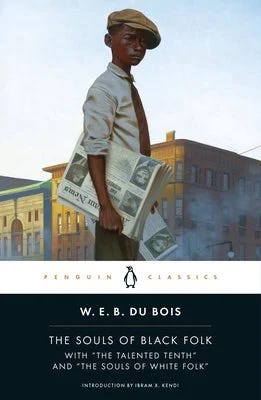
When The Souls of Black Folk was first published in 1903, it had a galvanizing effect on the conversation about race in America—and it remains both a touchstone in the literature of African America and a beacon in the fight for civil rights. Believing that one can know the “soul” of a race by knowing the souls of individuals, W. E. B. Du Bois combines history and stirring autobiography to reflect on the magnitude of American racism and to chart a path forward against oppression, and introduces the now-famous concepts of the color line, the veil, and double-consciousness.
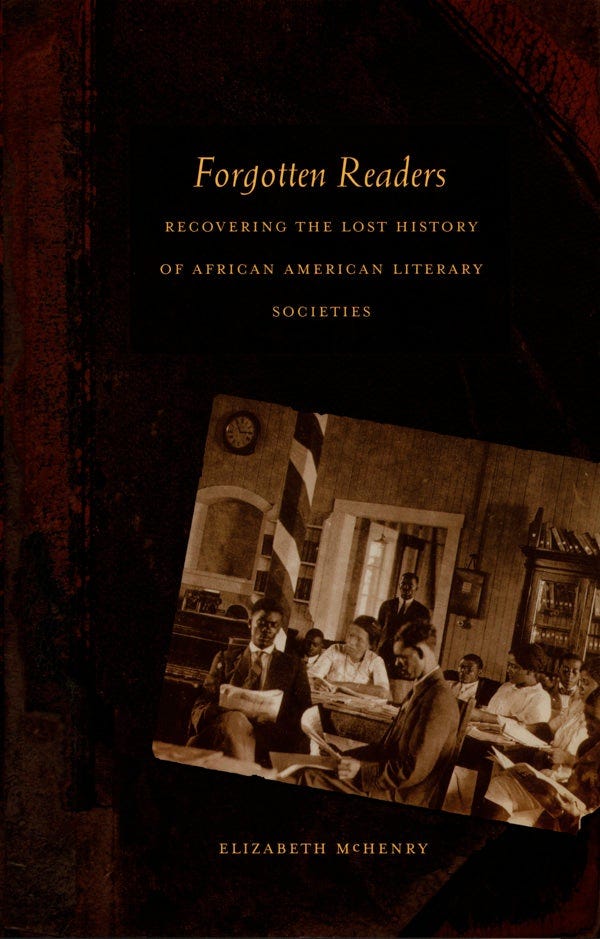
There is a vibrant history of African American literacy, literary associations, and book clubs. Forgotten Readers reveals that neglected past, looking at the reading practices of free blacks in the antebellum north and among African Americans following the Civil War. It places the black upper and middle classes within American literary history, illustrating how they used reading and literary conversation as a means to assert their civic identities and intervene in the political and literary cultures of the United States from which they were otherwise excluded.
Forgotten Readers expands our definition of literacy and urges us to think of literature as broadly as it was conceived of in the nineteenth century. Elizabeth McHenry delves into archival sources, including the records of past literary societies and the unpublished writings of their members. She examines particular literary associations, including the Saturday Nighters of Washington, D.C., whose members included Jean Toomer and Georgia Douglas Johnson. She shows how black literary societies developed, their relationship to the black press, and the ways that African American women’s clubs—which flourished during the 1890s—encouraged literary activity.
Comments
Nothing yet. Say the first thing.
Sign in to join the conversation.