
Shanaka Anslem Perera
5th August 2026
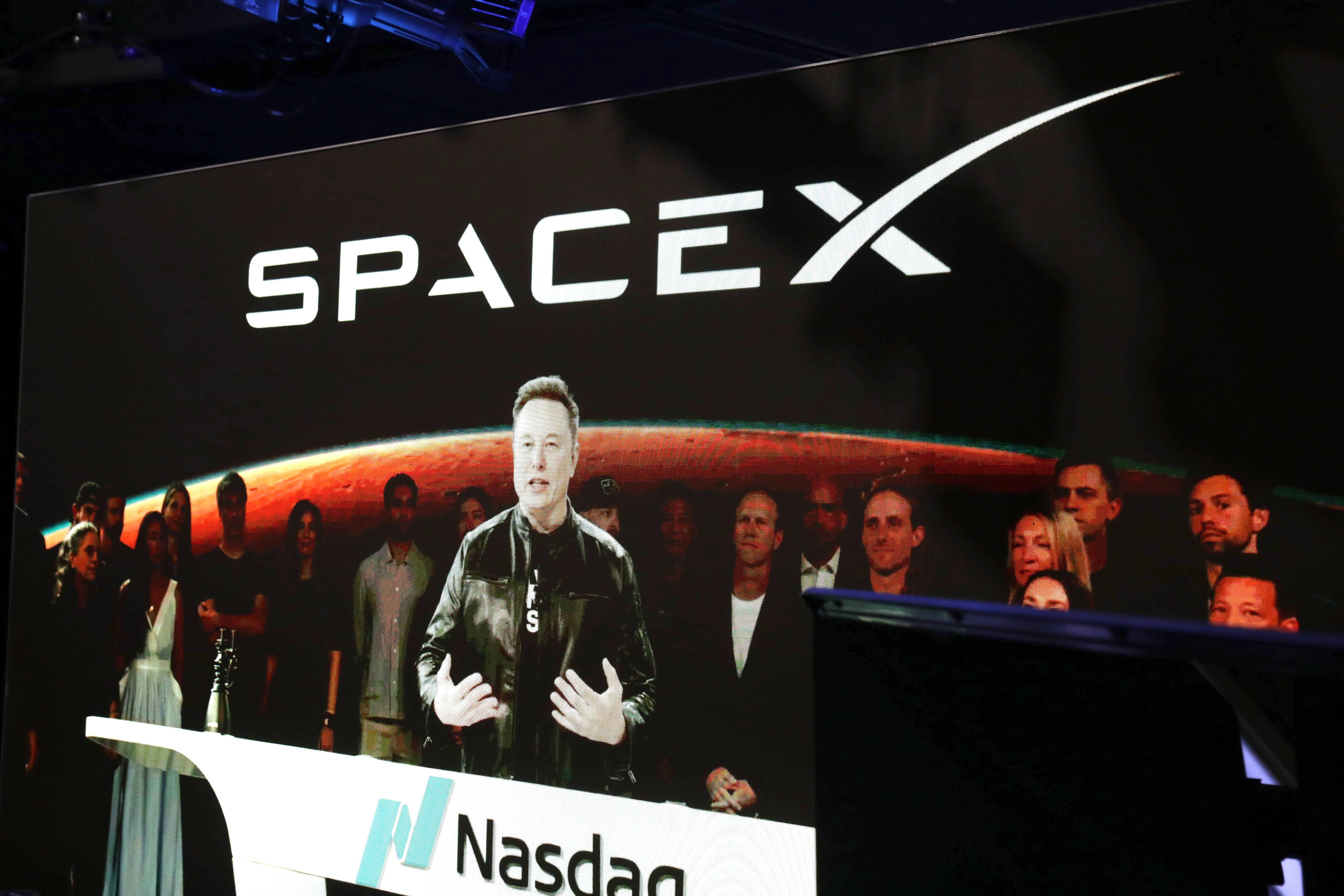
At the New York open on Thursday, 6 August, holders subject to the ordinary lock-up may transfer up to twenty percent of the applicable locked shares. Secondary estimates place the maximum first tranche at roughly 912 million SpaceX shares. Eligibility is not selling, recognised free float, or passive demand. It is the first dated expansion of who may act.
Class A remains the claim with no comparable date attached to recovery. If you hold it at Thursday’s bell, you hold the one major claim on this company that carries no date, at the exact moment nearly a billion others acquire one.
SpaceX’s first public quarter proved demand. It did not prove recovery. Long-duration public capital now finances three businesses operating on three different clocks, and customer cancellation, hardware obsolescence, physics, permission, and controller choice will determine how long those assets earn. Class A has little practical control over any of those durations. Class A bears the residual time mismatch.
The decisive sentence in the release is not the revenue number. It is a definition, buried in Note 2, written by the company about itself, rendered here in substance and quoted exactly later in this analysis. Contracted sales refers to the total value of contracts signed for the non-cancellable, enforceable period, including revenue recognised in the period and deferred revenue related to those contracts. It excludes estimated revenue for future periods cancellable by SpaceX or the customer. Under that definition, the Cloud Services Agreements total 14.1 billion dollars. In the same ninety days, the AI segment spent 15.828 billion dollars of capital. The contracted-sales figure equals 89.1 percent of one quarter’s AI construction bill. The numerator is revenue, not cash contribution. It includes revenue already recognised. The denominator is one period, not a matched capital cohort. The comparison is not a payback verdict. It exposes the question the filings cannot answer, the share of each compute cohort that comes home before continuation becomes optional. The issuer quantified its enforceable floor, and almost nobody read the footnote.
One law governs everything that follows. Capital markets funded the build. Contracts determine whether the build recovers its cost.
Past the paywall, the full anatomy. The customer exit architecture, including the filing language that makes cloud agreements generally terminable by either side on ninety days’ notice after an initial ramp. A concentration table showing one unnamed AI counterparty moving from below the ten-percent reporting threshold to nearly one fifth of company revenue. An assumption-stated reconstruction of management’s hundred-billion-dollar December claim, which requires the monthly revenue pace to rise 220 percent in six months and leaves a large portion unbridged by public disclosure. A supervoting class whose published count has already shrunk by 210.2 million shares since the prospectus, without a complete causal bridge. Two megacap income statements exposed to this ticker through their own accounting policies. A 22.244 billion dollar commitment wall in 2027. And a dated forward ledger, sealed before Thursday’s eligibility window, so the tape prints against a map that existed first.
The date arrives before the evidence. Thursday begins the first window in which eligible holders may act. It may not identify who acts, and it cannot establish what any holder knew or intended. The ledger below fixes the tests before the tape can rewrite the story.
On 4 August, one session after the stock touched its all-time low of 104.83 dollars, SpaceX closed up 9.43 percent at 125.33. Then the print landed after the bell, revenue cleared consensus, the loss came in at less than a third of what analysts expected, and the stock fell roughly seven percent in extended trading.
A nine-percent rally into an earnings beat followed by a late decline is not a clean verdict on one fact. It is a price sequence carrying operating surprise, capital intensity, positioning, and an imminent eligibility event at the same time.
Revenue of 7.814 billion dollars against consensus near 6.9, up 92 percent from 4.071 billion a year earlier. Net loss of 541 million against expectations near 1.9 billion. Adjusted EBITDA of 3.538 billion against roughly 2.0 billion expected. A loss of nine cents per share where analysts carried twenty-six cents. Starlink subscribers doubled in a year to 12 million. Revenue increased across all three segments, and the AI segment’s operating loss nearly halved sequentially. On the demand question that dominated the seven weeks after the IPO, the print answered emphatically.
Then the other number. Capital expenditure of 18.369 billion dollars in ninety days, of which 15.828 billion, 86.2 percent, went to the AI segment. One quarter of AI construction spending equal to 2.03 times the whole company’s quarterly revenue. Equal to 6.18 times the AI segment’s own revenue. Equal to 13.81 times the AI segment’s adjusted EBITDA.
The estimate history narrows what the late move can responsibly mean. The widely circulated preview for total capital expenditure sat near 18.6 billion, and the actual total landed just below it. A reported AI-specific estimate sat near 13.1 billion, and the segment printed almost 2.8 billion above it. Estimate vendors diverged widely. The FactSet consensus mean for the total, carried by CNBC, sat near 13.2 billion. Against the StreetAccount segment estimates, also via CNBC, all three segments cleared, Space at 962 million versus roughly 835 expected, Connectivity at 4.29 billion versus 3.83, and AI at 2.56 billion versus 2.18. The composition was therefore more surprising than the aggregate. Fully 86.2 percent of quarterly capex entered the segment with the fastest technology cycle, the shortest disclosed post-ramp exit mechanics, the largest current operating loss, and the least public evidence on long-run return on invested capital. That mix is a plausible contributor to the repricing. It is not a proven single cause.
The question was no longer whether SpaceX could manufacture revenue. The print proved that it could convert installed capacity into revenue at exceptional speed. The unresolved question is whether each cohort of AI infrastructure recovers its full economic cost before the customer can terminate, before a newer GPU generation reprices the installed base, before depreciation now delayed in construction accounts reaches operating income, and before the balance sheet must fund the cohort after this one.
The company has converted its public balance sheet into a race between capital recovery and optionality expiry. Everything below is the state of that race.
SpaceX did not report one business having one quarter. It revealed three capital regimes running on three unrelated clocks, consolidated into a single set of financial statements that the market insists on pricing as one thing.
Connectivity is the earnings engine, and it runs on a customer clock. Revenue came in at 4.291 billion, up 66 percent year over year and 32 percent sequentially. Operating income was 1.656 billion, a 38.6 percent margin. Segment adjusted EBITDA printed 2.597 billion, a 60.5 percent margin. Twelve million subscribers were up 1.7 million in one quarter. The more durable shift is in mix. Enterprise and government revenue climbed to 1.806 billion, up 108 percent year over year, and represented 42.1 percent of the segment. The release reported over six billion dollars of multi-year Starshield awards. Official Space Force announcements identify a 4.16 billion dollar airborne moving target indicator agreement and a 2.29 billion dollar space data network backbone agreement, 6.45 billion combined. That official total supports the release. It does not support a sixteen-billion-dollar single-contract figure that has circulated elsewhere.
The average revenue per user series tells its own quieter story. Eighty-five dollars a month a year ago, sixty-six in the first quarter, at the bottom of a prospectus series that had stepped down from ninety-nine, with the prospectus warning of further pressure. The second quarter printed sixty-six again, and the release said ARPU was maintained in line with the first quarter. One quarter of stabilisation is one quarter. It does not prove the pricing cycle has ended. It does coincide with the segment’s economic center moving toward airlines, carriers, enterprise buyers, and sovereign customers, where contract mix, service obligations, and bargaining power differ materially from consumer broadband.
AI is not yet an earnings engine under GAAP. It is a capital conversion engine, and it runs on a hardware clock. Revenue was 2.561 billion, up 247 percent year over year and more than triple the first quarter, driven by 2.194 billion of AI solutions and infrastructure revenue, while advertising declined to 367 million from 426 million a year earlier. Grok 4.5 shipped in July and, according to the company, was trained alongside Cursor and incorporated the V9 foundation model. Filed offering materials also state that SpaceX can allocate compute between external agreements and internal initiatives. The public record does not map each physical cohort to each workload, so internal redeployment is an option rather than a demonstrated one-for-one substitute. Operating loss was 1.257 billion, down from 2.469 billion in the first quarter. Segment adjusted EBITDA turned positive at 1.146 billion only after adding back 1.885 billion of depreciation and amortisation and 516 million of share-based compensation. Across the company, depreciation and stock compensation together, 3.679 billion, exceeded consolidated adjusted EBITDA of 3.538 billion. Adjusted EBITDA is not false. For a compute landlord whose primary assets reprice on a rapid silicon cadence, it is incomplete. The segment’s adjusted EBITDA equalled 7.24 percent of contemporaneous capex, which shows the scale of the build, not the lifetime return of the cohort.
Space is the strategic enabler, and it runs on a civilizational clock. Revenue rose to 962 million, up 29 percent on pricing and customer mix even as launches fell to 38 from 46 and mass to orbit fell to 485 tonnes from 652, because 28 of the 38 launches served the company itself, primarily deploying Starlink. Operating loss was 542 million as Starship development accelerated toward management’s stated goal of reducing the cost to orbit by 99 percent or more. Flight 12 in May flew the V3 ship’s first suborbital mission from the new pad. Flight 13 in July deployed twenty production V3 satellites, demonstrated an in-space engine relight, and completed the softest Starship splashdown yet with an intact heat shield. Independent reporting also described a partial landing-engine ignition failure on the booster during descent. The exact engine count was not confirmed in the official release. Orbit and propellant transfer remain future gates. Management has described a Flight 14 ship-catch attempt, subject to data review and regulatory approval.
Three clocks. The customer clock compounds. The hardware clock depreciates. The civilizational clock spends now for permissions and physics that may pay over decades. One balance sheet carries all three. Class A has one vote per share, but the dual-class structure gives it little practical authority over transfers among the clocks.
Connectivity is the load-bearing wall of the bull case, and the question it cannot yet answer is the pivot on which everything behind the paywall turns.
The commercial momentum is not in dispute. American Airlines signed. Southwest, Virgin Atlantic, Iberia, and Aer Lingus activated. SoftBank, NTT Docomo, and Spark launched mobile partnerships. Beneath the mobile push, the quarter advanced a spectrum position. The FCC approved a two-step transfer structure for 65 megahertz of United States spectrum, first from EchoStar subsidiaries into a trust for SpaceX’s benefit and later from the trust to SpaceX, with final assignment expected around November 2027 subject to the approved terms. The separate 2.4 billion dollar fund imposed by the FCC is an EchoStar obligation intended to address specified legacy network and site claims. It is not capital standing behind SpaceX’s direct-to-device business. The mobile ambition is real, and the permission layer still moves on a regulatory calendar. The chief executive told the call, as reported, that Starlink could one day carry a majority of the world’s internet. That is an aspiration, not a forecast, and it belongs in the model only as a management claim.
The segment generated 2.597 billion of adjusted EBITDA against 1.367 billion of capex in the quarter. On a blended adjusted-EBITDA-minus-capex proxy, the segment showed 1.230 billion of headroom. That is not segment free cash flow and does not establish self-funding. The filing does not split maintenance from growth capex, replacement satellites from capacity expansion, or segment working capital, cash taxes, and allocated financing. The honest statement is that Connectivity appears economically strong on the disclosed blended figures while the replacement test remains open. The V3 programme also runs through Starship, which makes the customer clock’s future replacement cost partly dependent on the civilizational clock’s flight schedule. The clocks are not separable even inside the strongest segment.
The strongest segment does not stand alone. In the same six months in which Connectivity produced 4.684 billion of segment adjusted EBITDA, the company generated 3.466 billion of operating cash flow and spent 28.476 billion on capex. Operating cash covered 12.2 percent of the build. Financing activities supplied 100.291 billion, dominated by IPO and bond proceeds and offset in part by debt repayment and repurchases. External capital, not current operating cash, supplied the balance-sheet duration for the programme.
Everything above this line is what the public print established. Everything below it is the architecture the market must now test, with the dates on which each clause activates. Thursday changes eligibility, not necessarily supply. The paid section fixes the contractual, accounting, financing, and valuation tests before observed outcomes can be mistaken for foresight.
The free portion ends here.
Comments
Nothing yet. Say the first thing.
Sign in to join the conversation.